A RATHER CHECKERED CAREER

For someone who has engaged in a writing life his whole adulthood, I’ve had a rather checkered career as a reader. After a precocious outburst in the classics – Robinson Crusoe, Tom Sawyer and Huckleberry Finn in second- or third- or fourth-grade (not as class assignments, of course – who knows what we were reading there), I found myself largely oblivious to fiction. My attention turned to history and biography (the Landmark series, especially) and then science and politics. Non-fiction, with a sense of content. Fiction came later, in high school, curiously through political fiction – Brave New World, Lord of the Flies, 1984, rather than any of the traditional British canon. Throw a little Shakespeare in, and I was off – into journalism. (Let me mention that Huck Finn was much harder reading in my junior year of high school than it had been when I was younger; as a novice reader, I wasn’t tripped up by the strange spellings of dialect.)

In college, for whatever reason, I developed a passion for Samuel Johnson. Not for his moralizing as much as the sarcasm, I’d say, as well as a fascination with the baroque richness of his style. Maybe it was just the force of personality projecting from the writing. And then came Virginia Woolf, Kurt Vonnegut, Richard Brautigan, Jack Kerouac … the widening stream.

Surprisingly, a major turning point occurred in the span when I had the fewest opportunities to read – my years living in the ashram, a monastic community in the Pocono mountains of Pennsylvania. Out of the practice of meditation and reflection, however, I began to approach literature in a new way. The quietude opened poetry to me, both as a reader and a writer. The experience also introduced me to mythology, with the Hindu stories being more fantastic and meaningful than anything I had encountered in the Greek and Roman stream. Later, I was able to leap from this into the stories of the Bible as well, returning me to my previously unknown roots.

Others have written of being a promiscuous reader. I wouldn’t say I’m addicted to reading that way – at least, not any more. One of the ashram exercises, in fact, was a “reading fast,” meaning written words, rather than food. It’s all a matter of focus. That is, when I’m eating, I want to choose to concentrate on my food rather than a text. When I’m traveling, I want to see where I’m going. (Airport terminals, on the other hand, or stretches before takeoff, are another matter — they are among those place of limbo.) Later, when the newspaper first comes off the press, I found I could no longer focus on the stories – not after a shift of heavy editing. If anything, my head was so full of disjointed stimulation I needed to slow down to savor what I’d already encountered. For that matter, I prefer walking to jogging, with its restoration of a natural pace. I rush too many places and deliver on too many deadlines as it is. When I enter someone’s home for the first time, I must take care to pay attention to them more than the spines on their bookshelves. Now what were you saying?

I read, then, with greater focus these days. More selectively. I can no longer have classical music playing in the background. (It used to provide a barrier for noise from my family or neighbors.) Now, I immerse myself in what is before me. The text, then, as in scripture.

~*~

Out of all of this, my own work emerges. As a writer, I strive to create a linear progression. That is, the parts must advance is some sort of logic. Curiously, in my own work, I am often inspired by a Hegelian model – thesis, antithesis, synthesis – as drawn from cinema theory. On a wider scale, my earlier interests surface in new ways, resulting in something more akin to a matrix or spiral or collage than a straight line. I have been called a Mixmaster, with good reason. On top of it all, in my many moves about the continent, I’ve found myself exploring the soul of each place – something wine aficionados consider, in a smaller range, when they discuss terroir.

LOOK, WE KNOW WHAT WE MEAN BY A ‘NEW ENGLANDER’ STYLE HOUSE

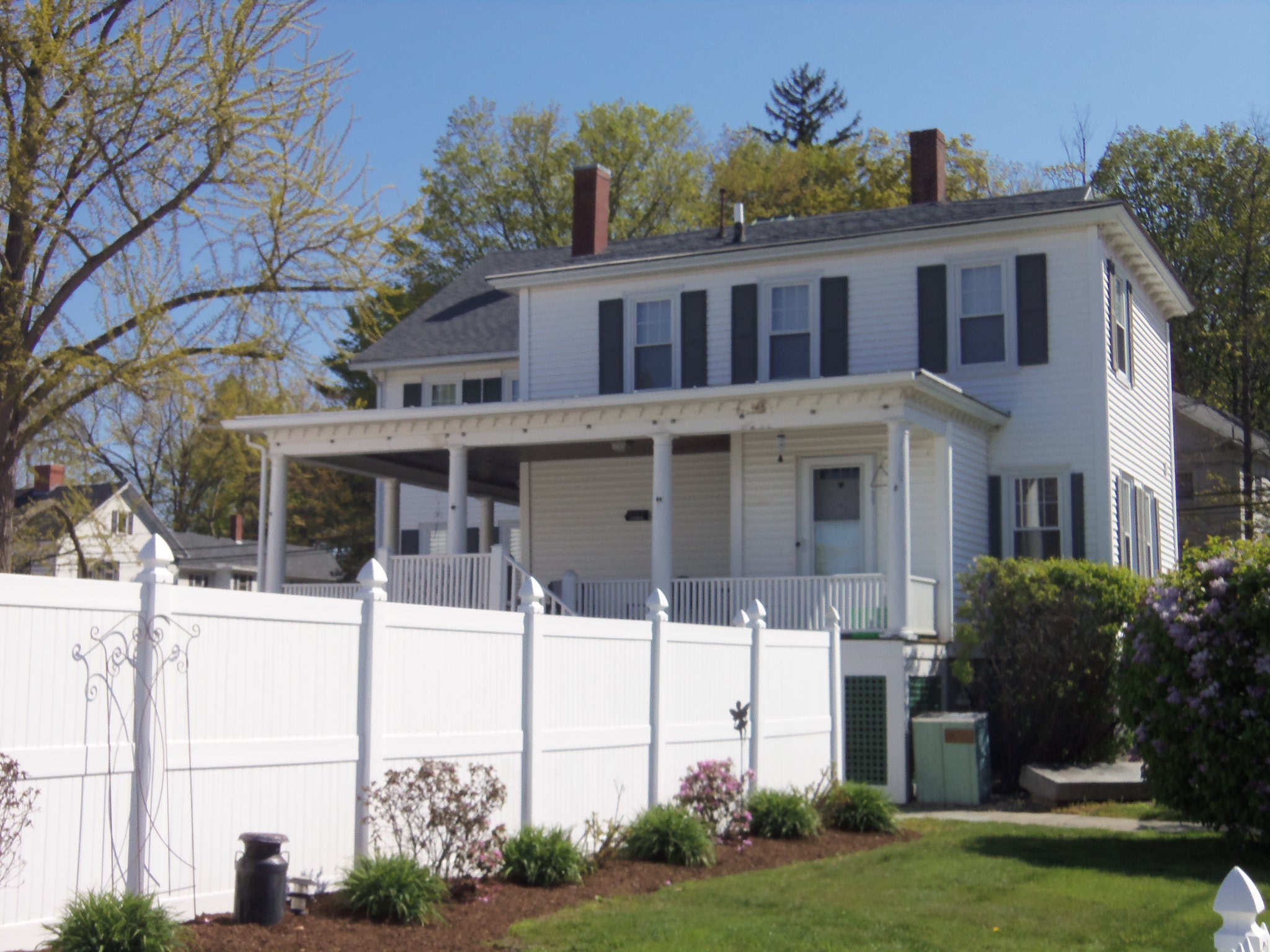
Around here, if you mention New Englander as a style of house, everybody knows what you mean. Gable end to the street, perhaps a bay window beside the front door, typically two full stories and a usable third floor. Not Greek Revival, except in a stripped-down way with some carpenter gothic touches, and definitely not Colonial Revival. Modest, middle-class – maybe even working class – sometimes even as a duplex.

But try looking it up and the best you can find is an accusation that it’s New Hampshire Realtor BS.

Well, that’s where we live. Ours seems to be from the 1890s.

~*~

My poems on the challenges of renovations, repairs, and relating as a husband are collected as Home Maintenance, a free ebook at Thistle/Flinch editions.

A CASE FOR NURTURING SERIOUS READERS

One of the challenges facing contemporary society is the shrinking percentage of active readers. (I say percentage, but fear what we face is more a shrinkage of actual numbers.) It’s not simply the decline in readers of fiction or the number of people who recite poetry from heart, but the lack of literary engagement of any kind. So I rat on myself early here, with my belief that the act of reading carries social value – especially when serious literature is the subject.

It is no mere coincidence that Americans’ widespread ignorance of history and our political system has accompanied the growing addiction to a sensual media orgy – large-screen television, movies, rock music – while habitual reading, including newspapers, has been declining. That is, what is superficial and easy – and ephemeral — has the upper hand. Little is demanded of the receptor, and loud excitement, rather than a deepened awareness, is the expectation; escapism, rather than engagement with life itself. Several European writers have suggested something more troubling is at work – the loss of reflective people, contemplative individuals – a theme I see developed, obliquely, in Stephen L. Carter’s Integrity and the labor of moral discernment. In other words, is the mind being enlarged or merely numbed? The fact that so many people cannot name their own senators or governors or are largely ignorant of geography, yet recognize countless actors and rockers points toward a disintegration of community and social service.

Paradoxically, the act of reading is largely a private enterprise. It’s a dialogue between a reader and a writer, sometimes separated by continents or centuries. It requires more activity from the receptor than a movie, short song, or television sit-com does – in fact, one of the concerns these days is the atrophied state of the imagination among those who have been raised on “electronic media” rather than the printed word or, for that matter, stories read aloud or in radio broadcasts. (There are, after all, degrees of imaginative challenge.) In the act of reading, there are no visible intermediaries – no actors, soundtrack, directors, sets, or costumes. The editor or printer or bookseller is of an entire order altogether. Here, the reader and the writer engage in a dance of the soul or a passionate argument. (Serious readers can be as demanding as lovers when it comes to this relationship.)

But the act of reading can also take us into the existence of another person, viewing the world from within that context. A movie, in contrast, leaves us looking at that person, hoping for a hint of emotion or profundity. The author can reflect on the situation, suggest ranges of experience, voice moral struggles in ways a movie might only touch in passing.

Here I think, too, of large-scale musical compositions – symphonies or string quartets, for instance – that demand intense listening, inducing reflection and emotional awareness. Like reading, the audience for serious music is in decline – and with it, a link to the riches of the past and its aspirations and wisdom.

CARPE DIEM

Among the historic divisions among Friends, none were more traumatic than the Hicksite-Orthodox separations, 1826-27. While New England and North Carolina were spared, most other American yearly meetings were torn in two. The reasons were deep and complicated – often along socio-economic and geographic lines. Subsistence versus commercial farming, artistan-craftsmen versus industrialists, rural versus urban, traditional versus forward-looking, tensions between having the polity of Friends lodged within the monthly meeting or at the yearly meeting level, even language itself, one holding to old expressions versus those wanting to embrace a new evangelical ecumenism.

We were not alone. The Puritan legacy, for instance, splintered into Congregationalists and Unitarians about the same time we Quakers split, theirs ostensibly over naming the president to head, first, Dartmouth College and then Harvard. The Dunkers (or German Baptist Brethren), meanwhile, managed to hold together, although their tensions would finally reappear in the 1880s, leading to a five-way split, producing the Church of the Brethren – about the same time many Friends began turning to pastor-led programmed worship. Curiously, the Brethren, laboring under a single yearly meeting, faced major tensions between the Eastern, old-fashioned members and the “Western” (west of the Appalachian Mountains) progressives – the same lineup that Friends would see in the quietist versus pastoral worship styles, with our Western Yearly Meetings going programmed and the Eastern ones largely holding to tradition.

These tensions were fueled by and reflected in many larger societal issues. In politics, the Jacksonians reflected the emergence of westward expansion. In religion, the Great Awakening first blazed through New England (sometimes as the New Lights movement) before igniting in Kentucky and the newly settled regions. In the economy, the industrial revolution was well under way.

For Quakers, the divisions essentially shut down the itinerant ministry from traveling Friends, which had kept the central messages of the faith and practice intact. That loss no doubt played into the emergence of the pastoral system in places where Friends were settling, rather than long settled. Another loss was a breakdown in the sharing of epistles and other written material. We no longer had a common vision to express or unite behind.

I reflect on these not so much as history but as a recognition that our larger society is in one of those watershed transitions – as our presentations and discussions on envisioning the future have suggested. How do we parlay what’s been entrusted to us into the future? Will Friends, as a whole, respond with radically new worship, organization, expression? Will we be sufficiently open to be led where we are needed? Of course, Israel under Roman occupation turned out to be another of those watershed moments, spreading both Judaism and the newly emerging Christianity across the empire. But that’s a much larger and more complicated story, except for the fact that we’re Friends as a consequence.

Or, as old Quakers would say, “Christ is come and coming.” It’s more than “Season’s Greetings,” after all.

LET’S CHIP AWAY AT SOME GENDER STEREOTYPES

It’s supposed to be a guy thing, I know. At least in the widespread expectations. This matter of home repair – carpentry, electrical, plumbing, roofing, and the like. Any of us can do it – or so we think.

It also explains a lot of what we’ve uncovered whenever we engage a new project in this house. And the common response, from anyone on the job now: What were they thinking?

Even I can see a lot of shoddy workmanship. As one example, let me mention the wildly askew joists, previously hidden by ceiling, that had never been attached to the wall. Why hadn’t they blown away years ago? We’d been lucky.

Don’t tell me about the “good old days,” either, or how much better things were done back then. There are solid reasons we’ve enacted building codes and now license electricians and plumbers, among others. As for apprenticeships?

What I do admire in our home upgrade undertakings is the skills many of these individuals bring to the task. As one Friend once articulated during worship, as a carpenter he’s come to recognize that each project is different and requires original problem-solving – it’s what he enjoys. What he didn’t add was the range of skills he also brings to the matter at hand, the recognition that you can tackle it this way or that way, certain tools are better suited at this point, or even the accumulated experience that immediately notices something the rest of us overlook entirely.

~*~

By the way, we’re still wondering about that paper plate we found, face up, in the gap as we ripped up the bathroom flooring. It was pretty much under the sink, or where the sink  had been.

Who’d left it there and how long ago? Back in the ’80s or ’90s? Or was it in the ’60s, when so much of the house was redone?

I’m tempted to blame a squirrel or one of the kids growing up here. Or just a careless worker.

Oh, the mysteries we uncover in a project like this!

~*~

My poems on the challenges of renovations, repairs, and relating as a husband are collected as Home Maintenance, a free ebook at Thistle/Flinch editions.

MOVING ON FROM BLUE JEANS

Over the past few years, there’s been an unanticipated shift in the way I dress, one that’s not entirely related to retirement. One of the lessons I carry from the hippie experience is an awareness that clothing should be comfortable, rather than conforming to the marketplace – and, if possible, it should express some degree of style.

As someone who never fit into the half of the bell curve the clothing manufacturers targeted, I’d always had difficulty dressing to general expectations. Back-to-school shopping was always a terror, one abetted by our family’s financial tight outlook, and one result was my pants were always way too short on my tall, skinny frame. You can imagine my delight discovering during my college years that Levis were actually available in my size. It was heavenly, even if radical at the time. I remember breaking unvoiced rules in attending classical concerts in my denim, even while wearing a necktie. Fortunately, the shift prevailed and later, when I discovered Quaker meeting for worship, came an expectation of dressing humbly rather than for pretentious show. Viva denim!

Moving to New Hampshire, I was delighted to learn that the San Francisco-based Levi Strauss relied on denim produced in the water-powered Amoskeag mills in Manchester, where I lived. So the product linked the continent, New England to California Bay Area, with cotton from the Deep South, and back.

As prices rose, my brand-name loyalty evaporated, even at the outlet store in nearby Maine, but some alternative sources still satisfied. And then they all started tinkering with the fit and gone was that feeling of comfort. Well, all except my Amish jeans – no zipper or belt but a pair of braces (suspenders, if you will) – which seem indestructible. Mine are going on 20 years, I reckon, and just starting to show real wear. The braces, though, can be a pain, as can going to the john when I’m also wearing a sweater.

For everyday usage, I’ve now drifted into variations of khaki or olive cargo pants. I really like all the pockets, along with the fit.

This has been accompanied by a shift from the oxford shirts I always wore to the office. From my first copydesk job, I’d learned to wear my wallet in my shirt pocket rather than sitting on it and throwing my back out of alignment – and so my shirts always had to have that pocket, which never, ever had a plastic liner like nerdy engineers include. Well, with the new pants, I could place my wallet in the other front pocket comfortably and that, in turn, allowed me to move on into turtlenecks for daily wear.

Turtlenecks are simply more flexible – no need for undershirts, I don’t even have to take them off at bedtime, for that matter, and they’re warm, even in our cold house. Yes, they also go with the sweaters I used to wear with those shirts.

I am surprised by my reaction looking at men my age or older who are still going about in blue jeans. They’re appearing somehow, uh, inappropriate.

HERE COMES THE SNOW AGAIN

New England can be a harsh place. Its winter is long, with snow possible October into April or even longer, at least where I live.

You’re never far from earlier generations, either. They’re hardy as stone.

Each month sinks down through centuries.

As do the poems in this almanac.

The new year’s just around the corner. For your own copy, click here.

Winged Death 1~*~

PLIMOTH PLANTATION

As I noted at the time …

  • Wow! 10 t0 12 hours to make an arrow: WAMPANOG.
  • Hollowed log for a canoe: burning removes the sap, lightens the vessel.
  • 17 English dialects (and vocabulary) … many of them hardly understandable by the others.
  • Richard Pickering (aka Governor Bradford: “I’ve become my own father-in-law”).
  • High literacy, both men and women – dialect and faith via the mother.
  • Shakespeare / University of Lincolnshire: source of much of the research.