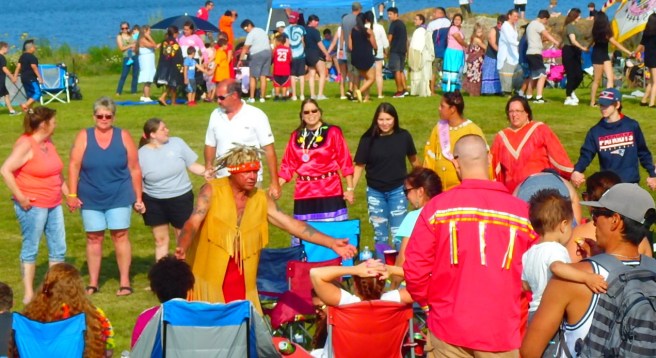
A trail of misunderstanding and betrayal

Martin Pring, after becoming the first known European explorer of the Piscataqua River in 1603, then continued south to Cape Cod, where his party engaged in harvesting sassafras tree bark and roots, “a plant of sovereign virtue for the French pox,” as he elaborated in his journal. It was highly lucrative back in Europe and would handsomely repay the Bristol investors backing his journey.

French pox, do note, was what we now call syphilis. If only it worked as a remedy or a cure.

Sassafras was also touted as “good against the plague and many other maladies,” as well, just in case. And you thought it was merely a “tonic” served as tea or the flavoring for root beer?

During their six weeks ashore at Truro, Pring’s crew built a barricaded encampment. It was often visited by as many as 60 Wampanoag at a time, sometimes bringing different kinds of food to the party.

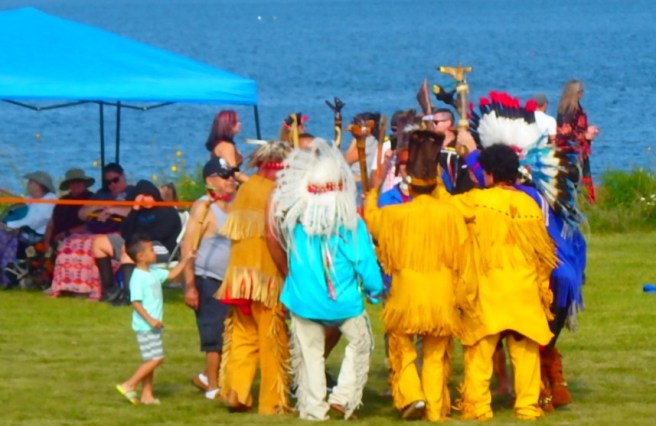
In one instance, in response to the playing of a kind of guitar, groups of up to 20 broke into dancing in a ring and singing “lo, la, lo, la, la, lo,” which works when you don’t know the words. For his part, the young musician was rewarded with gifts of tobacco and pipes, fawn skins, and snake skins up to six feet long, “which they used for girdles.”

But it was an uneasy relationship. Pring’s two mastiffs in particular terrorized the Natives. Anytime the sailors felt threatened, they’d release the big canines. As Pring recorded, the Wampanoag were more afraid of the two dogs than they were of 20 men.

The tension finally exploded when about 140 “savages armed with their bows and arrows” approached the barricade and a “a piece of great ordinance” was shot off in response as a warning and call to arms.

Recognizing that they’d worn out their welcome, the Englishmen quickly packed up and scooted off behind the protection of the mastiffs and set off for home while the Wampanoag set a mile-width of forest aflame and chased the ship in their canoes.

Of course, we’re never told what so soured the relationship. I doubt that the mariners were very tidy or respectful in their ravaging the forest, and I suspect that may have had something to do with their reaction.

Still, when the Pilgrims arrived in 1620, remains of Pring’s palisades were still visible.

What do you imagine had so enraged the Wampanoags?

Whatever it was, it seemed to set the pattern for much of what followed.

~*~

The episode is rarely told in American history, and, when it is, it’s quickly skimmed over.

Like so much of the New England record that follows, we’re rarely given the Natives’ side of the events.

One thing we can be sure of, though, is that there were huge differences in expectations and values, to say nothing of hygiene or manners.

For instance, as I’ve heard, the Wampanoag word for “treaty” translates as “making relatives,” which is hardly what English settlers had in mind for their part. Far from it. Something similar no doubt happened when the colonists “purchased” land from a sachem.

As the Wampanoag believed, “the land knows you,” more than the other way around.

Quite simply, from their end of these transactions, they were betrayed.

~*~

These days, residing in Downeast Maine – that is, Passamaquoddy country, which stretches over into Canada as well – I’m learning of another series of these one-sided deals.

Joe Clabby’s excellent A History of Eastport, Passamaquoddy Bay, and Vicinity chronicles much of the federal and state maltreatment, misrepresentation, and mismanagement regarding the tribe and its members. One instance, by no means the most outrageous, is this, from 1950: Indian Agent “Hiram Hall allowed the state to charge the Passamaquoddy Fund $8,000 per home for home construction (the homes are worth only $2,500).” This came more than a year after the tribe requested that the state remove him for misappropriation of state aid, favoritism, and disinterest in tribal government.

Driving to and from Eastport, I pass many of these houses, now in serious need of repair. Don’t blame the residents.

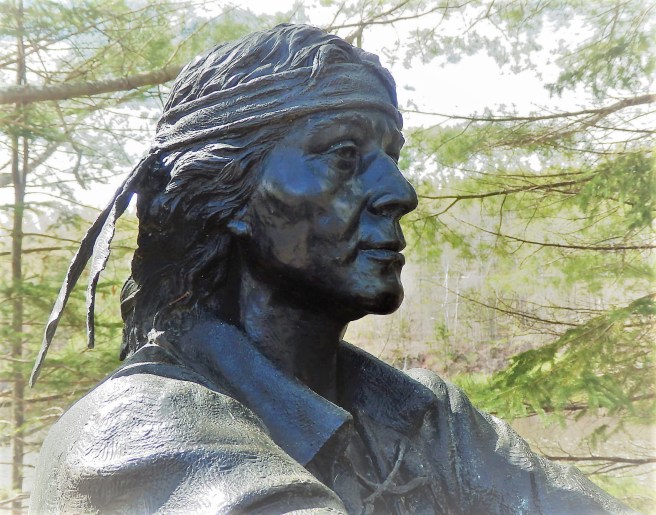
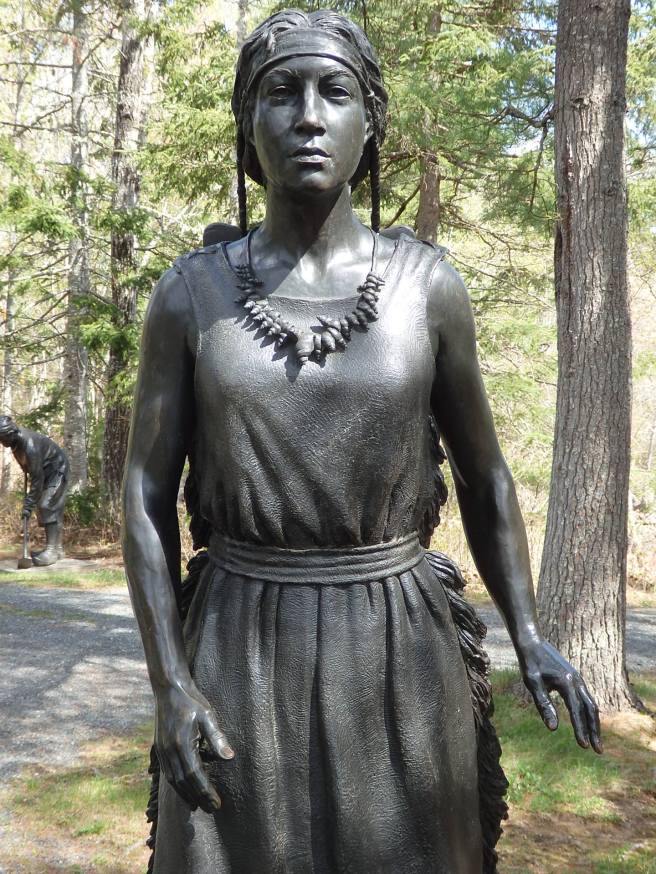
As I relate in my new book New England relations with the Natives got off on the wrong foot, starting with the kidnapping of Squanto and four  others. (Virginia hadn’t done any better.)

Shame, shame, shame.

Food as religion

Perhaps you know the counsel, “’Eat to Live,’ rather than ‘Live to Eat.’”

Still, a big change has occurred in America in the past half century. While the impact of organized religion has declined, a quest for a rich, even exotic, cuisine has flourished. As I posted a few years ago, dining out became the major fine art form of our time, rather than music, theater, film, or dance.  It’s the ethereal experience, the sensual transcendence, that’s the goal – ultimately, subjective rather than objective, heightened by long exposure to the field. Examples? Just look at the restaurant and wine reviews, along with their arcane or cryptic dialect.

Well, that also takes it into the realm of spirituality and religion, too, although that might also temper the feasting with periods of fasting. Maybe all of the limitations that have popped up, usually for health reasons or weight control, fit in here. It has been said that you can’t read the life of Jesus without getting hungry – there’s food or a food event at nearly every turn. (As a rabbi told me, that’s because Jesus was Jewish and in social settings, you always wind up with something to nibble in your hand.)

I’m left wondering how this translates to the home kitchen. Cooking skills, by and large, seem to be less universal than in the past, and time to devote to food preparation usually comes at a premium. Is takeout a kind of sacrificial nod to the food gods?

One thing I will say in all of the transformation. Thank God for the microwave oven.

In the comfort of my own home

Oh, the joys of online streaming! In my case, music, classical and jazz. Or when everyone else is up visiting, what we’re watching on the big screen. The one I call the wall of death, when it’s black with nothing on, or even when it’s blazing action blood, aliens, car crashes, and meaningless gore.

Yeah, I love having my beloved circle spending time in this place that’s ultimately theirs. For now, it’s like our extraordinary tides. Hopefully, I can roll with it.

Call me a fuddy-duddy, one living in a remote fishing village with a lively arts scene on an island in Maine, but that doesn’t mean I’m isolated from what I might be dialing in on the radio in Boston or New York, much less attending live. I have an ear on weekly orchestral concerts or Metropolitan Opera, for starters. And we do have some incredible live performances here, musical and theatrical, just less frequently. Oh, my, do we! Many of them are only eight blocks from home, an easy stroll.

Well, the opportunities for ethic food deliveries are another matter – even pizza. Things you might take for granted. But that’s offset by things like fresh scallops, which you’ll never eat anyplace else.

I’m not so sure how I’d feel about all this if I were exiled to some small place in North Dakota or the Upper Peninsula of Michigan, by the way. But this really feels like home.

One thing for sure. I had no idea this was my destination, back when I was in college back in Indiana. But I really have no complaints, other than trying to keep warm through deep winter.

Not to get too sentimental, but …

What is life without memories?

The most tragic part of Alzheimer’s is what happens when one crosses that threshold and leaves the connecting memories behind.

Quite simply, stories – and storytelling, one way or another – are essential. Stories are, after all, ultimately memories within human existence, no matter how fanciful or mythical.

How else do we remember where we are in the universe? Or even why?

There are good reasons we swap stories, from pillow talk on.

Cutting to the core about Wagner

Is the German Romantic opera composer the biggest successful egotist in the history of art? (He couldn’t even compose an effective symphony, yet look, he couldn’t trust anyone else with a libretto, either.)

He was definitely stuck in a Madonna/whore complex regarding women and, more specifically, women within further Roman Catholic entanglements like relics and grails and a sword or spear or two. Where was Freud? Talk about symbolism? It all gets pretty lurid, even before we get to the serious limitations regarding his immortals. I wouldn’t call them gods, exactly, but rather something more like today’s tainted celebrities and political hopefuls. What losers! So badly dressed, at that.

He definitely wouldn’t have gone for today’s fashion supermodels, either. Everything in his world is hefty, leading to some of the most sumptuous music ever. Seems nobody ever asked how he really felt about his mother. Give me some more sumptuous scoring, please.

And yes, he goes way over the top, including the seemingly endlessly boring stretches of boredom.

As Mark Twain said, he’s not nearly as bad as he sounds.

Not that he can apparently help it.

But then, as critic Alex Ross has elaborated, he’s also the foundation of Hollywood, from the plots and scenery all the way up. Think of the thousands involved in each movie and then the music.

For years now, I’ve been explaining opera as the movies of their time. Turns out to be more accurate than I imagined.

What cans’t thou say, in the midst of a popular concerto for the umpteenth time

The probing question by seminal Quaker George Fox, in a setting totally foreign to his comprehension, leads to the mystery of what makes something constantly new after any so many encounters.

Say a route you retrace daily. What do you discover for the first time today?

A spouse or a child, even more so.

And yes, a passage of Scripture or music.

Or whatever else is on your plate.

When accent marks count

Learning a foreign language includes acquiring an awareness of subtle distinctions. Oh, we really can have pity on anyone trying to navigate English as a second language!

Here are ten things I’m finding in Spanish.

  • Bebe / bebé … He/she/it drinks versus a baby.
  • Papa /  papá … A potato versus Daddy.
  • Mamá / mamaMom or mommy versus breast.
  • Esta / está … “This” versus he, she, or it is.
  • Si / síIf versus yes.
  • Hablo / hablóI speak versus he, she, or it spoke. In other words, that accent changes both the person doing the speaking as well as the tense.
  • Que / quéThat versus what.
  • Él / elHe versus the.
  • Sé / seI know versus reflective pronoun for he, she, it, even you.
  • Cómo / comoHow versus I eat.
  • Sólo / solo … With the accent, it can also mean “just,” in addition to “only.”

Of course, I don’t have those accent marks on my English keyboard or cell phone. Things can get really tricky when I’m trying to reply en Español.

Matchmaker, matchmaker, please take a bow

My novel Pit-a-Pat High Jinks gives good reasons for Cassia’s future father to celebrate once he’s finally met her mother, as he does in my novel What’s Left. She quickly becomes the love of his life, and they’re well matched.

Do you know any couples who were brought together by a sage introduction from someone who knew them both well?

~*~

Greek migrant woman at the close of the 19th century or the beginning of the 20th. How many of her customs continued?

Reasons I still love type on paper

Well, compared to ebooks and all this digital reading.

  1. I can caress it. Yes, even the texture and weight of the paper itself.
  2. Admire the spine on a shelf.
  3. Frame a page and mount it on a wall. (I’m thinking of a broadside, especially.)
  4. There’s marbling in some old editions, and end-papers. Nothing like that in ebooks.
  5. Underline and make notes as I read, enhancing the engagement.
  6. A sense of timelessness. Unlike a computer crash.
  7. Open an old book and there’s a special aroma. Hopefully not mold.
  8. Reading one works better at the beach, in full sunlight.
  9. Easier to find errors when correcting galleys or drafts.
  10. It really does feel finished.

The Achilles heel in Quaker culture  

When the Quaker movement swept through the English-speaking world and a bit more in the mid-1600s, it saw itself as primitive Christianity restored from before the time apostasy set upon the church – that is, sometime before the Nicene Council of 325 CE.

In theory, nothing could have been simpler or more welcoming than what they presented, an alternative Christianity for all, though in practice what emerged was often more difficult than many could follow, even before the disciplined rules of conduct set in.

I could lay out many of the obstacles to continuing the faith over the generations, even admitting that I wouldn’t have survived the lifestyle restrictions during much of that time, but more recently I’ve been seeing the most insidious impact was in the curtailment of emotion.

Yes, Friends were often seen as gentle and kind, but it came at a price. The Quaker culture that evolved, quite simply, suppressed any expression of anger – which was usually seen as leading to violence, which Friends abhorred – but only in recent decades has there been an acknowledgment that emotions don’t go away, and suppressing the expression of one curtails an open experience of the others. Burying anger, in fact, festers as depression, which can be glimpsed in the memorial minutes of many of the “weighty Quakes” of the past.

While moderation in daily life and meekness were encouraged, they could be performed thoughtfully or habitually without being deeply felt.

I’ve heard instances of old Friends’ reluctance to show emotion.

Greeting a son returned from wartime service with a handshake rather than a hug, for instance. My own family, several generations removed from its Quaker and Dunker (Brethren) roots, was similarly restrained. And, as has been said, the Hodsons didn’t know how to have fun. (When students at one Quaker school asked to have a fun activity, the elders had to withdraw to ponder the peculiar request and then came back with a proposal to paint a widow’s barn. An old Brethren, asked what he did for fun as a child, was perplexed by the very notion and finally replied he guessed it was bringing the cows in each evening.)

Then there’s the sly comment that passed among young Friends in the 1970s, asking if we knew why the old Quakers were so opposed to handholding. The answer? It might lead to premarital intercourse, not meaning sex but rather conversation.

There are also stories, usually told within families, of the individual who would never, ever, express anger only to have an offense fester, leading to deeply hurtful reactions in convolutions much later. You can guess, the baffling ex-mother-in-law, after the divorce, that sort of thing.

Not all birthright Friends, I should add, are so conflicted. Many I’ve known have been among the most loving individuals in my acquaintance.

But in looking at the decline of the faith over its history, I feel an awareness of the psychological undertow needs to be acknowledged, especially as we face the future.

Religion, as I see it, always has work to do to bring each person to a fuller experience of life.