How comforting when a few others independently come to my conclusion

Two examples:

  • The Dover Historical Society’s now ancient trolley tour that mentions the Providence ship’s landing. (Now, where did I come up with that?) It is crucial in establishing the early settlement date for what’s now the oldest city in New Hampshire, as I detail in my book Quaking Dover.
  • Someone else seeing the similarities between the slow movement in American composer John Knowles Paine’s second symphony and in Gustav Mahler’s much more famous and more popular fifth two decades later. Give originality and genius its due.


Opera fans have their memories, but few are like this

Thinking about arts performance scheduling and audiences has had me recalling some of the first operas I attended.

They were at the Cincinnati Zoo, at the corner of Erkenbrecher and Vine.

Don’t laugh. The performances were top-flight. The Cincinnati Summer Opera, as it was commonly known, was informally considered the summer home of New York’s Met, and it provided seasonal employment for members of the Cincinnati Symphony Orchestra.

The company had an impressive pavilion on the grounds, and visiting the animals before watching the singers was part of the experience, if you allowed yourself time. I especially remember being amused by the monkey island antics at intermission. And many of the singers, so I’ve read, humorously came to think of themselves as a special kind of animal.

Especially notable was the first time you heard a roving peacock screech. It sounded like somebody was being murdered and could happen at any time during a performance. Veteran singers used to wait to see if newbies could maintain their composure when the cry rang through the theater. In the opera world, this was an inside joke and a rite of passage, at least for those who passed the test.

I’ve been trying to remember how long the season ran, but there were usually four performances a week – one production on Thursday and Saturday, and another on Friday and Sunday, if I have it right. In the late ‘60s, that spanned six to eight weeks, best as I can recall.

Think of that – 12 to 16 different productions each year. Only a few big houses in the world surpass that.

But at its height, there were 18 different offerings over 61 performances in a ten-week season. Where did that many operagoers come from out in Ohio and neighboring Kentucky and Indiana?

The tradition originated in 1920, making the Cincinnati Opera Association the second-oldest opera company in the U.S., and continued until moving into the renovated and air-conditioned Music Hall in 1972, where the season still happens each summer, though on a much different scale.

The collapse of NBC

I don’t mean the cracker company, either, the one known as Nabisco, for National Biscuit Company. Or was that Baking?

No, I’m thinking of what was once the broadcasting monolith, first in radio and then in television, the one that projected a peacock logo at the onset of color programming.

The financial struggles for traditional mass media in the digital age are well-known, but broadcasting has been hit perhaps even more drastically than newspapers.

As a child of the ‘50s and ‘60s, I’m still shocked at the disappearance of AM radio, especially its powerhouse clear-channel signals. My daughters, savvy as they are in tech matters, don’t even know what AM is. These were coveted media, and getting a license for even a daytime frequency in a metropolitan market could be a coup. Think of WKRP in Cincinnati for the insider view. Instead, though, owners have allowed many of these to go silent. As for FM? The real competition is from streaming and satellite.

We gave up our TV years ago after realizing that whatever we wanted to watch was available online. Still, I was stunned the other day to discover that NBC no longer has an on-the-air outlet in Boston. That was unthinkable. Nobody would give up a network affiliation and go independent. Yet, as I learned, it isn’t anymore.

The trigger came the other morning when I was gazing at my Yahoo news feed and clicked on the latest Patriots football gossip from NBC Sports Boston, one of the primary regional sources. Wait, I thought. Why isn’t this identifying a station? Or at least a channel?

And that’s when I went down the proverbial online rabbit hole and found out that the once mighty network exists solely on cable in the nation’s tenth largest media market. Even the Tonight Show.

As for its entertainment lineup?

There are good reasons we’re turning to the new seasons at Amazon, Netflix, Hulu, etc. Besides, we can watch those shows at our convenience, not the network’s.

I must admit finding it hard to keep up with all of these changes. How about you?

Am I the man you wanted me to be?

The question is asked by Zorro in the opera by Hector Armienta recently premiered in Albuquerque and Fort Worth. This version of the story is much more subversive than the one I encountered as a kid. And the musical drama is, from what I heard on the radio, very much worthy of retelling.

What stunned me in the question that it’s directed toward the father. How often in today’s Western culture does a son turn toward his father that way, rather than his mother? Not in my experience.

It is making me look toward Dad anew and suspect I hadn’t failed him that much, after all. But the question remains disturbing and enriching, all the same.

How do we males find this working as well in terms of our wives – or lovers? Or our children?

This really gets serious – and unending.

Does every act of creation begin with demolition?

Or at least making a mess?

The observation here originates with an artist’s amazement at the mess at the beginning of the book of Genesis in the Bible. As panelist on the Bill Moyers’ PBS series, he picked up on the matter of chaos at the outset. Not the blank canvas but rather all the surrounding disarray, probably including thinking.

More recently, I’ve been seeing that in our own home renovation project. For a while, there was a lot less of our house than when we began. How quickly the Dumpster got filled and another delivered!

As for a film society’s choices

The Eastport Arts Center was a major factor in my decision to relocate here. Quoddy Voices is one of its constituent groups.

Another was the Northern Lights film society, which only recently resurfaced but greatly diminished after the Covid hiatus.

I’ve found its offerings invigorating and sometimes disturbing. The deep discussions that follow the showings are especially valued, even for the recent Carnival of Souls and Night of the Living Dead horror vein.

What was perplexing was that the society was essentially two people, one a veteran of its 47-year history, give or take a few seasons.

They were asking those of us who kept coming each week for our input regarding possible selections from the two vendors available to us. Learning of the licensing hurdles for presenting movies even at a nonprofit arts venue was daunting. I’ll spare you the details.

I will, though, share my response to the possibilities and the situation we’re facing.

~*~

As I wrote:

Seems to me our thinking about the film society comes down to building a larger audience. That, in turn, adds considerations of “branding” – the image the public has – as well as the types of films we air and even our geographic range of appeal.

What do we show this week that will bring people back for our next film? That is, what’s our continuity or identity? What has them awaiting the next round? Are we an “art” films circle, an awards-driven following, a sensual experience sharing group? Do our screenings enhance or compete with other arts ventures in the region?

If we’re limiting ourselves to two showings a month, let me suggest making those the second and third Sunday evenings of the month. I’m feeling there might be a “bounce” in favor of that second showing, perhaps even with some common thread for the month. Let me also push for 6 pm so more viewers from throughout Washington County can readily attend. (Note, too, the problems of getting anyone out on a Sunday night, plus the competition with the winter Sunday afternoon series at the arts center and Stage East matinees.)

My thinking is that we might get some synergy and energy that way, especially in getting the word out. The Tides comes out on the second Friday (we might have occasions when the showing falls a week before that).

Orchestras and live theater companies have long relied on season subscribers but have been finding, even a few decades before Covid, that the model was eroding. Festival programming – a cluster – has been one alternative that’s created excitement and ticket sales. I’m seeing that as something that might work with the second/third Sundays model, perhaps even giving us the option of adding a fourth Sunday for a suitable extension.

That said, we are also shaped by the collections of our two distributors.

At the first, I’m steering clear of the traditional art films for now – the Italian, French, German, Japanese, etc.

Instead, I’d look at the USA (not Hollywood, for the most part, which is the global conglomerate movie center) and three Canadian films, many of them documentaries, and at the Latin films – Mexico, Cuba, Spain, Portugal, Brazil. Viridiana stands out on that front. Washington County has a large and largely overlooked Hispanic population.

Cluster options here: Orson Welles, Robert Downey Sr., Chaplin and Harold Lloyd, silents The Freshmen, The Kid Brother, The Most Dangerous Game, and King of Kings (if we can keep a straight face), Norman Mailer, John Huston (Under the Volcano and Wise Blood).

Among the docudramas etc.: A Brief History of Time (Stephen Hawking), Burroughs: the Movie, Don’t Look Back (Dylan), For All Mankind (astronauts), Gimme Shelter, God’s Country (Louis Malle), Jimi Plays Monterey or Monterey Pop, Louie Bluie, Multiple Maniacs (John Waters), Eating Raoul (Warhol).

Titles that catch my attention: The Baron of Arizona, The Beales of Grey Gardens, Border Radio, Buena Vista Social Club, Cameraperson, Carnival of Souls, Chop Shop, Clean Shaven, Desert Hearts, Detour (possibly anchoring an international film noir survey), Dillinger Is Dead (OK, it’s Italian but still), possibly with I Shot Jesse James, Drylongso, The Honeymoon Killers, Push Cart Man, Paris Texas (yeah, it’s French), A Poem Is a Naked Person, Poto and Cabengo, Routine Pleasures, Smooth Talker, Slacker, Sweet Sweetback’s Badass Song, Symbiopsychotaxism, Twin Peaks, Thank You and Good Night, and The Watermelon Woman.

Looking way ahead, sometime it might be fun to do a festival based on Japanese Godzilla fixation.

And then, at the other: For the most part, these offerings strike me as highly commercial creations most people stream at home. Still, American audiences look for star-power rather than directors, so this might provide some extra punch for attendance. That said, some offerings to consider: Barbie, Oppenheimer, Gran Turismo, Joy Ride, Insidious, Tar, Asteroid City, Dear Evan Hansen, The Little Mermaid (with ArtsWalk), The Outfit, Samaritan, The Black Phone, and Cruella (if it’s not too Disney).

~*~

Well, we’ve had a second meeting and set a course for the next year, one that seems to be generating a buzz. We’re focusing on one boffo film a month, with both a matinee and evening showing, and tying the offerings into other events happening in town, when possible.

The first one is indeed Barbie on the Thanksgiving weekend.

The Metropolitan Opera broadcasts take on a new tone

One of the benefits of donating even a modest amount to the Metropolitan Opera’s broadcast fund is that you receive an annual schedule booklet, 36 colorful, glossy pages with the casts, broadcast times and estimated lengths, and summaries of the plots. The booklet arrives a month or two before the next season begins, and I keep mine as wonderful future references.

The upcoming Saturday matinee broadcasts, which start airing on Dec. 9, have already been controversial, due to the company’s shifting focus toward increased contemporary and sometimes realistically gritty works. The first presentation of the season, in fact, is Florencia en el Amazonas, inspired by the writings of Gabriel Garcia Marquez and only the third Spanish-language opera to be performed at the Met. (Carmen, after all, is in French and will be heard on Jan. 27.) Other works from our own era are Dead Man Walking (Jan. 20), X: The Life and Times of Malcolm X (Feb. 3), Fire Shut Up in My Bones (April 27), John Adams’ opera-oratorio El Nino (May 4), and The Hours (May 18).

That unprecedented string of operas by living composers doesn’t mean the usual masters aren’t on the menu. Mozart (3), Wagner, Verdi (4), Puccini (3), Bizet, Gounod, Donizetti, Johann Strauss Jr., and Gluck are all in the lineup, with two of the dates yet to be announced. Conspicuously absent is Richard Strauss.

Two of the archived presentations feature my favorite-ever conductor, Max Rudolf: Mozart’s Le Nozze di Figaro on Dec. 30, with Victoria de los Angeles and Cesare Siepi, and Donizetti’s L’Elisir d’Amore on April 6, with Luciano Pavarotti, Judith Blegen, and Ezio Flagello. As one conductor once told me, Rudolf could have been famous, if he had wanted that. At the Met, he worked largely behind the scenes as Rudolf Bing’s artistic administrator before going to Cincinnati and rebuilding that city’s great orchestra.

Also of note is that the long-running broadcast series has a new sponsor, the Robert K. Johnson Foundation, only the third in its history. The series was underwritten by Texaco from 1940 to 2003, followed by Toll Brothers luxury homebuilders (2005 to 2023).

Gee, have Texaco’s red-star gas stations been gone from the landscape 20 years already?

Even tradition changes.

The one place I’ve never wanted to live was the suburbs

I love big cities, even have a certificate in Urban Studies, but can’t afford them, not for long.

Internet, at least, allows me some important virtual connections that way, not that it includes strolling into ethnic restaurants or great museums.

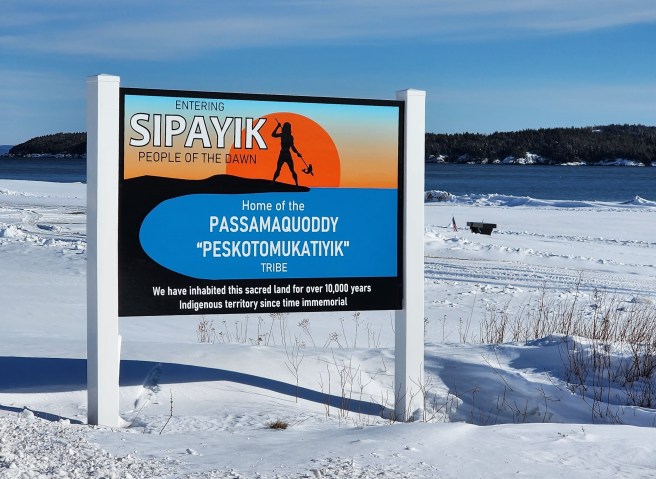
On the other hand, I’m living in a place others consider ideal for a vacation.

And for me, it’s an ideal writer’s retreat or de facto arts colony.

The ability to walk to so much of what I want in daily life is a huge consideration.

Time in the creation of poetry and much else

Robert Bly once said that to write a line of poetry requires two hours. Not so much for the actual writing.  Not even for the inspiration. Though certainly for the revision.  As well as compression and redistillation. And more revision.

His estimate, to me, seems quite optimistic.

I’m thinking it can be applied to many more examples of where human creative action is involved, too.

Go ahead, name one where you wish you had more time for the project.