Join us in a free concert for Sanctuary

Dover Friends Meeting is presenting a free evening of song, scripture, and reflection on the essence and intention of Sanctuary as we seek to build and sustain unity in our leading to offer mercy and love to those in need.

The hour-and-a-half celebration takes place Saturday, March 13, from 7:30 to 9 p.m., and you are welcome to join with us via Zoom.

For years, our community of faith has enjoyed an annual Arts & Letters gathering around this time each winter, an event where we could enjoy the wide range of artistic abilities among us, both amateur and professional, by Friends of all ages. Visual arts and crafts, dramatic readings, original poetry and prose, dance, video productions, gymnastics, even self-defense, and of course music have all been abundant. And this year, as a consequence of Covid, the occasion is taking yet another turn, one with a theme and a venue that will allow folks from all around the world to meet with us in our little corner of seacoast New Hampshire. I already know of one song written especially for this occasion.

Welcome to Dover Friends …

Remember, it’s free, but registration is required. Click here!

Maybe it’s not really news but it counts

Heyduck

In my novel What’s Left, Cassia’s aunt Nita writes a daily newspaper column focusing on local people and their real interests. It’s not all that different from CeCe Cobb’s in my earlier novel Hometown News, but Nita’s is far less corny and far newsier.

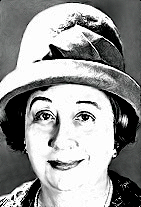
In Dayton, where I grew up, it was Marj Heyduck of the Journal Herald. Her mug shot on her daily column featured a new hat each week as a signature touch. And in Cincinnati, it was TV host Sally Flowers.

But I can think of others who just seem to know everybody.

Does your community have a local voice? A minor celebrity or just a naturally curious friend of all?

Best hippie towns in Midwest

The vibe lives on. Here are some hot spots in the American heartland:

  1. Ann Arbor, Michigan
  2. Bloomington, Indiana
  3. Decorah, Iowa
  4. Duluth, Minnesota
  5. Eau Claire, Wisconsin
  6. Lawrence, Kansas
  7. Lincoln, Nebraska
  8. Madison, Wisconsin
  9. Makanda, Illinois
  10. Yellow Springs, Ohio

(Disclaimer: I’m relying largely on Thrillist and have been to slightly fewer than half of these.)

~*~

Looking across the country, we’d add Athens. Georgia; Austin, Texas; Berkeley, natch; Port Townsend, Washington; Cambridge and Northampton, Massachusetts; and Burlington, up in Vermont. Again, half of these are by reputation, not direct experience.

What other towns should be noted, anywhere in the world?

Enumerator insights

After 7½ years of retirement, I returned to the workplace part-time for two months this year.

The job was supposed to begin in May and run through the summer but got pushed back to August and then abruptly cut off at the end of September.

I was a federal agent.

The private identifying details we recorded are sworn to secrecy – or the equivalent, for those of us who follow Scripture and refuse to take oaths. But I’m still trying to put the experience into perspective.

For nearly 40 years, I’ve worked through the available Census files in my genealogical research, as you’ll see in the posts on my Orphan George blog. It’s become something of a specialty for me, along with the Quaker minutes. I mean, it’s how I learned that Grandpa married the girl next door. There’s also one set of ancestors who were recorded twice in 1860 but with enough differences to make me suspect there were two Jacob Ehrstines closely related – one detail in the 1870 Census cleared that up. And I have one ancestor who shaved another year or two off her age every decade, though I have no idea whether it was intentional or out of ignorance, considering that Quakers didn’t celebrate birthdays.

So I set forth in part out of gratitude for those earlier enumerators. The first ones, incidentally, were federal marshals. This was that important.

What surprised me as I hit the streets and knocked on doors on behalf of the Census Bureau was how physically hard it becomes – bending over an iPhone placed on a clipboard to input data quickly had my back aching, especially. For a dozen years, I managed to work a double shift every Saturday as a newspaper editor, yet here I was pushing my limits when it got close to five hours a day. (Wimp!) Six really maxed it. An article in the Washington Post enlightened me that I wasn’t alone here, so I couldn’t blame it all on age.

I am surprised by how many Americans don’t know what a census is or that it’s required every ten years or that they don’t want to be recorded.

Well, I now also have a clearer understanding of why one household might disappear ten years later but reappear again in a subsequent Census. You know, be there in 1800 and 1820 but not 1810.

I am also surprised how much of my brain space got wrapped in a job again. You know, replaying cases and wondering how I might have done them differently. This was supposed to be something I could let go of at quitting time. Not so, though.

Inputting data in an app on an iPhone still strikes me as tedious. You might have guessed I pretty much hate texting, except as an alternative to an actual phone call. (Emails seem to be my preferred form of communicating these days.) How do kids do it, texting with their thumbs? Or are their exchanges all typos?

Oh, yes, another confession. I’ve typed for nearly six decades now. Self-taught, earned my livelihood with it. Written whole books, even. But ask me to re-create a keyboard from memory, and I have no clue where the individual letters of the alphabet are. The memory is all in my fingers, not my head. Seriously.

So I can’t imagine keyboarding with my thumbs. As I was saying about the kids? Besides, thumbs are awfully fat for those tiny screens. My dry fingers had enough trouble connecting, even before getting to any issue of accuracy.

In my rounds, I had a few near falls (including one wooden step that wasn’t nailed down anymore), a couple of dogs who could have turned nasty, some close calls in traffic, but emerged unscathed.

Some of the most enjoyable interviews turned out to be those where I could put my very limited Spanish to work. Other enumerators had backed off, so I guessed it was up to me, and somehow, we got the required data, often with a lot of laughter. Yes, I made some funnies.

The best part of the job, though, was meeting people who, for the most part, were warm, friendly, helpful. I have a much clearer understanding of the neighborhoods around me.

Would I do it again?

No, I’ll be too feeble – or feebleminded – in another decade.

But maybe you’d want to give it a crack.
I’m feeling suspended in time, as in limbo

A curious set of emotions has set in for me. As much as I love living in Dover, I feel myself separating from it. There’s a sadness, as well as the excitement of new adventure ahead, though we have no idea exactly how soon.

Next week? Next month? Next spring or summer? We don’t know yet.

We had enough surprises in trying to buy this place, in what seems a life ago to me.

So I anticipate a crush of time-consuming work ahead in packing and then unpacking our goods, as well as the rounds of changing address and establishing new connections, and that in turn has me hesitating to step up to volunteer for tasks in the groups where I’m a member. Yes, I’m distancing.

It’s happening at home, too.

Moving around the garden, for instance, when we realized we wouldn’t replant garlic bulbs this fall, not here. Or looking at my fern beds and asparagus patch, knowing I’ll definitely miss them.

Or facing household breakdowns, which seem to be multiplying. You know, let repairing them become someone else’s problem. They probably wouldn’t like the color of paint we use, anyway.

Things we’ve never really liked about the house itself but somehow accepted now are acknowledged as irritants. That sort of thing.

I keep thinking we could easily pour another hundred grand into this domicile, if we had that much, but it would never be want we really want or, at this point in our lives, fit what we need.

This all feels so strange, given that I’d settled into a kind of familiar lazy comfort with things.

All of them about to be uprooted.

Cash in a time of Covid

Well, this used to be the start of the Christmas shopping season, and with Coronavirus I’m assuming that our Thanksgiving gatherings are smaller than usual. (Anyone sitting down to a turkey TV dinner rather than a family gathering?)

Traditionally, today is a day when we’re supposed to think about what we’re grateful for during the past year, but we’re more likely reflecting on what we really miss.

Those face-to-face times when we’re altogether, especially. (Including those casual opportunities to pass along treasures to others, too … as I’ve pondered while culling my bookshelves.)

It’s even having me admit how little cash I’ve used since March, instead putting most of my small purchases “on plastic,” the way, say, most kids have long been doing. For just a cup of coffee?

I’m wondering what else, besides cash, has been a victim of this pandemic.

High on my list would be communal worship, singing together, dancing, concerts and plays, swimming and similar exercise as well as sporting events with live crowds, study groups, parties.

For the record, I’m grateful nobody among my family or friends has come down with Covid and that none of us has been evicted. Also, for one in particular, being furloughed opened the door to an even better position. So the list of positives begins to emerge.

How about you?

It’s surprising to see how much early morning commuter traffic there is here

As a line in one of my poems goes, New Hampshire is for the most part a daytime state. The thought arose in downtown Portsmouth around six o’clock on a Tuesday or Wednesday evening around  this time of the year nearly three decades ago, and it still holds.

For added perspective, let me add that Portsmouth was – and until Covid – continued to be the place with the most nightlife in the Granite State, yet the center felt deserted that evening, save for a few furtive figures dashing from doorways and down the sidewalks.

Well, tourist season had long passed and the weather was definitely frigid. I imagined that everybody was already huddled inside somewhere.

Lately, I’ve been thinking there’s a good reason for that daytime state observation. The bulk of the populace in the state has a long daily commute to and from the workplace.

~*~

When I lived in Manchester, my apartment was only a few miles from the office. I had backways to zip from home to work and back.

In moving to Dover, things changed. My hour-long daily commute over Manchester involved part of the afternoon rush hour, which blessedly was headed mostly in the opposite direction. For the late-night return, the roads were nearly empty.

Working the vampire shift or weekends definitely gives you a different view of a certain subculture of society. You can shop or run other errands when so many others are locked away on their jobs.

One thing I learned to avoid in my free time was trying to head south, meaning toward Boston, any earlier than 9 a.m., when the bottleneck at the Great Bay bridge would finally clear out. (After years of construction, that problem’s finally been alleviated. Hooray!)

Other than that, I haven’t thought much about rush hours, but recently, given repeated opportunities to dash across the state in the morning on behalf of my elder daughter’s business, I’ve been retracing my former daily commute plus a little more, just at a much different hour.

Hoping to avoid the morning rush hour, I’ve set forth as early as 5:30 but been surprised by the amount of traffic already on the road, significantly more than I’ve been seeing at 8 or 9 in the evening. By 6:30 a.m., the headlights streaming out of seemingly rural locales (what we call towns or others might consider townships) is quite steady – in one direction. Many of them, I’m guessing, are headed toward jobs in Massachusetts, ones that might start at 8 or 9.

As I ponder the flow, I’m wondering how much heavier it was before Covid and all of the work-at-home shift that’s followed. Did the drivers I’m seeing previously have to leave that much earlier to accommodate the heavier traffic volume?

Still, if you’re among those who have to rise at 4 or 5 to commute four to six hours a day, that leaves little time for evening activities. It strikes me as a high price to pay, but then so is the cost of housing in the Bay State, where most of the good-paying jobs are.

Living into the Kingdom

It really is a revolutionary concept, presented toward the end of the Lord’s Prayer taught by Jesus of Nazareth.

To invoke God’s kingdom on earth as well as in heavenly spiritual expanses takes us way beyond nationalities, social status, even economics. It transcends our experience in everyday relationships. It’s a call for justice and peace, especially.

The idea of kingdom is, of course, unfathomable for Americans, as is a dictatorship or any other form of authoritarian rule. We can try to translate it as commonwealth, dominion, realm, or sphere, each with its own limitations. The Blessed Community comes closest for me.

Some of us take this seriously. What steps can we take to bring this closer? How do we honor the creation we’ve been given? How does governing by love rather than fear really appear?

It’s something we can take baby steps toward in our families and local congregations. It’s not always easy, but we need practice.

I find it a more engaging approach to following Jesus than the question, “Are you saved?”

Especially with the kicker, “as your personal lord and savior.”

I believe the concept of Living into the Kingdom is more essential than the Resurrection.

Yes, that is startling, even as I write it.

But it is also of the here-and-now.

How are you Living into the Kingdom?