On the continuing toll of the Internet on the livelihoods of creative souls

Fellow blogger Gary Hart recently had an eulogy for Outdoor Photography magazine, which prompted this comment from me:

“Your post mortem is one more story of the toll the Internet is taking on the income of many creative individuals. Freelance writers were devastated early on when their secondary markets for republication withered (anyone could already find the piece online). In professional photography, you lost sales to people who found your images posted online and were content with copies they printed out at home.

“Magazines faced a double whammy as content moved to the Web. Not only were sales and subscriptions shrinking, so was advertising, which paid most of the bills. In the case of photography, the products themselves were being rendered obsolete. Film, chemicals, papers, enlargers, darkrooms, and so on became ancient history and then, for the most part, so have cameras. What I’m getting with my cell phone, for instance, is unbelievable (though I know its imperfections, too).  As a parallel, you can discuss what happened to the professional wedding photographer.

“Finally, as much as I love paper, I’m using far less of it as either a writer or a reader. Downsizing is one reason but not the only one.”

An island garden isn’t entirely quaint

I’ve loved the phrase, “island garden,” even before we relocated to Moose Island, Maine.

The resonance comes in a classic book of that title by poet Celia Thaxter from her efforts on Appledore Island at the other end of the state. Her volume is illustrated by the great American Impressionist painter Childe Hassam, an addicted summer visitor. He made some stunning paintings on the island.

My wife and I did make a pilgrimage to the site, which once included a hotel considered by many to be America’s first artists’ colony. Nowadays, you do need permission to land there – we arrived on a research vessel as guests of the University of New Hampshire, which shares a major ornithological center with Cornell in what had been a World War II watchtower and bunkers.

Moose Island, in contrast, connects to the mainland by a causeway – no need for a ferry – but it’s still an island, an element that grows in awareness the longer I’m here.

Celia’s text often laments the arrival of garden slugs on the previously uninfected island, a pestilence we certainly understand, even before relocating from New Hampshire.

Alas, we do have those slimy destructors here. Apparently, Celia was unaware of the advantages of using seaweed as a mulch, one that repels the offenders in both its fresh and dried states. It’s something I’ve previously posted on. And something I need to reapply here.

While her garden was mostly flowers, ours skewers more toward edible items. And that adds a further layer of offenders, as you’ve been seeing here: deer. The ones with voracious appetites.

Wilting as they lose local awareness

As a newspaper editor, I was often startled in looking at coverage from the other side when something I was affiliated with was subject to a story. Or even more startling, when I was quoted and seeing how it looked it print.

It was like working in a restaurant kitchen and shipping dishes to the dining room and then, on a night off, going in for a celebratory dinner.

Seeing a report through the readers’ viewpoint really could be eye-opening. It’s not the “names-is-news” philosophy that many small-minded editors and publishers pursued, either. That approach could be even more boring than reading the phone book. Remember those?

The backbone of most of American newspapers has been the way they connect with their local communities. As one wise editor once told me, it should be news of local interest, rather than just happenings in the place itself. I spent much of my career trying to open parochial outlooks to an awareness of the wider world, both directions, and I do believe that can happen and even be exciting.

When I was calling on daily newspaper editors across the Northeast as a syndicate features field representative, I was surprised by how few of the papers gave a taste of a unique nature of each of the communities. Many of the editors thought of local news as city council and school board meetings plus high school sports scores. As I argue in my novel Hometown News, the real stories – the kind that come home – are found elsewhere and require more reportorial digging. That’s one reason I’ve long advocated local columnists (real writers, not dilettantes, though skilled amateurs are welcome). Few papers had even that much.

When former U.S. House Speaker Tip O’Neill famously proclaimed “All politics is local,” he understood those roots.

~*~

A decade after I’ve left the newsroom, I’m directly experiencing that again, or more accurately, its lack.

In the past 20 years, the number of people employed in newsrooms at American papers has dropped about 60 percent. That leaves far fewer people to write about what’s happening or even be aware of what’s going on at the grassroots level where they live. Much of the nuts-and-bolts editing is being done in clusters far from the paper itself, removing another layer of local nuance and understanding.

In my case, in my participation in events celebrating the 400th anniversary of the founding of Dover, I’m seeing the local paper is doing far less coverage than I would have expected. Not after the family that owned it for generations finally sold out to a media conglomerate.

That disconnect isn’t just print media, either. New Hampshire Public Radio no longer originates any content in the Granite State, as far as I can see. Two decades ago, appearing on one of its shows would have been a natural for a local author like me.

Quite simply, it’s disappointing and a bit scary.

This free opportunity might look crazy, really

Offering the ebook edition of my new book, Quaking Dover, for free might look crazy, but let me put it into perspective.

Books get lost in the outpouring of new publications these days. Yet for publicity, nothing beats word of mouth, especially when it comes to getting folks to pick up their own copy.

In the old days, I would have sent my paper editions to potential reviewers, but there was no guarantee that would lead to any results. I know, having picked up many free books as a newspaper editor that way, as well as my experience with my first novel, Subway Hitchhikers.

So let’s cut to the chase. Smashwords.com has an annual promotional sale this month, and I’m participating by offering my latest book for free, hoping that if you like it, you’ll give it a brief review on my page there along with five stars. Maybe you’ll even want to give paperbook copies as gifts as a result. Either way, I get a much-needed boost. We’re back to word-of-mouth.

But first you have to download it. Just go to Smashwords and follow through.

Honestly, it might even leave you prepared to order more of my ebooks once you’re comfortable with the process.

Is it a deal?

Free, this month only

Do you read ebooks? If so, here’s an offer you really can’t pass up.

For the month of July, the digital version of my history Quaking Dover is being offered for free at Smashword.com’s annual summer sale.

The paperback edition has been selling very nicely, thank you, but I do want to share the excitement during the city’s 400th anniversary and, well, here’s one more opportunity to get in on the story. Yes, little Dover is older than Boston, New York, or, well, any other city along the northeast coast other than Plymouth and Weymouth, Massachusetts.  (Bet you didn’t know that!)

For details on obtaining this limited-time offer, go to the Jnana Hodson page at Smashwords.com.

It really is quite a tale.

As a professional historian friend said after one of my presentations

New England history is all through Harvard. And then Yale and Williams College.

Except, of course, a few mavericks like me. (Even though, humbly confessed, I’m not a historian.)

Well, you do have another opportunity to see why he said that if you register promptly for my free Zoom presentation from Cape Cod at 12:30 Sunday afternoon ( https://bit.ly/QuakingDover ).

Here’s hoping to hear from you there!

All advocates of peace are invited

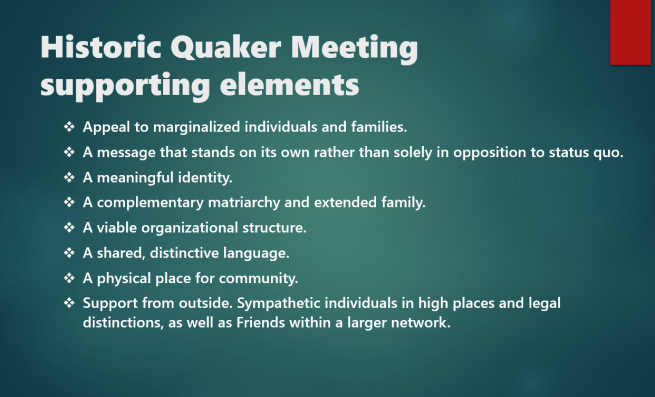
I didn’t make these points this baldly in my book Quaking Dover, but as I’ve prepared for my upcoming presentation from West Falmouth Friends’ Peace and Social Order committee’s Zoom presentation, I’m seeing these elements at play.

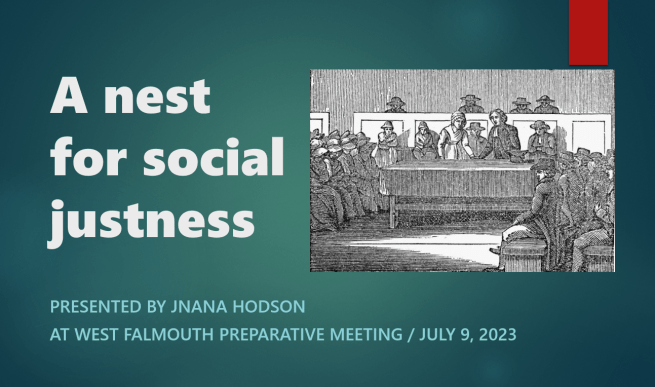
I do hope you can join us online for this free presentation on Sunday, July 9, at 12:30 pm. Please not that preregistration is required at https://bit.ly/QuakingDover

You don’t have to be a Quaker to participate, either. (Insert smiley face emoji if you must.)

Just how do peaceable communities emerge and survive?

Join me virtually at Cape Cod

I’d love for you to join me on Cape Cod on Sunday, July 9, for a Zoom examination of ways a faith community can sustain a unique witness in the face of strong resistance. I do expect some lively discussion, based on my book, Quaking Dover, but you don’t need to be a Quaker to participate.

Do note that preregistration for the free event is required  (https://bit.ly/QuakingDover).

Hey, it’s a great place to be on a day in July!


This feels like a ‘welcome to the club’

Coming up at the Phoenix wine bar downtown on Thursday from 6-8 pm, I’ll be one of six local writers reading from our books.

It’s organized by Catherine SJ Lee, whose wonderful collection of short stories Island Secrets is well worth acquiring. One secret she doesn’t mention is how many fine writers and other artists dwell on the charming island I now call home. Honestly, I feel honored to be among those invited to read and am certainly looking forward to personally meeting others.

Each of us will present a 15-minute selection of our work and then engage in a meet-and-greet over a bookselling and signing at the end.

These days, presenting my case without including an accompanying PowerPoint does feel a bit strange. Still, as a writer, I do love having the text itself be the sole focus, as I have enjoyed in our monthly open mics at the arts center.

The wine bar event is part of the first ArtWalk weekend of the season in Eastport and Lubec. Other planned activities include gallery tours, rock painting, sidewalk chalking, games, musicians around town, an outdoor contradance, and perhaps a street dance or two.