GREETINGS FROM THE PAST

Back when I was living in the townhouse apartments “on the hill,” the preschool tot next door was learning he could manipulate me presumably, any grown up into waving to him. All he has to do is wave first.

At first, he was pretty shy, wondering whether he should wave at all when I wiggled my hand or arm in his direction before driving off to the office or the grocery. In time he became more intrigued, hovering at their open front door or staying close to his mother if she were sitting at their stoop.

And then he became bolder. One morning, he parted their upstairs blinds and cried out from the window to me, just so I could see his smile and wave.

The next day, he told me as he rode his bike around the parking lot, “I runned into your car.”

“Oh, where’d you hit it,” I replied, not the least worried, not with all the rust spots that are appearing simultaneously on my well worn vehicle.

“On the tire!” he piped up as I performed a mock inspection.

And finally, he came charging out the door just as I was about to drive off, grinning and hailing me in huge motions. “Welcome!” he cried out. “Welcome to Walmart!”

“Well, say `hi’ to Sam for me!” I chuckled.

His father, a few steps behind, shrugged as they set off on their errands.

RIVERSING

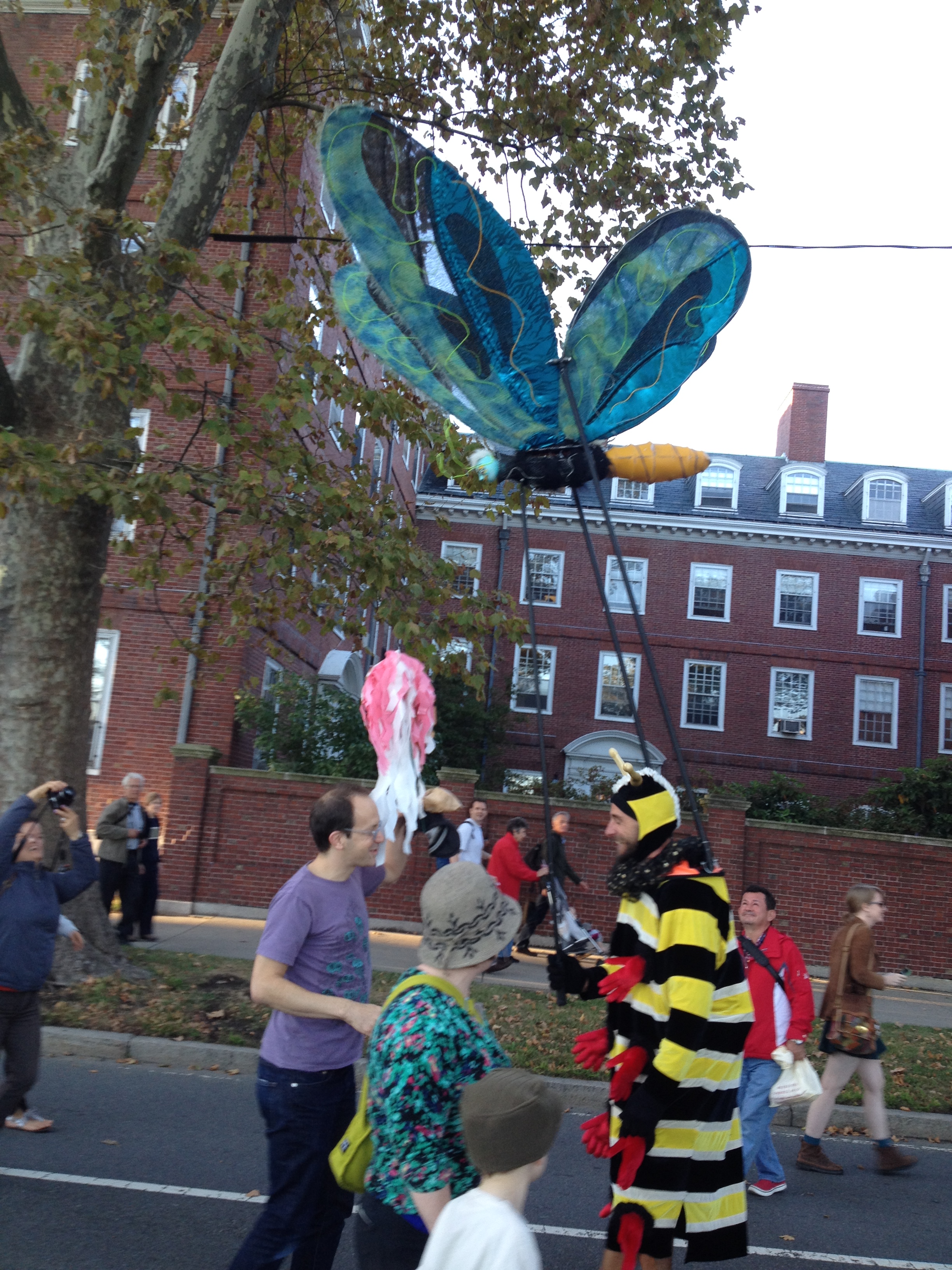
RiverSing was accompanied by large butterflies and other imaginative creations from Moonship Productions and the Puppeteers Cooperative. Here's one by daylight.
RiverSing is accompanied by large butterflies and other imaginative creations from Moonship Productions and the Puppeteers Cooperative. Here’s one by daylight.
And if you've ever wanted to converse with a butterfly, here's your chance.
And if you’ve ever wanted to converse with a butterfly, here’s your chance.
Once the sun goes down, the butterflies take on a new look as they swirl at the margin of the audience.

Best known for its 16 packed shows in Harvard’s Sanders Theatre each Christmas, Boston’s Revels organization also presents many other activities of community-enhancing music, theater, dance, and storytelling for family audiences through the year.

Each autumn, for instance, it welcomes the equinox with a free Sunday evening concert along the Charles River in Cambridge, which takes place tonight with activities beginning at 5 p.m. in Winthrop Park at Harvard Square. A police-escorted street procession leads down to the riverside, where thousands settle in for a two-hour high-energy performance.

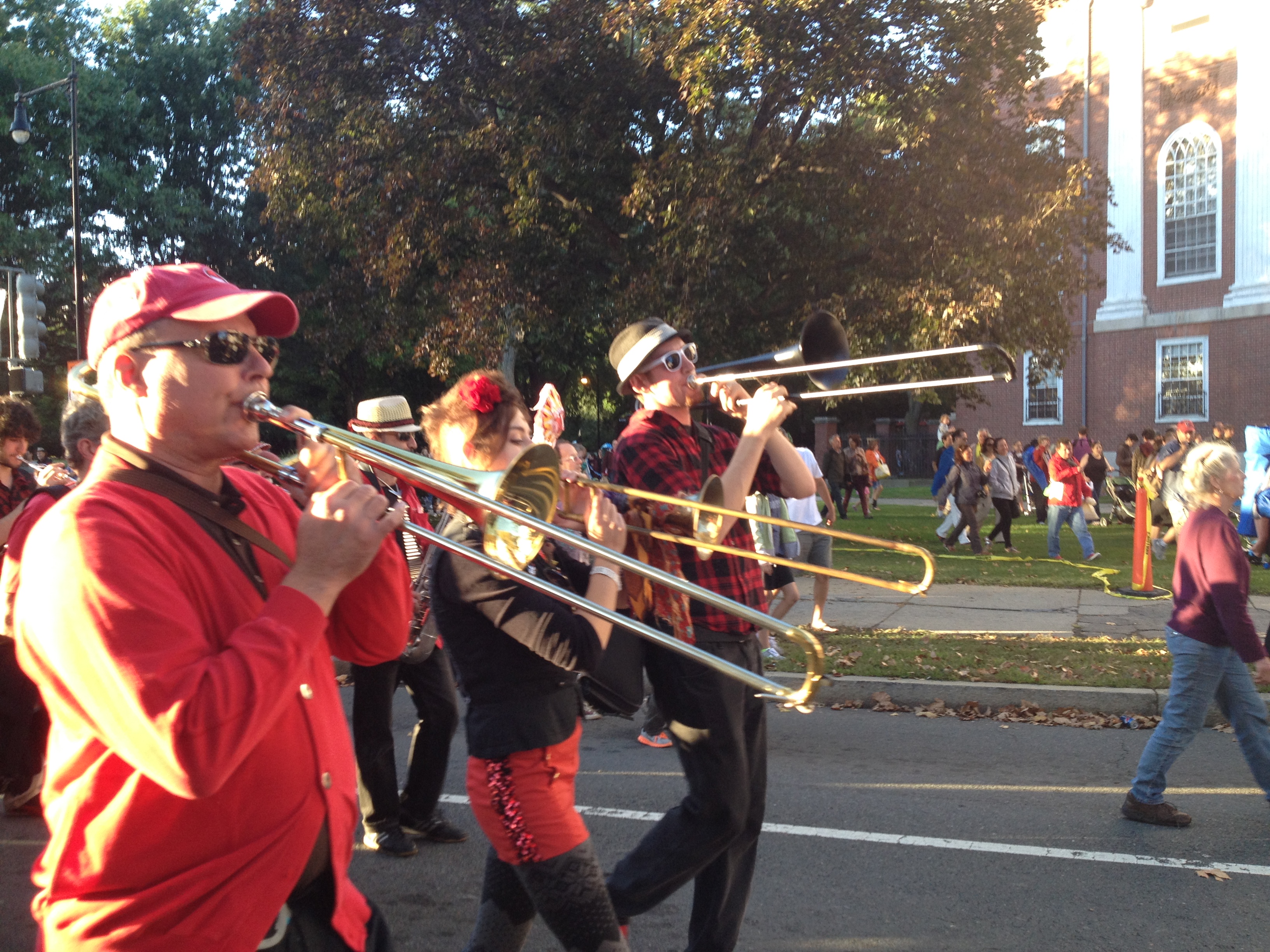
The marvelous Second Line Social Aid and Pleasure Society Brass Band played a lively set in Winthrop Park before escorting a large procession to the Charles River. I'll refrain from telling stories about the trombonist on the right, who I've known long before he even knew about trombones.
The marvelous Second Line Social Aid and Pleasure Society Brass Band plays a lively set in Winthrop Park before it escorts a large procession to the Charles River. I’ll refrain from telling stories about the trombonist on the right, whom I’ve known long before he even knew about trombones.

Last year’s concert featured Noel Paul Stookey of Peter, Paul, and Mary fame, and I was part of the chorus of 120 behind him. It was a blast.

Here we are, with Noel Paul Stookey beside conductor, arranger, and master of ceremonies George Emlen in the white tie-and-tails.
After the show, this puppet quickly filled with children.

The stage also provided some great views of the sunset and audience, which was ringed by glowing butterflies. It was a magical experience.

My wife took these photos with her phone. For some showing my face in the choir, though, go to the Revels site.

If you’re in New England, consider showing up tonight. The more, in this case, the merrier.

A TINY DETAIL

We’d get the phone call. “You promised a story.” We knew we’d been very careful not to do that. Instead, it was, “I’ll look into that” or “I’ll pass that along to the appropriate editor for a decision.”

My favorite was the caller who claimed to be good friends with the publisher, who had promised the coverage. Followed by our response, “You know she died twelve years ago?” And their embarrassed silence.

Of course, it’s not just stories.

People read into the most carefully crafted texts and then respond to only the parts they want to hear while tuning out the rest. Or they just plain tune out. It’s called the theory of cognitive dissonance. If they think you’re agreeing with them, they’ll bend the message their way. If they think you’re critical, they’ll shove you out altogether.

Often, all tripping over a tiny detail or two.

~*~

Oh, how I came to hate the telephone when I worked in the newsroom! If you want further proof, just go to my novel Hometown News.

Hometown News


FLATBED

Returning to my native corner of Ohio, I’m astonished by its flatness; what had seemed to be large hills or significant valleys now appear embarrassingly horizontal.

On the other hand, as I’ve uncovered my ancestral roots in that land, I’m finding a lost and untold richness in what was essentially a Pennsylvania Dutch heritage continuing in western Ohio. Feel free to take a look at my findings at the Orphan George Chronicles.

CORKING THE STATE LIQUOR COMMISSION

For all of it reputation as the “tax-free state” and “live free or die,” New Hampshire has some pretty convoluted ways of making ends meet. True, we have no sales tax and no income tax, but that simply means finding a lot of nickel-and-dime ways of raising public revenues, starting with a hefty property tax rate. (Renters, of course, get no break on their federal taxes there, either – as I said, convoluted.) And if you dine out, even for breakfast, there’s another big hit, eight percent or so, one of many others. Eventually, it all adds up.

New Hampshire also has a reputation as the go-to state for cheaper liquor, compared to the rest of the Northeast. For all of the official conservative rhetoric of free enterprise, the state clutches its monopoly on the sale of hard liquor, unlike, say, neighboring Massachusetts, with its liberal tradition of neighborhood mom-and-pop “package” stores.

The conflict I see comes in the fact the state is both the regulator of alcoholic beverage sales, ranging from bars to groceries and wine stores and home consumption, and also the distributor. That is, the same agency, the State Liquor Commission, is both the policeman and an active dealer in what it is policing. It’s a situation rife with the potential for favors, favoritism, and outright bribery or corruption. As the Founding Fathers were well aware, whoever polices the police should not be the police. You separate them – the classic separation of powers, each keeping jealous watch over the other.

Not so here in New Hampshire. When it comes to alcohol, the only line of defense might be the Legislature or the Governor and Executive Council as the counterbalance, but that’s not the way it should be, especially when we factor in the possibilities of hefty campaign donations. The enforcer and distributor should be under separate agencies – then, if conflict arises, they appeal to higher authority. As it is, they’re likely to squelch any complainer … or else.

In addition, when it comes to wine, all the supermarkets, grocers, and independent wine shops face a double whammy. They’re required to buy their wine from the state (through the one and only licensed warehouse dealer), even though the state also sells directly against them. In fact, it’s the same agency they must apply to for their very permit to do business in this field. And then the agency adds its own percentage to the product, even if it’s from a winery the state wouldn’t otherwise stock except for the retailers’ order. As I said, convoluted and rife for abuse.

I first noticed this when I found a certain label for sale much cheaper in Massachusetts. Seems the Bay State has one less layer of middleman in the process. So much for the “Taxachusetts” tag we Granite Staters so often brush on our southern neighbor. Tain’t always so.

More recently, I found an example of the state’s monopoly bully at work when a local supermarket was out of several of its more popular varieties. Could it be someone had said something that miffed somebody in the state agency that was supposed to deliver the product, which now was just sitting in the warehouse? Who do you complain to, after all? You can’t switch to a different supplier, either. Where’s the free market free enterprise in this case? The official line may have been that the state was in the midst of shifting from one licensed warehouse operator, which had held the contract for decades, to a new one. But, as the old contractor miffed, the situation “is just the latest example of many where the the commission has cut a special deal” with the new licensee.

For years, I received the weekly release of which bars, restaurants, and convenience stores or supermarkets had their liquor licenses suspended by the State Liquor Commission, usually for underage sales of beverages. Not once did I see a State Liquor Store in that list. Not that they weren’t as prone to violations. As I said, who polices the police?

Yes, New Hampshire gets the revenue. As long as I’m not forced to go to Maine or Massachusetts to get the wine I want, where it’s available, maybe even more cheaply.

Any future MBAs interested in doing a case study? This one could be a doozy.

EVERYONE’S FROM SOMEWHERE

In the aftermath of major disasters, the wire services run a list of victims, something I used to think was to inform the editors of local newspapers of potential links to their own circulation area. But then my boss told me to run them.

“Why?” I asked. “We don’t have that much space for wire news.” Meaning national and international stories.

“Everybody’s from somewhere,” he answered. And I soon learned how true that was.

In fact, here in New Hampshire, we’ve come to expect a Granite State angle in almost every breaking story.

Small world, indeed.

ESTABLISHING MY CREDS

Longtime visitors to the Red Barn are likely aware that I spent four decades as a newspaper editor – experiences that feed into my latest novel, Hometown News.

It’s meant working nights, holidays, and weekends – rarely on a schedule matching the general public’s. And it’s always meant “working under deadline,” where an internal clock is always racing to finish the task on time (or else!). In addition, it’s also given me some insider looks at the surrounding world itself: having a celebrity standing a dozen feet behind your back is just another regular occurrence. (For the record, they often look quite different than they do on television.) Even as a cub reporter, I saw dead bodies, got inside the county morgue, checked out small plane crashes, met ex-movie stars, faced some stiff competition from the pros on the rival paper. Looking back, I sense how often I was in over my head and wonder how I ever survived.

These experiences have also fed into the Red Barn’s category of Newspaper Traditions, where I’ve written about:

  • The best newspaper ever” The glorious final days of the New York Herald Tribune were like no other newspaper. Nothing like fighting hard to the bitter end.
  • Chancing Upon a Profession: Glenn Thompson’s influence hit me, among many others, in one medium-sized city. He had a knack for finding talent.
  • Hot Type: In the days before phototypesetting and then digital publishing, newspaper production was a highly skilled craft. Here’s an admiration for the long gone masters.
  • Living Under Deadline: When your career hangs on meeting deadline after deadline, with no room to spare, you begin to live differently from other people.
  • The Art of Writing a Headline: Trying to steer readers to a given news report with just four words can be a real challenge. Take it from a pro.
  • Editing Obituaries: Announcing someone’s death and funeral arrangements can be more precarious than you’d imagine. This post, one of the most popular at the Red Barn, became a WordPress Freshly Pressed selection.
  • Four Measures: Just what makes “news,” anyone? Here’s one take.
  • Police Calls, 10 P.M.: Well, there is some behind-the-scenes banter, even when calling the cops.
  • One Phone Call Too Many: And then sometimes the facts get in the way of what looked like a great story.
  • Local, Local: How you define “local” news can backfire when it comes to your readers. Especially when it’s boring.
  • Bias: Sometimes those who accuse journalists of being biased should first look at themselves in the mirror.
  • The Shrinking Page: Like many other products, the newspaper page has been shrinking. It’s about half as wide as it was when I entered the trade.
  • The Human Imprint: Not too long ago, the editors and publishers were well-known public figures.
  • Objectivity, for Starters: There really were some strict standards and practices.
  • Windy City Perspectives: The tower of the Chicago Tribune holds some special memories for me.
  • Painful Neutrality: Again, maintaining a discipline of objectivity comes at a personal price.
  • Free of the Entourage: David Broder was the best of the breed. I wish I’d said hi.
  • End of the Line: One of the last editors who put a personal stamp on a paper was David Burgin. Maybe that’s why he was always getting fired.
  • Get Out of the Way: Real reporters are invisible observers. TV’s imitation inserts itself on the story.
  • You Read It Here First: Plagiarism has always been a dirty practice. Here are a few examples.
  • Reality Check: When it comes to seeing “liberal media,” some people fall off the far right of the world. The one that’s still flat.
  • A Logical Conclusion: The more conservative the nation’s editorial pages become, the more circulation declines. Think about that.
  • Death in the Afternoon: The newspapers published in the afternoon once had the blockbuster circulation. Here’s why they vanished.
  • Beware of Unintended Consequences: There are times embarrassing things slip into print. Lewd expressions, especially.
  • Beware of Survey Conclusions: Marketing research can lead to bad choices. It helps to put the findings in perspective before taking action.
  • So Much for Romance: And then there was the reporter’s lament as he returned from covering a large singles’ mixer.

I invite you to visit or revisit the postings, especially if you’re new here. And I promise there are more ahead.

~*~

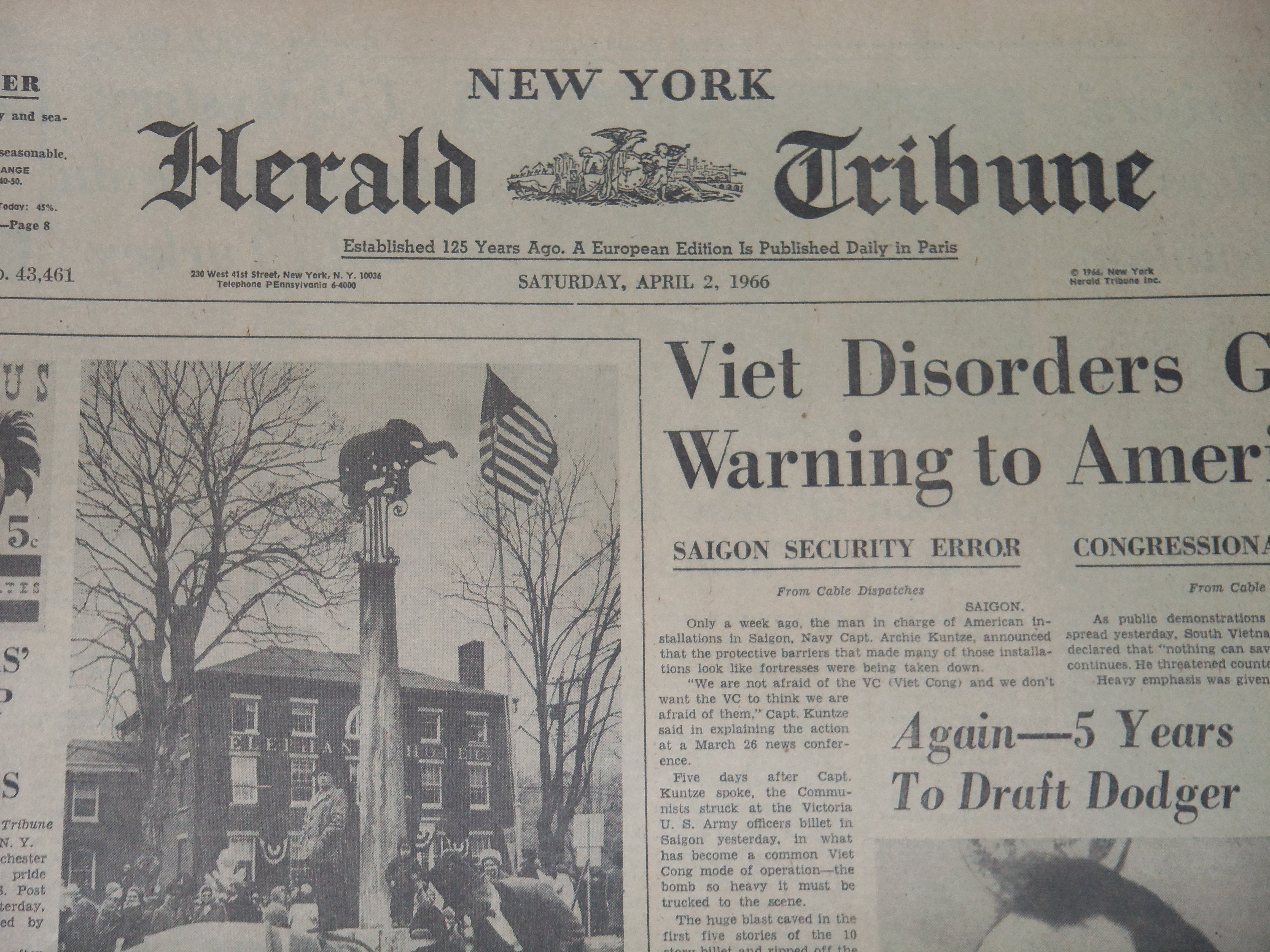
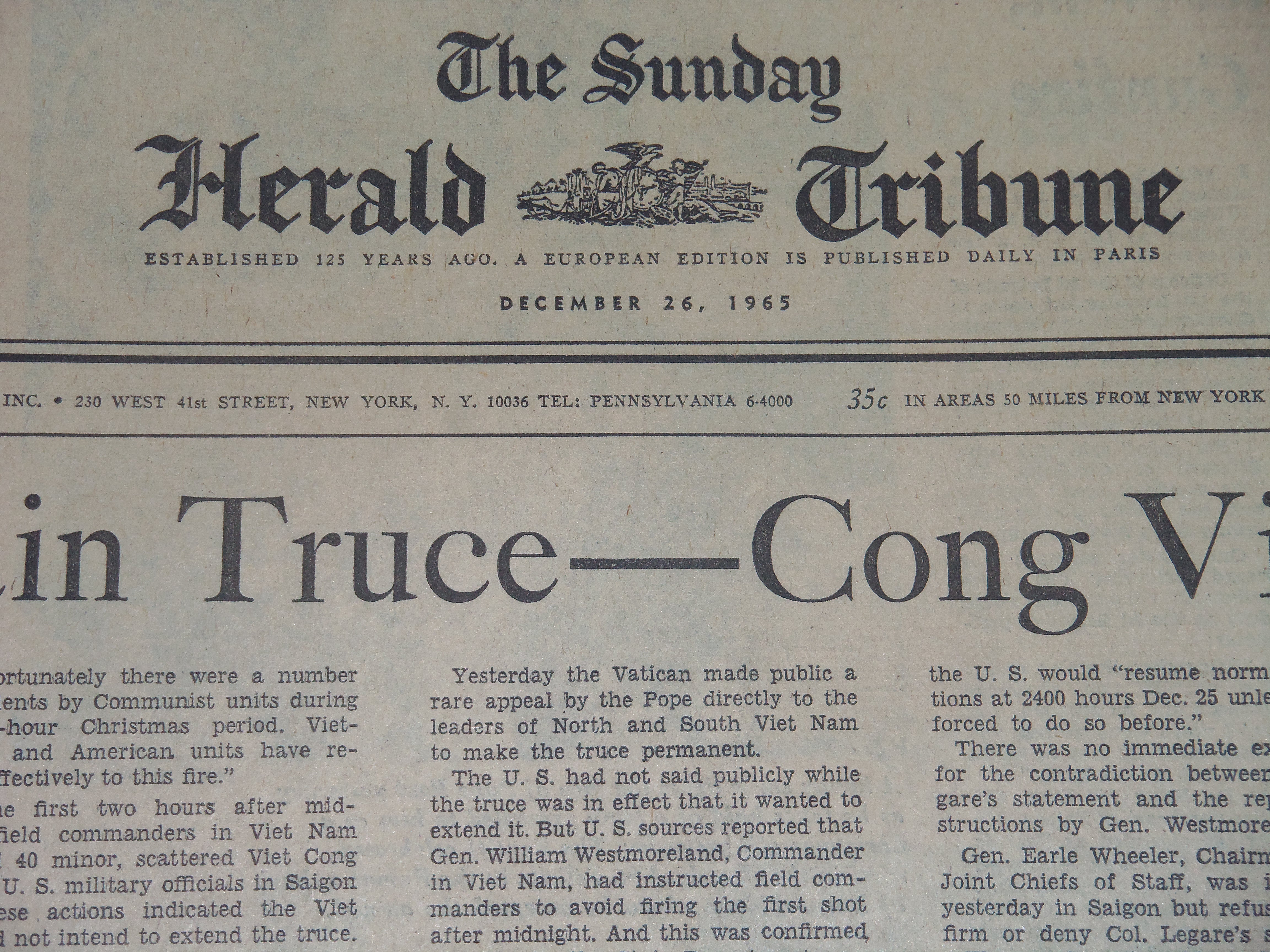
While we’re at it, here are some pages from the New York Herald Tribune’s final years, when it established itself in my mind as the most elegant and exciting newspaper ever. (Remember, I was still a teen and a budding journalist.)

The daily edition.
The daily edition.
And Sunday.
And Sunday.

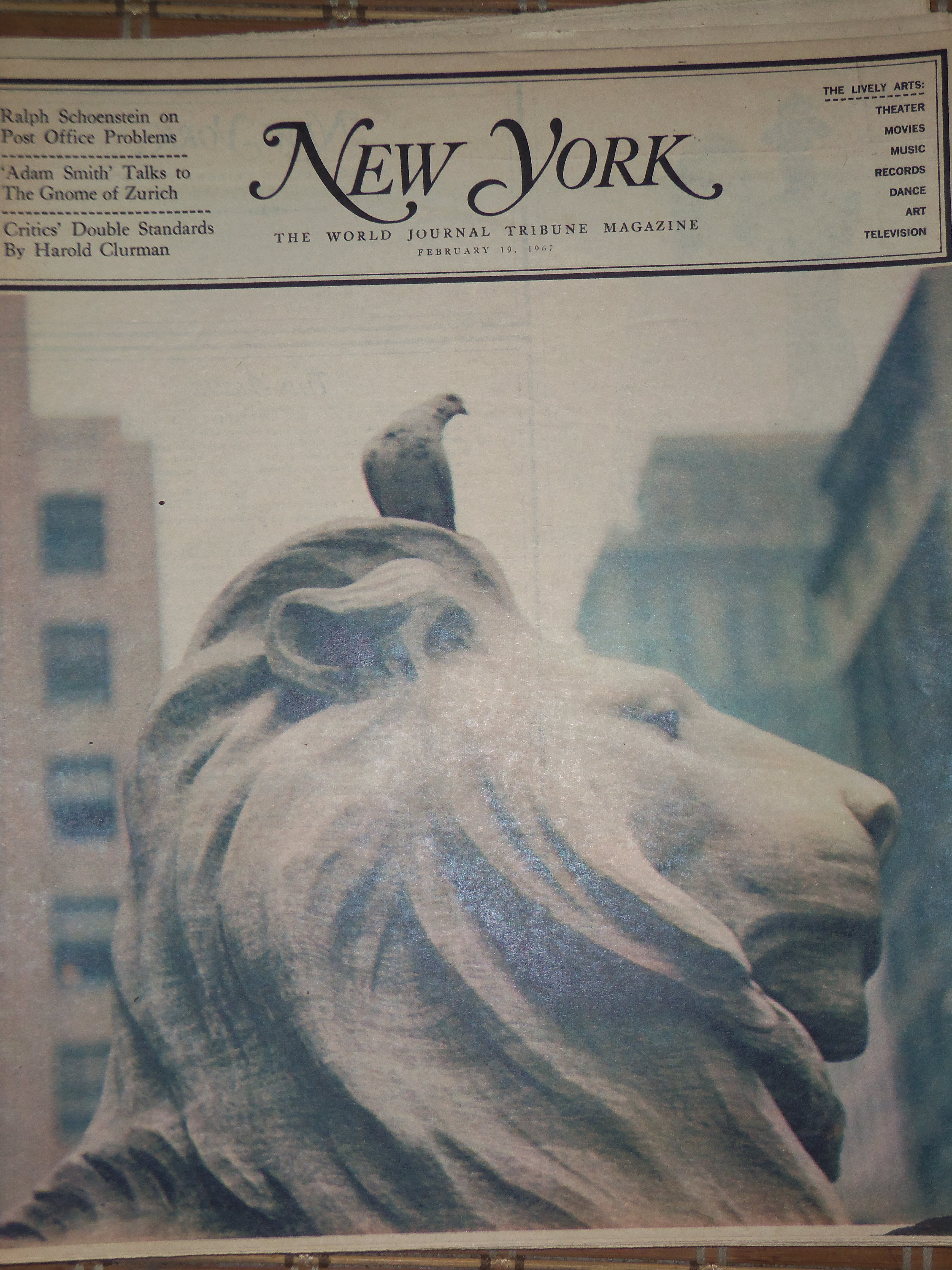
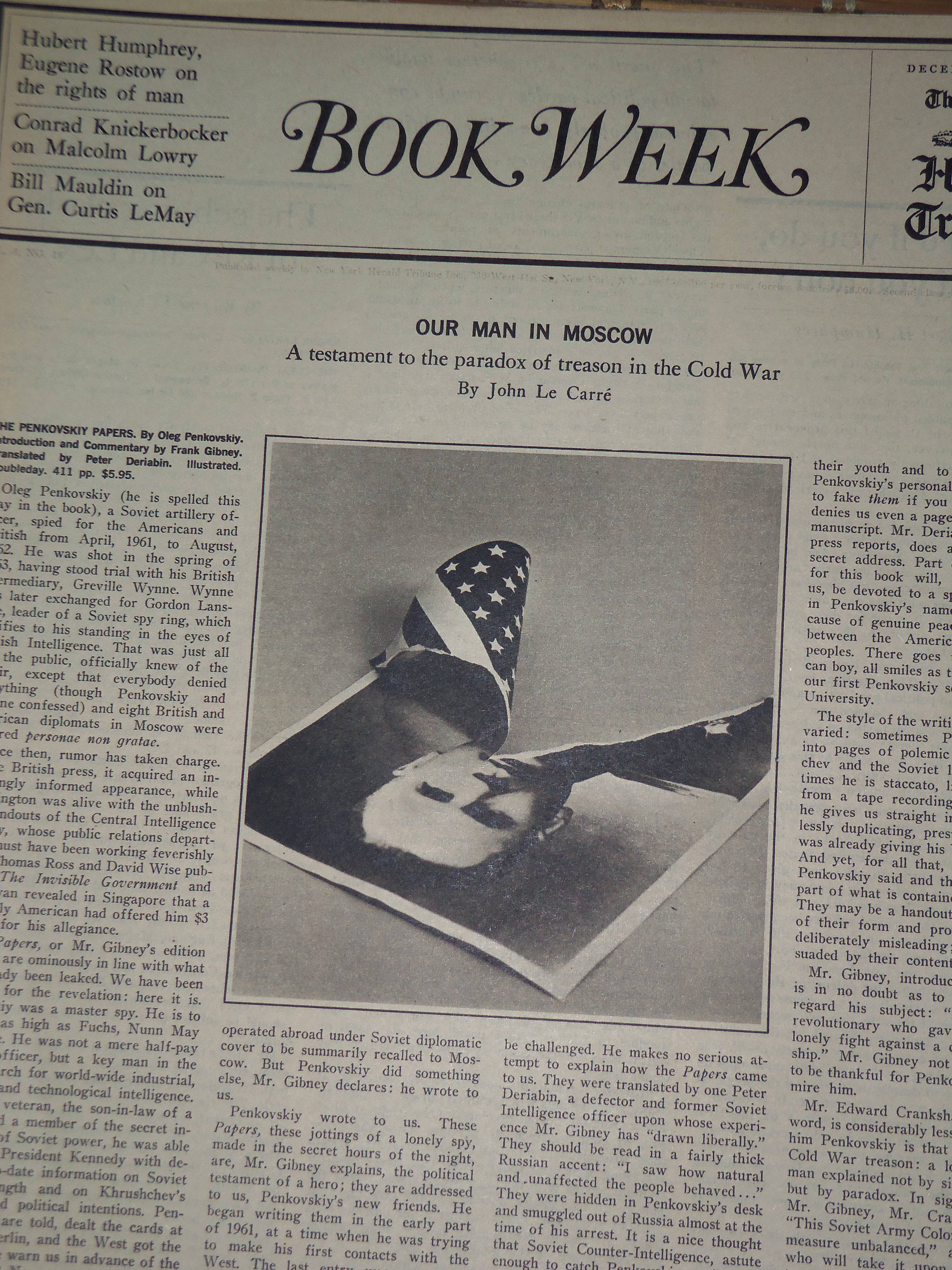
Among the Trib’s legacy was New York Magazine, which originated as the Trib’s Sunday glossy magazine. It was classic. And Book Week reflects a time when books were really important, at least in the eyes of the informed public.

The Sunday mag.
The Sunday mag.
And the books review section.

~*~

Not all of the exciting journalistic action took place in Gotham or Fleet Street or Chicago’s competitive shootouts, though.

Much of the most dedicated and innovative work emerged in small communities in the heartland where a few individuals could make an obvious difference. That’s the story I explore in my latest novel. In some ways, it’s Tom Peters’ Pursuit of Excellence meets Dilbert on steroids. It might even resemble some places you’ve labored.

 ~*~

To find out more about Hometown News or to obtain your own copy, go to my page at Smashwords.com.

COUNTING TO SEVEN

Dover, where I live, is proclaimed as the oldest permanent settlement in New Hampshire and the seventh oldest in the United States.

Counting gets tricky, because there were earlier settlements that were abandoned. As best as I can determine, then, here’s the list the counts to seven:

  1. St. Augustine, Florida, 1565
  2. Santa Fe, New Mexico, 1607
  3. Newport News as Hopewell or Elizabeth Cittie, Virginia, 1613
  4. Albany, New York, 1614
  5. Jersey City, New Jersey, as Pavonia, New Netherlands, 1617
  6. Plymouth, Massachusetts, 1620
  7. Dover, New Hampshire, 1623

While I found Weymouth, Massachusetts, as Wessagussett, 1622, the town itself notes 1630 as its settlement. And Taos, New Mexico, 1615, was abandoned by its Spanish missionaries in 1640. As I said, counting gets tricky.

SAGEBRUSH AS A STATEMENT

The diamond hitch is a top-of-the-line knot, especially useful in cowboy, mining, or logging country – or, as I apply it, the desert foothills of Washington state found east of the Cascade mountains. Forefront in my related set of poems is the unspoken recognition of diamond hitch as marriage, with its implied images of diamond ring and getting hitched. In the background, also unvoiced, is the diamond symbol of the clear and enduring heart – further extended to intense spiritual quest, as The Diamond Sutra (Vajrachchedika in Sanskrit) demonstrates, found also in the Buddhist linkage of diamond to Dharma. In addition to serving as an emblem for the open range of the American Far West, sagebrush, moreover, suggests wisdom, spice, even the Burning Bush of Moses – the profound influence desert has upheld for prophets and mystics over the millennia.

SUCH DIFFERENCES

As I said at the time …

Finally, observing the banner in the background of the thirty-fifth reunion pictures, my wife finally connected a date she’d long known with her own experience: “When you were all graduating, I was being potty trained.”

I wonder what I would tell them, given the chance. I’m not judging them, as much as judging myself and all of the intervening years. The long journey to here. I’m not gloating that I have a younger wife, one who’s only a few years older than some of their own children; besides, that wouldn’t have been the case, had my first marriage not failed. I’m finally experiencing the challenges and joys of parenting, while they already have grandchildren – on that front, maybe they really are much older. See, I am envious of those still married to their spouse right out of high school. They took the straight path and got down to business. In contrast, many lonely nights and a sequence of transitory relationships have been my alternative. I think how innocent I was (ignorant is the more accurate term, actually), especially on matters of sex. In the intervening years, even after I realized that certain girls had gone away because they were pregnant or certain guys were homosexual, I simply couldn’t admit that any of us were actually having, gulp, intercourse. Although, years later, looking at the homecoming court photos in the yearbook, the realization flashed upon me, from one’s smile, that she must have recently become sexually active.

Which leads me to the goddesses. The beauties I both idealized and gazed at with masked lust, wondering how the soft touch would feel, how the naked body would look, how two people actually connect. The ones who left me speechless. The ones who were, in many ways, in a league other than the one I inhabited. To my eyes, they were miraculous and mysterious, invested with secret knowledge and magical powers, with taste, social graces, and high style – no matter how middle-class we were or the fact that our conversations rarely went any deeper than howdy. The reunion photos, then, confirm my fears – that goddesses may become hags – yes, mortal, even grotesque. And yet, to my surprise, some have become more beautiful than ever. How can this be? If we could only return, however briefly, for candid discourse, to uncover what thoughts, feelings, and actions lurked behind those Mona Lisa facades, both then and in the subsequent years. Not superficial conversation, but blunt disclosures. Now, however, sifting through the reunion photos, I soon calculate how few of these goddesses attended – which leads to further speculation. To my eye, they were the essence of what Hollywood starlets aspire to represent. Unlike any mythology, however, few remain in any Olympus. Instead, I must confront a youth culture that offered little wisdom.

I must leave it to the girls-turned-to-women to speak of the Adonis club and its deterioration. Besides, I was never a member. On the other hand, I’ve sometimes quipped that if I could do it all over again, I would have hung out with the greasers – that they had what I was lacking. As if they would have had me! Or am I only imagining they had fun in their tweaking of authority?

To reenter those years also means admitting shame, embarrassment, and guilt. I’m not the golden boy my mother expected, or the great talent my youth pastor counseled. For that matter, it’s been many years since I could tie my hair back in a ponytail or part it down the middle. Since I had a beer bottle tossed at me at a party. As I’ve said, it’s been a long road from there to here.

One soon approaching what will be a fiftieth anniversary reunion, if it happens.