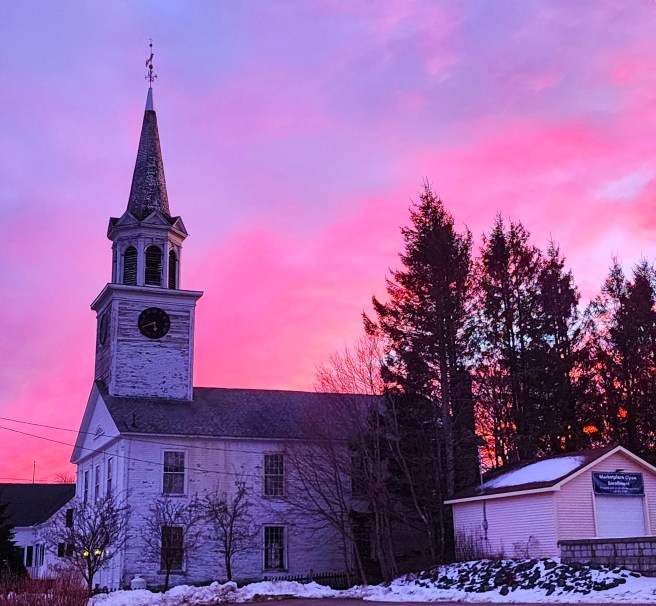
We’re still looking forward to a transformed kitchen and a lot more

Under other conditions, this is where we would have started our renovations.

The kitchen, in our firmament, is the heart of a home. The one in our historic house needed some serious attention. Let me amend that, needs extensive remodeling.

The electric Montgomery Ward stovetop we inherited has a dead burner. If you’re too young to know about Monkey Wards, it was a major Chicago-based retail chain and mail-order empire that went bankrupt and out of business before Sears Roebuck. If I need to explain Sears and its Kenmore brand appliances, you really do need a history lesson. I’ll let you give me one in current pop culture in exchange. Back to the kitchen, for now. There’s no oven, other than the small tabletop convection unit we brought up with us. It’s definitely not big enough for a Thanksgiving turkey or a boneless beef prime rib, as was my birthday tradition in Dover, or even full trays of cookies for Christmas. A dishwasher is a necessity in today’s ideal world, especially when you consider my dishwashing skills, frankly, as falling short. The lack of decent electrical lighting over the sink doesn’t help. As for that lighting or additional electrical outlets? The list quickly grows. We weren’t expecting our redo to be as extensive as the one we undertook in Dover; do note, we also gleaned valuable insights from that. Or at least one of us had, the one whose opinion counts most.

Next to the kitchen was the mudroom, uninsulated and without electricity. We needed someplace to put a big freezer to augment the kitchen, garden, and marked-down grocery jackpots. The existing roof there was funky at best and leaking, along with exterior rot. New windows could point to space for new shelving, too. OK, we’ve addressed half of the mudroom checklist, for now.

The front door of the house, as previously noted, needs replacing, along with the downstairs windows and most of their sills. Anything to cut the heating bill, right?

At this point, we’ve decided to defer work on the downstairs bathroom aka the water closet.

Ditto for the emerging dining room slash crafts room with a butler’s pantry. The room which was my headquarters in the universe for five years.

And then, as for gutters? Or window dressings? Or new furnishings?

The bottom line in all of this has shifted but remains exciting, all the same.

Yet, when you’re married to one of the world’s great cooks, the state of the kitchen is a major consideration.

She and her elder daughter have some great ideas and dreams.

I, in turn, reap the benefits as these happen.


Addressing the dissemination of ideas in a changing world

Rifling through my remaining files, I recently came across an informal working paper I had drafted 50 years ago while working for the Workshop in Political Theory and Policy Analysis at Indiana University in Bloomington. At the time, I was employed as a social sciences editor but beginning to get really hooked on being a poet on the side, along with the entire small-press literary scene. This came in a break in my newspaper journalism career, which also figures into the considerations.  

One of my challenges at the workshop involved getting our field research findings out to a diverse audience of researchers, public officials, and politicians. Traditional publishing avenues were becoming prohibitively expensive for our enterprise.

What I saw as the challenges in a changing publishing world at the time seems truly prescient now as well as often naïve. The paper, “Thinking Thru the Future of the Realm of Publishing,” has been greatly eclipsed by the Internet, which wasn’t even on the horizon, as far as we knew.

Some of the problems, such as lack of compensation for intellectual property and vulnerability to piracy, seem larger than ever.

And there are still the challenges of establishing a readership and the related costs.

~*~

As I wrote:

There seems to be, at least as far as newspapers are concerned, a kind of decreasing level of literacy. This seems to be reflected in the declining reading scores reported over the ‘60s & early ‘70s in the SAT exams & other measures of reading abilities.

Perhaps this is nothing new, but in practical terms, as a measure the American adult illiterate — that is, incapable of reading the comics or Ann Landers with any degree of understanding or skill – it remains a challenge. Perhaps insurmountable.

On the other hand, the knowledge explosion is leading increasingly to the phenomenon Ortega y Gasset dubbed “the learned ignoramus” — the situation where individuals may be very deeply & narrowly trained in a field of technical specialization, but may also be very ignorant of other disciplines.

As an example of this phenomenon at work today, we can consider this: That two decades ago, a broadly-trained baccalaureate degree could be the threshold of the generalist — the PhD, the mark of the specialist. Today, the PhD is the threshold of the specialist, & the realm of research may lie far beyond his vision or understanding. In other words, perhaps, the minuteness of scholarly research today is so diverse & specialized that little of it fits into broad, theoretical concepts.

Are we at a point in which our investigations resemble a plant that has been given too much light, too much water, & too much food? Such a plant becomes weak & spindly, & collapses.

While that comparison may seem too strong, consider the problems of trying to keep abreast in one’s own field. There are far more journals in the social sciences, or in even political science or economics, than any researcher or scholar could possibly keep abreast of. How many journals are there on administration, urban problems, and police, that would affect even our own area of investigation?

I raise these two points because they do interact: the broadly- based, literate range of media would appear to be shrinking:

  1. a) The range of specialized knowledge gets further & further away from their abilities to report;
  2. b) The time required of specialists to keep abreast of their own specialties would decrease the time they have to spend with the more generalized, & hence more interdisciplinary, range of publications;
  3. c) The increasing costs of publication & distribution would weed out the more marginal, but still significant, publications in this range. (The real money in periodicals publication in the last decade has specialized mags, focusing, for example, on skiing or coin collecting — areas with a potentially specialized market for advertisers.)

~*~

The costs, especially of labor & paper, have escalated sharply in recent years, resulting in outrageously expensive book costs (at least in the traditionally published & distributed volumes): journal costs for libraries & institutions are something that a number of Workshop personnel have commented upon. The situation of hard-bound volumes & high-priced journals facing libraries is one of “rip off.”

[As for individuals?]

~*~

Simultaneously, libraries have been forced to install photo-copying machines as a means to prevent the mutilation of their collections by users with razors & other means of lifting pages for home use.

The entire library system is based upon user cooperation & consideration, which appears to be breaking down in many situations. In other words, if the theft rate & volume loss rate of some collections continues unabated, the library as a source of photocopy material may be in danger.

~*~

On the other hand, the existence of photocopying equipment introduces a threat to authors, editors, & publishers. Authors have faced readers who proudly proclaim that they have the writer’s work – in Xerox form. The author, of course, receives no royalty from these readers, despite the reader’s praise.

~*~

My, those photocopiers seem so benign compared to so much of the Internet!

Stay tuned for next week’s continuation.

~*~

That said, you can find my works in the digital platform of your choice at Smashwords, the Apple Store, Barnes & Noble’s Nook, Scribd, Sony’s Kobo, and other fine ebook retailers. You can also ask your public library to obtain them.

He said, she said

He would have said alert but she’d counter twitchy
He would have said observant but she’d counter oblivious

He would have said free-thinking but she’d counter too serious
He would have said independent but she’d counter aloof

He would have said sensitive but she’d counter nervous
He would have said inquisitive but she’d say he rarely asks questions

He would have said accepting but she’d counter indecisive
He would have said nurturing but she’d counter cold

He would have said serious but she’d counter silent
He would have said playful but she’d counter negative

He would have said witty but she’d counter legalistic

He would have said intelligent but she’d counter uptight

He would have said slightly bent but she’d counter insecure
He would have said self-sufficient but she’d counter evasive

He would have said caring but she’d counter mean
He would have said spiritual but she’d ask how that makes him a better person

He would have said spirited but she’d counter lazy
He would have said somewhat reserved but she’d counter socially deficient

He would have said somewhat shy but she’d counter loner
He would have said elitist in quest of excellence and quality but she’d counter self-centered

He would have said egalitarian in opportunity and expectation but she’d counter workaholic
He would have said outdoorsy but she’d counter escapist

He would have said rainbow chaser but she’d counter impractical
He would have said aging but she’d agree

He would have said youthful but she’d counter bald
He would have said honest, direct but she’d counter defensive

He would have said exploring but she’d counter unemotional
He would have said hedonist but she’d counter lazy

He would have said ascetic but she’d counter dull
He would have said a bit gallant but she’d counter straight-laced

He would have said organized but she’d notice he rarely dusts furniture
He would have said self-starter but she’d counter with a list of projects

He would have said visionary but she’d counter icy
He would have said original but she’d counter quirky

He would have said inventive but she’d counter weird
He would have said creative but she’d counter unrealistic

He would have said hopeful but she’d counter inexpressive
He would have said responsive but she’d counter boring

He would have said kind, gentle but she’d counter too serious
He would have said frugal but she’d counter tight-fisted or fiscally irresponsible

He would have said financially marginal
but she would have countered too willing to pay full price

Now, for her side of the dialogue?

Aspiring novelists, good luck

This is the month many aspiring writers sit down and try to complete a draft of a novel before December sets in. For perspective, here are ten points as inspiration

“If you have any young friends who aspire to become writers, the second greatest favor you can do them is to present them with copies of The Elements of Style. The first greatest, of course, is to shoot them now, while they’re happy.” ― Dorothy Parker

“If it sounds like writing, I rewrite it. Or, if proper usage gets in the way, it may have to go. I can’t allow what we learned in English composition to disrupt the sound and rhythm of the narrative.” – Elmore Leonard

“Your writing voice is the deepest possible reflection of who you are. The job of your voice is not to seduce or flatter or make well-shaped sentences. In your voice, your readers should be able to hear the contents of your mind, your heart, your soul.” – Meg Rosoff

“I just give myself permission to suck. I delete about 90 percent of my first drafts, so it doesn’t really matter much if on a particular day I write beautiful and brilliant prose that will stick in the minds of my readers forever, because there’s a 90 percent chance I’m just going to delete whatever I write anyway. I find this hugely liberating.” – John Green

“Anyone who says writing is easy isn’t doing it right.” – Amy Joy

“You fail only if you stop writing.” – Ray Bradbury

“Do not hoard what seems good for a later place in the book, or for another book; give it, give it all, give it now.” – Annie Dillard

“If my doctor told me I had only six minutes to live, I wouldn’t brood. I’d type a little faster.” – Isaac Asimov

“I taught my brother everything he needs to know about writing.” – Stan Asimov

“There is no real ending. It’s just the place where you stop the story.” – Frank Herbert

Welcome to Middle End, maybe the only one on earth

When I moved to Eastport nearly five years ago, old-timers began telling me of the intense antagonism between the North End, or Dog Islanders, and the South End, aka Assault and Battery (for Battery Street) or Sodom and Gomorrah. Their antagonism toward Lubec just to the south was the only thing strong enough to unite them.

Yes, when it came to the antagonism toward Lubec, the town to the south, they unified in their venom, which was something like the reaction of Dog River residents toward Wolverton in the Canadian comedy series Corner Gas.

Only four months ago, at a historical society forum, did I first hear that the residential section between them – where I live – was known as Middle End, a designation that many of those who grew up here had never heard yet was common in usage by others.

It’s the neighborhood containing the majority of the homes in town, much of it proposed for National Historic Registry recognition as the Eastport Central Neighborhood district. Well, it does have its merits.

Our house would be the oldest within its boundaries, built by the man who originally held title to half of Middle End. His brother-in-law, Caleb Boynton, held the other half. Shackford’s sons and sons-in-law and presumably their wives were active in developing their share, what they surveyed with numbered plots as Majorville.

A middle, by definition, is between ends rather than being an end or even having one, I suppose. For me, that leads to a quaint contradiction. Is there even another Middle End on the planet? Google maps proffer a nada.

The Eastport neighborhood is largely to the west of downtown, with a little wrapping around to the south and north, so it wouldn’t exactly form a West End. And to the east of downtown? It’s all water and very quickly beyond that, Canada.

Well, if they had only called these “sides,” but for whatever reason, they didn’t see things that way.

The End.