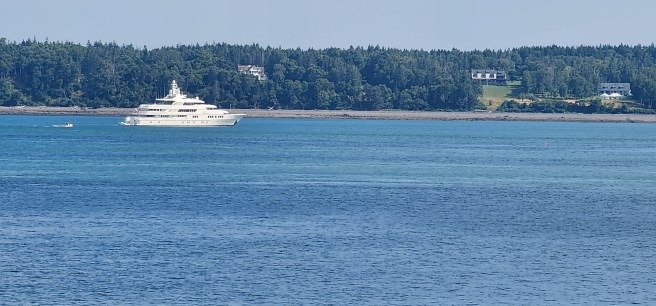
We’re not overrun with them, unlike Bar Harbor and points south and west.
You never know what we'll churn up in cleaning a stall
We’re not overrun with them, unlike Bar Harbor and points south and west.
Multilayered and deeply personal, Goatwalking: a Guide to Wildland Living is a rich blend of social activism, clandestine adventure, wilderness survival, political resistance, witness for justice, and spiritual growth and grounding.
It’s all based on Corbett’s experiences as a founder of the Sanctuary movement for persecuted Central American refugees. He escorted many of them on foot through the desert from the border to safety within defiant congregations across the Far West. On the trail, he was accompanied by milking goats who provided needed nurture – hence the title.
The book is as a much a journal as a history or social philosophy. As I found related elsewhere, when Corbett first came among Quakers, he knew more about Buddha than Jesus. But then, waiting for his next party to arrive at a remote chapel, he meditated on the crucifix on the wall before him and realized that if anyone could possibly know the terrors his charges had suffered, it was Jesus. Later, working with a dedicated priest, he was treated as an equal in everything but the serving of the eucharist – “I’m a Jesuit, a member of the Society of Jesus,” he was told, “and you’re a member of the Society of Friends,” or Quakers. “What’s the difference?”
His insights are as relevant today as they were when first published.
I had a good day of photography
a wonderful day overall
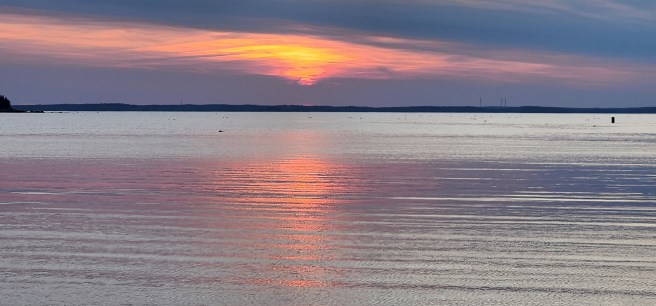
How gentle the water surface
a few moments of approaching mal de mer, but no problems
we were lucky, having seven rain-free days,
only some heavy fog in the night and morning
why did the chicken cross the road?
because he didn’t cook it
Looking up at the new roof’s overhang and fascia gives me a feeling of satisfaction. Far more labor, care, and skill went into these layers than I would have imagined. Our contractor is not one for shortcuts. He certainly intends for this dwelling to stand erect for another 200 years or more.

As a writer, I love what alphabet letters and words by themselves can do on paper, apart from any meaning. Just look at one man’s intrepid signature on the Declaration of Independence and try to imagine that document without it.
I used to love visiting a friend who was a professional calligrapher and type designer. This was her life’s work.
Are other writers also inspired by such visual artistry?
The Lilly rare book library at Indiana University puts on exhibits of historic volumes, not just their typography and inside pages but also their bindings, endpapers, and spines. This is part of a legacy every serious writer is indebted to.
In its reading room I delighted in periodicals from the 1700s as well as contemporary poetry broadsides, limited edition prints intended to be framed and displayed on walls or preserved in rich patrons’ collections. Who wouldn’t aspire to see their own work presented as such a creation?
And then there were the psychedelic rock concert posters for the Fillmore back in the 1960s. If words could dance, they certainly do so here.
~*~
Most people are baffled by the wealth that gets doled out to acquire a painting or even a bottle of very old wine. I’m not in their camp, either a collector or a scoffer.
I will, however, declare what some people spend for trendy items they assume will be valuable someday – baseball cards included – is utter folly.
What I will defend is those individuals who spend a fortune to preserve an exalted example of inspiration – and I worry about those who might use possession as an opportunity for ostentatious destruction. Consider the lost Buddhist statues in Afghanistan for the latter.
I raise this out of gratitude for those patrons who preserve examples of excellence.
~*~
While I lament the loss of the craftsmanship involved in the letterpress printing of my early days in journalism, I am recognizing that online design has come a long way in even the last decade. Much of it is truly striking. Still, even as an ebook author and a prolific blogger, I still hold a special place in my heart for fine paper that’s attuned to the words entrusted to it.
That said, what else do you know about Mr. Hancock other than his signature?
… a faultless plan was not to be expected.
James Madison in Federalist No. 37
Here are “four for the Fourth,” a sampling from last year’s pyrotechnics display. The photos were taken from maybe 200 feet away from the firing line on the Fish Pier. It’s always a fine festive event along the waterfront.
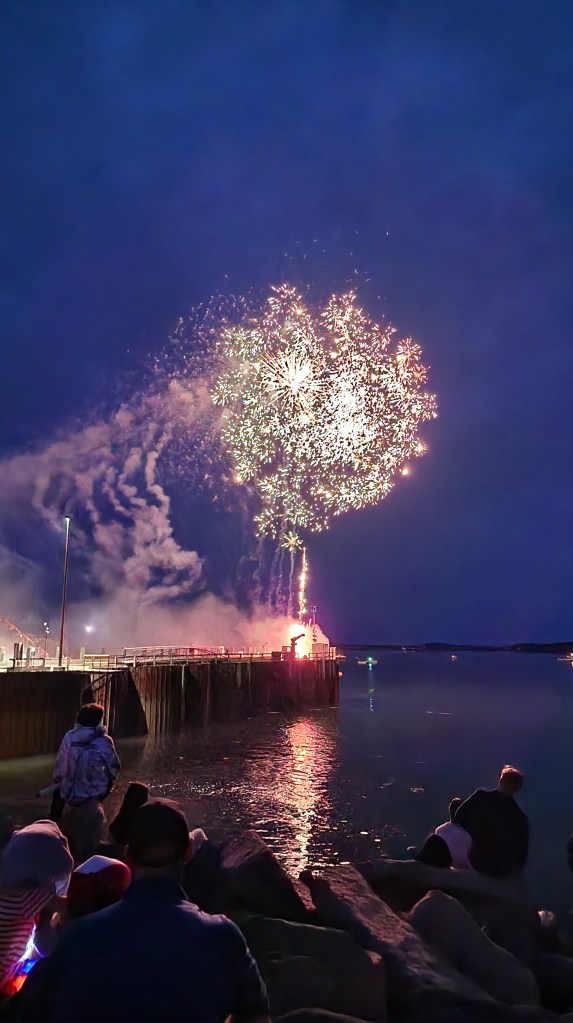
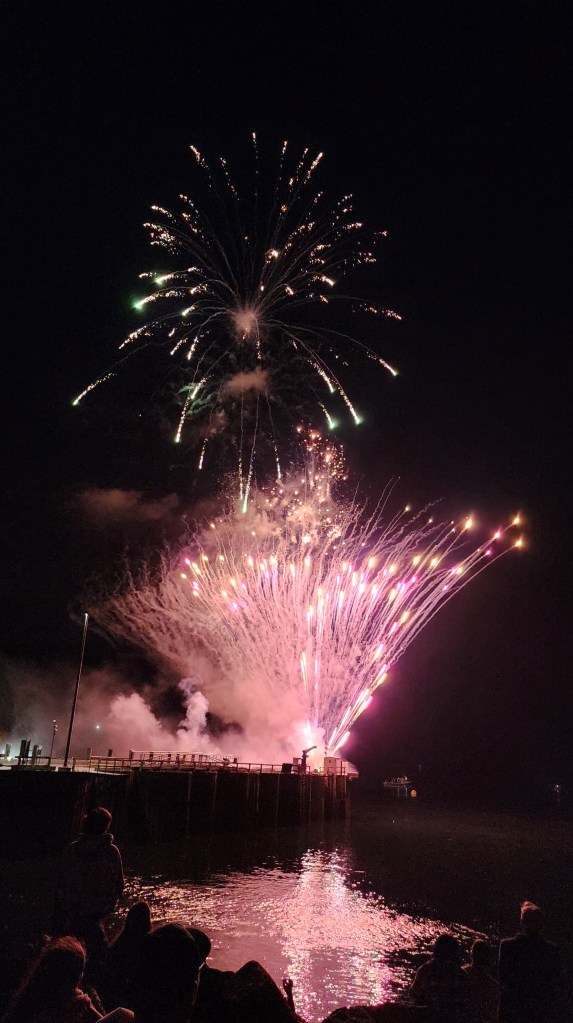
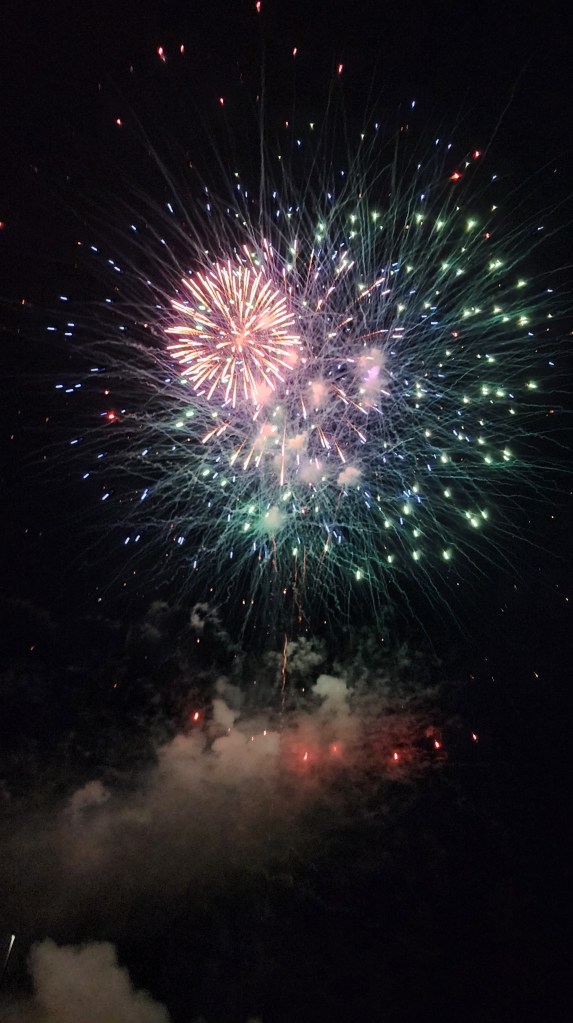
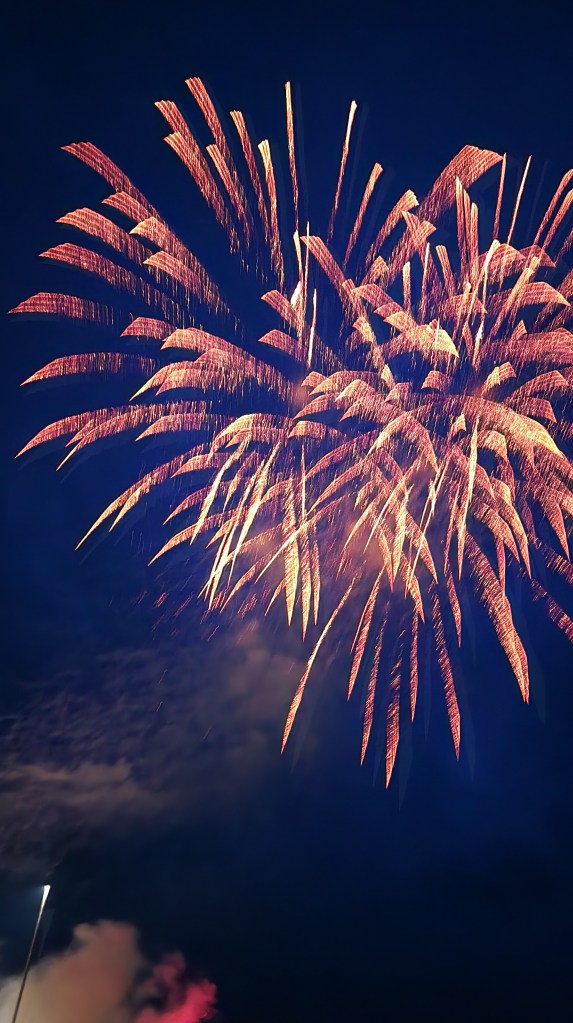
Have a happy and safe Fourth of July.
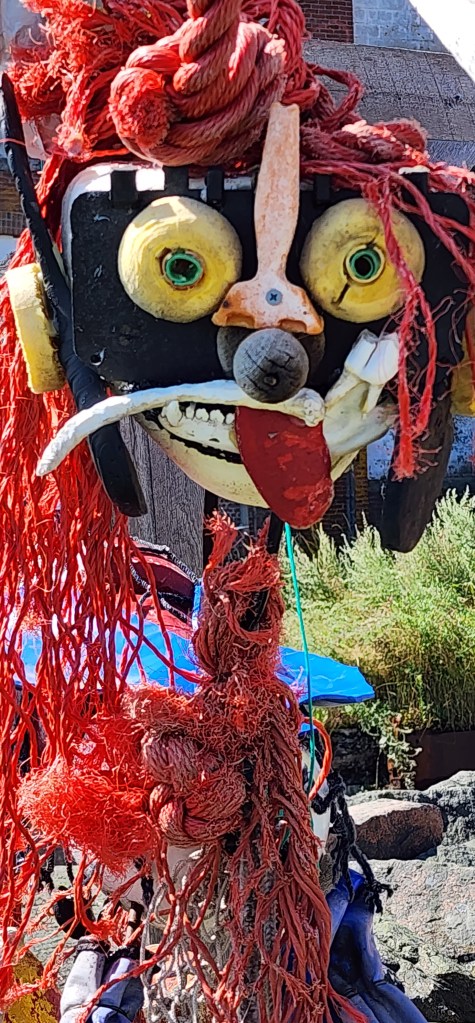
Lubec blue-collar artist Chuck Kniffen created Rosebud, above, and Unicorn, below, from debris found along the shoreline.

That’s the vein the poems in Hamlet: A Village of Gargoyles explores, carving them into dramatic stone, as it were.
The experience may even lead you to revise how you define yourself.
And this month only, it’s available at half-price. What a deal!

Check the ebook out at my author page at Smashwords.com.
 Jnana's Red Barn