LILACS

So when did this appreciation begin? When I lived in the orchard house, we had a big lilac bush at the corner of the yard – the one where the bees swarmed from the hive that one day.

But I think the real change happened that spring after my first marriage collapsed and I was finally in love again. I crowded the house with those cut blossoms and their fragrance. It’s enough to make me picture a blue silk kimono.

That was years ago, and many miles. Yet the lilacs are more precious than ever.

As I said at the time, when I lived in that last apartment, I vowed if I ever bought my own place, I’d get cuttings from a friend whose lilacs likely descended from the first ones brought to North America. Of course, I didn’t, and the owner has since moved into a retirement center.

Even so, these days, we have our own, screening the Smoking Garden from the street. One lilac had, in fact, grown as tall as the house – but hollow. It’s been work, restoring them to flowering condition.

Still, there’s nothing more luxurious than lilac cuttings arrayed in the bedroom, with their heavenly aroma.

So quickly, they pass.

QUAKER STREET

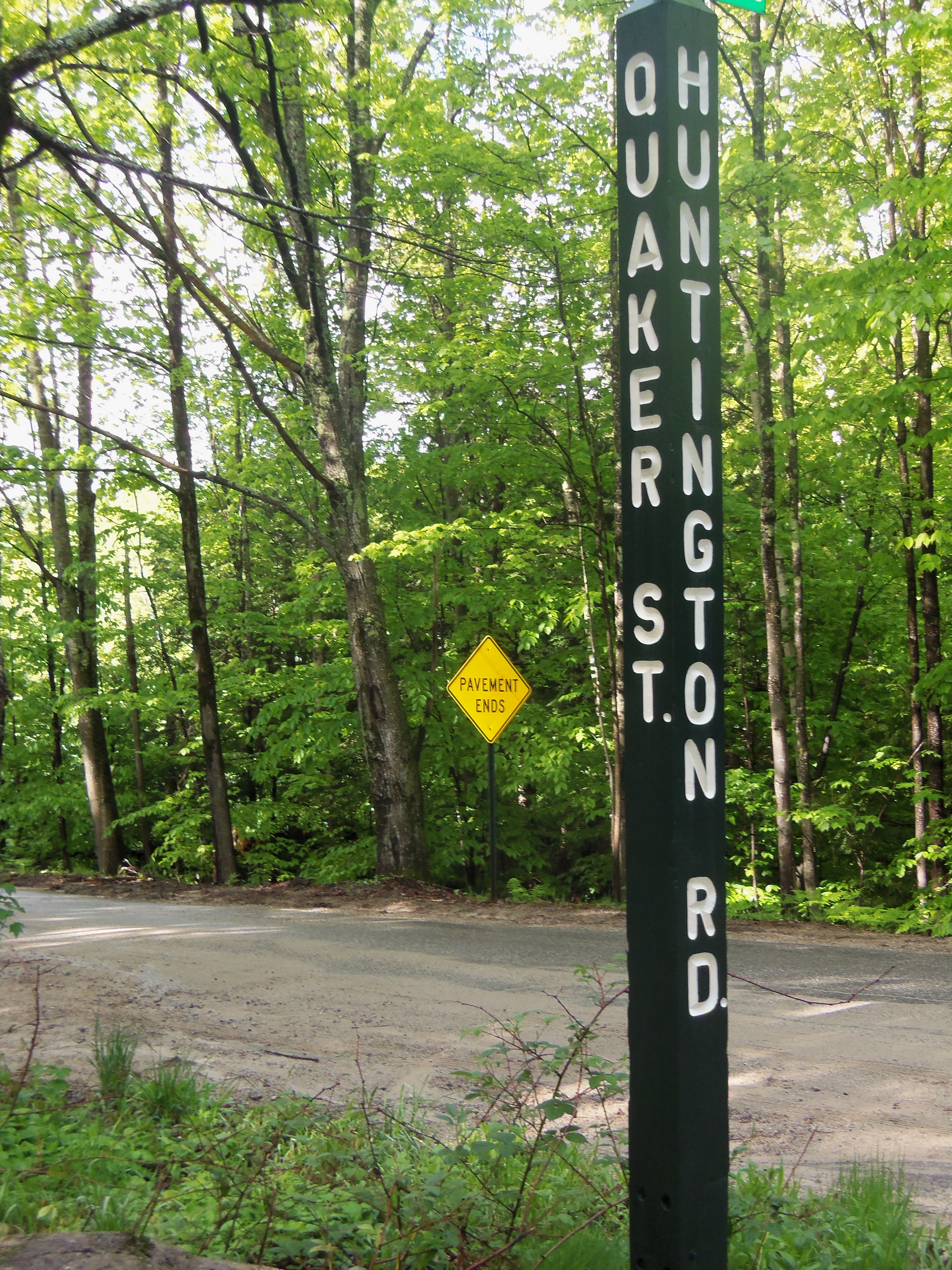
Note the yellow sign, "Pavement ends." It really does feel like a slower place.
Note the yellow sign, “Pavement ends.” It really does feel like a slower place.

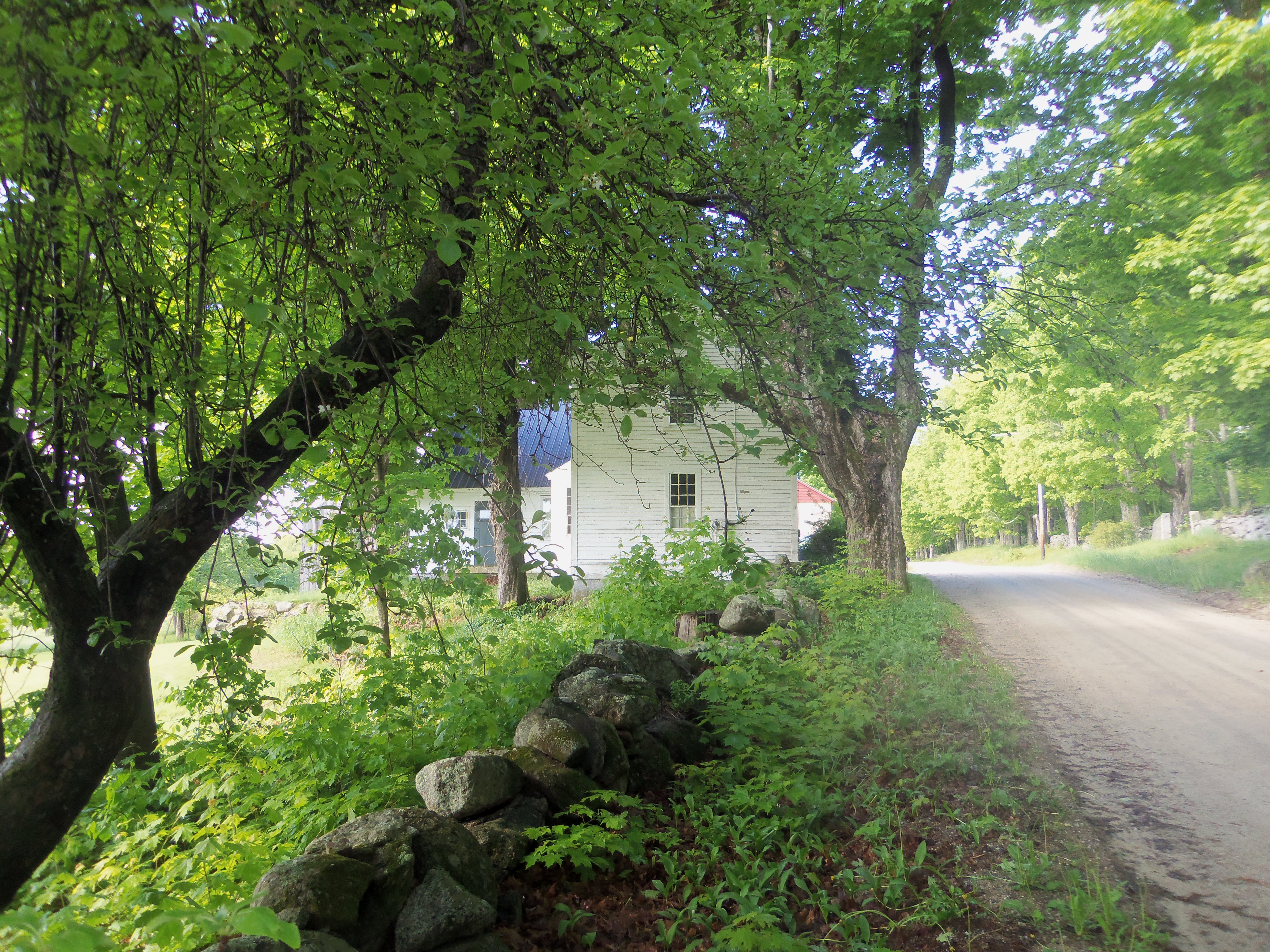
Taking its name from an old use of “street” as “neighborhood,” the stretch is also known now as the Quaker District. It’s up in the hills in a remote corner of Henniker, New Hampshire.

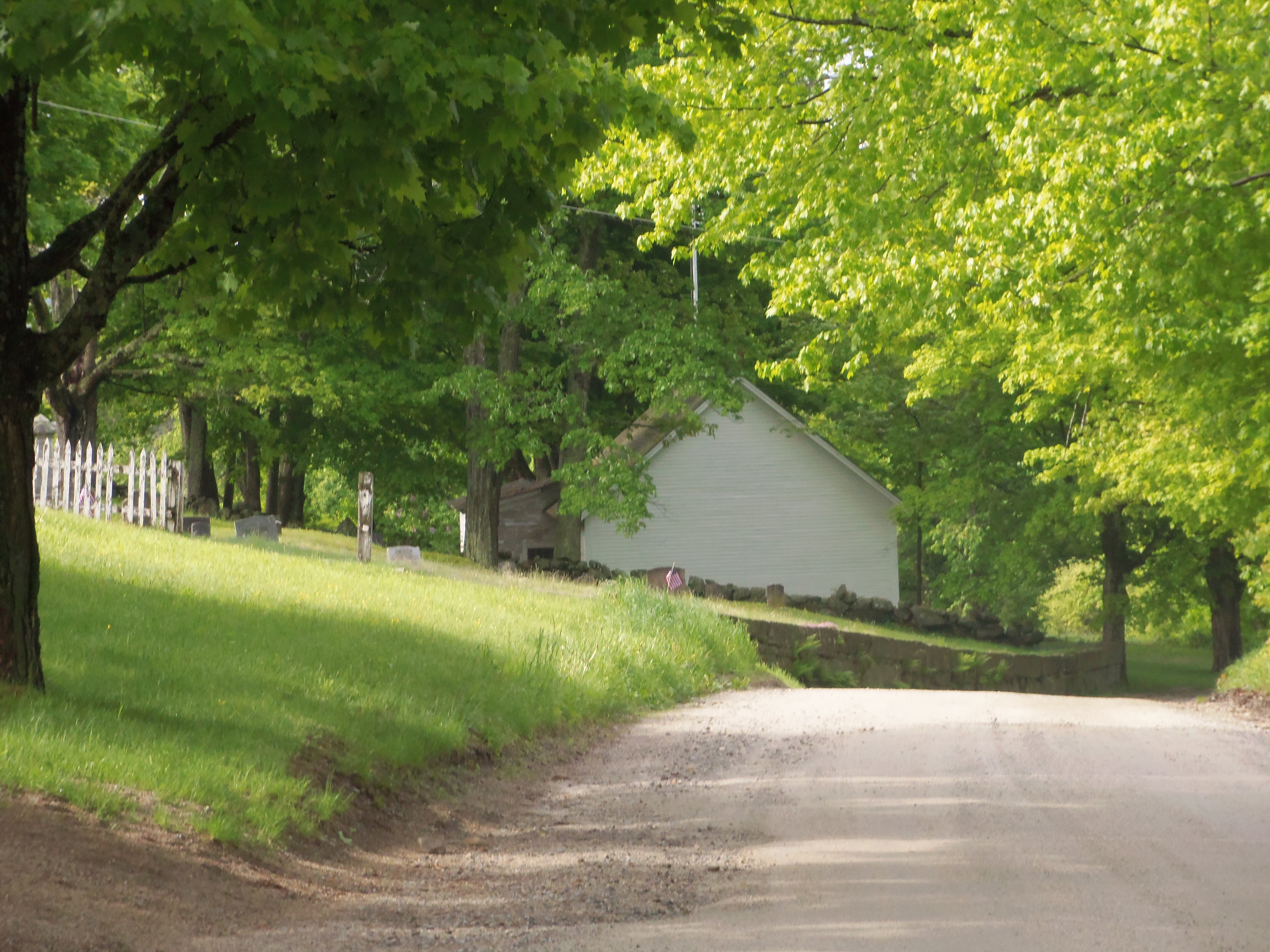
The road approaches the old schoolhouse.
The road passes a small Quaker burial ground next to the old schoolhouse.
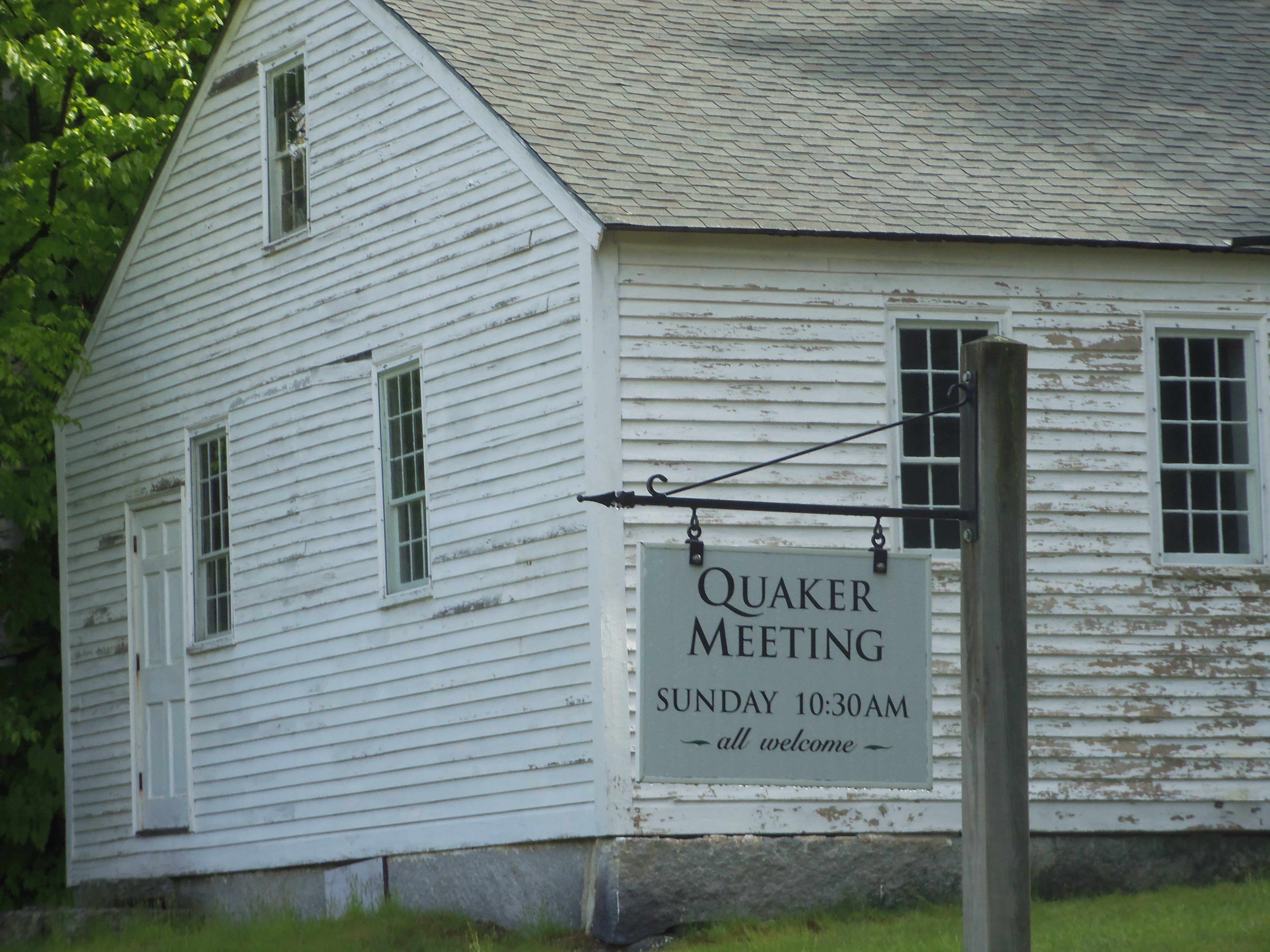
As the sign on the schoolhouse says ...
As the sign on the schoolhouse says …
The center of the village was the Friends meetinghouse, which is still in use.
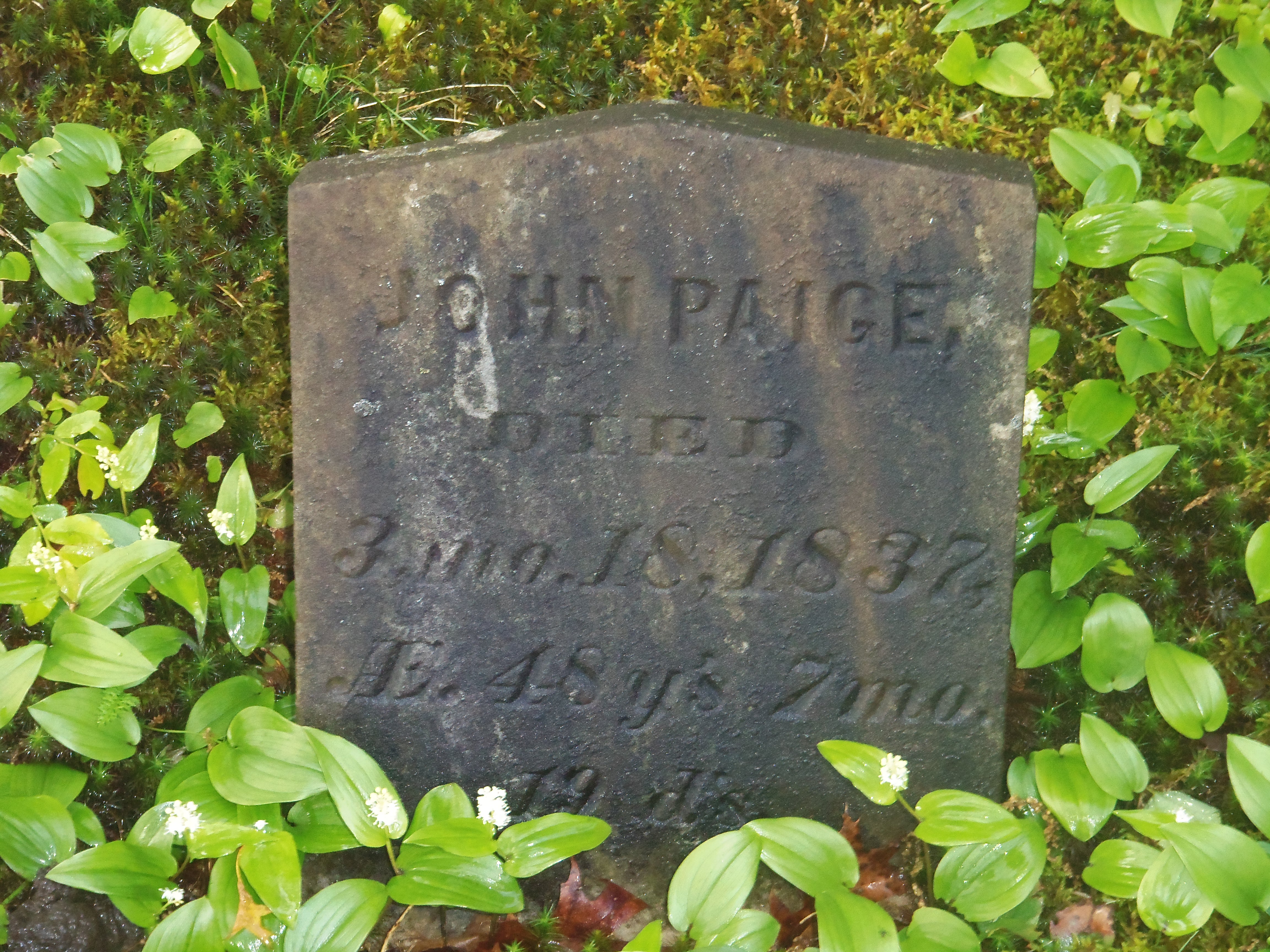
Many headstones in the burial ground use the old Plain dates.
Many headstones in the burial ground use the old Plain dates. The “3rd mo” is Third Month, or March.
Around the corner.
Around the corner.


WHAT WAS I THINKING?

Every writer, we can presume, has plans for the next work – or several. Tackling them, of course, can be another matter altogether, especially if the schedule’s already full, even before we get to the overdue house and garden projects. Or some equivalent.

Listen to other writers, by the way, and you’ll hear just how much of that schedule now focuses on marketing, including social media, to push already published work instead of doing the, well, not exactly “fun” part (it is, after all, work) but the passionate core that prompts the entire enterprise: drafting and revising. The very thing that makes us writers.

For me, much of that has also involved moving four decades of serious writing, however experimental, into the public access where adventurous readers might find the volumes. Places like Smashwords.com and my Thistle/Flinch site here at WordPress. To be candid, the backlog was inhibiting my ability to forge ahead on new work – not exactly writer’s bloc, but something more like claustrophobia? Having the remaining novels in the pipeline for ebook publication is a huge relief.

Let me repeat, though, about the necessity of marketing and how that should be the focus.

What’s taken root over the past several months, though, is another novel. One that just might pull my Hippie Trails series together a half-century later. That is, something that covers far more than just ’60s and ’70s. Am I crazy?

Well, maybe. What’s shaping up is far different from anything I’ve previously undertaken.

For one thing, I’m starting with an overarching structure – something approaching an outline, rather than my usual setting forth on a journey to see where an image or character or idea will lead. And then there’s little autobiographical here; it’s largely new territory, apart from tying up some loose ends from the earlier novels. The dictum, “Write about what you know,” gets readjusted to “Write about what you would like to know,” meaning more about certain ethnic groups I’ve encountered, businesses I’ve brushed up against, spiritual practices, histories, desires, losses. I’m even beginning with a commercial genre in mind, which means drafting from a perspective and in a voice far from my own.

I’m not sure this is a work I’ll actually finish. It may be too difficult. Or it may become more of a collaboration, perhaps with a circle of beta readers set at liberty to edit at will. (Have I ever written of my theory that what we know as Shakespeare was the product of a circle of very talented improvisers, whose inventions were recorded by the playwright? Almost a committee, if you will, except for his imprint on the final version.)

Different from anything else I’ve done to date? How about needing to finish a draft of the last chapter, along with a stretch of the opening, before writing anything else? Or heading off with 80 or so pages of notes for the middle, plus questions to pursue? It’s certainly driven by the characters and events that turn in directions I’d normally avoid.

What I do know from experience is how crucial it is to sit down at the keyboard when these juices are flowing.

CORMORANTS ON THE RIVER

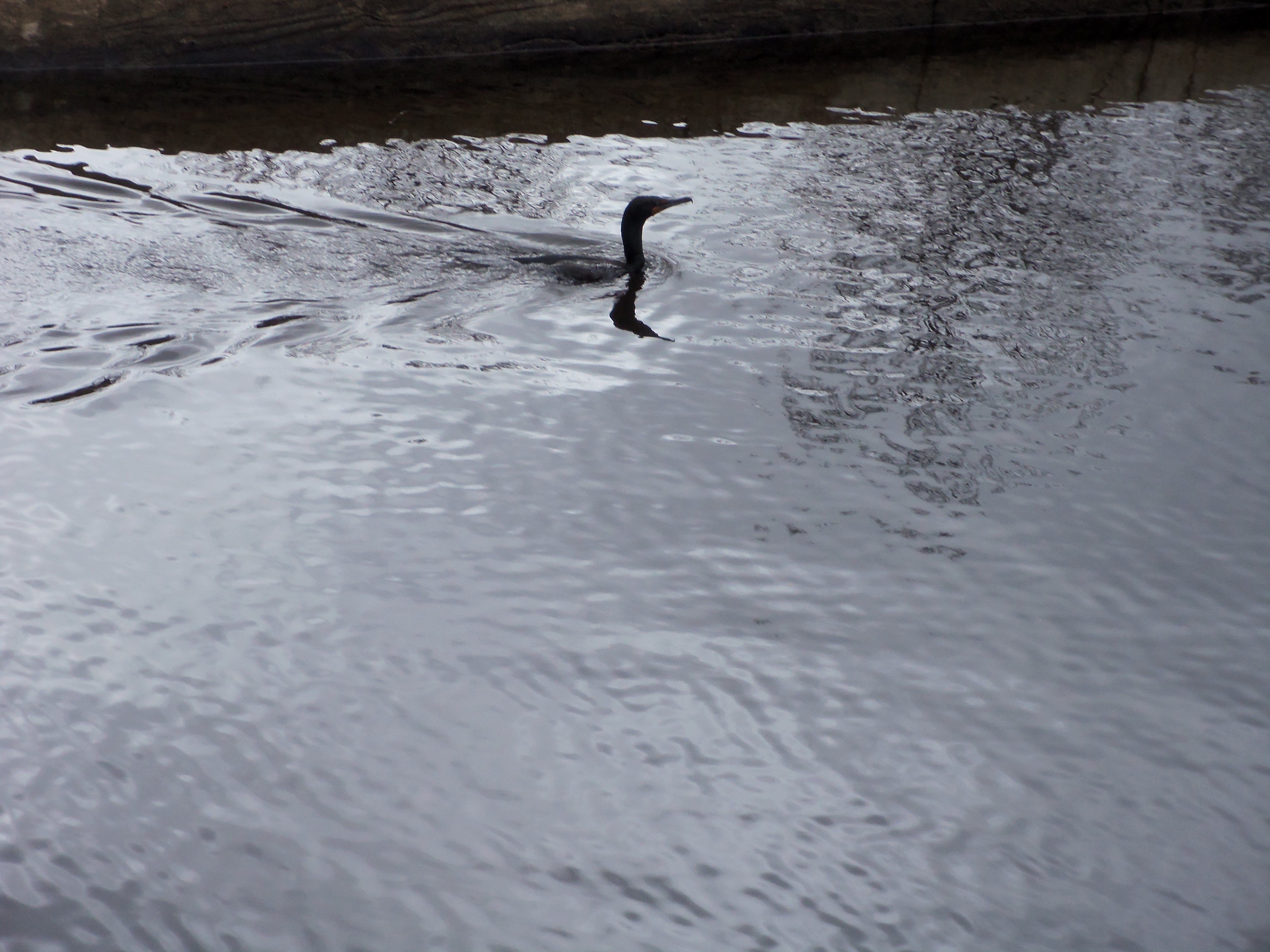
A cormorant cruises along the top of the Cocheco Falls dam in downtown Dover, New Hampshire.
Another watches for migrating fish.
Upstream, another watches for migrating fish.

When the river herring run from the sea into freshwater streams to spawn a new generation, the cormorants tag along, along with a cloud of fishermen.

The herring, which include the alewife variety, are part of New England lore. Look closely here and you’ll see them crowded in under the shade along the river.

River herring rest in a pool along the Charles River in Massachusetts.

THE ATTRACTION OF FERNS

As I said at the time …

It took eight springs in this household before we were finally greeted by a sequence of designed abundance. First, the pussy willow cuttings. Then the succession of flowering: snow lily, crocus, hyacinth, daffodil, forsythia, marsh marigold, tulip, forget-me-not, sweet woodruff, rhododendron, iris, mountain laurel. Accompanied by asparagus, rebounding after a season of root virus.

That’s not to say that any of it’s as orderly or magazine perfect as my wife would like. One neighbor jested our style’s too organic for that. Actually, it’s more like our budget.

Still, it’s quite an improvement over what we encountered when we first moved in and discovered most of our property was wet clay and neglected. Some portions had been landscaped with black plastic covered with gravel, which only worsened the water problems – extending to our cellar. Other portions were heavily shaded, with several nasty box elders and then a dead elm to be taken out.

While most of the garden has been my wife’s project – leaving to me the actual construction of raised beds and pathways, as well as the composting – I lay claim to a few exceptions: the asparagus bed and two small, heavily shaded panels behind the lilacs. The latter, each about forty square feet, are separated by a wood-chip passage. In our first year here, I shoveled off the gravel and dug up the plastic on one side of the pathway and began our attempts to plant ferns in the beds. Later, I dug up the pathway itself, removing the plastic and replacing the gravel with wood chips. The other panel would follow a year or two later.

I envisioned the footpath leading between two lush expanses of fiddleheads – woodland greenery right at home. A taste of deep forest.

The reality was that nothing wanted to grow there. We enhanced the soil repeated. Bought a few commercial fern varieties, which never quite caught on. My wife stuck in some other plants – lilies of the valley, wild ginger, lungwort, jack-in-the-pulpit – and they’ve taken hold. We transplanted ferns from the woods behind our best friends’ house at the time. Next year, I dug up more from along my commute, as well as the first of several seasons from another friend’s forest. Even so, come springtime, squirrels or slugs would mow down the rising green scrolls, while the surviving fronds remained tenuous and “went down,” as they say, earlier in the summer than I would have liked. In other words, forest undergrowth is hardly as natural as it would appear.

But this spring was different. In the older bed, the ferns came in thick and gorgeous – and after a few of the first fiddlehead stalks were leveled, we encased the plants in chicken wire to ward off predators. It worked. In the newer bed, which still has plenty of room to grow, one can see progress. “It’s where the other bed was last year,” we say, meaning we expect it to catch up. No, it’s not the uniform deck of fiddleheads I expected, nor is it the waist high ferns of a forest where a friend lived last year. Rather, it’s a celebration – at least six varieties (we’re not technical; fern identification is quite tricky) – with Rachel’s other plants and a few star flowers and Solomon’s seals thrown in.

* * *

What fascinates me is the variety of the fronds themselves, and how they now spread through in the bed. Some are fine-toothed, while others are broad. Some are bright green, while others show more blue or red. Some shoot upward, while others spray outward. If some are finely etched, others are painted with a broad brush. There are degrees of delicacy, fragility, and geometric interlocking arcs and angles. While the asparagus comes to replicate a tall fern with its feathery fronds, it spikes from the ground, unlike the uncoiling fern stems. This unfurling, in fact, seems to suspend time in space, especially in a few precious weeks when spring is taking hold. There’s something modest in the way ferns float only a foot or two above the ground or the way they crowd in along a wall or fence; something amazing, too, when they take hold in a boulder or cliff. When I gaze at my two fern beds, I must acknowledge that despite all my labors, this is what I have, or at least what’s survived. It wasn’t the plan, exactly. Maybe that’s what makes it all the more remarkable in my eyes.

A bigger question asks just where my fondness for ferns originates. I don’t remember them from the woods in my native Ohio or boyhood backpacking along the Appalachian Trail. I acknowledged them in the glen at the back of a farm I inhabited while living Upstate New York, and later at the ashram in the Pocono Mountains of Pennsylvania. I do remember being stung by the scorn of a Californian while hiking in southern Indiana, and then being enchanted in the array within rainforest in Washington State. Returning east, I kept Boston ferns in my apartment windows, vowing if I ever owned property again, I’d have ferns.

So memories and associations fit in here. Tastes of the past, and souvenirs of discovery. A reminder, too, of how forest touches my soul. My wife is moved more by flowers. I, by the gentleness of ferns.
AT THE HEART OF AN UNDERLYING TENSION

As I said at the time …

In these reflections on Quaker practice, I’ve tried to avoid overt theology. Leave that for messages in worship or for “nuts and bolts” workshops. My focus has been largely on ways our faith comes together in community and some of the quirky sides to that.

This time, though, I want to remind us that the foundation of Meeting is our experience with the Divine – by whatever name we use, or however personal or transcendent the relationship. What is often seen as a tension between peace-action Friends and contemplative ones – or universalist and Christocentric, depending on the particular discussion – can be turned on its head: in Beyond Majority Rule, Jesuit Michael J. Sheeran argued “the real cleavage among Friends is between those who experience the gathered or covered condition and those who do not.” How astute!

There’s a difference between Quaker culture and Quaker faith itself. Since most of us in Dover Meeting weren’t raised Quaker, we’re not steeped in the culture, but we’ve adopted it, to whatever degree, in our own lives all the same. (Or at least like to think we have.) It’s more subtle than it was in the days of Plain speech and dress, but it’s there all the same. The faith part, of course, is at the heart of our worship.

We can ask ourselves if we were led to Meeting more by the culture or by the faith, and then ask how one activates the other. Jim Wallis, the evangelical editor of Sojourner, sees social action arising from the faith as an imperative. In a similar vein, one might see how central the Peace Testimony is in the teachings of Jesus, and how hollow the Christian message is without it. One lights up the other when the culture and faith move together.

Using the language that’s come to represent my experience, this is what happens with Christ amongst us. How do you express it?

BACK IN THE POOL

Physical exercise has never been high on my list of activities – at least until I discovered hatha yoga a year after I graduated from college. From the time of required elementary-school gym classes, or phys ed as they became known in high school, I found the experience largely tedious – there were always better things to do. And calisthenics were simply mind-numbing. As for that lap around the track? The teacher who told a student it was good for a broken leg – true story, I was there – convinced me the male authority figure we were dealing with was an idiot. Or just insane. Yes, I did enjoy hiking and bicycling but they fell outside the sphere of “exercise.” Ditto for the contradancing.

The major exception was my first winter after college as I swam regularly at the local university indoor pool – a privilege that came through my roommate’s girlfriend, who happened to be the chief lifeguard. This was just before taking up yoga, come to think of it. (The school wised up later and started charging “outsiders.”)

And then? Well, I tried several times to get a regular routine going, but nothing ever took hold. And then when I retired from the office and changed medical plans, my new doctor began encouraging … maybe not running the way he does, but something cardio-vascular. Oh, my.

Tick-tock to last Christmas, when my beloved elder stepdaughter gave me a yearlong pass to our city’s indoor pool. Meant having to go through some hoops, of course – the whole matter of scheduling, locker rooms, gear. (I’ve always had to use nose plugs – my sinuses are horrible – so where do you find a new pair in January?)

Let me say, the first month was embarrassing – three laps just three times a week. And then Doc insisted it be daily, or in my case, five times a week. What happened to the two dozen lengths or more I used to do without pausing? These days, I could barely breathe.

Three months later, it’s up to nine laps – a quarter of a mile – but I do have to pause every length or two to catch my breath. But it’s getting easier, generating less resistance. I’m still not getting much sensation of flying, something I used to appreciate, but it’s coming. Or even a feeling of being one with the water.

But, hate to admit this, I miss the feeling on the days I can’t go – the weekend, mostly, when the available hours don’t match mine.

And then there are the casual conversations with fellow swimmers. Nice to know I’m not alone after all. As for the embarrassment? Ah! Not anymore. We just keep plugging along. Or I just say I’m trying to keep my physician happy. Not that it matters.

GRANITE STATE’S QUEEN CITY

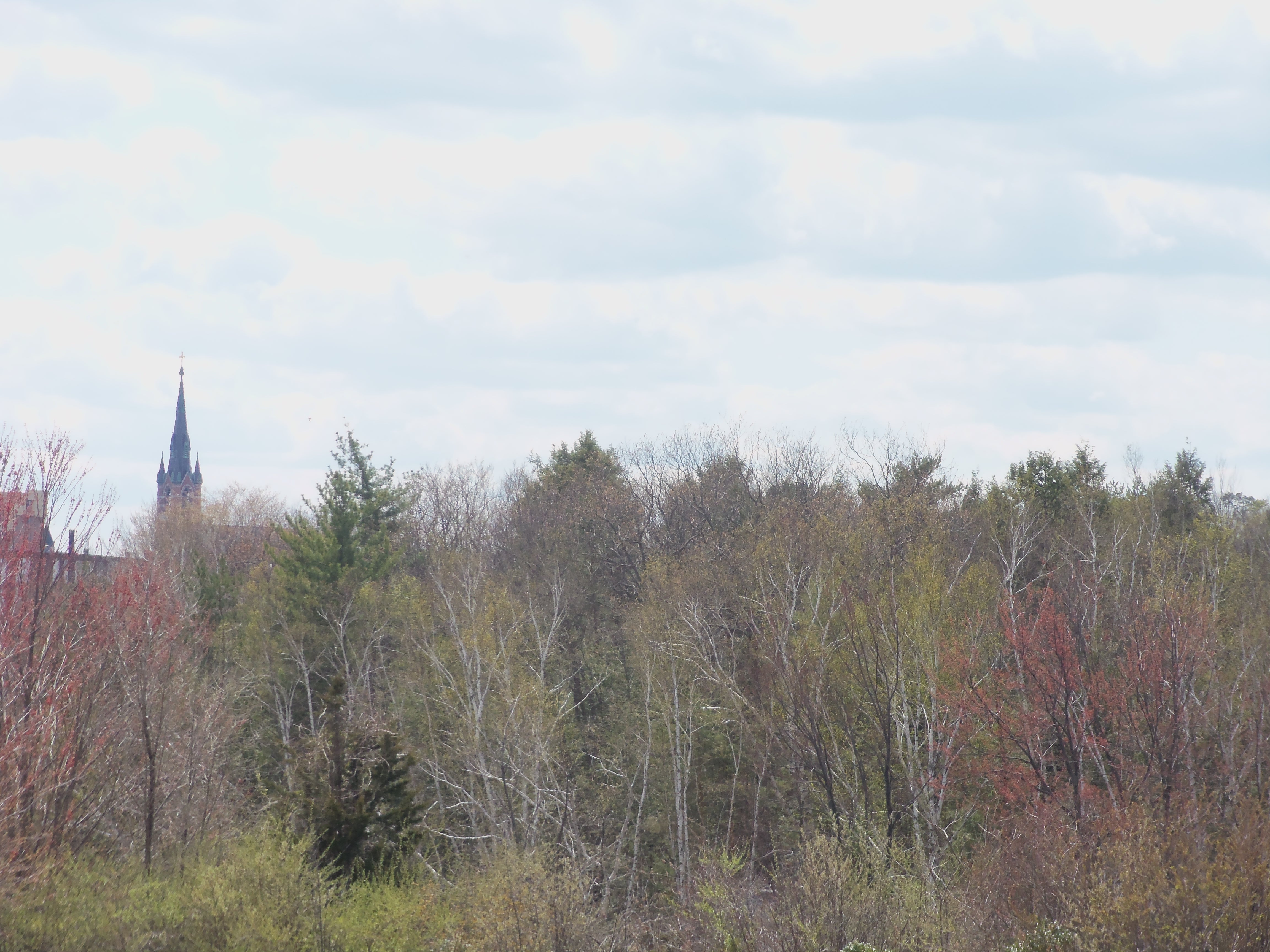
Seen from the falls, Ste. Marie Roman Catholic church crowns Manchester's French-Canadian West Side.
Seen from the falls, Ste. Marie Roman Catholic church crowns Manchester’s French-Canadian West Side.

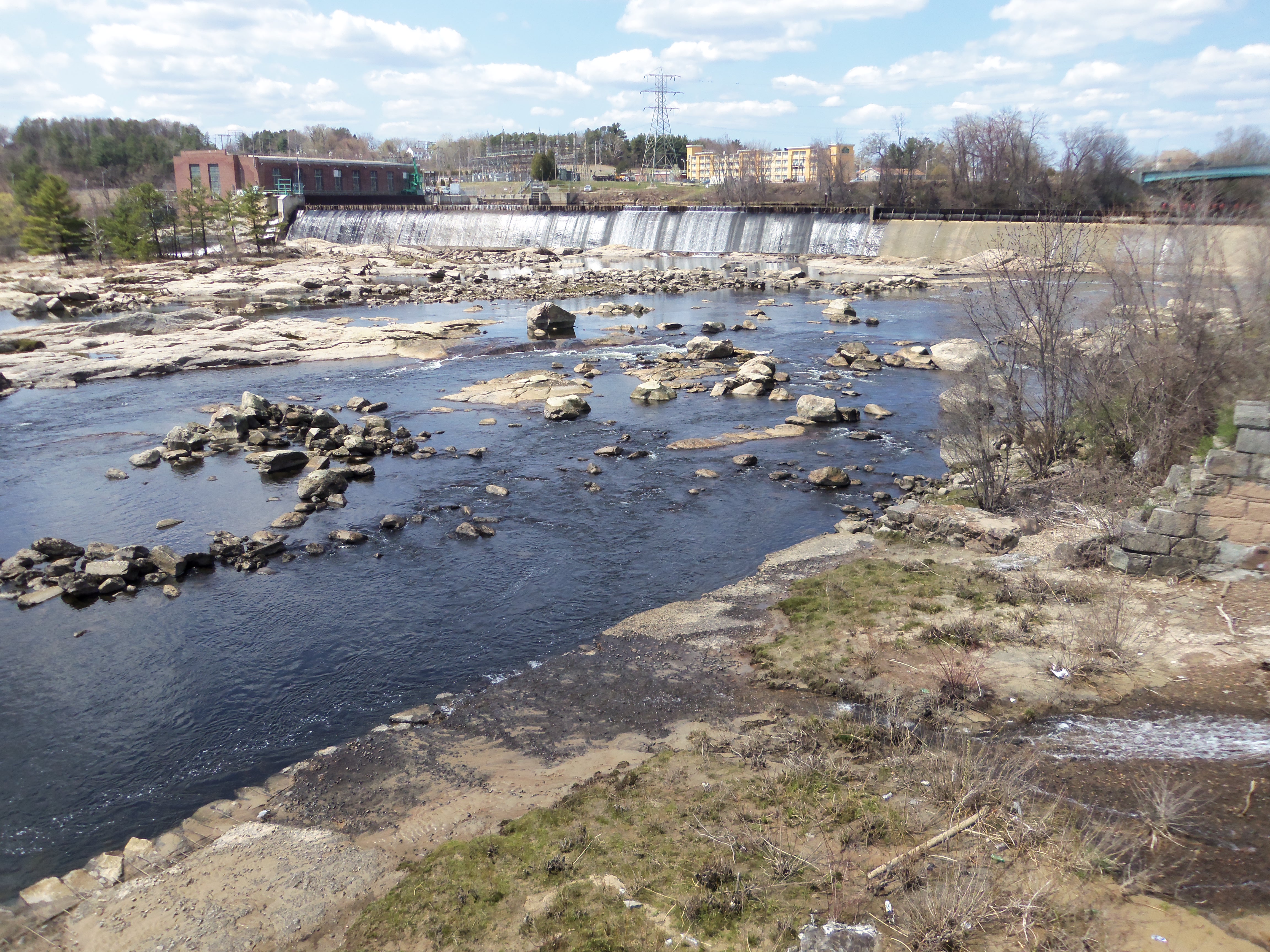
As the largest city in northern New England, Manchester was built on the water power captured at the Amoskeag Falls in the Merrimack River.

The Amoskeag Falls, now submerged behind the dam in the Merrimack River, were the source of the city's industrial power. A hydroelectric dam sits at the left of the photo.
The Amoskeag Falls, now submerged behind the dam in the Merrimack River, were the source of the city’s industrial power. A hydroelectric generating station sits at the left of the photo.
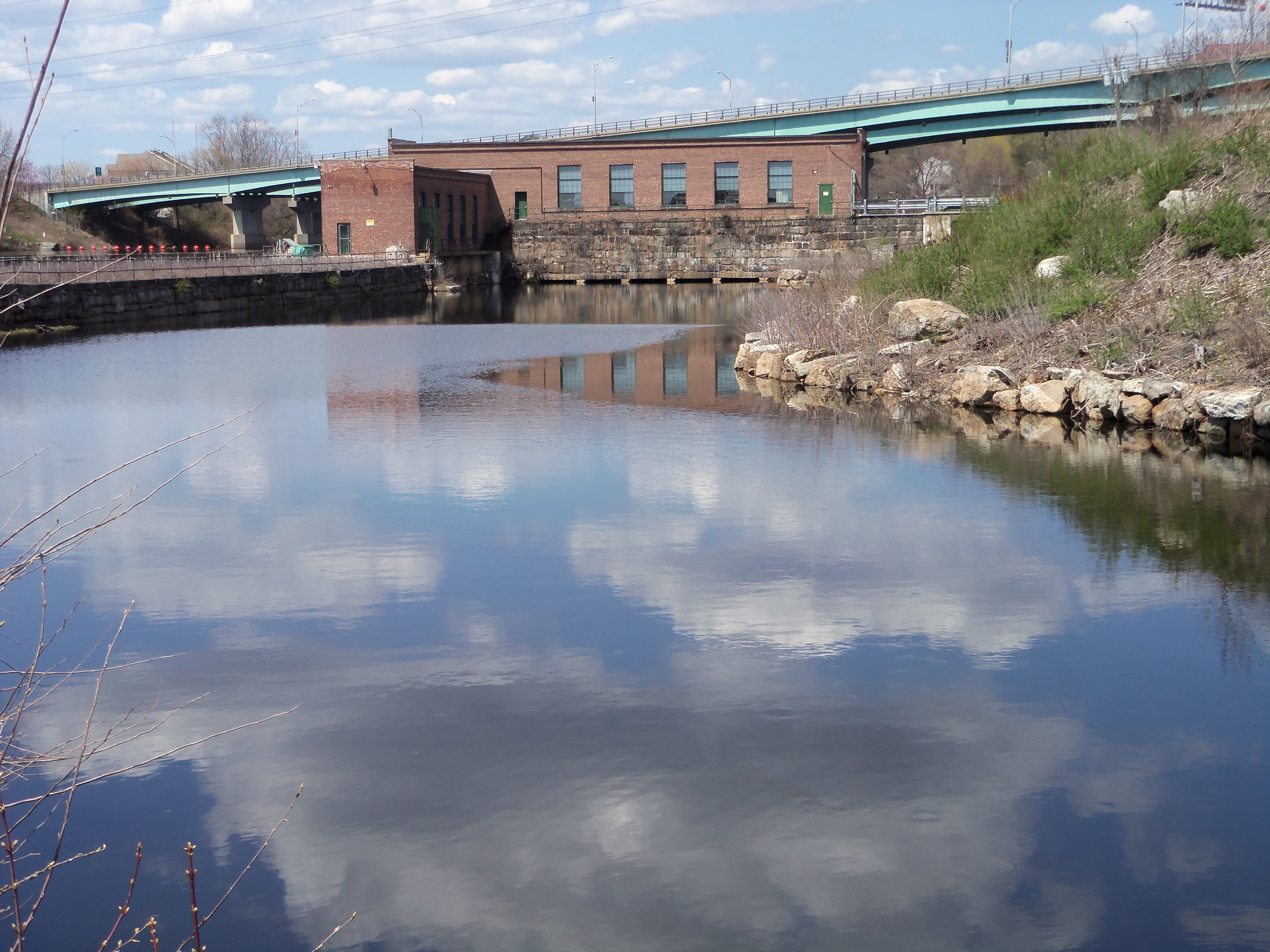
A large complex of mills on the east side of the river was powered by the water channeled through this canal.
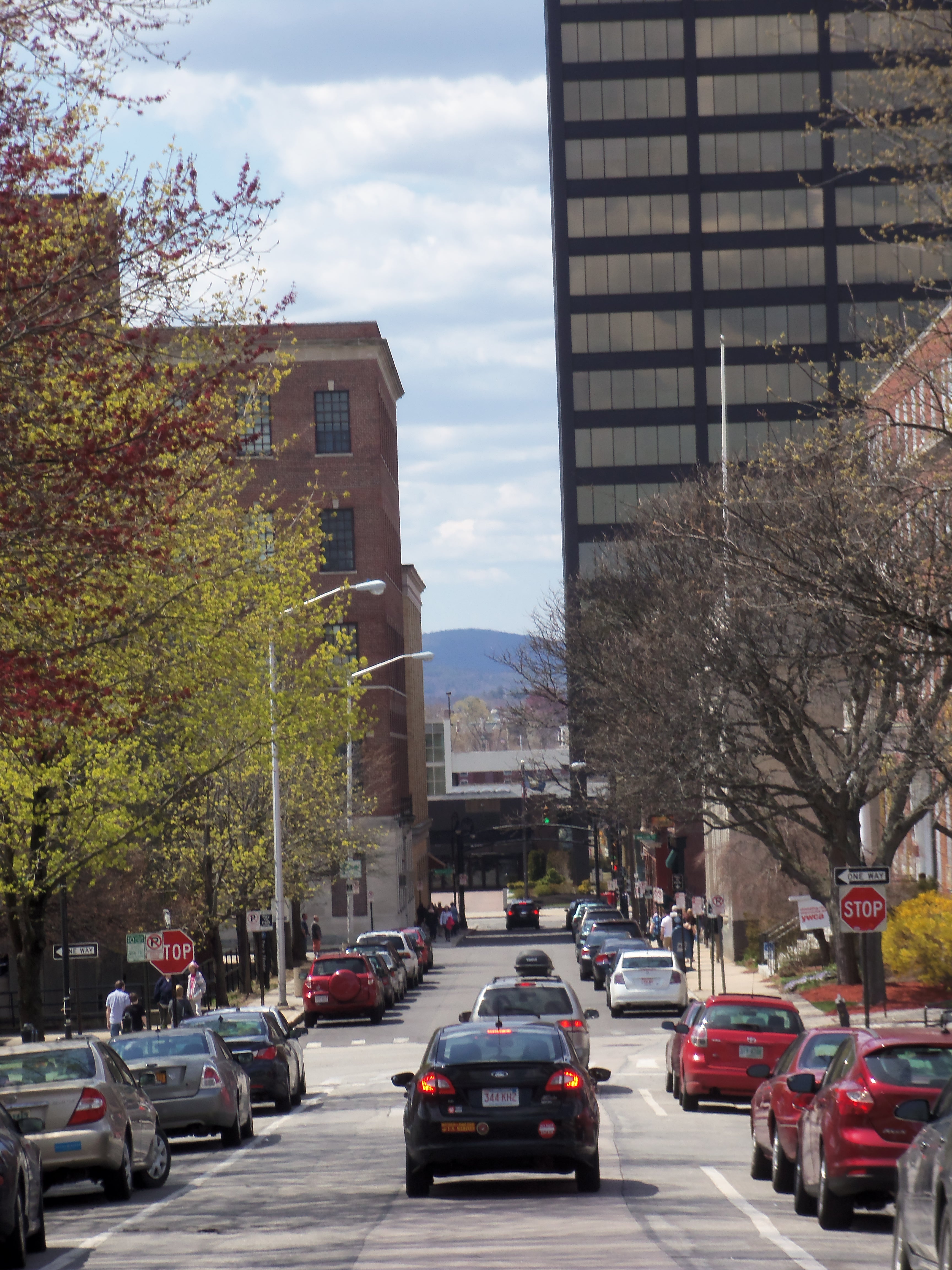
The downtown has undergone a revival. Here's one of the side streets.
The downtown has undergone a revival. Here’s one of the side streets.


A LITTLE AFTER THE FACT

So there we were a few days ago, finishing our Chinese dinners before dashing down the street to choir rehearsal. After cracking open my fortune cookie, rather than reaching into my pack for my eyeglasses, I asked my companion if he’d read my little slip to me. (Ah, the joys of getting older.)

After he recited my fortune, I replied, “You’re making that up, right?”

I was rather impressed, actually, and he does have a great sense of humor. Not bad for improv.

“No, here it is. You read it.” Which I did:

You are a lover of words someday
you will write a book.

LOOKING FOR THOSE LOCAL DISTINCTIONS

As I said at the time …

Greetings again from this old mill town along the Merrimack River.

There is still a special feel to an octavo-size, typeset journal – a unity of design and purpose carried throughout – even in this era of desktop design and photocopy wizardry. A major challenge, whether it’s in shaping a literary journal like yours, a daily newspaper, or even an old-fashioned country dance, is simply: what can we do to make our own locale distinctive?

An example: a few years ago, the New England contradance scene was becoming generic: you’d drive for miles to a village town hall only to find the same faces and same pieces you had faraway the week before. Fortunately, that seems to be changing as different callers, musicians, and promoters are striving to put their own distinctive signature – and a local stamp – on each venue. So there’s your challenge!

I’m struck by the fact that even familiar voices from our round of journals seem to sound different in varied locales. If you’ve ever been around paintings, as I was when married to an artist, and seen a piece go from her studio to our living room to an art gallery to a major museum, you would be amazed how different it appears it each setting. Publishing is the same.