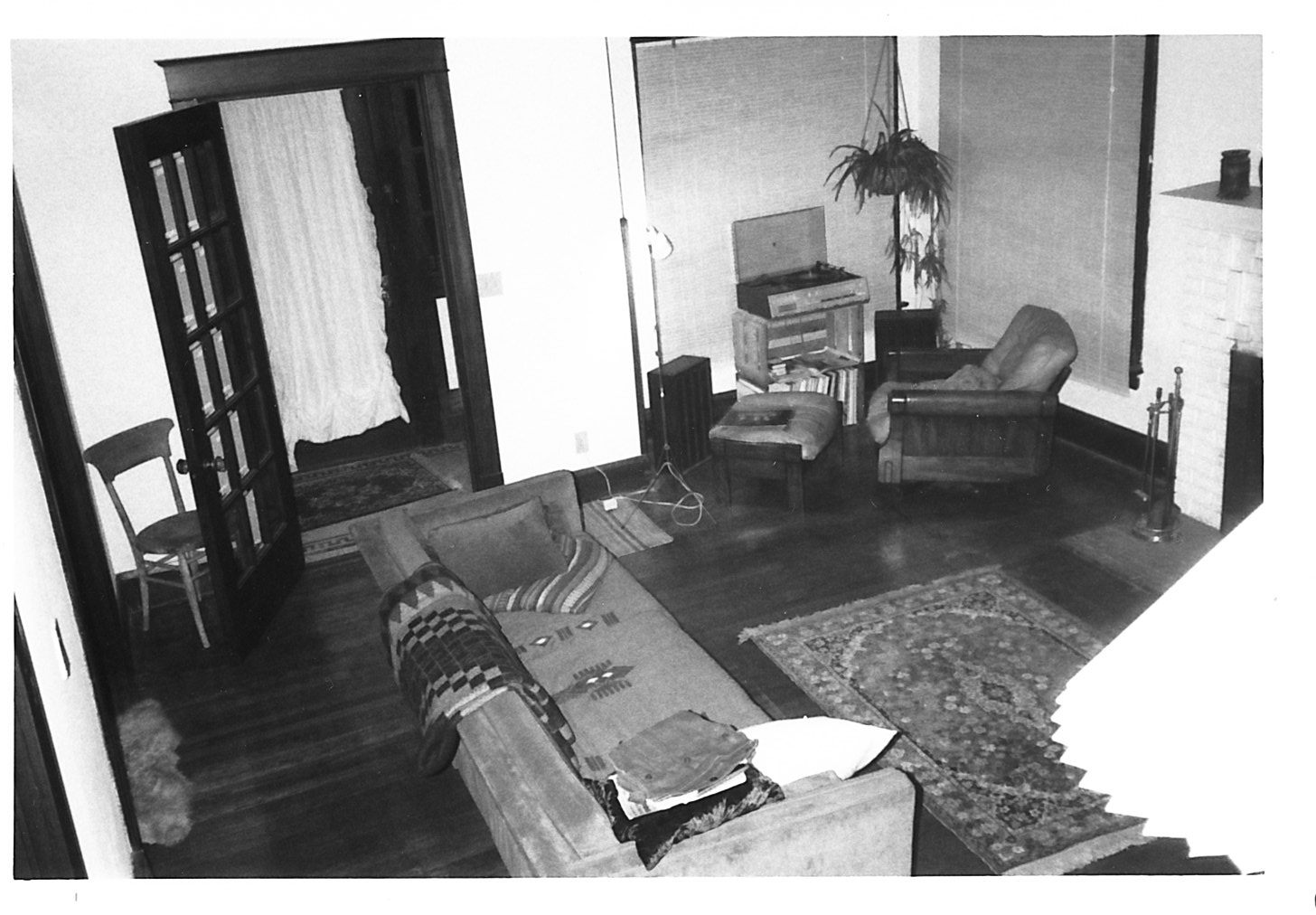
Many New England farms traditionally had their barns connected to the farmhouse, no doubt because of the deep snow and vicious cold each winter. Sometimes the additions seem to run on and on.
OH! WOW!
Gourmet is one of those words I’ve come to detest, in large part because it’s lost any genuine meaning. Well, these days it’s usually an excuse to charge more for an assembly-line product, but that’s about it. As an adjective to suggest quality, it rarely reflects excellence. As for its other definition, as a noun, we have glutton or pig.
So here I am thinking once more of the “wow factor” on our tongue and palate. It’s the surprise that accompanies an amazing first morsel or sip, when our reaction is “Oh! Wow!” in discovering the treasure before us. Often, it’s uttered before we’re fully conscious of doing so.
I know those who take the over-the-top approach here, adding and adding to a dish until it’s simply overwhelming. Or taking a drink to near-lethal alcohol levels for its whammy.
For us, the “wow factor” is more simply direct. It honors the ingredients and makes them shine. It knows there’s no substitute for freshness, and its techniques aim at enhancing that.
If you want to read more of this philosophy, Angelo Pellegrini’s writings, as my wife attests, lay it out delightfully. A generation before Julia Child, he began instructing fellow Americans on the ways of applying homegrown herbs and spices and appreciating the pleasures that follow. His lovely essays are about gardening as much as cooking, along with a few diversions like making your own wine or the joys of being a granddad.
I come back to this each year as our own garden kicks into gear. Forget any argument that gardening is cheaper – it’s not, even before you consider your own labor. It’s the taste that accompanies freshness – sometimes while the strawberry’s still warm from the sun or the lettuce was crisped earlier in the afternoon. Real tomatoes in contrast to the impostors at the grocery are another matter altogether. I’ll go ten months without the latter, if necessary.
We managed an overnight getaway to the Cape recently and decided to try the bakery-bistro combination across the highway. There are good reasons the line’s out the door in the morning. As for the evening, when we decided to stop for drinks and appetizers, we figured we could walk home rather than drive.
As I was saying about Wow? From start to finish. Let me warn you, it wasn’t cheap, not even by today’s average. But it was worth every penny – something I won’t say for any of the chains where I’ve eaten in the past few years. And what they’ve done to the former clam shack in the past six years is amazing – you’d never guess something this charming could come out of something that had been so decrepit.
I’ll try not to go into a restaurant review, but let me say I never imagined corn (fresh, local) could be pureed with (forget the cooking-school terms) the sweat from a baked salmon to produce a cold soup this heavenly. As for the oysters on the half-shell, the presentation was breath-taking – generous in the ice, accompanied by the in-house sauces – but the oysters themselves were fat and succulent, the way they are in November or December, fattened up for winter, rather than this time of year. Responding to that observation when chef/owner Philippe Rispoli stopped by our seats at the bar counter, we heard his pride in working with Richard Blakeley and paying top dollar for the best. I know this was Wellfleet, but I’ve had Maine oysters that have surpassed what I’ve had in other establishments in town – until now. As for their variant on Oysters Rockefeller, we go back to Wow.
We ordered wine by the glass – and our sauvignon blanc was priced reasonably, and the portions were generous. Perfect.
My wife, always a critic when it comes to food, declared her pate to be everything she’d hoped for, even before she got to the accompaniments and salad. The vinaigrette, as she noted, was amazing – whatever measurements he’d worked out, there’d be no changing this recipe.
Curiosity taking priority over any appearance of sophistication, we also ordered a side of pommes frites – or French fries, to most of us. They arrived in a glorious presentation with a red-and-white checkered napkin – and one bite once again went Wow. The chef asked how we liked them, grinned in response, told us he made them himself.
I should explain that we’ve decided fries are often a reliable test of a restaurant’s ability. Are they straight from a supplier’s frozen batch – or made from scratch, like these? Are the outsides hot and crusty and well seasoned, like these? Or limp and flavorless? Are the insides creamy and yummy, like these, or merely whatever?
The test also extends to a restaurant’s attention to its frying oil and batters – fried onion rings are another big litmus test here. Light and fresh? Old and heavy? As we say, “They do cooking oil well.”
OK, if you’re planning a trip to Cape Cod (I first typed that Cape Cook, make of it what you will), I won’t keep the place secret. Just click here.
WHO’S TAKING A PASS?
It’s bound to appear, the bumper sticker, at least where I live:
LET’S DEFLATE
ROGER.
NATIVE INSPIRATION
Dwelling at the edge of a large Indian reservation, I found it impossible to ignore a vibration in the earth itself of their spirit.
Had I remained there a few more years, I no doubt would have collected turquoise-and-silver jewelry, the work of many Native masters.
Sometimes I still see their inspiration in the stars, though. Especially on a clear night. A very clear night, at that.
~*~
To see how it’s inspired my collection of poems, click here.
BOULANGERIES AT THE BASE
Julia Child liked to emphasize technique as the foundation of French cuisine – starting with the ability to create traditional sauces and custards.
But lately I’ve been thinking of something even more basic and yet distinctive – bread. Yes, the transformation of dough into a baguette or croissant. Seemingly simple, yet utterly heavenly when masterfully done – and so often delivered and sold in pale imitations, probably even in France today or more commonly across America. Admittedly, there’s a great deal of technique required in doing these right – along with the unique steam-infused, high temperature ovens designed expressly for the purpose.
Maybe that’s why two of our favorite bakeries – or boulangeries – each share their building with a celebrated New England restaurant, one in Maine, the other in Cape Cod. These restaurants know the importance of bread.
Put simply, let me argue that based on its breads and pastries alone, French cuisine would rank high on any global listing. You can add other categories as you wish – from soups to wines to desserts – but let me return to that moment of sitting on the back porch of the house where we were staying, sipping coffee and white wine and munching on bread and pastries we’d just picked up across the highway before dashing back. We were there, in line, at opening – and when the doors opened a few minutes after the official time, all we got in greeting was cheerful “Bonjour,” sans apologie.
Not that we’re complaining. Definitely not.
We’re both still marveling at the sight we’d caught of a baker transferring the rows of baguette dough from the tray to the rack for the oven. I’ve kneaded hundreds of loaves of bread, and none have ever been so smoothly gorgeous. It was like watching a fisherman with his catch, actually. We can only imagine how each armlike roll feels to the touch or the baker’s gentle caress in lifting it and arranging it anew in its rows for baking.
Coincidentally, my wife’s started reading Bread Alone, Daniel Leader’s eye-opening discoveries as an American who backed into preserving the old ways of French baking artistry. Since then, he’s made a success of it in Upstate New York, of all places. His is a delightful story full of unlikely twists of fate and French characters, along with some definite opinions about flour and approaches and some detailed recipes for the exacting aspirant – or professional baker.
I return to a concept of simplicity as leaving one with no place to hide, no disguises for shoddy workmanship, no excuses. Simplicity instead as a goal of mastery, competence, elegance. In other words, good work.
For now, though, I’ll just savor the delight of what’s fresh, carefully crafted, and unpretentiously good – slices of crusty bread with soft butter and a glass of chilled vinho verde, for instance, to accompany a green salad of lettuce straight from the garden. Well, the homemade vinaigrette might take some finessing.
For me, a perfect summer repast, especially when shared in good company.
CHAUNCY CREEK

This lovely tidal channel links Pepperell Cove to a town park called Seapoint and sets Fort Foster off on its own island.


NORTHWEST OASIS
Three hundred sunny days a year in a fertile land may seem like Paradise.
But it’s surrounded by desert. And every irrigated ribbon of orchards was a relief.
~*~
In rain on Mount Cleman, sage and conifers become cloud wisps treading updrafts. Black talus glistens. The mountain’s so quiet that what seemed important hardly matters any more. Boulders float past the relics of the lookout, elevation 4,884. Step away. Over the edge, where black scree cascades, the carbon rods and oxidizing metal loops and plates of electrical batteries from some previous decade are now scattered among elk and deer scats. On downed trees and furry branches, too. A battered coyote skull stares up between shellrock. The mountains gasp repeatedly in their wrinkled embrace of limbs stretching out from the forest. Cupping vistas of orchards and rivers, the desert yawns.
~*~
For a free copy of my newest novel, click here.
GOLDEN DETOUR
The land was often golden in the bright sunlight. Not green, but a permanent range of yellowish brown only flecked with green in a few weeks of spring passing.
Once I adjusted to its palette and air, I hoped we’d live there forever.
~*~
It’s the background for some of my novels and poetry now appearing at Thistle/Flinch editions. To read more, click here.
WATCH THOSE DRINKS
A soft drink of local note – or notoriety, depending – is thick, dark, bitter Moxie. Think molasses. Or patent medicine, as it originated.
The soda has a cult following, something that mystifies many of us. Well, in our part of New England it’s something like Dr. Pepper is elsewhere. Hardly a universal taste. Either you get it or you don’t.
Well, there’s also Red Bull, which commonly gets teamed up with Jagermeister – as the Jagerbomb. The rumor is it’s so popular with underage drinkers that anyone buying Jagermeister at the State Liquor Store will get carded, regardless of age.
So the other day I noticed one of our neighbors sitting out in the sun and sipping … Moxie.
What, no Jagermeister with it?
No, he said smoothly. Moxie goes with Captain Morgan.
LESSONS IN PICKING BERRIES
“You’re a gardener?” I’m occasionally asked, only to reply, “Not really. My wife is. I’m the compost master – and I like to eat.”
Well, I also do a lot of the harvest. The planning, vision, and execution, though, are entirely hers. Along with the shoebox of seed packets.
Each summer, though, one lesson keeps coming back to me when it comes time to pick ripe berries. Well, sugar snap peas, too. It’s a reminder of patience and human imperfection. I like to think of myself as observant, but what I keep noticing is that no matter how thoroughly you think you’ve harvested a particular bit – say a square foot or two – once you move over a step, you’ll see you’ve missed some. Often, more than a few. Someone can come along behind you and find you’ve missed almost as many as you collected. Seriously. Don’t be offended, it’s simply a fact of reality. Call it a lesson in humility. And a lesson in the importance of assuming multiple perspectives — something that definitely applies to the revisions of poetry and fiction or the reading of a good text, even Scripture.
Picking blueberries this morning, I sat in a lawn chair much of the time – one knee has been especially painful if I kneel just so. The chair had nothing to do with laziness. Rather, it allowed me to get under the foliage. To lift each branch and see the ripe berries hiding underneath the thickness of leaves. So another lesson has to do with getting a view from ground level, or as close to it as you can. Too often we like to look at life from the top down, not that it doesn’t help. Rather, it’s only one of several approaches — and in harvesting here, you’ll need a handful.
Another lesson, seen most recently in our raspberries, is an admission you can have them all. Some are in places you just can’t reach, especially when they’re surrounded by prickly stalks. So those we’ll share with the wildlife, once the netting’s off. There’s no need to get greedy. Persistent and careful are another matter.
Which brings up a lesson in defense. You have to remain vigilant. No matter how well you think you’ve secured the netting, a few birds or squirrels (especially) will find a way through. Or just sit on top and glean what’s in reach.
That part has me remembering a detail I never included in my Hippie Trails novels. The farm in front of ours had a commercial blueberry operation with some of the bushes not more than a hundred feet or so away from my bedroom window. Once the berries started to ripen, its water cannon would start booming every few minutes. The sound was supposed to frighten the birds away. I can’t remember if the noise continued 24/7 or ceased for the night, but it did take some getting used to. As for the tranquil countryside? Oh, you city folk, you’re in for a rude awakening there. Unlike our little city farm (huh, should that be our little little-city farm?) that’s delightfully quiet on this Saturday morning. Apart from the joyous birds’ singing.
Oh, yes, there’s the lesson of generosity and sharing. I’m tightfisted by nature, so this always needs practice. But eating them with others rather than alone is essentially far more pleasurable. Or taking the bowl you just collected and handing it to a cook who, after a moment of happy admiration, transforms them into fresh scones and tarts before the whole household has stirred?
Don’t overlook the lesson of discomfort, either. If it’s not mosquitoes, it’s blazing sun or a drizzle. It’s rarely perfect. So be tolerant and grateful. Oh, yes, and when it’s perfect? Appreciate the glorious moment. The King of France never had it so good.