When I see this …

… I think of this.
 For the free ebook novel and more, click here.
You never know what we'll churn up in cleaning a stall
When I see this …
… I think of this.
For the free ebook novel and more, click here.
In college, I went through a soul-searching crisis that questioned whether we could justify subsidizing symphony orchestras or opera companies or art museums and the like in light of the economic inequities in our nation and world. And then I noticed how much of an entertainment industry flowed through the ghetto and Third World, too. That is, everybody has art (even those old Quakers, in a few restricted forms) — it’s not necessarily about money but a need for expression. And all of the emotions and aspirations that go with it. As well as the big bucks, for the big jobs.
In my trials after college, I eventually found myself moving among Friends and then, in time, a few who had grown up under the old restrictions that banned fiction, theater, and even music. Harsh as the old discipline was (and I could have never lived under it), there was also a valid criticism – especially of the superfluous nature of so much of the artistic effort and the egotism so rampant in its ranks.
Maybe the early Friends saw, too, how much the arts were a function of the royal court and its fashions. Or a gilded church. Even the way arts were used to veil the upper crust from the populace and its labors. It turns outs the original Quakers were also picking up on a dialectic from the earliest days of the Christian church, one that contended acting arose in counterfeiting thoughts and actions, many of them of an evil nature.
Within the memory of Quakers, at least, the fine arts have come a long way from the 1650s, pro and con.
Still, proscribing many of the arts did focus Friends on other matters, including abolition and nonviolence. It channeled creative energy into mathematics and science, architecture and industry, poetry and journalism (“We Friends only read true things,” as one Quaker purportedly said, regarding a neighbor’s stack of novels). Go ahead, tally the other fields.
On the other hand, how much of our own focus is deflected by our apparent indulgence? Or how much of it is enriched and deepened?
So how do we make peace with that seemingly artless side of our legacy? Let me suggest we begin with a consideration of “only true things” in our practice. Back to the deeper expression, the part that reflects Truth that goes beyond quantifiable facts. We might even begin with questions of quality or justice or compassion. And then, as they say, the plot thickens.
A flash the other morning has me wondering. Donald Trump as a … Jezebel?
Yes, Jez was a woman married to a spineless king. And in her excesses she led Ahab’s kingdom astray. Or more accurately, God’s.
It was all glitzy seduction and court intrigue, of course, and she was the outsider taking over. Most of the prophets went silent, somewhat like the criticism we’re not hearing today. For those who saw clearly, this initiated a time of terror.
As for the gender thing, we might ask if any previous presidential candidate paid so much attention to the rivals’ hairstyles or dress. Aren’t there more serious issues? And the bitchy tone? Is everyone else really that cowed?
Don’t know how far to take the comparison, other than throw it in play for discussion. Your turn!
A recent brag by Marco Rubio’s camp that he nearly killed “Obamacare” could just have a boomerang effect. Yes, I know that many Republicans hate the Affordable Care Act, but the reality remains that it’s the only way for many Americans to obtain medical care.
If you have a child with a “preexisting condition” like asthma or a defective heart, you know the alternative is a death sentence. If you undergo surgery and see what the bill would be without insurance coverage – thousands of dollars more – you get a clue of the unjust disadvantage you’d be at. Bankruptcy, as your likely fate. (There goes the house. And the American dream.)
It’s not that the critics are presenting a better proposal for affordable health care. They keep ignoring the issue, actually. It wouldn’t take much for many Americans to awaken to an argument that Rubio nearly killed health care. Kinda sounds like a Neanderthal or Hun.
Saying what you stand against doesn’t necessarily tell us what you stand for. The question remains.
A solid door yet there’s natural light in the hallway.
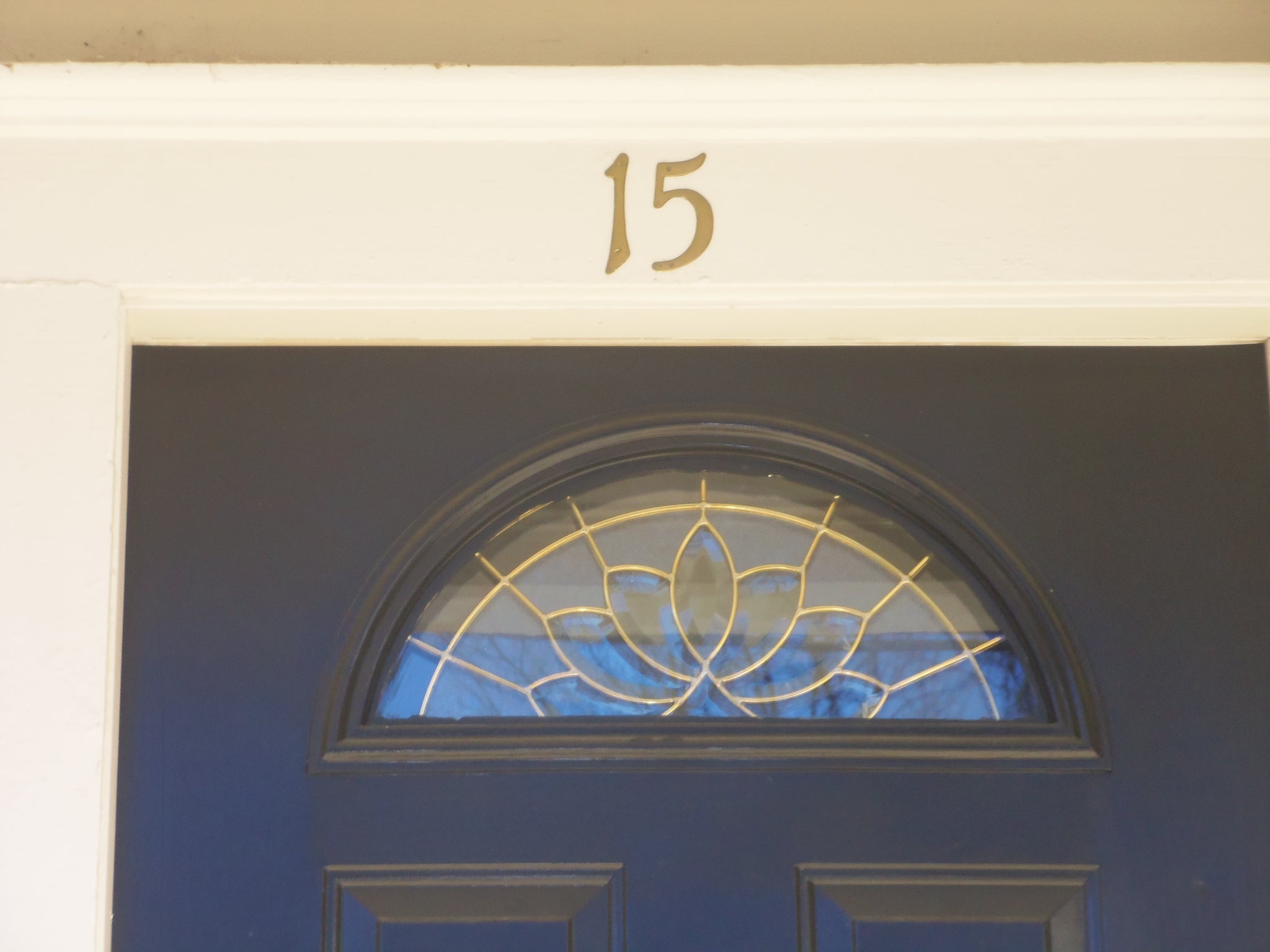 Strolling Dover: for more, click here.
After all of the delusional accusations about Obama’s citizenship and religion, hearing charges that Ted Cruz is not a “natural born” American and thus Constitutionally barred from the presidency comes as an ironic twist. This one might actually have legs, factually speaking.
We don’t expect him to quit that easily, of course. So this could get interesting, especially if the natives get restless.
Noticing the first few lawn signs for a particular presidential hopeful the other day demanded a second look.
Yes, they were brand new. Sparkling. So who was endorsing him?
Nobody, apparently. Only his staff.
Years ago I learned to pay attention to just where the roadside signs were being planted. If they’re popping up on people’s lawns, you can assume some support for the candidate. But placed on public right of way or at intersections or uninhabited stretches of roadway, it’s only somebody doing a job. (In this case, the signs were in front of the parking lot of an abandoned church. So much for separation of church and state?)
Some of us have learned not to be fooled. And some of us have learned to seriously consider a candidate, based on the lawns where their names are appearing.
As we’ve noted, Donald Trump has a very thin skin. Add to that his obsession with, well, himself as he imagines himself, brooking no dissension. It’s said he dictates the position of television cameras at public events to enhance the likelihood of only flattering images.
And now that the New Hampshire Union Leader has endorsed Chris Christie in the Republican presidential primary, Trump is taking credit for getting the state’s largest newspaper dumped from participating in an upcoming debate in its home city. The ABC network, it appears, simply caved in to the candidate’s demands. (For the record, it’s not the first. Let’s hope, though, it’s the last.)
Perhaps as part of his shallow understanding of the workings of the public sphere, Trump apparently cannot separate the news gathering and reporting side of journalism from the opinions expressed in its editorial columns. Now, it seems, neither can ABC News, which puts its own credibility in question. More to the point, where does the network separate news from entertainment? Is it as soft and spineless as Trump just accused the American public of being?
Where’s the truth in all of Trump’s image-building? Who’s to separate the reality before us from an increasingly weird fiction? Is it going to be left to the legions of National Football League fans he’s just insulted? Or is the court jester really in line for his own coronation?
One way to take down a bully, as we recall, is for everyone to pile on together. So who will take the first move – and who will be second? After that, you can imagine what happens. Right?
It’s not the first time I’ve read it this way:
It feels all so fitting for a suburb.
Those of us on the peacemaking side of armaments debates have usually resisted calls that would require a balanced budget, usually because of our concerns about what would happen to the poor and oppressed during economic downturns. It’s not that we’re against a balanced budget, mind you – many of us would favor a budget surplus and reserves.
Curiously, however, those who have been most vocal in their demands for a constitutional amendment requiring a balanced federal budget have also proclaimed strong support for large military outlays.
Here’s their unintentional bind: Some historians and economists have noted that without the ability to borrow money, America would never have been able to enter into armed conflict. Perhaps that’s universally true among nations, not just mine.
If that’s the case, perhaps we have our lines tangled. Would a balanced-budget requirement have prevented the U.S. buildup in Vietnam as well as both wars in Iraq?
Remember, too, we were on track to eliminate the federal deficit before 9/11 overturned everything.
The war costs were, in effect, put on a national credit card the hawks were never willing to pay off.
Is this a game we’re willing to play – a kind of chicken? (No pun intended.)
The concept certainly thickens the plot, even before we get to name-calling.
 Jnana's Red Barn