Retired six years now

Through much of my working career, the question lingered: What do I want to be when I grow up?

The answer finally shaped up: Retired!

So it’s hard to think I’ve been retired six years now – make it seven if you include the early buyout that allowed me to work more flexibly in the newsroom for a year.

Frankly, I don’t feel retired – whatever that is. I don’t play golf or spend all day at the beach or play evenings of card games like bridge.

For me, what I wanted was more time to read and write and attend to Quaker matters and be out in the wilderness – that sort of thing. Do what Gary Snyder would call the Real Work.

My wife scoffed when she saw some of my early plans for retirement. Would I devote regular blocks of time to each pursuit? Would I rise at five to meditate and do yoga before moving on poetry or fiction?

Scoff? She was more infuriated that I wasn’t including time for household chores or gardening or togetherness along other kinds. Saw it as being self-centered.

~*~

Suffice it to say those early scheduling ideas are far from what emerged. They didn’t include swimming laps every weekday, thanks to the brilliant Christmas present of an annual indoor pool pass from my elder daughter, who wisely decided I needed more exercise, seconding a motion from my physician.

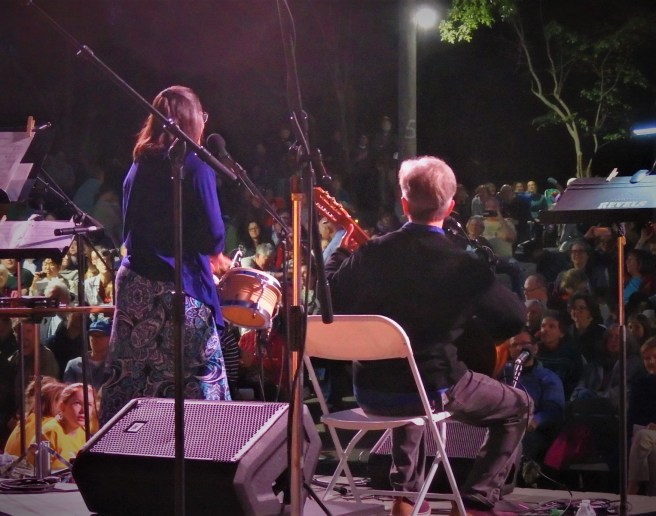
Nor did they include being performing in incredible choir in Boston, which takes up the better part of a day. Or, more accurately, an afternoon and evening. Never in my wildest dreams did I ever anticipate making music on such a high level.

Nor was blogging on those blueprints. It’s wound up occupying more time than I expected, but it’s also freed me from the submissions process in getting work published – so timewise, I think it’s a bargain. And that includes having my own small-press imprint on my Thistle Finch line here at WordPress.

~*~

I have been able to devote more blocks of time to the fiction, which has been satisfying, but I still feel myself pressed for time when it comes to doing all I want or should.

I’m still trying to make adjustments for the domestic needs, especially now that my wife’s back in the workforce.

The joke is I’m not really retired – I’m just not receiving a paycheck.

In retrospect, I’m surprised by how much writing I actually accomplished in my own time all those years I was employed. It gives me a deep well to draw on.

Another San Francisco connection

Cassia’s aunt Yin reinforces a San Francisco connection established with Cassia’s uncle Dimitri and his companion, Graham. In time, it’s one Cassia herself comes to experience, so far from her native Indiana, as I relate as early as the third chapter of my new novel, What’s Left.

~*~

A single visit to the Golden Gate city put it high on my scale. I’d return in a flash, given the opportunity. These days, living a hour from Boston, I’m near another great center with many valued connections to the world. And, yes, I still miss Baltimore.

What’s your favorite city? What would you urge people to do when they get there?

~*~

Octopus sun-drying at the Mama Thira restaurant in Firostefani, Santorini. Photo by Klearchos Kapoutsis via Wikimedia Commons.

In her family, her great-grandparents would have known scenes like this.

Ten things hippies and beatniks had in common

While many beatniks despised the hippies who followed on the counterculture trail, the two did have some commonalities.

Here are ten I see.

  1. Alternative living: They both dressed in ways that weren’t socially acceptable, part of their rejection of bourgeois attitudes of American respectability. Hippies, especially, advanced that into group living.
  2. Beards: The beat goatee was signature. Hippies took facial hair in many distinctive directions.
  3. Sandals: On men, especially. Forget the polished wingtips.
  4. Incense: It became a staple of small alternative stores, along with interesting teas like Earl Grey and Gunpowder.
  5. Pot: Jazz musicians were the root for the beats. Having a toke together became a communal expression among hippies.
  6. Free love: Although the birth control pill was approved for public use in 1960, it was still illegal in eight states four years later. Still, it quickly grew in popularity, garnering the condemnation of Pope Paul VI in 1968. Well, if extramarital sex was already taboo, what additional fault would using the contraceptive have? This was having fun while scoffing at conventionality at the same time.
  7. Eastern spirituality: Zen Buddhist and Theosophist influences championed by the beats spread into yoga, Sufism, and other strands of Buddhism in the hippie era.
  8. Pacifism: Opposition to war, though, did not always carry a corresponding nonviolent outlook by hippies, who instead focused their opposition on the military draft and stopping that by any means possible.
  9. Cool: Beatniks liked to “play it cool.” Hippies had their own nuance in preferring to “be cool” as a way of displaying their individuality.
  10. Mass-media caricatures: Both were portrayed negatively in the mass media, usually as warped stereotypes.

Singing over beers

So there we were after choir rehearsal, more than 20 of us gathered for what’s called a pub sing.

It’s commonplace in England and Ireland, I suppose, but a rarity in the States.

In fact, this was my first encounter. One of our members had reserved a room at a tavern down the street.

Our Boston Revels organization hosts public versions of these during the year, but this was more impromptu. Yes, we had a stack of the organization’s songbooks, just in case. As our motto states, “Where tradition comes to life.”

Two of those present had birthdays, so we belted out in the traditional Happy Birthday song, in glorious four-part harmony – maybe more.

And then one basso voice continued in a dark melody with lyrics like “long ago your hair turned gray, now it’s falling out, they say,” or “it’s your birthday, never fear, you’ll be dead this time next year.” He was quickly joined by a soprano across the table in what became a competition to see who could remember lines the other didn’t know.

For those with a mordant sense of humor, it’s (UHH!) great fun. You can even Google it under the “Happy Birthday Dirge.” For the record, we sang it much better than any of the versions you’ll hear there.

Fortunately, my birthday had slipped past unnoticed just a few weeks earlier.

Maybe next year?

Maria would have to be a firecracker

In the still-in-my-dreaming movie version of my new novel, What’s Left, who would you cast as her great-grandmother Maria?

She’d have to be a firecracker, for starters.

~*~

Maria Pappas serving the “perfect Greek luncheon” in Tarpon Springs, Florida, June 27, 1947. (State Library and Archives of Florida via Wikimedia Commons.)

In Cassia’s family’s past, there may have been scenes food like this.

Ten ways hippies differed from beatniks

While many hippies were profoundly influenced by beatnik writers such as Jack Kerouac and Allen Ginsberg and their alternative lifestyles, many beatniks were contemptuous of the flowering of the hippie movement.

The term “beatnik” itself was coined by San Francisco Chronicle columnist Herb Caen on April 2, 1958, after the Russian Sputnik satellite went into orbit. It quickly encapsulated what had been happening since the early part of the decade in the city’s North Beach district.

The word hippie probably springs from the much older word “hipster,” and came to prominence when 100,000 young people from across the country converged on the city for the Summer of Love in 1967.

Here are ten ways the two cultures differed:

  1. Prime time: 1950s and early ’60s, the beats. Late ’60s and early ’70s, the hippies. A half-generation apart. My guess is that unlike beatniks, hippies grew up with television in the house, along with rock ‘n’ roll, and that this influenced the thinking.
  2. Hangouts: Coffee houses and bookstores, especially in San Francisco’s North Shore and Manhattan’s Greenwich Village, for the beats. San Francisco’s Haight-Asbury districts before moving out to communes and college campus fringes, for the hippies.
  3. Philosophical roots: Nonjudgmental, noncombative attitudes influenced by Eastern religions and philosophies, along with nuclear arms opposition, for the beats. Hostility to the military draft and parental control, plus opportunities for sexual freedom, for the hippies.
  4. Personnel: The beats were a much smaller group, primarily poets and essayists, centered on the fine arts and artists themselves. The hippies sprang largely from runaways, initially, and drug experimenters, musicians, war protesters, and laissez-faire independents.
  5. Political orientation: Beatniks eschewed political involvement but did benefit from crucial court decisions, especially involving pornographic expression. Hippies were politically vocal, especially with protests and rallies.
  6. The beat, er, sound: Jazz, primarily, and folk, for the beats. Breakthrough venue: Newport Festival in Rhode Island, starting in 1954. For the hippies, rock and some folk, for the hippies. Breakthrough venue: Woodstock, 1969, as well as the Filmore Auditorium in San Francisco beginning in 1966.
  7. Threads: Dark clothing, usually black with a European look, for the beats. Women went for dark leotards and long, straight dark hair. For the hippies, clothing was anything comfortable, often ratty, drab as well colorfully excessive with occasional global or back-to-the-land historical flavors. Think Gypsy, Native American, even India for influence.
  8. Recreational drugs: Beatnik pot use became widespread among hippies. LSD, though, was definitively hippie. Beats were known for cool. Hippies, for stoned.
  9. Mass media stereotypes: Turtleneck sweaters, bongos, berets, and dark glasses, for the beats. Tie-dye, long hair, headbands, tassels, beads, and bell bottoms, for the hippies. Both usually portrayed in negative light.
  10. Artistic expression: Poetry and novels, the beats. Rock and filmmaking, the hippies. Abstract impressionist painting, the beats. Installation art, performance art, and graffiti, for the hippies.

‘Vegan Before 6’ for Great Lent

As Quakers, we’re not confined to a liturgical calendar or its requirements. Even so, through much of our history, members of the Society of Friends lived within the limitations of strict discipline, which included plain dress like the Amish and plain speech of the “thee” and “thou” sort.

These have greatly loosened up over the past century, which is not to say we don’t live out a distinct set of values – we’re just more flexible or forgiving. Non-violence and pacifism, equality, simplicity, social justice, and truthfulness remain forefront in our daily lives. Few Friends I know smoke, and in our circles, I suspect the majority now drive Priuses as a consequence of faith. Many, but by no means all, participate in vigils or social witness demonstrations.

But being Quaker doesn’t preclude us from what Douglas Steere coined “mutual irradiation,” acknowledging that we can learn from others’ religious practices and experiences and encourage them in their own. It’s not the same as a lowest-common-denominator ecumenism, but rather a willingness to be inspired and enlightened by our differences. It’s something I’ve been enjoying among the Greek-Orthodox where I live, and found with Mennonites and Brethren earlier. It’s also a principal reason I participate in the Dover Area Religious Leaders’ Association and our joint services.

Of course, remarrying has changed some of my perspectives. With children, especially, there was no way of downplaying Christmas, not in contemporary American society. (Historically, Friends were among those who considered it a pagan import.) I’ve previously posted about the revolutionary ways observing Advent has helped me cope with the commercial assault of that holiday.

~*~

Eliminating a liturgical calendar also meant we also didn’t observe Easter. (Every day was to be holy.) And without Christmas or Easter, there would be no Advent or Lent.

Leap ahead.

There’s no way to totally ignore these, not when no longer live in close communities of our own and are often the only Quaker in our workplace. On top of that, many of us come from other faith traditions and carry within us many of those teachings and traditions, one way or another.

~*~

All of this leads up to to a desire in our household to use Advent and Lent as times of renewal and rededication. We try to do a special reading together, at the least, and usually give up alcohol.

For the record, by the late 19th century, most Quakers had banned alcohol altogether – it’s not uncommon to meet Friends who have never had a drink in their life. On the other hand, when I admitted to enjoying a glass of beer or wine, one old Friend replied, “Jnana, in thy occupation, we’d be surprised if thee didn’t.” Remember, I was a newspaper editor.

So, here we are in what the Eastern Orthodox call Great Lent, and I’m surviving without my daily martini or a glass of wine with dinner. Abstaining reminds me of just how habitual these things become. Besides, I believe saying “no” for a season can be strengthen one’s willpower for other decisions, too.

~*~

One year, my wife and I went largely vegan for Advent. She had reviewed all of the Eastern Orthodox dietary rules for that observance and concluded they were essentially vegan with the additional elimination of olive oil and alcohol. Oh, and when she concluded that since olive oil would have been the only oil in the eastern Mediterrean, she extended the ban to all cooking oils.

It was a tough period, as I posted at the time. She did come up with some marvelous dishes all the same, but rather than being freed from considerations of food, she was spending more time trying to find ways to manage.

This year, for the period of Great Lent, we’re taking a slightly different approach. Remember, we’re not confined to the ancient regulations, we’re doing this voluntarily. (And, as I’ve learned, the Orthodox rules are only suggested, not required, of the faithful.) What we’re doing is inspired by food guru Mark Bittman’s book Eat Vegan Before 6:00. In short, we have more options when it comes to the evening meal – especially, as we’re applying this, on the weekends.

Since I’m already trying to observe a Healthy Heart diet, I’m not seeing a lot of change. The biggest challenge has involved my morning coffee, which is already down to a single cup a day, thanks to another medical restriction.

No, alas, there are no wonder substitutes for dairy.

Homemade almond milk comes closest – we find much of the commercial variety to be vile. But almonds are comparatively expensive, and soaking the nuts and grinding and straining take time.

Oat milk, made from oatmeal, starts cooking in hot liquid, leaving an unpleasant layer of sludge in the bottom of the mug.

Coconut milk tastes like coconut, which I find disconcerting.

Black coffee seems harsh on an empty stomach – a sliver of lemon helps a little, somehow.

~*~

So I’m counting the days till Easter – the Orthodox version, which comes at the end of Passover, a full week later than the Western celebration.

Who could portray Barney?

In the still speculative movie version of my new novel, What’s Left, who would you have portray her uncle Barney?

From my perspective, so much would have to depend on the eyes. Something soulful, at the start.

~*~

A plate of popular summer Greek food: gemista or yemista (Γεμιστά), tomatoes, peppers (and sometimes eggplant and zucchini) stuffed with rice. Photo and cooking by Badseed via Wikimedia Commons.

In the family, Cassia may have had food like this.