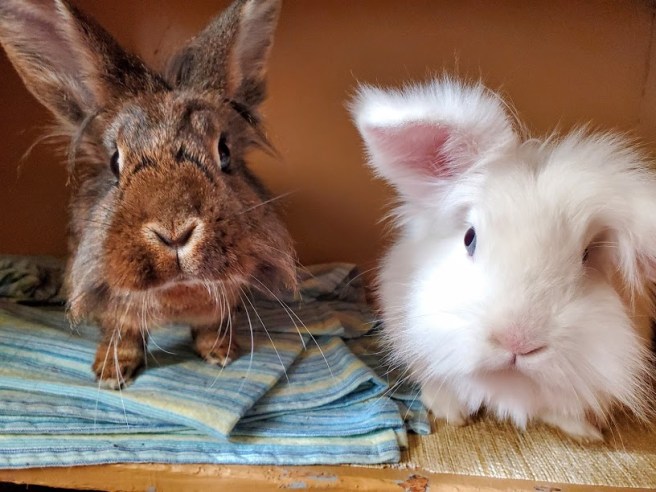
Check out those legs

You never know what we'll churn up in cleaning a stall

Coming up on my tenth year of blogging, I can say I’ve seen a lot of changes in the online practice and what’s being posted.
One of the joys, no doubt about it, is connecting with other bloggers in our shared interests.
I happen to live in a fairly small state, about a million and a half population, with the majority of them living in the Merrimack Valley in the lower middle third of the geography, or along the towns bordering Massachusetts or in the compact Seacoast region. In other words, most of the residents dwell in a connected swath that leaves the bulk of the state pretty rural.
It’s always fun to read blogs by others who post from nearby and often to weigh in with my own comments or to hear theirs.
By the way, I think every place feels special, or should. Take heart, wherever you are, and celebrate what’s worthy.
Gardening is big here, and the state has always had more than its share of poets. That could provide its own Tendrils listing.
As a sampling, here are ten other blogs from the Granite State. I have a feeling I’m missing some significant others that aren’t tagging the state – say people serializing their novel or focusing on poetry or some other topic. I’d like to hear about these in the comments.
Taa-taa:
One other I’ll mention is Isabel Povey, where a 17-year-old Pinkerton Academy beauty queen posts with all of the gushing exuberance you might expect, even in a Covid-restricted era. Yeah, her Seeds of Hope is mostly self-promotion, but I find it refreshing.
We bloggers aren’t all retirees or struggling arts and writers! Yay!
And then the state often pops up in posts by visiting bloggers. Have you ever been here?


“You’d be quite at home in the 1820s or 1840s.”
Back when slavery and similar moral issues were more clear-cut than, say, affirmative action or climatic instability or the massive shift in wealth to the super-rich.
Never thought I’d be writing a ghost story, but that’s what happened in a chapter toward the end of What’s Left. Actually, it kinda dictated itself.
In retrospect, it looks pretty natural, considering that Cassia’s trying to recover her deceased father. What happens along the way, though, is that she uncovers a lot about her other ancestors, too, and from there she begins realizing the crucial impact many people, past and present, have in shaping her future.
The ghost story wasn’t all my idea. I was inspired by one in the novel whose structure I was adapting. The two chapters, for what it’s worth, are quite different.
The poet Gary Snyder, quoting an ancient Chinese folk song, has noted that the traditional way of making an ax handle was to take another one and use it as the model in making a copy. Likewise, I wanted something other than the usual 20- to 24-chapter novel and, as it turned out, the structural model for the new story remained intact. It didn’t quite hold for Daffodil Uprising, but it was still useful. The model also had me looking at each chapter as a panel or tile that might be moved around independently, a concept that didn’t entirely remain in what emerged.
As for the ghost story?
Remember, I’m coming from a “just the facts, ma’am,” career in daily journalism. Verifiable facts. Cold, hard facts. As for emotions? In fiction, I might stretch that to reporting what individuals say they’re feeling, but beyond that? Well, as I’m learning, fiction allows me to record how something feels, rather than how it empirically is. A lot of that awareness, by the way, came about for me in my revisions with Cassia.
Still, when it comes to ghosts, remember – little of my writing is conventional. So my ghost story winds up being humorous, rather than scary. Got a problem with that?
I might add that living in New England, I’ve become aware of how many people admit having ghosts in their houses. Even highly educated, otherwise rational folks. As far as I know, mine’s an exception, unless the specters inhabit that room we still haven’t discovered after 19 years here – the one housing all of the things that have gone awol, one by one.
~*~
I’ve previously posted on my aversion to genre, and that includes fantasy, especially of a paranormal sort.
But Cassia had me reconsidering that. I mean, I loved the Hobbit epic back in college. And what do I make of my appreciation for mythology or even Wagner’s Ring Cycle? Where is the line drawn?
So as I ventured on to revise the novels dealing with Cassia’s father (remember, she was nowhere on the horizon of my radar at the time they were written and published), I felt a new liberty. Why not employ elements of fantasy and paranormal, especially, in addressing the ’60s? They really do seem to fit the story.
I’ve long had a fondness for surrealism, which was a central strand of my subway novel. But my new thinking about fantasy now infused the revisions there, too. The second half of Subway Visions is livelier that way. The book is no longer an image in search of a narrative.
My novella With a Passing Freight Train of 119 Cars and Twin Cabooses also was framed on a surrealistic leap. The characters, though drawn from different points in history, were never ghosts, but seeing them from a fantasy perspective certainly made the revision easier as I realized it could fit into the third book of Tender Connections, my series about Jaya.
A related novella, Kokopelli’s Hornpipe, likewise benefitted. Its basis was mythology. What, a flute-playing giant cricket couldn’t also be fantasy?
To pull the two novellas together as a single book, I really needed a third novella, and Miller at the Springs emerged to sit between them. It easily slipped over the limits of hard-and-fast for me and was a delight to write, even when I had no idea where it was headed.
The three now fit neatly, I think, into The Secret Side of Jaya. Let me know what you think.
Gee, I wonder if I’ll ever have a place to include dragons? Or …
~*~
Don’t forget: You better be good to toads!
Every December, the Boston Revels produces a new winter solstice celebration that now plays to 18 sold-out performances in Harvard’s historic Sanders Theatre. Or did, before the Covid-19 restrictions.
From their first round in 1970, the shows have grown into a unique hybrid of storytelling, theater, dance, concert, audience singalong and other participation. Each year focuses on a different corner of the world or a historical event.
Guest artists bring their traditions to the company, and the costuming and sets are always spectacular. Nobody could forget the big canoe that came flying out over the audience in a Canadian show a couple of decades back.
Well, this year’s production won’t be live in the flesh, but rather a streamed online retrospective. I don’t really know how to count it. Still, if you go to the revels.org website, you can attend a virtual show wherever you dwell. Admittedly, it won’t quite be the same.
Here are ten we’ve especially enjoyed.
~*~
~*~
What live Christmas season events have become part of your tradition?

When biblical translator and subversive revolutionary John Wycliffe (born 1384) meets up with the psychedelic painter Hieronymous Bosch ( born 1450) in a railroad-siding town on the Great Plains, who knows what will erupt. Especially when modern dance genius Isadora Duncan (born 1877) joins the action. Who says great genius doesn’t continue, even in the most out-of-the-way places?
That’s the premise of my novella, With a Passing Freight Train of 119 Cars and Twin Cabooses, which has become part of my new book, The Secret Side of Jaya, now that she’s entered the fray. Jaya has, after all, shown up in town as a do-gooder social activist. How else is she supposed to keep her sanity in relative isolation?
Well, there is the Laundromat plus a subversive operation from an old warehouse owned by Virgil and Homer, as in Latin and Greek classics, erupting in my wildest prose to date. The original work bitterly split one competition jury that awarded publication honors to another author. So be warned, you’ll either hate or love it.
But it’s only part of the resulting new collection.