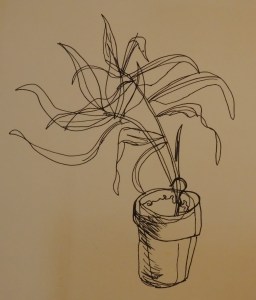
Potted plant
You never know what we'll churn up in cleaning a stall
In my novel What’s Left, Cassia’s best friend is her cousin Sandra – short for Cassandra, in full.
Tell us about your best friend. Someone part of the family? A neighbor? Classmate or coworker? Or is there some other special connection?
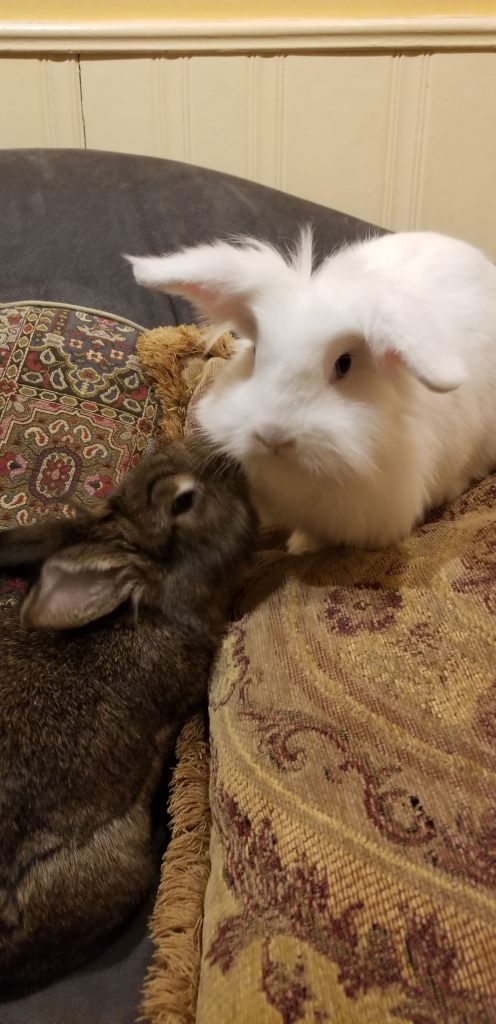
One test of a poem (for me, at least) is based on the qualities of good vocal ministry arising in the traditional quiet worship of Quakers: incantatory language and prophetic whirlwind. Unlike “slow prose” as a kind of sermon.
In vocal ministry, how often the message comes from within our current conflict or personal struggle!
Yes, we wrestle with God.
Poems and prayers you feel in your hands more than bounce around ‘tween your ears.
Moving on?
what’s happened I no longer want to travel or climb the high mountains or is it just all the moves across the continent and back, my years on the road, my commute daily so stretched I’d contract into my nest and grounds for reading or revision, the places I’ve been and people I’ve known so many I want to know my own better . people come from all over the globe to see the landscape I call home
John Wycliffe, who introduced the Bible into English back in the 14th century, shows up as a major character in the opening novella in my book, The Secret Side of Jaya, only he’s taking refuge out on the American prairie.
And a century-and-a-half later, William Tyndale picked up the mission in England, though he didn’t move on to my fiction.
Could they be the most important translators in history? Apart, maybe, from Martin Luther, who could be the basis of his own Tendril, one with 95 points rather than ten, and his German rather than English?
Here, then, we go.
~*~
There we go, politics AND religion. In this case, both of a radical nature.
In early drafts of my novel What’s Left, I considered going into detail on her uncle Dimitri’s practice of micro-lending and startup investing. Here at home we discussed including a whole list of failures and successes — or reasons applications were approved or rejected. Just think of all the once bright options that soon failed, as well as the ones that have since gone mainstream.
One proposal that didn’t survive my second-thoughts was this:
Thus, when friends decide to launch a local winery, we support them.
At the time I first noted this, 45 or so years ago, a local winery would have been cutting edge. Now there seem to be wineries everywhere, and their output can be widely uneven and often overpriced.
~*~
My experience as a home brewer, making more than 2,500 bottles of beer, was fascinating. We relied on kits from a local aficionado and never had a bum batch. But we still haven’t tried making our own wine.
Gardening, of course, is another matter. As is composting.
Do you raise any of your own food? Make your own bread or yogurt? How about jams or jellies or artisanal vinegars? Any other hands-on touches?
~*~

In past years, we’ve had Chinese college students stay with us during their term breaks. They were in Dover and nearby communities to work volunteer internships, usually a month long, and the New Hampshire Children’s Museum was a popular choice.
They would often bring a gift, typically fine green tea, but this one initially perplexed me until it was pointed out that it’s a holding cup for things like pens and pencils and is inscribed with four popular poems.
Cynthia later transcribed them, with translations in English.
She had no idea I am a poet, or that her gift would be so appropriate.
With the Chinese New Year on Friday, we’ll be thinking of her and the others who have brightened our household.
Here’s what she wrote out:


