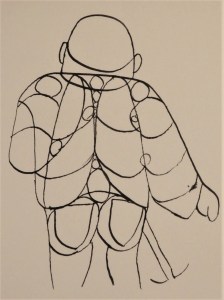
Think she’s comfortable?
You never know what we'll churn up in cleaning a stall
Lawrence Durrell’s “Justine.” Henry Miller’s “Nexus”; Gabriel Garcia Marquez’ “In Evil Hour”; Jack Kerouac’s “Desolation Angels”; Kurt Vonnegut’s “Deadeye Dick” and “Galapagos”; Richard Brautigan’s “So the Wind Won’t Blow It All Away”; Carol Rakoski’s “Ere-Voice”; Anne Tyler’s “Accidental Traveler” and “Earthly Possessions”; Hugh Nissenson’s “The Tree of Life” (interesting use of pioneer Ohio historical materials); Grace Paley’s “Later the Same Day” short stories; Italo Calvino’s “If on a Winter Night a Traveler” (this time, rather fascinating seems I’m finally able to read styles quite unlike my own part of that cleaning out I’m in); William Kennedy’s “Ironweed”; Laurence Sterne’s “Tristram Shandy”; Ray Bradbury’s “Dandelion Wine”; Hugh Prather’s “Notes to Myself” (late Sixties classic that seems so superficial these days); Marilyn French’s “The Women’s Room” (blames men for every problem, including mothers); Nena and George O’Neill’s “Open Marriage” (my wife had wanted me to be influenced by this what I see is that we HAD an open marriage, which is why it failed); Merle Shain’s “Some Men Are More Perfect Than Others” (more blame, this time from an upscale pre-Yuppie bubblehead); Paul Wellman’s “The Indian Wars of the West” (one of my ex’s left-behinds); “The Solution as Part of the Problem” (superficial Sixties Leftist education propaganda); Saul Alinsky’s “Rules for Radicals” what else?
though I did see a moose along the Kancamagus and the next day, at sea, three humpbacks, including a mother and calf we followed more than an hour as the wind blew their misty exhalations across us a week before a perfect ocean sailing and that was about it, except for my annual Labor Day trek up the rails along the Merrimack and a brisk swim before the pool closed yet any view says there’s something out there you’re not getting
The early Quaker movement was heavily influenced by Mennonites via the early General Baptists in England. It’s a complicated story, but today Quakers and Mennonites still share some deep bonds, especially in the witness for peace. And yes, they’re both important in Pennsylvania. In fact, the first Mennonite congregation in America was a joint venture with Quakers in Germantown, then outside Philadelphia.
Here’s some background.
In my novel, What’s Left, Cassia becomes a rising executive with half of the country as her territory. The experience of growing up in the family restaurant gives her a head start over her colleagues, but she’s also much more vulnerable in a highly competitive, often hostile, financial world, than she’d ever been back home.
What are the biggest threats in being a woman in management? How would you avoid them?
~*~


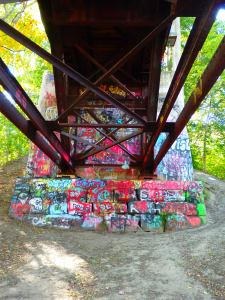

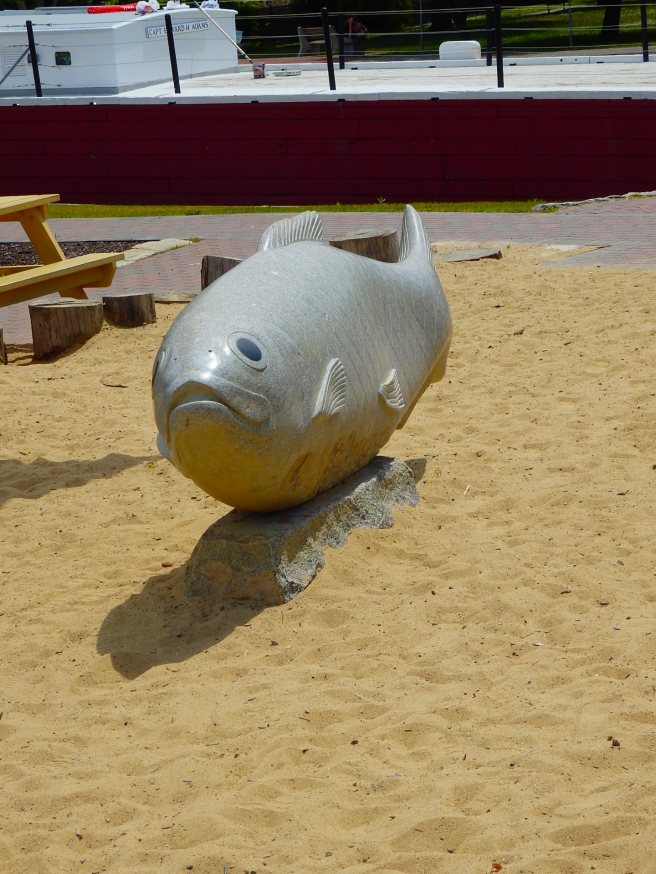
Cinema critic Roger Ebert was talking of the importance of the witness in every movie and pointing to the places where the character appeared in the film under discussion, mostly in a lower corner. The comment flashed me to the reality of how often the hardest thing to see is what should be the most obvious. It’s not just the elephant in the room, it’s things we take for granted.
One way or another, all fiction is built on the observer, who is also to some degree an outsider or misfit, too. (If there are any exceptions, I’d love to hear them.) Four of my novels, for instance, were intuitively built around a photographer, a profession that makes Cassia’s father a well-trained witness. In turn, as she investigates his archives, she, too, becomes a witness, even before she starts commenting on his earlier life.
Of course, as a reader, you also become a witness. Or even a voyeur, as Camille Paglia has contended. It’s almost like every page is a microscope slide to be interpreted.
Curiously, I now see this also at play in a long-term non-fiction project in my life. Forty 40 years ago, seemingly by accident, I became involved in trying to uncover my father’s ancestry. I thought we were simply homogenous Midwesterners who had always been in Ohio from its beginning. What I discovered, though, was that one branch was – but German-speaking and largely akin to Amish. My name-line, however, was Quaker by way of North Carolina and its slaveholding culture. Both strands were outsiders to the larger society and also pacifist. It opened my eyes to alternative histories and to a recognition that stories don’t always have to resolve nicely – three people may record their memories quite differently, and maybe all three are true, if not factually accurate.
Oh yes, the research was often collaborative, with correspondence going and coming from others working on parts of the puzzle. It wasn’t always quite as lonely as drafting fiction or poetry.
To my surprise, as my novel What’s Left was taking shape, Cassia started assembling bits about her Greek-American grandparents, who had died before her birth, and then beyond to her great-grandparents, who brought the family to the New World. Like me, she found valuable clues in the surviving snapshots and formal portraits regarding their personalities, as she also did in the letters and other documents.
None of my ancestors came by way of Ellis Island, and on Dad’s side, they were all in this country by the time of the Revolutionary War. I once pondered doing a series of novels on them, but I’m still intimidated by the technical challenges – a realistic language they can speak and we can understand being high among them.
Witness, I might add, has an extra dimension in Quaker thinking. It’s not just what one sees or hears but how one lives. The goal is integrity, as in wholeness or consistency. Is that what others see in us or our lives and work? Or even as our goal and ideal, even when we fall short reaching for it?
Let’s skip past Jesus and Lincoln and King David and Gandhi, Martin Luther King, etc. Go to more regular folks who also had everyday lives.
~*~
Well, this list has changed over my life!
Who would you name?