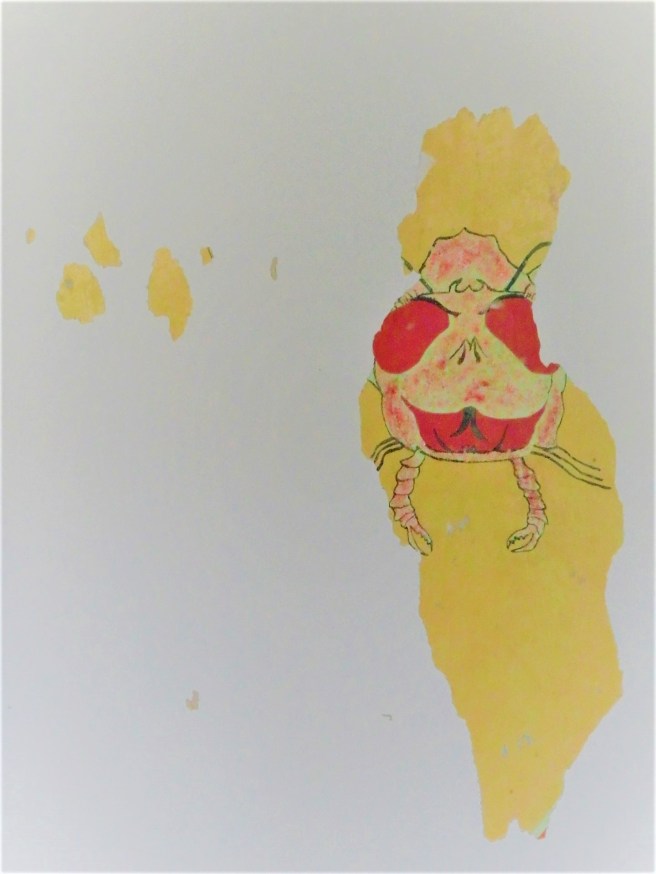
Wall crab or what?
You never know what we'll churn up in cleaning a stall
such gain, left to carry the rubbish after this unsettling and upheaval, all crashing down, the lonely conflagration increasingly desperate for a phoenix in some dawning how often one begins over, take the bookshelves, reorganize religious literature, find that ten-year-old letter initially appearing unopened sent just before the marriage with its Far West a nebulous daydream now I continue in the opposite direction rebounding perhaps keeping time as pigeons return quietly that’s all Thanks and g’day
Having to wait 72 hours for a Covid test result – but don’t you dare delay much longer – as well as the other current restrictions have meant that the U.S.-Canada border really isn’t open, not the way it was before the coronavirus outbreak.
That’s made for a hard burden where I now live. New Brunswick is very much a part of our community. Just about every long-established family has kin on the other side of the boundary. For almost everyone, it’s meant jobs or services or shopping or even cultural pursuits. There are good reasons our local newspaper covers the two adjoining counties, which share the tidal waters and weather. The virus constraints have devastated the economy of the small city of Calais, to our north, which usually carries heavy truck traffic between the two countries as well as local business at groceries, hardware stores, and other retailers and restaurants; likewise for the town of Lubec, to our south, which has the only bridge connection for Campobello Island. Many folks also have property on the other side of the line, or maybe their boat, or even dear ones buried in cemeteries, and are cut off. You go to the dentist and realize the radio is tuned to a Canadian station, that sort of thing. It’s not all one way, either. I would be back to swimming laps in the nearest indoor pool, for instance, only 45 minutes or so distant. The nearest Costco would be only an hour-and-a-half drive off, rather than eight or nine down around Boston. We’d have some fine dining options available, so I’ve been told, as well as museums and nightlife and even festivals.
The local Passamaquoddy population has long been torn by the international division, especially the differing laws regarding Indigenous peoples. I’ve also heard how the already tightening border regulations have changed other interactions. Guys my age have told me about dating girls on the other side of the water (way back then we were all teens), rowing over to court them and then returning (merrily), something nobody could do today without being detained by the Coast Guard, Customs officials, and who knows else. (Not so merrily.)
It’s also dampened summer tourism, especially by travelers who were hoping to continue on but couldn’t, or by Canadians who usually boost the crowds at our week-long Fourth of July revels and Pirate Festival weekend.
For me, this has been a lesson in the ways seemingly arcane regulations made in distant places can hit home personally. You know, the kind of thing you might glance over in a news story with a shrug, as I would, not anticipating a trip to Europe or a Caribbean cruise or even a cross-country flight anytime soon.
What unexpected ways have you experienced Covid restrictions?
To understand why a third of Dover became Quaker in the mid-1600s, we need to go back to the very founding of the colony.

The common presentation of history has New England settlement being prompted by a quest for religious liberty – you know, the Pilgrims and then the Puritans – but close examination finds that’s not the full story.
For instance, the first permanent English habitation, Plymouth in southern Massachusetts, is only half Pilgrims – the other half is diverse individuals looking for economic opportunity. The colony is also heavily in debt to investors in London who dictate much of its operation. Religion isn’t on their radar.
There’s nothing altruistic in the investors’ role. They’re looking for quick returns on their money. Their eye is on gold and silver or at least a shortcut to the Far East and its lucrative spices. Trade for furs could also be lewdly profitable. And then there’s the possibility of creating landed estates in the New World, where they could live at ease as gentlemen farmers supported by the rents paid by their tenants once the time’s ripe.
All of that puts the investors at odds with settlers who are out to establish homes, livelihoods, and security.
~*~
AS A FURTHER COMPLICATION, the investors come in layers. One company holds rights to the development of all of New England and then enters agreements with others interested in specific tracts, sometimes within a specified timeframe.
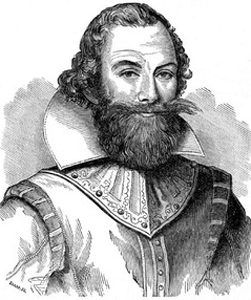
Sir Ferdinando Gorges is the godfather of all this and plays a crucial role in the birth of Maine, which emerged largely on its border with Dover. Quite simply, the Maine side of the Piscataqua River is a big part of early Dover’s community.
Sir Ferdinando’s business associate, Captain John Mason, emerges more directly as the proprietor of New Hampshire itself.
Together, only two years after the Pilgrim venture, they negotiate with a band of Devonshire merchants to settle on the Piscataqua River, today’s border between New Hampshire and Maine.
~*~
THEIR AGREEMENT SPECIFIES seven settlers – and, as we will see, that implies their families, servants, and laborers – intent on commercial opportunity. Forget religion.
The Puritans, pointedly, are nowhere to be found. They’re still seven or eight years off in the future. Their arrival to the south of New Hampshire will, however, spark a culture clash and ongoing power struggle that will include Maine. As you’ll see, the plot thickens.
In the meantime, the odds are greatly against the survival of the Piscataqua enterprise.
Other attempts in New England have failed, some without a trace, as would others. The Plymouth colony is faltering.
Remember, nobody finds gold or silver or that shortcut to China.
Even so, Gorges and Mason leave a deep imprint on the future Dover.
As do Edward Hilton, a member of the powerful fishmongers’ guild in London, and his apprentice, Thomas Roberts. Their outpost at Dover Point is the start of the seventh oldest permanent European settlement in the United States – and the third oldest in New England.
Edward has been recognized as the Father of New Hampshire.
Thomas, however, is generally neglected, even though he has a more central role in its continuing development. He even becomes Quaker, for all intents and purposes. And though an apprentice, he’s not a disadvantaged youth looking for a step upward. He comes from a privileged family, and his father, by some accounts, is about to become a baron.
~*~
ALL OF THAT’S PART of what we’ll be celebrating next year – 400 years after their arrival. And my new big book tackles some of the story.
How can the weather shift from cloudless and gloriously blue sky to overcast and snowing in just four hours?
Don’t try to answer that, but similar questions are definitely welcome!
Some time ago I discovered that to write poetry I had to be sitting in meditation every day.
Or sometimes a good walk would do.
Or even a little simmering in the spa.
What works for you?

In my book The Secret Side of Jaya, her sojourn in the Ozarks introduces her to a magical vale in the woods just beyond their house. It’s also the site of a water-powered grist mill she begins to frequent in her free time.
Here are ten facts about the historic industry.
Maine is bigger than you’d think, and half of it is still unpopulated.
In fact, the easternmost county in the USA is more than twice the size of Rhode Island or New York’s Long Island – or, if you prefer, bigger than the two of them put together. And it’s merely half of Downeast Maine, with Hancock County comprising most of the western flank.
Washington County, aka “Sunrise County,” has a population of only 32,000 – about the size of Juneau or Fairbanks, Alaska, or Dover, New Hampshire, my home of the previous 21 years. You know, the one I repeatedly referred to as a small city. My, how my perspective’s changing!
Most Downeast folks live near the rugged coastline, with the largest municipality in Washington County being Calais, the connection to mainland Canada, followed by Machias-East Machias, Eastport, Lubec, and Jonesport.
The four largest public high schools have about a hundred graduates a year – combined.

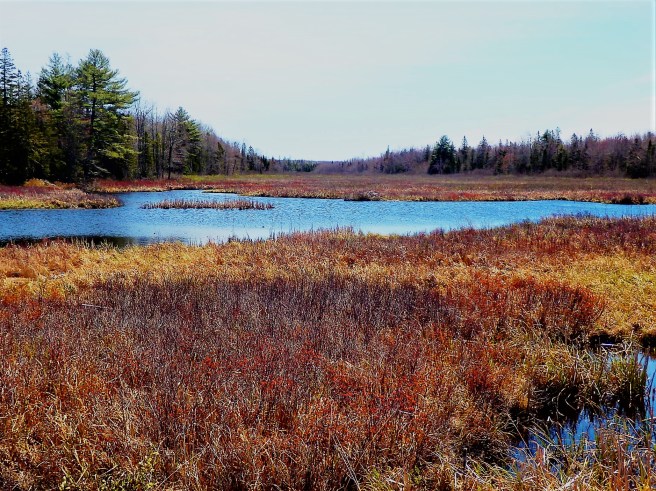
There are many reasons Downeast reminds me of the Far West, though it’s generally much wetter. In fact, 21 percent of the county is covered with water, much of it as big ponds running along the valleys between the low-elevation mountains. Many of these often island-specked bodies extend two to five miles in length and at least a mile across. And that’s before getting to the bogs and fens or wild rivers and tide meadows or marshes and swamps or prolific beaver ponds. The technical definitions vary, depending perhaps on how wet your shoes get. Quibble as folks might, the northern half of the county seems to be more lakes and wetlands than solid ground. I’m not sure if the Atlantic bays and coves even count in this tally. Quite simply, we’re surrounded by a lot of liquid, so watch where you step.

What also strikes me is how little development rings the shoreline of the lakes. Many have only a few “camps,” as we New Englanders call the cabins, trailers, or cottages and their docks, with the remainder in full, unspoiled forest. Make a bid, if you must.
It does make for a lot of unspoiled tranquility, for those who are so inclined, if you can deal with black flies and mosquitos. Moose often come as a bonus.