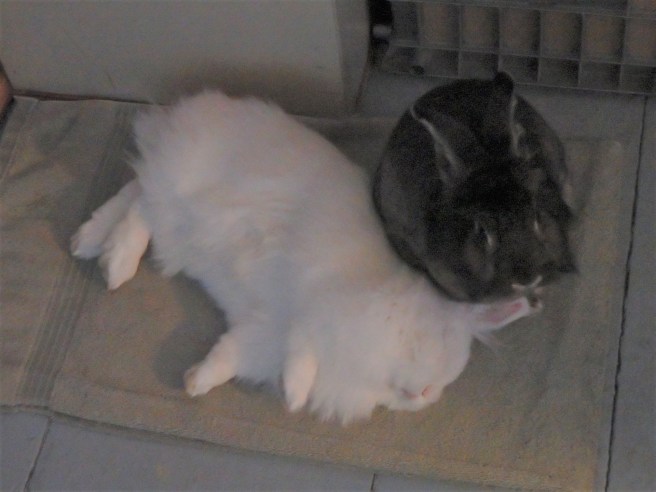
Out cold and she snores
You never know what we'll churn up in cleaning a stall
Eastport may be small, but its lively arts scene includes the Stage East company, with some rather lively programming.
At the moment, for example, they’re preparing a world-premiere musical for performances next month.
It’s the kind of place where you quickly get to know half of the town, too, so I wasn’t surprised to get an email from the director Thursday morning, even if its contents were unexpected. Could I participate in a play reading that evening and the next two nights?
An original work, the winner of the company’s inaugural playwriting competition?
I’d never done anything like that before, but in a pitch-in kind of community like ours, you learn to step up when asked, and so I replied fine. Honestly, I felt honored, and it couldn’t be too different from a poetry reading, right?
The initial reading was fun, both times through the one-act play. Better yet, my part was the shortest of the four and the least complicated. And then I learned we’d be doing it in front of a live audience the next night, meaning last night, and again tonight.
The playwright is Wilder Fray Short, a Bowdoin College senior and soccer fan, and the one-act play is In the 45th, about sibling rivalry and a lot more.
The competition, open to young full-time Maine residents and including a week-long residency and $1,000 prize, itself honors the late Jay Skriletz, the company founder, prolific playwright, and believer in social change.
To which I’ll add, it was an amazing experience and if you’re anywhere nearby, show up tonight!
pattern of fern shadows cast by candles playing into snug culmination rented theaters where hillsides tottered in the unspoken gamble of her slightest motion, some indication if anyone commenced singing against the walls and ceiling of an unclothed expanse of potential a warm hand broaches, scratching its initials on frosted windows and then a lower back arched for precision a cappella with the choir we clocked a blizzard of treetop squirrels far below whatever our season and there you have it . tenderly
Realizing I really did need to get some regular physical exercise last winter, I finally caved in and ventured into the senior center for fitness class twice a week. It took three friends to nudge me into it, and it’s embarrassing to have to admit what 50 years of neglect have done to my body. I’m a long way from my yoga glory. Well, I’m also the only male in the circle, not that it inhibits the lively, enlightening, and laughter-riddled banter that occurs while we’re plodding through the routine. Their hour-plus dialogue could fill a hit sit-com or bestseller novel, if only I could find a plot. Well, much of the running commentary there is also about ailments afflicting folks in the community, sometimes leading to offering rides to their specialists or food deliveries – what I’ll call “good gossip.” And, oh yes, I much prefer to refer to the place as the Old Firehouse, skirting around the stigma of “senior center.”
That has me recalling an aside years ago when our managing editor told of a phone call he’d received from a reader complaining about being referred to as elderly.
“How old are you,” my boss asked and was told 78. “I see,” was the best he could respond with.
After that, I always struck “elderly” from news copy, along with “little” from child or kid.
Getting older is a multistage passage, most notably with the skin and stiffening joints, but the physical changes are only part of the experience.
One part is an awareness of being on borrowed time. Even when I was editing obituaries, I noted how many of the deceased were younger than me, and that was a little more than ten years ago.
Moving around the country has lessened some of the impact of aging, since I haven’t had to watch us grow older together. My high school classmates, for instance, will always never be more than 18 in my mind. Ditto for others left behind, they’re all frozen in time, even the few who are still in correspondence.
So another part is hearing that more of these colleagues of my generation are passing – a situation akin to personally knowing more people who have had been diagnosed with Covid and the recognition that it’s not just multiplying “out there” somewhere – that is, knowing only the abstract – but close at hand.
I recently posted two memorial minutes of Friends I worked with clerking Dover Meeting and have been reflecting on others in my Quaker circles.
Now I get word of the passing of an esteemed reporter who was six years younger than me, and somehow it hits more than those from the workplace who died earlier. To my surprise, it has nothing to do with how close we were in our daily interactions. (He and I weren’t, apart from a comment or two in passing. I should note that he produced “clean copy,” requiring little editing, and that meant little interpersonal friction.)
In his case, I think the blow comes as a sense of an end of an era. He carried institutional weight in covering the New Hampshire’s political scene and soared nationally during the first-in-the-nation presidential primary. With the decline of newspapers in general, his replacement at the statewide Union Leader will never achieve such prominence or influence.
You know, “I did it all on my own,” with no credit to anyone else.
It’s not the way things really work, for one thing. Think of all the support needed to survive, learn, and achieve — family, teachers, coaches and mentors, colleagues, customers, buyers, employers, friends, partners.
For another, every man for himself leaves no room for God, much less other people.
Deep down, that has to be incredibly lonely. How does someone like that mask the pain or the fear of falling?
The fur traders’ hot market for beaver pelts in colonial New England soon reduced beaver populations, and fewer beavers meant fewer beaver ponds, an important source of the local Native diet, including roots and waterfowl.

That was followed by the construction of mills, which were powered by water, and that meant dams. Some impounded incoming tides for release a few hours later. These were tricky to operate, though, and changed speeds depending on the strength of the incoming tide or the level of the water during its release.
Dams at the waterfalls became more common.
Either way, dams impeded upstream migrations of fish trying to return from the sea to their spawning grounds. These included salmon, sturgeons, eels, and river herring. Their reduced stocks afflicted both the Natives and the English inland fishing industry.
The mills also produced copious amounts of sawdust that choked river bottoms, reducing and killing off additional species.
The demand for timber itself cleared land all the way back eight to ten miles from the riverbanks, further eliminating wild game. The wood was needed not only for the sawmills but also as fuel for brickmaking, domestic cooking, and warmth through winter. Heating a house commonly required 40 cords of wood a year – no small feat of labor.
And runoff muddied and silted the streams.
Let’s not get too sentimental about the bucolic nature of the era, OK?
~*~
Welcome to Dover’s upcoming 400th anniversary.

Somehow, this past winter I got struck by a sustained sense of cabin fever. Should that be “stuck”? To my thinking, that’s not necessarily a “bad” thing and was not unexpected, given my relatively isolated situation combined with the continuing Covid precautions and the usual northern New England long nights and winter snow, ice, sleet, and unassisted general deep cold. I do believe there’s value in periodically clearing some of the clutter from one’s life and regaining a sense of direction, and I have found a huge difference between solitude and loneliness, so here I was.
Mostly, I was feeling a bit directionless, having completed a big revision of the Dover history and wanting to move forward with its publication but not yet having clarity on exactly how that would go. I mean, as books go, this was one more niche item, not likely to hit the bonanza list, no matter how original the findings. Emotionally, then, I was feeling stuck, not my best mental state. It even leads to fidgetiness.
Breaking that up was a visit by family – or should I say invasion – that included time with movies and TV series on the 40-inch screen I usually leave dark. Me? I’d usually read and listen to the radio. I’ve tried to avoid television series, seeing them as addictive couch-potato time-sucks.
A year ago, though, they hooked me on the first season of Mad Men, which we had on DVD. Whew! I was free only after admitting there is some quality writing and performing available and losing a full weekend in full immersion.
This Christmas, they hooked me with Murders Only in the Building, which again fortunately had only one season.
But during a return visit a few weeks later, we shared a phone conversation with the daughter in California who had just made our son-in-law his favorite meal for his birthday, and that mention of brisket led to my memories of being introduced to the cut as a Jewish tradition by my almost parents-in-law, if only, and those stories now had us sitting down in front of streamed episodes of The Marvelous Mrs. Maisel. The fam scooted off, leaving me to catch up on all of the available seasons, and I’m now miffed I have to wait for more on the way. I hate being left dangling. Worse yet, I was told Prime had the remaining Mad Men episodes – so I caught the final six seasons in a bit over a week, how many hours did I squander there? And the last two of Mozart in the Jungle plus all but one season of the Secret Diary of a Call Girl, which was quite sassy but not nearly as hot as touted. There may have been another series I’m overlooking.
Said family was highly amused by my engagement with works they deeply appreciate, but I am still appalled the hours I lost and by one more manifestation of my obsessive side.
For the record, I’m blaming the younger daughter and her brisket for this latest outbreak. Now, just when is the last time I’ve had a slice of one?
What do you suggest I stream next?


