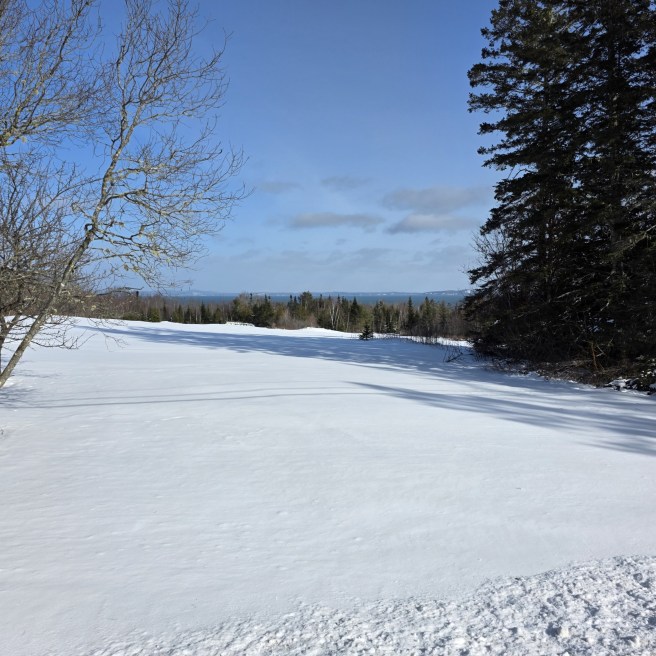
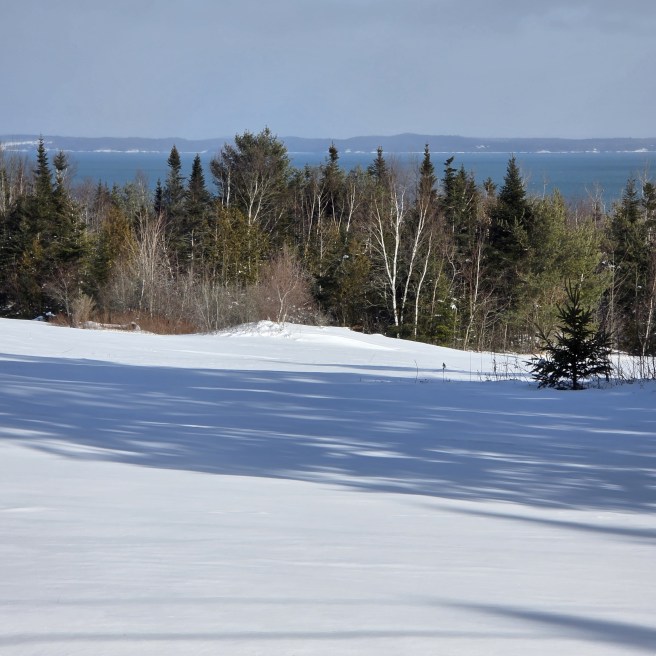
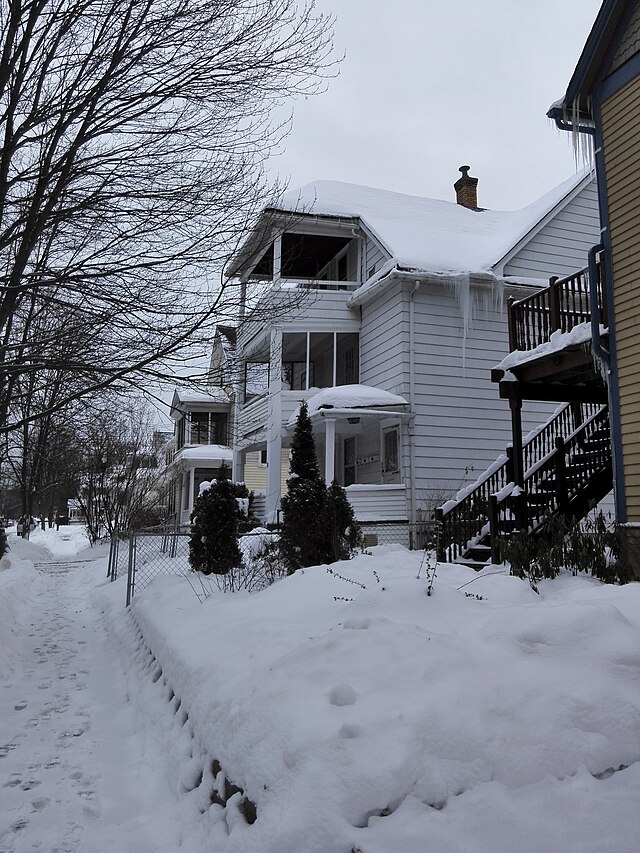
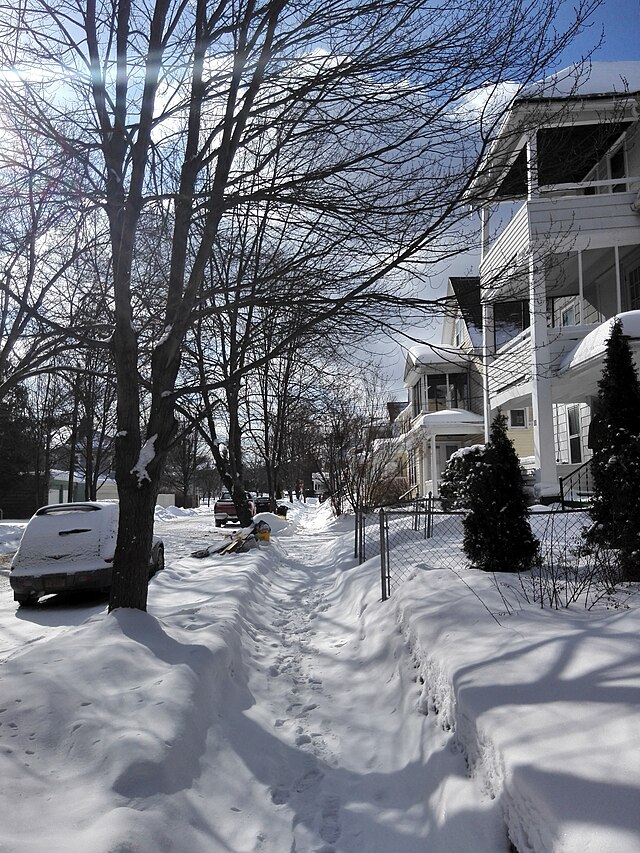
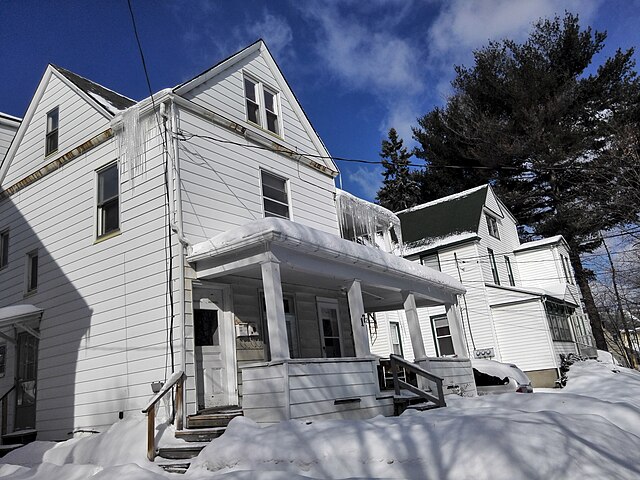
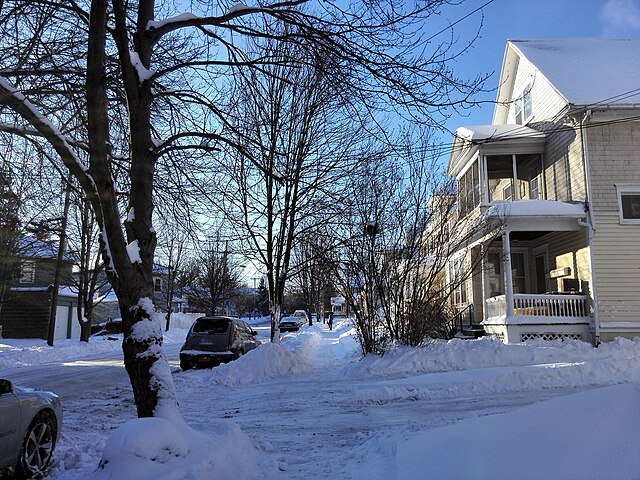
Climatic change is bringing more frequent and fiercer storms to Way Downeast. Last winter felled many trees in the region. Here’s what of those did to a riverside rental cabin in Calais.
Fir tipping is a big job around here
The signs “fir tippers wanted” this time of year can be puzzling, so here’s the scoop for those of you who don’t live in Maine.
- Christmas wreath makers need stands of evergreens to shape into their festive rings. In Maine, the traditional material is the tips of balsam fir branches. Don’t confuse the inch-long needles for spruce or hemlock.
- “Tippers” are the folks who have the skills to collect tips that usually range between 12 to 20 inches.
- Quality needles are found only in the mid-section of the tree. Tops and bottoms are deemed unsuitable.
- The season is short. The greens cannot be collected before the “tips” are set when a tree goes dormant for winter, usually around November 1, and that’s if the stand has had three nights of 20-degree or lower nights. (Beware of global warning.) Any earlier and the tips lose their needles prematurely. But the wreath-makers do need to get the product to market before Christmas Day, too. It gets busy.
- Millions of wreaths are crafted in the state each Christmas season. The trees are abundant and the fir branches are easily worked. Balsam is pleasant to smell, too.
- The work is a welcome boost in income for many rural families and comes after the crops are in.
- Tips can be harvested by a firm grasp between forefinger and thumb followed by a quick downward motion. Loppers or pruners do the trick for more out-of-the-way tips.
- Skilled tippers leave enough on a tree for it to recover in about three years.
- The tips are commonly gathered on a “stick” made of a small conifer stripped of most of its branches. When the stick has 40 to 75 pounds of tips, it’s carried off. Bundling the tips into smaller bunches is another method of transport.
- Tippers do need to get permission before harvesting from a site. Sometimes that means paying a fee for a permit.
– Source: University of Maine Cooperative Extension Service
In our longest nights
How long the day now? Our shortest is a mere 8¾ hours of visible sun if the clouds permit, barely a third of the 24-hour cycle.
Where I live, we’ve now reached the earliest sunsets. They’ll be inching later by the solstice.
Enjoy the long nights, then. Perhaps by a fire but especially in sleep. Or even out, bundled up, viewing Northern Lights and meteor showers.
I’ll be there!
Look for my books, sharply discounted. A few are even offered for free.

Kinisi 291
behind the house
I do miss my barn
Gilkey Harbor memory

The member ships of the Maine Windjammer Association are independently owned and operated, and apart from setting firm departure and return dates, each of them ventures at the will of its skipper and the elements each day.
Watching the others in the course of a cruise is almost a game, and sometimes two or three wind up spending the night in the same cove, as happened here on Islesboro. We had the Heritage, above on one side, and the Angelique on the other, and the atmosphere was festive.
For more schooner sailing experiences, take a look at my Under Sail photo album at Thistle Finch editions.
One checkpoint where we lucked out
A miraculous thing for us was that the roofing shingles, which had prompted our big renovation project, had held on for the four years between the insurance company’s alarm after our purchase and the actual replacement. Not so for many other shingles around us, even those that had been replaced during those years.
My initial impression, looking at the real estate market when we started considering this move, had been that we could fit into something cheap and make do. But things were shifting.
Most homes we saw for sale had problems, either for my coconspirators or me. Many of the remodelings were utterly puzzling. Others really needed to be redone.
I wasn’t the one who zeroed in on Eastport, but now I cannot imagine anywhere else I’d want to be at this stage in my life. Maybe it’s like Swami when she came to the Poconos and felt the vibes.
The ideal of moving to an island in Maine is almost a cliché. Even a Downeast shore, or a bit to our west, like the Wyeth clan. But we did need to downsize.
At one point, my dream had been to live on a mountain lake. The ocean never even entered into the picture.
Yet here we are, surrounded by interesting people, too.
Where is today’s local communication and shared identity?
Unlike many localities, Eastport has a fine newspaper, one that appears twice each month. It covers much of Washington County in Maine and Charlotte County in neighboring New Brunswick, Canada.
You get a good sense of the place from its pages. I can’t say that for many of the newspapers I’ve seen across the country, even when they were big moneymakers.
Living in out-of-the-spotlight localities, I’ve been sensitive to the nuances of each landscape and the people who inhabit there, not that I’ve often found them reflected in mass media outlets.
It’s not just newspapers or, for the most part, TV, though Northern Exposure did create the sense of one, especially with Chris Stevens as the disc jockey on KBHR radio.
I do sense that the lessening of local identity reflects the loss of local economic power centers, largely through corporate buyouts. The pharmacist no longer owns the drug store, nor does the local bank have its own president. The newspaper is part of a chain, as are most hospitals these days. The list goes on.
As I’ve explained, for many years, despite the arcane business structure in which advertising rather than sales of copies provided the bulk of the income, hometown newspapers were cash cows for their owners – who, in turn, paid their reporters and editors minimal wages.
The resulting management practices – reflecting those of surrounding corporate retailers and manufacturers – have put news coverage at risk, endangering both the communities and democracy itself. How will they, like the reporters and editors, survive?
Oh, yes, the big box stores – especially Walmart – rarely bought advertising space in the local paper, even while they squeezed the smaller retailers out of business. I remember one year when an economic downturn put five of our ten largest advertisers out of business.
~*~
Social media posts by amateurs may fill some of the gap, but there’s no substitute for fact-checking and other accuracy. Reporting and writing take time and devotion, not a given when you have a real job and family vying for attention.
And if you’re out there solo, who’s going to back you up when the topic at hand gets nasty? As it does, when corruption seeps in.
Anybody else feeling crushed?
From a Scroll of Improvisation
The premise: So much of my writing has resulted from distillation, revision, compression, and concision, often as a matter of collage or thesis/antithesis/ synthesis opposition and release.
The pieces of this scroll, in contrast, are envisioned as longer, free-flowing outbursts without structure or topic, a matter of simply letting the writing stream where and how it will. Perhaps my Dialogues are my closest antecedent, although I could throw in Ned Rorem’s journals or John Cage’s diary or Keith Jarrett’s solo improv concerts. I like the story about one of those performances, where Jarrett came out and sat for some time, unable to begin. As the audience grew restless, someone called out to the stage, “D sharp!” or some such; the pianist turned, said “Thank you,” and began.
While I anticipate these to emerge as prose, their spirit should be poetry. Whatever the key or time signature.
~*~
To start slowly, or even slow, with a single note. Not even a chord. A word or two, cryptically without context. Sit in place, melting.
Where was I, then? Or you?
De Tocqueville set out to define America, that is the United States, as some overriding commonalities. What conceit, though I suppose we might do the same regarding Europeans, as if Italians and Danes resemble each other in many ways. Yes, I boldly spent a week on the Olympic Peninsula followed by a couple of years digesting the place and its peoples. More recently, the decades of investigating New England have proved more elusive. Even my native Midwest is far more varied and nuanced than I would have suspected. Explore the world? My focus becomes more and more this place I inhabit along the Cocheco.
The falling water, splaying on rock below. The mills. My own small tract, now covered with new snow. Birds at the feeder. Skittering.
What do I know of anything? Of anyone? Just who am I, and how did I ever arrive here, with this woman and her daughters? All these squirrels and buried black walnuts.
Each shell, a note. Each snowflake, another. Cry out, unheard against the wind.
Beaver lodge, too

The range of wildlife found in a healthy flowage like this can be quite impressive. Wetlands and open waters comprise about a fifth of Washington County’s landscape.