Florida as a place of limbo
Pemaquid, out beyond the Piscataqua frontier
Call it a serendipitous trip.
My stopping off at the Colonial Pemaquid historical site in Maine during a weekend at the Common Ground Country Fair last year was an impromptu decision. I’d made a side trip to visit the iconic lighthouse down on Pemaquid Point in midcoast Maine and saw a roadside sign and thought, what the heck, on my drive back.
After all, the settlement had some connections to early Dover, as I note in my new book, but simply setting foot there gave me a more substantial sense of the place than as a footnote vaguely out there somewhere up the coastline.
At first, the state-managed site appears rather modest. Its small museum and nearby seafood restaurant were both closed, this being the shoulder season. But nosing around revealed much, much more, as I’ll explain here and in some upcoming posts.
It was settled by West Country fishermen, like those who were pivotal in early Dover, shortly after Edward Hilton and Thomas Roberts set up shop along the Piscataqua, so they would have shared a common culture. Notably, both sites were established before the great Puritan migration into Massachusetts Bay, bringing a much different English culture into New England.
Unlike Dover, the Pemaquid village was destroyed repeatedly in attacks from the French and their Native allies in the decades from King Phillip’s war on.
In short, English settlement was erased from Maine all the way down to Wells and York, close to Dover. I have to admit that caused me to give lesser attention to settlement much to the east of the Piscataqua River.
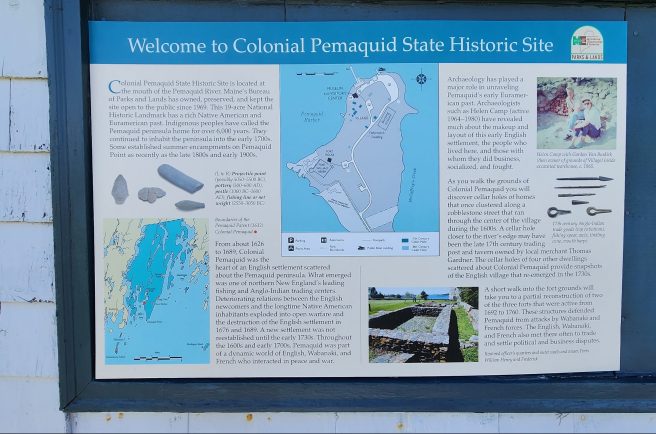
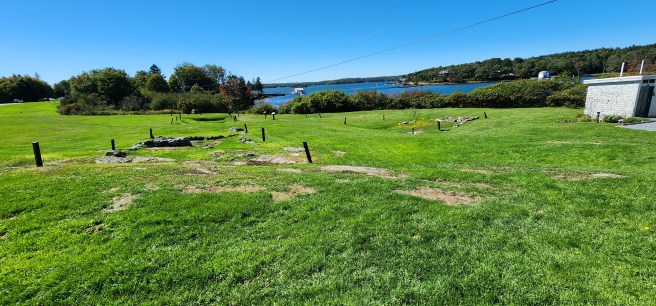
Still, the Pemaquid site, now in the town of Bristol, was left relatively undisturbed after the late 1700s. In the 1990s, though, extensive archeological excavations determined the shape of the village and a gave a clearer understanding of its economy and lifestyle. Today, the stone foundations and interpretative signage present some of their findings.
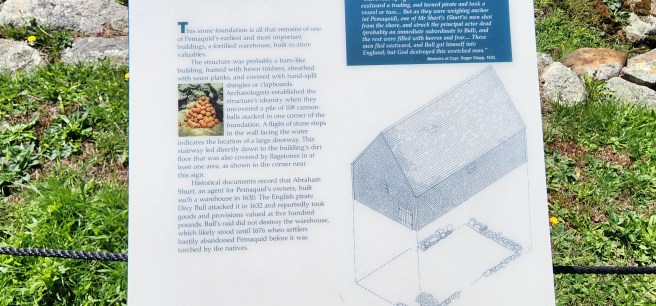
In those, as I’m excited to see, I got a clearer sense of how early Dover may have also emerged along High Street – today’s Dover Point Road.
Lilac

Scattershot
SUNDAY A.M., THE TERRORIST while I hide in the little room.
A parade passes, then the Mercedes.
Two houses: furnace spewing water, boiling water in one.
I can’t find the key to the other house, where I would turn it off – am I naked? See, I’m barefoot.
At a Confederate officers’ banquet, toasting and dancing, cheek to cheek, a broken leg.
Now I’m painting – vault.
“Surrender!”
Scratched up concrete and brick patterns of floor and walls, ceilings, then the people – children at play, etc. – a public space, now viewed from above.
Am getting ready to serve the Daily Student as executive sports editor – or my dorm room, where I arrived early – no room for my roomies.
A lost hymnal with a hot concert pianist (but he’s not religious!). Kitchen table.
My sister, flowers or a meal.
DEER JOSTLING IN THE NIGHT WOODS as I gather stones in a pool of street light to pot bulbs to force open in mid-winter.
THE PANIC WHEN I SAY it’s never going to happen – the Children. Then marriage.
(In the gut, when I whisper.)
Just what the hell is Self-Realization, Swami Jnana?
While attempting to clasp objects, I am annoyed to find there are long thin strands of hair in the way. They’re growing from my palm and tangling in the object. It’s more a sensation of something awry, actually.
I HEAD AN ARMY UNIT AND have a young spoiled recruit or draftee who won’t accept discipline or follow orders. He soon has his attorney accompanying him everywhere. “Shut up!” and he keeps talking.
AT THE SCENE OF A PLANE CRASH – helping with the body bags (curiously like valet bags).
A CORNER OF THE CHIMNEY IS GONE, chomped away by a flying creature. The house itself is a huge flaking gray monster with two heads and forty paws. From the compound eye of its center stare forty children, each in some awe, while seventy-five toddlers weave in and out of the mouth.
I’m caught without a future and the past she has retracted. So this is the present?
I RECEIVE AN OFFER FOR A MASSAGE … from a male therapist. I hedge, but he promises it will be the best I’ve ever received. He uses both hands simultaneously, the thumbs like motorized screwdrivers. Incredible!
DOORBELL RINGING. I wake, realize it’s not the sound of my doorbell here.
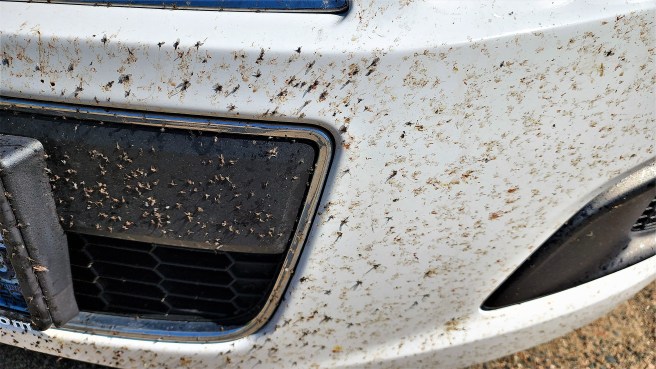
Black fly season
And now for Lubec
I’ve been posting a lot about Eastport and nearby scenes but said little to date about the neighboring communities here in Way Downeast Maine.
So today I’ll turn the spotlight to a town to our south, one we easily see from the Breakwater and other points in Eastport. It also sits across the water to our west. Despite the proximity, driving between the two takes nearly an hour.
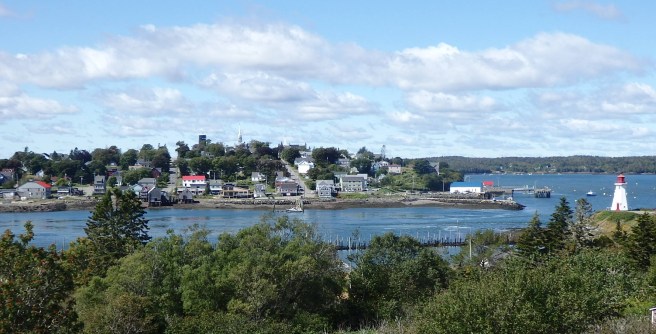
~*~
Here are a few additional facts.
- It’s pronounced “LOO-beck,” named for Lubeck, Germany.
- It has roughly the same (small) population as Eastport but is organized as a town rather than a city. That’s why it can claim to be the easternmost point in the continental U.S., while E’port struts about being the easternmost city. It’s a hairline difference.
- Lubec’s also the closest location in the continental U.S to Africa. Yes, way up here nearly on the 45th parallel, halfway to the North Pole, rather than say Virginia or tropical Florida.
- Set on a peninsula, the town has more water than land.
- With its Quoddy Head State Park and the iconic peppermint-pole lighthouse, Lubec can be seen as the gateway to the Bold Coast trailheads that provide access to spectacular shoreline and bluffs. It’s like Acadia National Park without the crowds.
- It also has a “sparkplug” lighthouse in the water south of downtown and faces the Mulholland lighthouse on the Canadian side of Quoddy Narrows.
- Speaking of Canada. Neighboring Campobello Island, New Brunswick, is home to the Franklin Roosevelt International Park, originally the family’s summer “cottage” and compound and then Eleanor’s favorite home. Today the historic site covers five square miles that include trails of shoreline and forest. To get there, you have to drive through Lubec.
- SummerKeys is a kind of music camp for adults, mixing skill levels from beginning amateur to skilled professionals into a lively and supportive environment. Free weekly concerts in the Congregational church are a highlight for the rest of us.
- While statics are unavailable, one friend tells of a summer when every day in Lubec was beset by heavy fog. She’s made it sound unbroken. I have been in town on several afternoons when the place was quickly socked in the dense gray invasion, and from Eastport I’ve often seen its thick steely blanket roll over the downtown at the fringe of our view before inching up the water toward us. Another friend tells of the common frequency of heavy winds. Either way sounds harsher than what I’ve encountered in nearby Eastport.
- The town no longer has a high school. When it did, athletic events between Lubec and Eastport were often followed by fights.
Spring wildflowering


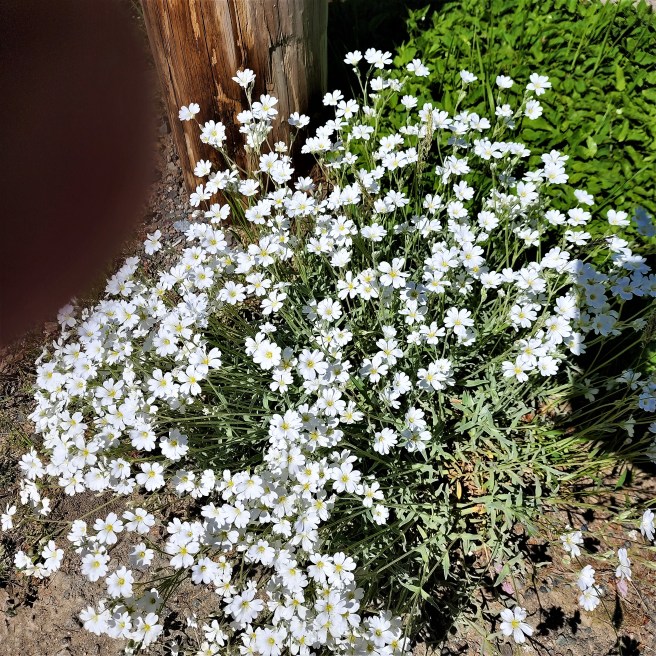
Kinisi 158
olive-skinned and sly smile
dark eyes
how golden, the rites of passage
I’d rather skip
back to
Thrift shop find
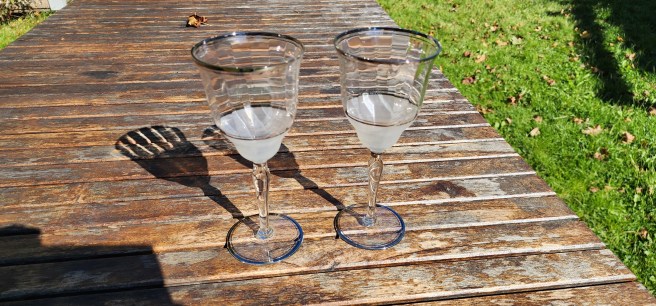
Vintage crystal glasses, a quarter apiece.
Clink me!
I’d love to hear more about the settlers’ culture
What did they eat, for instance. Or, more accurately, how did they prefer it to be cooked?
And did children really smoke tobacco and drink beer, as seemed to be common among the Puritans.
My book, Quaking Dover, mentions a number of things that may have come down through the West Country culture of Devonshire. As one historian details, they were part of the Cavaliers’ lifestyle in Virginia, but for now I have no evidence of the degree they influenced the settlers in the Piscataqua watershed.
Still, I believe they were one of the reasons the Quaker message so readily took root and flourished there.
Not that Quakers or Puritans got very far in Virginia.

