I’m rather glad I waited to read the First Parish history

As a parent, you really try to keep your kids from a lot of painful encounters but they never listen to your advice, as far as you can tell, which seems to be futile no matter how hard you try, and then the next thing you hear is crying.

Maybe that’s a good thing, if from their experience they learn more than you knew.

There are several books that fall into that model. Had I read them before completing Quaker Dover, I might have overlooked some fresh insights. But now that my book’s out, I really appreciate what else I’m finding.

Donald R. Bryant’s History of the First Parish Church is one of them. The 160-page volume, first published in 1970 and enlarged in 2002, offers another side of my argument of the Quaker invasion in town, for one thing, while relating other parts of the early years with, well, perhaps more discretion. And, my, I do admire his resources and tenacity.

One of my favorite sections is the profile of John Williams that Bryant works into the narrative. Williams, a member of the parish, was, as he says “a visionary, a leader in bringing textile manufacturing to America,” and a cofounder of what became the big millworks in today’s downtown.

But he also became part of the faction of 26 male members who announced in 1828 they were leaving the church to join the Unitarian Society in establishing a new congregation. The split among the heirs of the Puritans into Unitarian or Trinitarian Congregational at the time paralleled a similar one among American Quakers into Orthodox and Hicksite. New England somehow remained Orthodox, as far as Friends went.

The plot within First Parish further thickens over the kind of minister it needed along with the construction of a new, and present, house of worship. What follows in the parish history is a turmoil that includes the changing economics of the town I haven’t yet found in the Quaker Meeting.

Bryant’s history then turns largely to the successive ministers rather than the congregation’s members and their influence in the community.

Still, I appreciate the comments by David Slater at the end of the book. He was First Parish pastor when I first came to Dover and quite engaging. He offered a checklist on how church life was changing that remains relevant, though nothing hit me more than this:

“Christianity is becoming more and more counter-cultural.”

That takes me back to the Quaker invasion into Dover, back in the mid-1600s.

As for the city’s other congregations? I’m anxious to hear more.
Why are houseflies really so meddlesome?

Unlike mosquitoes or black flies, they don’t bite us.

Depending on our household hygiene, they’re unlikely to be carrying much in the way of contamination when they land on our plates.

Unlike certain moths, they don’t destroy our winter clothing.

They don’t even get in our eyes.

But they really can drive us nuts! Especially when they’re inside the house.

They make a point of letting us know they’re present, just by the whirring wings and flashes at the edge of our vision. When they land, it’s often to tease us, staying just out of range of the swatter, once we’ve grabbed one.

They seem to be nosy about whatever we’re trying to do or even eat.

Somehow, they’ll even show up in winter or at least on a day of thawing.

And some people think “getting a buzz on” is a good idea?

I suspect that ultimately houseflies stir up feelings we have about certain individuals in our lives but don’t dare admit to ourselves, much less express openly.

Which brings up a related question. Why is a successful “thwack!” so satisfying?


In Native parlance, I live at Muselenk

Or is that “in” or rather “on”?

The revival of the Passamaquoddy language has stirred a renewed interest in tribal place names in the easternmost corner of Maine, as we heard in an insightful Sunday afternoon talk by historian Donald Sacotomah last winter at the Eastport Arts Center. Many of those names, I should add, convey first-hand observations of conditions that would get lost in translation. Not that many non-Natives would be so observant of the waters or perhaps even their own emotions.

Concurrently, the Tides Institute and Museum of Art here has updated its free map of the region to include some of those place names, including Muselenk for Eastport, which is largely on Moose Island and where I live.

In trying to land on the its proper pronunciation, I was pointed to a most remarkable website, the Passamaquoddy-Maliseet Language Portal, which has a dictionary that includes recorded examples of pronunciation.

There, I learned that “Muselenk” is an example of a word that was imported from the English, in this case Moose Island.

Which leaves me wondering what this place was called before that. As well as curious about so much more, such as nuances of personal anger in entries a few pages away.

Comfort in adversity

Trying to drive up a very steep hill, something of a sparse residential area, solid, old white-frame houses … Can’t get all the way up, so back around to a well-lighted stand-alone bookstore – old-fashioned drugstore feeling.

The kid (suddenly she’s been with me all along) sees a friend and the friend’s mother, who takes us under wing – and off around another corner (now like old suburban blocks in Needham) – altogether, a good feeling, even when we don’t make it straight up the street (no argument from the youngster, who just shrugs it off humorously).

Still later, I raise my voice to my boss, who comes back with a curt – and decisive – firing. Instead of being defensive, I say simply, “OK.” Got a home, supportive family. They’ll take care of me. I can concentrate on my real work.

Here I am living in a most photogenic terrain

Others have pointed out that most of the places I’ve resided in have been rich in natural beauty. While I’ve dampened that with an argument that you can find beauty wherever you are, or at least visual stimulation, I do have to concede how rarely that’s the case.

Many places, in fact, are brutal on the eyeballs.

Part of the attraction to Eastport for me was, after all, its access to wilderness and a rugged shoreline. Good shots seem to be waiting everywhere.

It shouldn’t be surprising that I’m overwhelmed by the number of solid photos I’ve been taking. How on earth is one supposed to organize them, much less share them?

It’s not like the old days of light meters, F-stops, film, or even focus, either.

Digital makes it a snap. All you have to do is look and see something.

And, yes, sometimes the camera – or cell phone – sees something more.

Eastport is a pedestrian-friendly village with old houses and storefronts, meaning more variety and detail than you’d find in the average drive-by suburb. It’s surrounded by forests, shorelines, and streams that present more opportunities. No wonder we see people pointing their lenses everywhere, and not just for selfies.

Where are all of these images going to go, anyway?

Turn around and it’s history

We were watching a movie the other night, one from the early ‘90s, I believe, and I realized most viewers probably didn’t recognize what the rotary-dial phone was, much less the busy signal.

It’s the sort of detail I had to watch carefully in revising my novels about the ‘60s, ‘70s, and even later, and it’s something I have to address in much of my poetry, especially when I’m reading pieces to a younger audience. Like the time I had to describe “transistors,” which were as big a leap forward as microchips a bit later.

Quite simply, authors of “contemporary” fiction are unintentionally writing history. Life is changing that fast.

On a related front, I comprehend very little of the dialogue in the online serials and movies we’re streaming. They’re not sentences with subjects, verbs, or supporting color. They’re often not even logical, in a traditional sense. They’re even contradictory. I certainly couldn’t recreate it.

I first noticed it back in Dover when listening to the young lifeguards together and wondered how on earth I’d diagram their communications.

Even worse, I hate feeling left out. Is there even a trail to follow? Anyone else with me here?

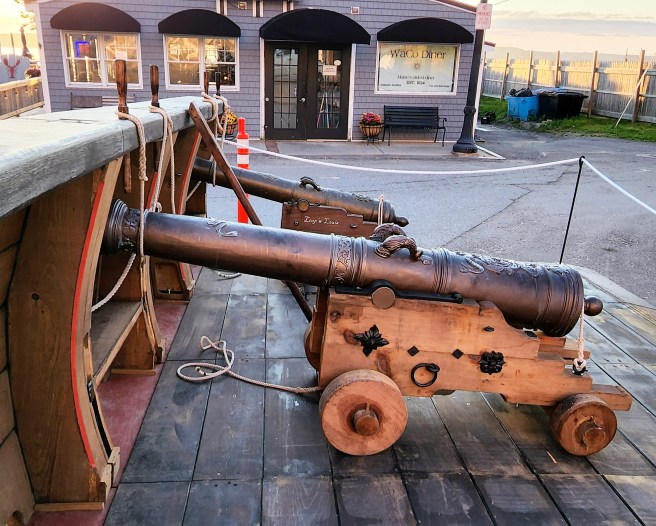
Forget what you think you know about pirates

The popular image, shiver me timbers, comes straight out of Disney.

To set the record straight:

  1. They didn’t punish people by making them walk a plank blindfolded. Instead, the victims were killed immediately or keelhauled – tied to a rope and dragged behind the ship.
  2. They didn’t say “Ahoy!” or “Matey!” I’m not so sure about “Argh!”
  3. Female pirates had to disguise themselves as men to protect themselves. But, by some accounts, there were many of them.
  4. Forget the buried treasure. And their loot was often something other than gold or jewelry.
  5. In fact, maps and some books were more treasured as booty than gold.
  6. Captains were elected and could be removed. Who would have thunk?
  7. The eyepatch wasn’t to hide a missing eye but rather to allow for rapid visual adjustment between above deck and below. Anyone want to try that for verification?
  8. Conditions aboard a pirate ship were often more civilized than those on merchant vessels, where lousy rations and low pay were often common.
  9. The skull-and-crossbones Jolly Roger wasn’t the only terrifying pirate flag, by far. How about Black Bart’s one having himself holding an hourglass with the Devil? Or Captain Low’s blood-red skeleton standing at the ready?
  10. Pirates still flourish today, especially in the Indian Ocean and parts of the Pacific.

Well, Eastport’s annual pirate weekend festival’s coming up. We’re bracing for the invasion.