Starting this project was like being buckled into a big roller coaster, say the legendary Son of Beast just north of Cincinnati, or finding yourself pregnant, or so I’ll presume, either way resigning yourself to going along for the ride, wherever. Well, in either of those examples there is a destination, and we’re assuming there’s a fine outcome here, too.
I had no idea how much I didn’t know the morning Adam showed up with his tools.
Let me relate how relieved I was to learn that we could still live in our house during the renovations. Stories circulated of people who not only arranged for accommodations where their crew could live during big renovation projects but also had to clear out themselves for the duration.
Look, our financial pockets aren’t deep. We’re addressing my lifetime savings, unless my novels somehow turn out to become blockbuster bestsellers, even at this late date.
Taking more than a few deep breaths, then?
Adam hit the ground running.
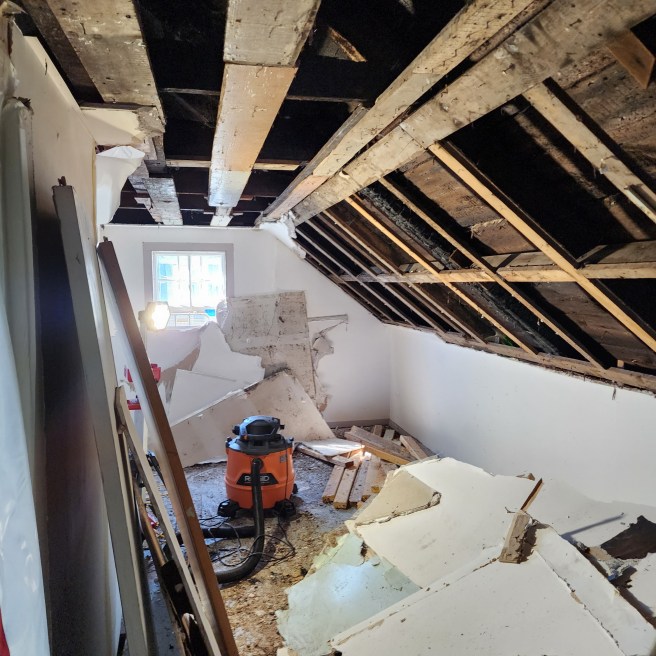
At the end of Day One.
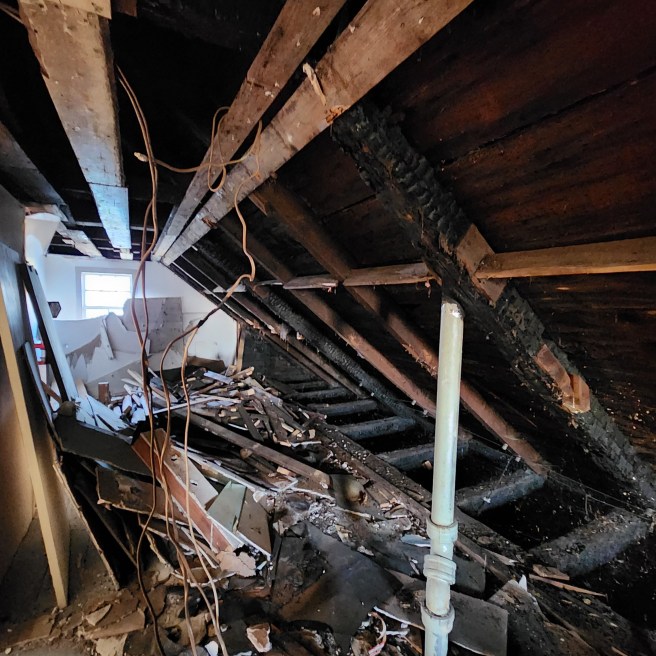
And Day Two.
Once we were underway, I was impressed by the measures that were taken to minimalize the spread of dust and debris and I would like to acknowledge those.
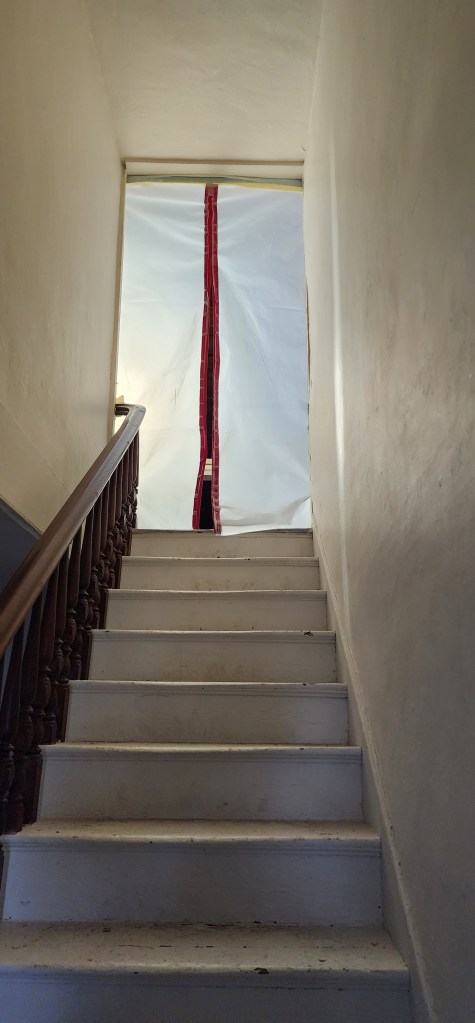
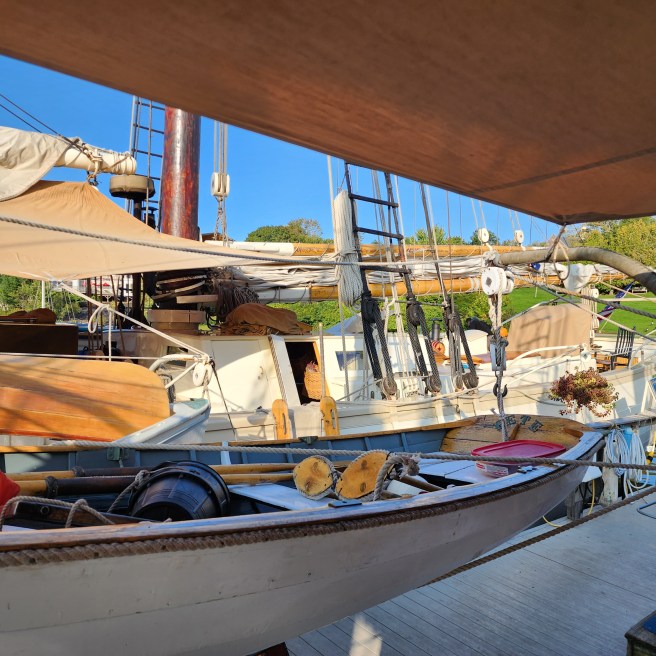
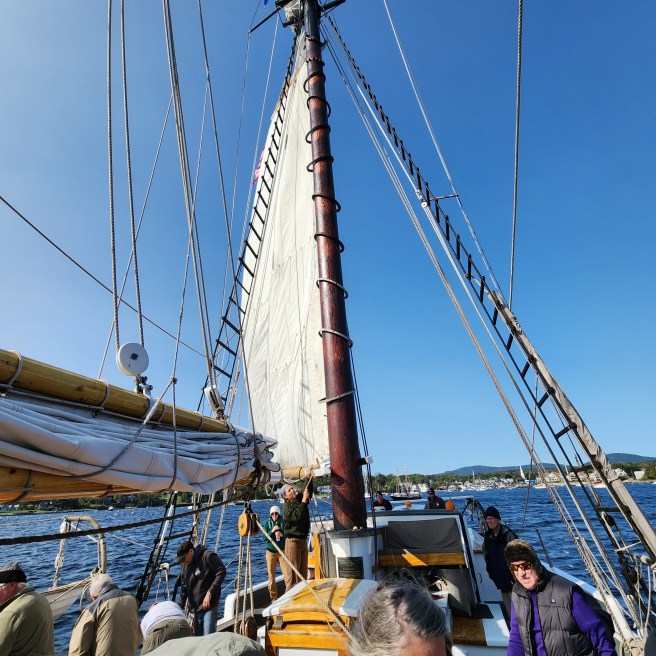
The zipper doorway to the second floor was the first step. And when working on the main floor, Adam erected clear-plastic envelopes he could work within. Made me think of the so-called “state rooms” on the historic schooner I sailed on last summer, where every inch was treasured. Adam’s power vac became a familiar sound.
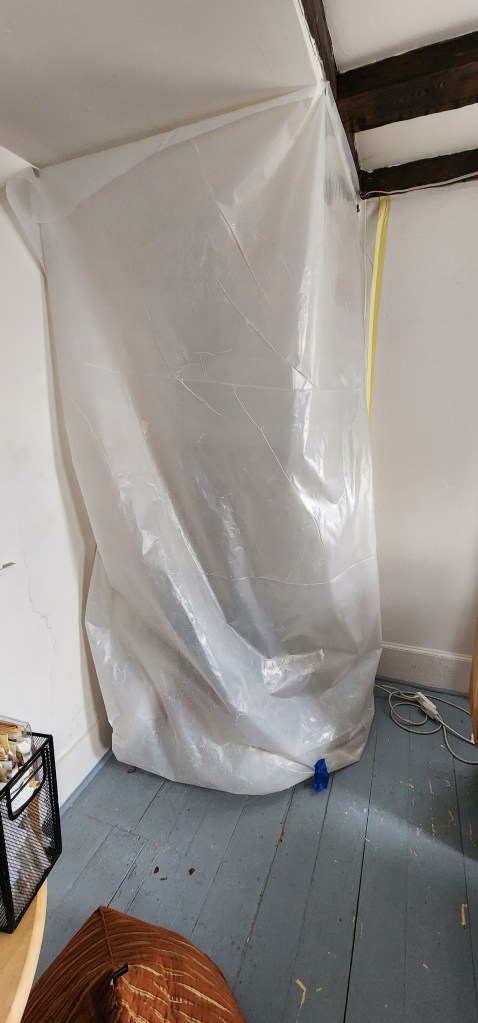
It wasn’t the only place he was fastidious. I would never get my sawing accurate to 1/16 of an inch, especially not when dealing with an old beam underneath that was a half-inch shorter on one side.
Do note, a lot of unsung artistry goes on in projects like this. As well as a lot of weird shit, done by rank amateurs, those whose weird decisions you discover along the way. Long ago, on projects on our little city farm back in Dover, we realized there are many, many very good reasons for modern building codes and for the inspectors who ensure they’re followed.
Also appreciated were the health measures of venting the upstairs or wearing earplugs and a face mask. Our previous carpenter, back in Dover, discovered the hard way about the alternative, hearing loss, and maybe the lungs, too. I don’t know what to advise about plumber’s knees, either.
By being able to be present when all this was happening, I did get to follow the action. I’ll hope you, too, finding that entertaining.
 These blasts of alarm and rage, 1976-2008, are an emotional mirror of events leading up to today, a not-so-distant past that’s been intensifying toward devastation. Let them stand as a call for personal honesty and engagement, too.