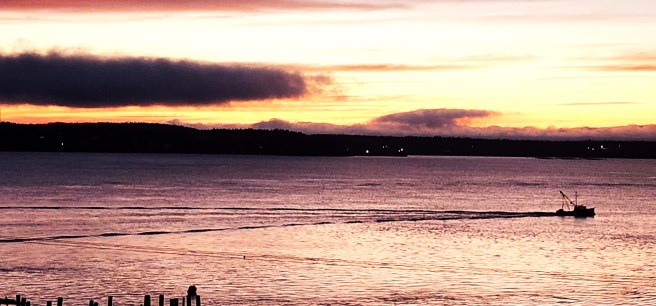
Serving fresh scallops quickly became a Christmas Day tradition in our household once we moved to Eastport. The fishermen set forth before sunrise on each of their preciously allocated days, and only the worst weather can convince them otherwise.
You never know what we'll churn up in cleaning a stall
Serving fresh scallops quickly became a Christmas Day tradition in our household once we moved to Eastport. The fishermen set forth before sunrise on each of their preciously allocated days, and only the worst weather can convince them otherwise.
We were staggered and bewildered by the number of people – mainly from California, Texas, and New York – who were buying up properties out here, sight unseen during the height of the Covid epidemic. Well, that went for our Dover in New Hampshire, too. Their bids definitely inflated the selling prices.
It seemed pretty risky, from the locals’ point of view, and that included us. There are so many things, including warning signs, that you discover in a walkthrough of a property, fine distinctions that don’t appear in photos or descriptions. Just think of smells or the neighbors or even lighting as well.
There are also so many things you won’t catch if you see a property only in fine weather. Not just leaks or drafts, either. As a quip around here goes, will those buyers be selling once they’ve endured a winter living here?
We were lucky to purchase when we did. The prices not only went up dramatically soon after that, they’ve stayed up, We remain mystified about how young families are paying what they are for housing.
One of the things I’ve learned over the years is that turning any discussion of religion away from the doctrinaire formulas and instead to direct feelings and experiences can be quite refreshing, even inspiring.
Essentially, that boils down to shifting from “head” speculation and instead to personal encounters, “heart,” if you will. It moves the focus from the abstract to something more concrete.
In my book, Light Seed Truth, I try to take that a step further by avoiding the G-word altogether except in direct quotation. Part of that stems from a Jewish tradition that considers the name of the Holy One to be too sacred to be uttered, leading instead to substitutes that include the all-cap LORD in English translations, meaning The Name. And part stems from just how different our individual perceptions of the word can be, often defaulting into an old bearded male of some sort, despite other options. Even Adonai and Elohim carry different connotations, not that I go into them. Just be aware.
Besides, the G-word can too easily create a wall between those who “believe” and those who don’t.
Add to that the surveys that find atheists, overall, are more familiar with the Bible than are members of varying denominations, and I do want to include them in the discussion.
In my ebook, I do hope to encourage an appreciation for wonder itself in our lives.
Not a bad place to start, is it?
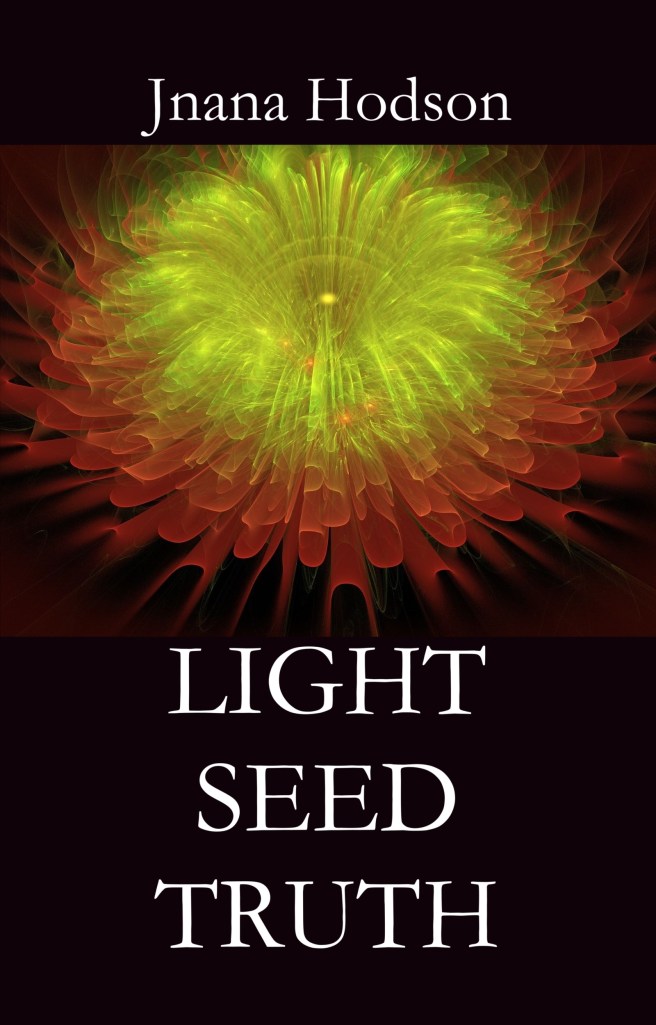
You can find the volume in the digital platform of your choice at Smashwords, the Apple Store, Barnes & Noble’s Nook, Scribd, Sony’s Kobo, and other fine ebook retailers. You can also ask your public library to obtain it.
The time to go has come. It should have arrived several years earlier, rather than continuing in so much wheelchair loitering, trapped in a dream-state. Now the phone call, “I don’t expect him to live another week,” leads into packing and flight.
Unable to awaken, fully, from the bewildering disconnections. This is not the heart attack or car crash I had predicted. Nor the old age of graceful evaporation into a vanishing point of history. No one will say now, “He lost his mind,” but the new names change nothing. This terminal illness, in stages, until the patient no longer remembers how to eat or breathe. Perhaps, mercifully, an angel will break through the sterile chambers of medical enterprise, and another nature will take its course.
This flesh, shrinking to bone, rather than feather.
 Climatic change is bringing more frequent and fiercer storms to Way Downeast. Last winter felled many trees in the region. Here’s what of those did to a riverside rental cabin in Calais.
The signs “fir tippers wanted” this time of year can be puzzling, so here’s the scoop for those of you who don’t live in Maine.
– Source: University of Maine Cooperative Extension Service
How long the day now? Our shortest is a mere 8¾ hours of visible sun if the clouds permit, barely a third of the 24-hour cycle.
Where I live, we’ve now reached the earliest sunsets. They’ll be inching later by the solstice.
Enjoy the long nights, then. Perhaps by a fire but especially in sleep. Or even out, bundled up, viewing Northern Lights and meteor showers.
Look for my books, sharply discounted. A few are even offered for free.

behind the house
I do miss my barn

The member ships of the Maine Windjammer Association are independently owned and operated, and apart from setting firm departure and return dates, each of them ventures at the will of its skipper and the elements each day.
Watching the others in the course of a cruise is almost a game, and sometimes two or three wind up spending the night in the same cove, as happened here on Islesboro. We had the Heritage, above on one side, and the Angelique on the other, and the atmosphere was festive.
For more schooner sailing experiences, take a look at my Under Sail photo album at Thistle Finch editions.
 Jnana's Red Barn