Ten things we miss in Portsmouth

When I say “we” here, I’m acknowledging a widespread sense of loss voiced by friends and neighbors. Some of these places I know by reputation only, though I still see signs where they were. And others are places I valued.

When I first came to New Hampshire more than 30 years ago, Portsmouth still had a funky feel through much of its downtown. But real estate prices have been soaring, and that’s taken a toll. Ouch!

  1. The J.J. Newberry’s store. A real old-fashioned five-and-dime emporium with its classic soda fountain, knickknacks, and distinctive aroma downtown. Its closure meant many items could no longer be purchased within walking distance.
  2. Seavey’s Hardware. This was one of those family-owned hardware stores where you could find just about anything you’d need if you owned an old house. They could find old fixtures in original packaging and offer it to you for a fraction of what you’d have to pay, if you could locate it at all anywhere else. Alas, when a new generation failed to step up, the buildings were sold … for a constantly changing lineup of boutiques.
  3. Ciabatta bakery and café. Yes, real bakers rising way before dawn to create artisanal breads, pastries, and cakes. And great coffee long before Starbucks was anywhere near our corner of New England. Again, owning its own building helped. But the toll of long hours with few breaks finally led its owner to move on. Boo-hoo. I see it as an emblem of many other dearly departed eateries. Sakura, a small Japanese spot, and the inexpensive Stock Pot overlooking the harbor (great pies, by the way) are two I especially miss.
  4. A real downtown grocery. I don’t remember its name, but it was handy, especially if you were about to go out on the water or wanted an impromptu picnic in the park.
  5. The Pick’n Pay. Within walking distance of downtown, this family-run grocery built a loyal following for all of its special little touches and its personal sense of a social gathering spot. Everybody seemed to know everybody, so I’m told. Many still lament its sale in 1999 to the Hannaford chain after five decades of independence.
  6. Funky, cheap stores. The storefronts have almost all gone upscale now. How many pricy clothes do people need, anyway? How many souvenirs and gifts? How many real estate brokers?
  7. The old Prescott Park arts festival. Yes, the programs continue but they just don’t seem the same. Is it the lineups? Or just us?
  8. Community spirit. Something in the laissez-faire bohemian air I recall has turned bourgeois, even puritanical. The children’s museum had outgrown its original space but was rebuffed repeatedly before leaving town altogether for Dover a few years ago (Hallelujah!), but the pattern continues. We hear story after story of sourpusses and grumblers who are upset by the ice skating rink at Strawbery Banke (it’s pure Currier and Ives, for goodness sake) or the self-deputized posse searching brown paper bags at the Prescott Park concerts and calling police. It’s the old “we got ours, now get out” attitude that will soon make the town unwelcoming even to itself.
  9. A small-town scale. One historic neighborhood, just north of downtown, that didn’t escape urban renewal long sat as a bizarre quasi mall in the middle of a big parking lot. The houses it replaced had been, I’ve heard, elaborate Victorians whose craftsmen builders had filled with stone carvings, fantastical woodwork, and fanciful windows. What was left, admittedly, was an eyesore. Initially, nobody seemed to object when plans were announced to redevelop the site. What’s gone up, though, is a few square blocks of relentless four- or five-story rectangular structures befitting a big city but alien to the architectural character it borders. These monoliths with national chain retailers and eateries on the ground floor and residential condos above just don’t fit in. Well, considering that the city also banned buses from downtown – to get one to Boston, for instance, you have to take a “cute” trolley out to the transportation beside Interstate 95 – you just might start wondering how long it will be before someone tries to convert the whole place to a gated compound.
  10. Easy parking. Yes, the parking garage has long been a sanctuary, considering the shortage of street parking downtown, but now even that’s usually overflowing, especially in tourist season.

~*~

What do you miss in a place you’ve frequented?

~*~

Well, the vibe’s right …
… even if the shots were taken on a Sunday afternoon in Tamworth, New Hampshire.


Ten things we still like in Portsmouth

Nearly all traffic to Maine passes through Portsmouth, a smaller but more affluent city to our south – and much of the traffic stops off for a meal or shopping break. It’s a picturesque place bordering the ocean, which makes it both a vacation destination on its own or chic place to retire. For years, it was the heart of New Hampshire’s seacoast region, although that’s shifting more and more to Dover as Portsmouth loses its blue-collar base and state university students at nearby Durham are priced out of its rental market.

Still, we heart it. Here are some reasons:

  1. The Music Hall. Within its unpretentious exterior, this restored 1878 auditorium is jewel of 895 seats and a horseshoe shaped balcony that’s become the principal venue for live music, classic and art films, lectures, and more in the seacoast region of New Hampshire. Simply stepped into the hall feels like stepping back in history.
  2. A vibrant theater scene. Despite its modest population, the Port City is home to an unexpected number of live stage companies. Our favorite is the Pontine Theater, founded by a duo in 1977. They do just about everything from writing the scripts to designing and building the sets and costumes to performing most of the shows each season.
  3. The harbor. Situated at the mouth of the Piscataqua River (with its treacherous currents), Portsmouth and Newington just upstream form the principal port of New Hampshire. The historic downtown wraps around Portsmouth Harbor, and overlooks its clutch of tugboats, commercial fishermen, ocean-going freighters, sailboats, motorboats, even yachts, plus cruises down the river and out to the Isles of Shoals or upstream to Dover (the latter limited to September and October). It’s a gorgeous view from many angles.
  4. Historic houses and neighborhoods. Like many other New England ports, Portsmouth was home to wealthy merchants and traders, and they built homes to match. A living history museum, Strawbery Banke, offers tours and programs featuring a selection of homes and small businesses from the mid-1600s to the beginning of the 1900s. The site, once scheduled for urban renewal demolition, is itself a miracle. It’s not alone, though. Spread throughout town are other historic houses open for public inspection, including the 1664 Jackson House, governor’s mansions, signers of the Declaration of Independence, the John Paul Jones House, and others. Strolling some of the side streets can feel just as impressive.
  5. Prescott Park. Set along the river adjacent to Strawbery Banke, this park is scene to a summer music and theater series, an All-America selection floral display, a lush public garden, sculpture, and dramatic views of vessels as well as the U.S. Navy shipyard and its nuclear submarines on the opposite shore. Next to the park is a small Colonial-era burial ground well worth examining.
  6. Tons of restaurants and nightlife. Downtown probably has as many eateries per capita as Manhattan, many of them veering toward upscale. It’s a constantly changing list.
  7. The new Memorial Bridge and new Sarah Long Bridge. The two drawbridges between New Hampshire and Maine have been recently rebuilt to handle more vehicular traffic and to better accommodate the oceanic freighters and barges. The new structures are pretty impressive.
  8. Third of July fireworks. With its annual pyrotechnics show the night before Independence Day, this city offers a great example of an artistic, well-planned visual production. Maybe it helps to have a central site like the park along the South Mill Pond, but this crew knows how to use the entire sky as a canvas.
  9. The Water Monkey. About the last surviving funky retail outlet downtown, which was once filled with hippie action. Lots of fun in a small space.
  10. The Brattle Organ. Said to be the oldest playable set of pipes in the country, this circa 1665 instrument was imported before 1708 for King’s Chapel in Boston. It now sits in a corner of the balcony at St. John Episcopal on a knoll downtown and is played on rare occasions. It’s a small instrument, fewer than 200 pipes. It must have been thought quite exotic at one time.

~*~

Think of a place near your home that you like to visit. Tell us one of things you find appealing.

~*~

Just to be contrarian, here’s a view of the Cocheco River just above the dam and falls in downtown Dover. The river flows right through the arch in the mill, where the tide rises and falls about eight feet every six hours. Portsmouth has nothing like this. (Photo taken from Thompson’s deck.)


Ten perspectives on subway systems around the globe

I’ve long looked at subway systems as a measure of a great metropolis. Not its only one, mind you, or even the defining one, but among the criteria to consider.

Here are ten items to put that in perspective.

  1. About 160 underground public transportation systems operate in 55 countries around the world – more than 40 percent of them new in the 21st century, starting a decade after my novel Subway Hitchhikers was first published.
  2. The London Underground opened in 1863 and operated its first electrified line in 1890, making it the oldest.
  3. The longest route is the Shanghai Metro.
  4. The busiest system is the Beijing Subway.
  5. New York City has the most stations.
  6. The Paris Metro opened in 1900. It has some great art deco design and a certain funky romantic air.
  7. Budapest opened in 1896, beating Paris. As did Boston, 1897.
  8. China has 32.
  9. Africa has three: Algiers (2011), Cairo (1987), Mecca (2010).
  10. The Moscow subway, with some truly impressively beautiful stations, opened in 1935 and claims the world’s highest daily ridership – nearly seven million. Tokyo, opened in 1927, has 8.7 million daily riders – more than Moscow’s – but the footnote is that subways account for only a fraction of the daily passengers. As for Beijing, 10.3 million riders daily? Go figure. Tokyo’s punctually efficient system still hires oshya to push commuters like sardines into the tin. Err, car, at peak hours.

What’s below the pavement in Manhattan?

A compact and congested city center sits atop a spaghetti pile of underground pipes and wires and more.

Here are ten things you might find below the pavement in Manhattan:

  1. Con Edison’s 105 miles of steam pipes heating nearly 2,000 buildings. (Take care – it’s 350 degree heat!)
  2. Water mains. Many lead to buildings. Others to fire hydrants or drinking fountains.
  3. Electrical conduits and telecommunications infrastructure.
  4. Natural gas mains. Beware of the pressure.
  5. Sewage pipes. These have to run downhill in the end.
  6. Storm drainage. Ditto.
  7. Underground storage tanks containing things like Freon or fuel oil or industrial chemicals. Who knows what else.
  8. History, from cobblestones and Colonial foundations to bottles and bones.
  9. Passenger and freight train tunnels. Think PATH, Metro North, and the Long Island Rail Road when they roll into Penn and Grand Central stations.
  10. Subway tubes and stations and the air vents that support them. The city has 275 fully underground stations.

What’s actually down there often remains a mystery, even to public and utility officials. What happens when a corroded pipe bursts?

Ten facts about Laconia Bike Week

For nine days each June, the sound of Harley’s is heard everywhere across the Granite State. The annual Laconia Bike Week schedule ends on Father’s Day, just before the traditional summer vacation season begins.

  1. It’s the oldest rally in the country. It originated in 1916 when hundreds of motorcyclists convened on Weirs Beach in the city of Laconia. It was officially organized in 1923 as an annual event.
  2. A 1965 riot between motorcycle gangs and police cast a pall over the rally. Attendance plummeted.
  3. Civic boosters revived the event’s popularity in the 1990s to enhance tourism revenue.
  4. New Hampshire does not require motorcyclists to wear helmets. The freedom to feel the wind in your hair – or these days, for many, bald head, is a huge attraction as they tool along scenic, winding highways in the state’s mountainous Lakes Region.
  5. Deaths often accompany the rally. There were at least two fatal crashes in 2018.
  6. Weirs Beach on the shore of Lake Winnipesaukee is Ground Zero. It’s filled with vendors and jammed with parked bikes during the rally.
  7. It has the third- or fourth-highest attendance (400,000). Sturgis, North Dakota, is first (500,000 to 700,000 in August); Daytona, Florida, is second (450,000 to 550,000 in March); and the Bikes, Blues, and BBQ in Fayetteville, Arkansas, comes in about the same (400,000 in September).
  8. The event brings an estimated $100 million into the state.
  9. The Mount Washington Ride to the Sky is a bikes-only event to the top of the tallest summit in the Northeast. Snow is sometimes part of the attraction.
  10. The crowd is graying – but still mostly male and white.

Ten facts about American subway systems

The Big Apple isn’t the only North American city to have a subway system. Underground rapid transit is a defining quality for a great metropolis, after all. Here are ten related facts.

  1. A shared dream: Two brothers – Henry Melville Whitney in Boston and William Collins Whitney in Manhattan – vied against each other to create the first public subway system in North America. Boston won in 1897. New York’s opened in 1904. Who says sibling rivalry doesn’t have its place?
  2. Chicago: While the Windy City is known for its “L,” those elevated tracks running in a loop through downtown, Shy-town also has a portion operating underground. That was a late entry, though, opening in 1951.
  3. Washington: Opened in 1976, the spick-and-span Metro has 117 miles of route, six lines, and 91 stations. It’s the third busiest rapid transit system in the country. Just don’t get caught snacking en route to work.
  4. San Francisco: The Bay Area Rapid Transportation system has six lines connecting 112 miles of route and 48 stations. It carries an average of 423,000 riders daily. Opened in stages from 1972, it was hailed for its technological advances. And then for its glitches.
  5. Philadelphia: SEPTA’s modes include about 25 miles of underground route in the center city, mostly as the Broad Street Subway, opened in 1928, and the Market-Frankford Line. As for safety? It’s far less terrifying than those Jersey drivers across the Delaware.
  6. Cincinnati: Abandoned tunnels and stations from the city’s efforts to build an underground rail system haunt the city. Construction halted during World War I and was officially cancelled in 1928 but bonds for the project weren’t paid off until 1966. Some fans say the failure to complete the dream caused Cincy to fall from the front ranks of American cities – traffic congestion remained a big headache until Interstate highways brought some relief.
  7. Montreal: Canada’s busiest system opened in 1966, running on the then innovative rubber tires. Le Metro now has four lines, 68 stations, and 43 miles of routes serving an average of 1.3 million riders daily – third highest in North America.
  8. Toronto: Opened in 1954, the TTC has an average of 915,000 daily riders on its four lines, 48 miles of route, and 75 stations. Its Yonge-University Line has a U-shaped route. Two others run east-west, while the fourth heads north and then turns east.
  9. Mexico City: The second-busiest in North America, with an average 4.6 million riders daily, it opened in 1969 and now has 12 lines and 124 miles of route. It’s likely the most colorful system on the continent.
  10. Los Angeles: Metro Rail, which opened in 1990, has two lines operating fully underground. They run 36 miles and have 22 stations. They carry an average of 153,000 riders daily – a low figure that stymies observers, considering the region’s notoriously jammed freeways. But poor connecting bus service may be part of the problem.

Ten facts about the New York City subway system

Opened in 1904 and the second-oldest system in the country, the New York subway is the biggest and busiest in North America.

Here are ten facts for perspective:

  1. Riders: 5.58 million on a weekday. (OK, even if most of them are probably using it at least twice, coming and going, that’s still over two million people. The busiest time is between 7 and 8 a.m.)
  2. Top speed: 55 mph.
  3. Average speed: 17 mph.
  4. Average voltage in the third rail: 625 DC.
  5. Route length: 245 miles.
  6. Total track length: 850 miles. (Remember, a route requires two tracks, one in each direction. And where local and express routes overlap, you can double that. Stretched out, the track would run well past Chicago.)
  7. Daylight: 40 percent of the track runs above ground, mostly in three boroughs outside Manhattan. (It doesn’t run on Staten Island.)
  8. Two sizes of cars in operation: The IRT tunnels, curves, and stations are too small for the cars running on the IND and BMT lines.
  9. Directions: The current official map by Michael Hertz Associates dates from 1979. It is not geographically accurate but makes Manhattan larger to accommodate for the borough’s having the most services. The earlier 1979 subway map by Massimo Vignelli is considered a modern classic but is flawed by its placement of geographical elements.
  10. Men working: Because the system does not shut down overnight, all track maintenance occurs while trains are running. It can account for delays and rerouting, as needed. (Well, some of them did inspire my novel now running as Subway Visions.)


Mixmaster? Just look at ‘Subway Visions’

What, me as a Mixmaster?

Just look at the topics percolating in Subway Visions.

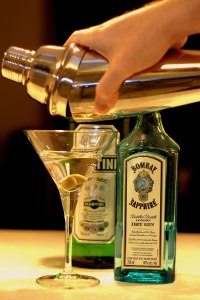
A great bartender is a Mixmaster, too. In fact, the origin of the dry martini is sometimes linked to one at the Knickerbocker Hotel in Manhattan in 1911 or 1912. (Wikimedia Commons photo by N. Renard.)

Here are ten:

  1. Underground mass transit rails. Not just in Gotham, but around the world, too.
  2. Weird chance encounters. A big city is all about people, most of them, I’d say, somehow eccentric. Get on a subway car and just look around – clandestinely, if you’re savvy.
  3. The nature of great cities. Tenements and trash are part of the scene.
  4. Bohemian underground. There’s always been a counterculture in a healthy society. It’s what makes great cities tick.
  5. T-Rex and graffiti. Ah, Kenzie shows up in Gotham just as its trains are being defaced by wild blobs of paint. And here he is as a photographer identifying himself as an artist, too. What’s the point of any art, anyway?
  6. Alternative means of transport. It’s also a time of hitchhiking on the open road. Kenzie discovers parallels in the bowels of the city.
  7. Crashing and couch-surfing. When you have friends, your options multiply. And it’s much better than the one hotel room he rents in his visits.
  8. The Dharma. Kenzie’s visits largely revolve around his studies under his Tibetan Buddhist guru in SoHo.
  9. Overcoming fear. His first ventures into the unfamiliar underworld are scary steps. By the second half of the novel, though, Kenzie is out along the fatal third rail and the elevated heights. How free can he get?
  10. Surrealist vision. He begins seeing in encounters in a fresh light. Maybe it’s a kind of X-ray? It’s entertaining, all the same, as well as refreshing. What else don’t most commuters notice?

Be among the first to read my newest novel.


Ten ways this ‘Subway’ is new and improved

My new novel Subway Visions comes a long way from its earlier incarnation as Subway Hitchhikers.

Here are ten ways it’s new and improved.

  1. The novel no longer serves as an introduction to three other volumes but stands fully on its own in a more timeless Gotham.
  2. The central character is now identified as Kenzie, in line with the other novels in my Freakin’ Free Spirits cycle. Gone are the Duma Luma and later D.L. monikers. He’s more grounded than they were.
  3. The action is now built on a clear chronology that runs parallel to his ongoing life to the north. For that, you can read Pit-a-Pat High Jinks.
  4. He now has monthly opportunities to visit the Big Apple and ride its rails, thanks to a floating three-day weekend off from his job. This gives more plausibility to his familiarity with the city while living hours to the north. He is young and ready for adventure, after all.
  5. With his Tibetan guru living in Manhattan’s SoHo district, Kenzie’s Buddhist studies now run through much of the story. His sessions there become his principal motivation for the monthly visits.
  6. The story is now anchored by a set of regular characters, beginning with his guru and Buddha buddies like Holly and Wilson before expanding in the second half with the wild tagger T-Rex.
  7. As one reader said of the earlier version, “I really dig that chick Holly.” Now there’s a lot more of her. (And Wilson and T-Rex are altogether new.)
  8. The language is tighter; the sentences, more staccato, befitting the grimy trains and their stations.
  9. The funky sweet surrealism of the original tale now floats over the substance of an inescapably malodorous substratum. There’s nothing bland and disinfected in this gritty demimonde of endless night where Kenzie encounters the most remarkable souls and visions.
  10. These events are now seen in a historical perspective, thanks to the unseen presence of Kenzie’s daughter Cassia while I was revising the tale. Credit her for the snippier tone, too.

Be among the first to read my newest novel.

Ten reasons the hippie movement collapsed

  1. No clearly defined identity. Long hair or passing the pipe was pretty superficial, ultimately.
  2. No underlying unity or structure. It’s not like we had a manifesto or membership cards or even paid dues.
  3. And bad trips. Especially bad trips.
  4. No reliable leaders or prophets. And definitely no reliable followers.
  5. End of the military draft. Not that it was the end of the war now, was it? But it turned the heat off the burner.
  6. Not enough self-discipline. Even before we got to the hard stuff.
  7. Demands of jobs and families kicked in after all. And since many of ours weren’t like our parents’, we had to keep improvising. There weren’t many guidelines left to follow.
  8. The soul mate who wasn’t. Or as they say in Zen, what’s the sound of one clap handing.
  9. Everyone else left. Maybe with your lover.
  10. The Grateful Dead couldn’t carry the beat forever. Even with all these oldies still hanging on.

What would you add to the list?