A few islands in comparison

Islands come in all shapes and sizes, and even that can change dramatically with the tides. Now that I’m living on one, I’m really beginning to appreciate their variety. Some you can drive to or from, while others require a ferry or even an airplane. The better-known ones seem to be vacation or travel destinations.

Here’s a sampling, starting with home.

  1. Eastport, Maine, including Moose, Treat, Carlow, Matthews, and a few more: 3.6 square miles (12.3 with water)
  2. Manhattan: 22.7 square miles
  3. Staten: 58.5 square miles
  4. Martha’s Vineyard: 96 square miles
  5. Nantucket: 48 square miles
  6. Grand Manan, New Brunswick: 55 square miles (198.4 with water), but one side is a 20-mile wall of tall bluffs – the same length as Martha’s Vineyard.
  7. Sanibel, Florida: 16.1 square miles
  8. Mount Desert, Maine (home of Acadia National Park): 108 square miles
  9. Santa Catalina, California: 75 square miles
  10. San Juan, Washington: 55 square miles

Care to tell us about others?


Not all firewood provides the proper heat

Living in places where firewood is readily available – unlike, say, Manhattan or the Arctic Circle – has made it relatively affordable to heat by a wood-burning stove, at least when we’ve had one. (Let me repeat, it’s high on our renovations and home improvement list.)

OK, my Eagle Scout training left me quite aware that green wood – that is, freshly cut – burns inefficiently, unlike wood that’s had time for the sap and related moisture to dry out. That said, here are some other points.

  1. Seasoning can take as little as six months, though old-timers prefer at least a full year. Or more, if stacked in a way that allows sufficient circulation to avoid rot and fungus.
  2. Softwoods – generally conifers like pine, juniper, spruce, and cedar but also including poplars – ignite easily and burn hot, but they don’t blaze long. They also have a lot of creosote, which will need to be cleaned from the chimney as a housefire hazard.
  3. Hardwoods – maple, oak, hickory, ash, and birch – are denser and burn slower and longer, and while they release less immediate heat, there’s also less smoke and they add up as a layer of radiantly hot coals.
  4. All firewood has creosote, so annual chimney cleaning is recommended. Some sources say every two cords. Chimney fires are especially vicious.
  5. In colonial New England, a house typically required 40 cords or more of firewood a year. Imagine cutting, splitting, and stacking all that – even before bringing it indoors.
  6. Salvaged wood – such as lumber, poles, and fencing – often contain preservatives that release hazardous vapors as they burn.
  7. Destructive insects and plant diseases can be spread when transporting firewood more than a few miles from its source. That’s why it’s illegal to import firewood into Maine. Now I’m wondering about the guys from Maine who delivered to our house in New Hampshire.
  8. A cord is a stack 4-by-4-by-8 feet of standard 16-inch wood. Many stoves, though, require a shorter log.
  9. Do you really get a full cord when it’s delivered? I’ll spare you some old jokes.
  10. Favorite woods include apple and tamarack/larch, both for their aroma and a clean burn that leaves little ash.

As for air pollution? I really don’t want to go there. It could be a Tendril all its own, once we find the right tech geek to sift through the varied reports.


Sometimes a small city can have a big impact

Bangor, Maine, has about the same population as Dover, New Hampshire – 30,000-plus.

But it’s the center of a wide region and has the spotlight to itself. In fact, though I live a 2½-hour drive away, it’s the place we often turn to for what many folks take for granted.

Here’s some perspective.

  1. It’s where the Penobscot River meets the ocean, so historically it was the world’s leading producer of lumber, which was floated down from the North Woods, milled, and then packed on ocean-going ships.
  2. Well, that did lead to Old Money, which can be seen in the remaining stately homes and churches built by lumber barons in the 19th century.
  3. The river also separates the city from Brewer, which adds another 10,000 or so to the metro population and provides some of the services and products we seek.
  4. Not just the mall and big-box stores, though some of them do deliver way out to our fringe of the state. Don’t overlook new auto dealerships and their service departments, either. Well, we do have one dealer out here in Sunrise County, but it’s not Toyota.
  5. The vast Northern Light Eastern Medical Center on the bank of the Penobscot River is the hub of an integrated health system spanning much of the state. Frequently, that means this is where your specialist is.
  6. Bangor International Airport. It’s where you have to go if you need to a commercial airline connection or are meeting an arrival.
  7. Media. Starting with the Bangor Daily News and Maine Public’s studio.
  8. University of Maine in neighboring Orono. Well, its impact spills over into downtown Bangor, should you be looking for funky.
  9. By the 1880s, Bangor was also a leading producer of moccasins, more than 100,000 a year. Should that be a footnote?
  10. The downtown was struck by major fires in 1856, 1869, 1872, and 1911 – the last one destroying the high school, post office, custom house, public library, telephone and telegraph companies, banks, two fire stations, six churches and a synagogue, about 100 businesses and 285 residences.


As for romantic attraction?

Yeah, this is the big day for roses and chocolate and those mood-drenched candlelight dinners. Let’s put it all in some perspective.

  1. Historically, it overlaps an ancient three-day Roman festival that included drunkenness, nudity, sacrifices of dogs and goats, and slapping by goatskins intended to heighten fertility. It was something the early church tried to deflect by invoking Saint V.
  2. As for the saint? The bio gets mysterious. Did the man really exist? Or was it eight?
  3. The oldest printed card, 1797, cited a day the sender desired to “be your Valentine.” Whatever that meant.
  4. The Quaker Cadbury chocolate company introduced the Valentine’s Day heart-shaped box in 1861 but failed to register the design. Copycats soon piled on.
  5. About a billion cards are sent for Valentine’s Day every year, second only to the 2½ billion at Christmas.
  6. Nasty cards have also been part of the tradition. Ever get a “vinegar Valentine”? Anyone else intrigued?
  7. It’s big business – by one count, $27 billion pre-Covid, with candy – mostly chocolate? – the biggest gift, followed by cards, roses, romantic dinners, and, for ten percent of recipients, jewelry. Not that you’re limited to just one category. And I’m not sure if the ranking is by the quantity of each one or by the amount spent.
  8. As for that jewelry? Much of it takes the shape of engagement rings – with six million being presented on the day every year.
  9. In Japan, women are expected to give the chocolate.
  10. Teachers receive the most cards, maybe because children age six to ten, exchange the three-fifths of the cards overall.

So far, I haven’t found perfumes, love potions, or aphrodisiacs on the list.


Things I wasn’t expecting when I started drafting my newest book

Yeah, I know about the adage, “Write about what you know,” but I’ve come to see that advice needs to be balanced by “write about what you want to know.”

What we might call a creative tension. If you’re a writer, I hope that helps.

My latest book, which started out as a humble and brief profile of Dover’s Quaker Meeting but turned into a contrarian New England history, could be presented as one example.

I mean, Dover is still seen as a shadow to neighboring Portsmouth, which is much smaller and more uppity. Get real!

Back to the book at hand and the research that’s gone into it. Here are some things that surprised me.

  1. Thomas Roberts as a cofounder of the settlement, rather than William Hilton. That alone alters the traditional telling.
  2. The Devonshire connection, which gave Dover a much different culture to build on rather than the one the Puritans presented.
  3. The extent of New Hampshire’s role as a haven for dissidents and misfits.
  4. Puritans as less than monolithic. They were primed for revolution but full of insecurities.
  5. Richard Waldron’s power in Boston. He was more than a rich hick in the sticks.
  6. The crucial impact of a few key provision in New Hampshire’s agreement to come under Massachusetts management. A male didn’t have to be a member in good standing in the town church in order to hold land or to vote in town affairs.
  7. Dover Friends Meeting as one of the seven oldest in America. It has a more prominent place in Quaker history than has been recognized.
  8. Early English resettlement of Maine after the French and Indian devastations coming around 1730 rather than 30 years later.
  9. Dover’s textile mills’ predating those in Lowell, Lawrence, and Manchester. In fact, the founders of Lowell looked to Dover for inspiration. In other words, we weren’t a small, insignificant mill town.
  10. The Sorcerer who was a member of Meeting. You’ll have to read the book to find out about him.

Order your copy of Quaking Dover at your favorite bookstore. Or request it at your public library.
A few things that surprised me about early Dover

In researching my new book, Quaking Dover, new findings pointed me in fresh directions. Sometimes they came in examining something I knew a little about already. Here are a few:

  1. Dover was a wilder place than you’d expect. At one point, it was a haven for harassed leaders and dissidents from Massachusetts, and for decades its frontier was torn by massacres, raids, and scalpings — much longer than anywhere in the Wild West.
  2. Despite its upstream location on the Piscataqua River, Dover emerged as New England’s third oldest permanent settlement and the seventh oldest in the United States. That makes New Hampshire the second-oldest state in New England, rather than Rhode Island, Connecticut, Maine, or Vermont.
  3. The earliest mills were for sawing wood rather than grinding grain. Shipbuilding and shipping, requiring barrels and boxes, were major industries. Food could be imported.
  4. Dover nearly had the first Baptist church in America, but its minister fled town, along with some followers who established Piscataway, New Jersey — named for the Piscataqua River.
  5. Edward Starbuck, sire of the surname in the New World, was elder of the town church until he ran afoul of its practice of baptizing children and its objections to the length of his hair. He left Dover to become a founder of Nantucket, where his family became well-known Quakers. His son repeatedly returned to Dover.
  6. The Quaker movement arrived in Dover earlier than has been acknowledged. Two of the three men hanged in Boston had visited Dover less than a month before — the third had been in town the previous year. Shortly afterward, three women missionaries in Dover were tied to the tail of an ox cart, banished, and ordered whipped in every town to the south. Even so, a third of the population of Dover soon identified as Quaker.
  7. Women were coequals in the Quaker movement, illustrated by many of Dover’s recorded ministers over the years.
  8. Early settlement of Maine was largely across the river from Dover. Access by water was more like crossing the street nowadays. Kittery House, named after a manor in England, sat in today’s Eliot, opposite Dover Point. Its proprietor, Nicholas Shapleigh, gave crucial protection to Quakers. Dover Quaker Meeting had meetinghouses in both Eliot and Berwick, close to the homes and farms of many members. Later generations of Dover Friends fanned out across the state, where their surnames remain quite visible.
  9. John Greenleaf Whittier was famed across the country as an abolitionist and poet, but Whittier Falls and Whittier Street in Dover were named for his uncle. The poet’s mother, on the other hand, grew up as a member of Dover Meeting and married in its meetinghouse.
  10. Landmark Tuttle’s Red Barn, a popular market at what was proclaimed America’s oldest family-owned and operated farm, was home to generations of Quakers. That “oldest” distinction is challenged by descendants of Thomas and Rebecca Roberts, themselves with a Quaker identity and founders of the Piscataqua settlement itself.

Order your copy of Quaking Dover at your favorite bookstore. Or request it at your public library.

There’s one outstanding King of Maine

The popular (and how) “king of horror” has long deserved kudos for getting so many people to read, period, especially in today’s mass-media and marketing saturation. (I refuse to say “culture.”) Plus, there’s evidence he’s a much “better” writer than his top-selling novels reflect, given his appearances as a poet under pseudonyms and a few rogue novels. He’s quite conscious of structure and a bigger picture, for one thing.

Add to that poet Donald Hall’s observation that New England has a gothic nature, which King has played in spades, and King’s own comments about today’s publishing scene in his duels with the critics, often with advice I wished I’d been able to apply to my own work, but mine remains what it is.

All I’m saying is don’t underestimate him.

  1. His upbringing, should you care, would easily fill a dark series of stories all on its own. Somehow, he managed to get back to Maine.
  2. His wife, Tabitha Spruce, seems to be much more of a muse and guiding spirit than has been acknowledged. They met in college at the University of Maine and are still married. She stayed with him through a period of heavy alcohol abuse followed by recovery and sobriety.
  3. He’s said he married her “because of the fish she cooked for me,” and his favorite foods are salmon and cheesecake.
  4. Often critically dismissed as a commercial, pop-culture writer – horror, supernatural, suspense, crime, science-fiction, and fantasy fiction – King nevertheless embodied a seriously dedicated author who spent long hours day after day at the craft. He had good reasons to return fire at the more elite literary side of the profession.
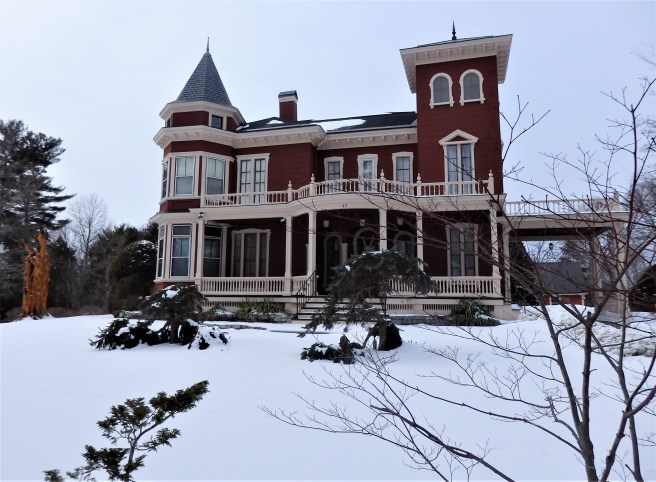
  5. He’s never left his blue-collar background. Witness his longtime residency in Bangor, Maine, where you can live in one of the city’s classic big mansions and still be one more regular guy.
  6. Despite his wealth, his politics lean left. He and his wife are active philanthropists – ranking sixth among Maine charities. It’s said no deserving child in Maine is denied a college education, thanks to the King scholarships.
  7. He’s an avid Red Sox fan. And a daughter’s a Unitarian-Universalist minister. Wanna talk about being a New Englander?
  8. His life was changed by an afternoon accident in 1999 when he was struck by a minivan while walking along a highway that left him severely injured and sent him to Florida to live through our harsh winters. Still, he writes on.
  9. He’s claimed to not use cell phones, though that was a while ago. As for other technology? There’s his recent spat with Twitter, which tried to charge him for contributing content for the platform – rather than the other way around.
  10. His 65-plus books have sold more than 400 million copies and spawned countless films, TV series and miniseries, and comic books. And still he’s advocating for the better royalties and advance payments to entry-level authors.

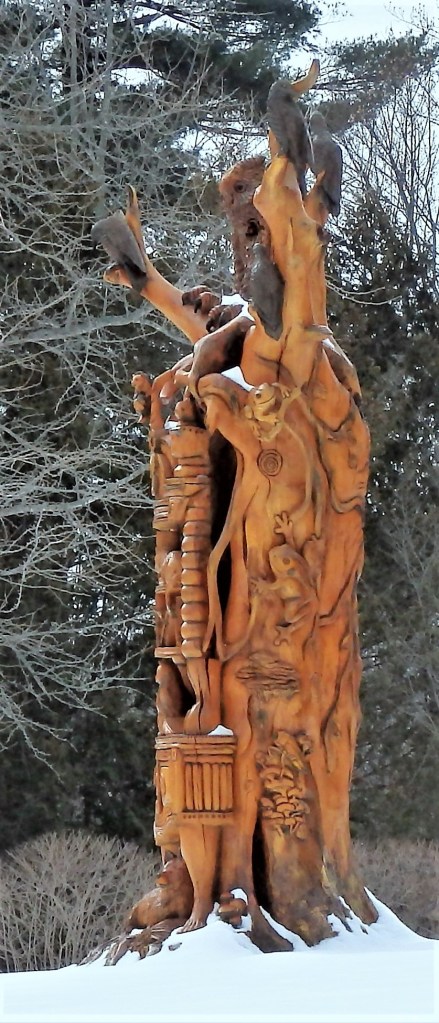
The King home in Bangor is a popular tourist attraction. A tree trunk outside has been transformed into a wild sculpture.

Ten major American religious dissidents

Who says you had to conform growing up? Here are some people who made America the land of the free, not that I agree with all of them. Still, it really does come down to language and how we use it. Especially when religion and politics are mixed in.

  1. Samuel Gorton. Just plain onery in early New England.
  2. Roger Williams. Leading to a progressive movement then known as Baptists.
  3. Anne Hutchinson. Pointing the way to New England Quakers.
  4. John Woolman. A Quaker who worked ardently against slavery and other economic perils.
  5. Henry David Thoreau. It’s a Unitarian thing, ultimately.
  6. William Miller. The foremost of the voices that would become the Seventh-day Adventist church. Ellen G. White emerged as an essential proponent in its development as it organized in Battle Creek, Michigan, and then Takoma Park, Maryland.
  7. Joseph Smith. You know, the Mormons. Along with Brigham Young and Utah.
  8. Dorothy Day. Catholic Workers, a truly radical movement.
  9. Martin Luther King Jr. Civil rights and much more.
  10. Bayard Rustin. Gay Black Quaker ahead of his time on many fronts.

Who am I overlooking?

With ten years of blogging under my belt, let me say  

  1. You have a global audience. I remember being startled after posting a posting of a snowy New England day and getting a comment from the Philippines, “I’ve never seen snow.” In my life, I’ve always taken it for granted. And professionally, my daily journalism career focused on a well-defined circulation area, perhaps a single county or an entire state, depending on the newspaper at the time. My Red Barn posts, on the other hand, often get read on five or six continents.
  2. On WordPress, you’re part of a community. Sometimes posting can feel a bit like corresponding to pen pals in the old days. And it’s important to see what they’re up to as well and letting them know you’ve stopped by, too.
  3. At first, I didn’t understand “likes.” Yes, I was that naïve about social media. They do help me know who’s tuning in on a given day or topic, even though the number of hits now is generally lower than I had five or so years ago – I take it that’s one thing happening across the board. But I’m also surprised by the number of new likes on archived posts.
  4. Tags. They help invite readers. Just don’t use too many or too few. These days, I’m finding readers show up less frequently but then stay around longer, sampling other recent posts or digging into my deep past. I do find tags quite helpful in navigating the WP Reader for fresh voices.
  5. Categories. I find them quite useful in navigating the Barn, so I assume that applies for others, too. With the Red Barn’s unique merry-go-round approach to topics, I find them quite helpful in organizing the ongoing mix.
  6. Scheduling. Unlike most other bloggers, I often work on posts long ahead of their release. It’s one way to create time for my other projects, admittedly, as well as to juggle topics for a better rhythm of presentation. The practice also allows me to go back and polish a post before it goes live or to add from additional reflection. And paradoxically, it can also have me releasing in a more timely pace with the changing seasons – working “live” would actually put me behind the action.
  7. Classic editor, rather than the newer “block” format. Old-timers here at WordPress will definitely understand. Ditto for the Administrative working option.
  8. Reader’s comments are important. Some days they’re the best part of a post. But they’ve definitely declined, and I’m not sure whether that’s a consequence of the Barn’s current appearance or of its shifting round of topics or just something else in general.
  9. Photography. Despite a lifelong love of visual art, I had intended the Red Barn to be a text vehicle. But then photography crept in, first through a borrowed digital camera and then a cheap point-and-shoot Kodak leading to an Olympus and now an unbelievable smart phone. In short, I now list photography among my hobbies, even if it does seem like cheating compared to the historic and very real craft of light meters, f-stops, and darkroom developing of film. As for texts, length remains a puzzle – sometimes a longer “think piece” gets more hits than the bright briefs that seem essential on other social media. And photography on WP? Let me suggest it seems to be more thoughtful than gossipy or copped from other sources.
  10. I’m still ambivalent about the decision to branch out into related blogs. Should I have kept most of their posts within the Barn? Or would that have cluttered the mix? The genealogy of Orphan George does seem to demand its own bookshelf, as it were, as do the free poetry chapbooks of Thistle Finch, but I do wonder about the money-and-your-life project now archived at Chicken Farmer as well as the Quaker spirituality and Bible reflections at Sowing Light.

Oh, yes, it does take far more time than I anticipated, even when I had a backlog of poetry and correspondence for republication. And I do miss the Fresh Pressed selections in the Reader feed. But not so the self-congratulatory “awards” nominations that made the rounds.

Personal goals in the new year

  1. Be more attentive to relationships.
  2. Do a better job of housecleaning.
  3. And gardening slash yard work.
  4. Read more of the books I’ve amassed and plunge through the backlog of magazines.
  5. See to the home renovations.
  6. Relish in the publication of Quaking Dover.
  7. Exercise more. Including time for treks in the wild.
  8. Revisit my journals.
  9. Have better dreams.
  10. Act my age.