SKINK, I HOPE

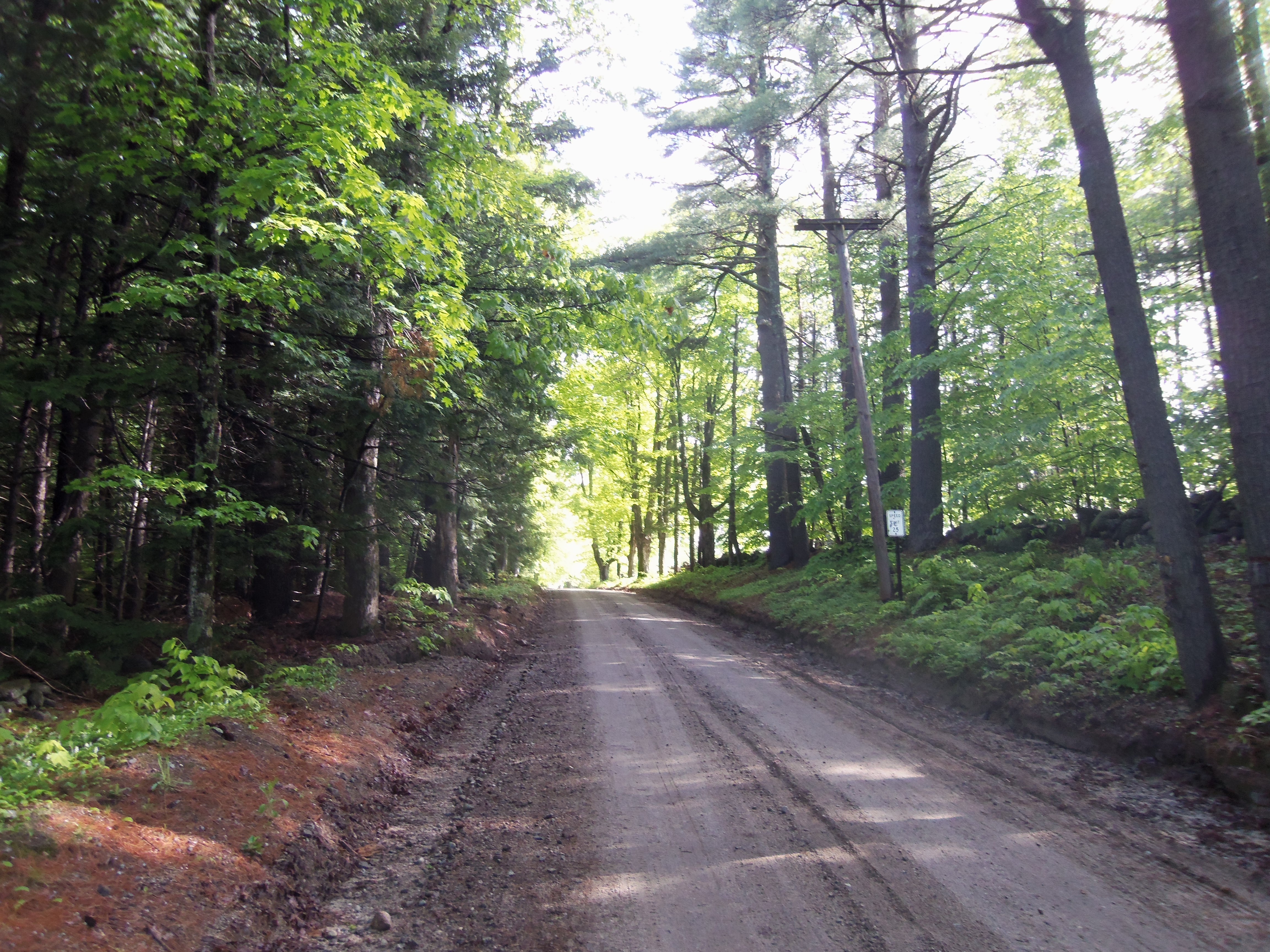
A small lizard, part of a family of reptiles informally called skinks, rests on the roadway. At least I assume it's a skink. I'll leave the final identification to others. It's under two or three inches in length.
A small lizard, part of a family of reptiles informally called skinks, rests on the roadway. At least I assume it’s a skink. I’ll leave the final identification to others. It’s under two or three inches in length.
I encountered the critter at the top of this incline while walking in Henniker, New Hampshire.


COLORING THE WIND

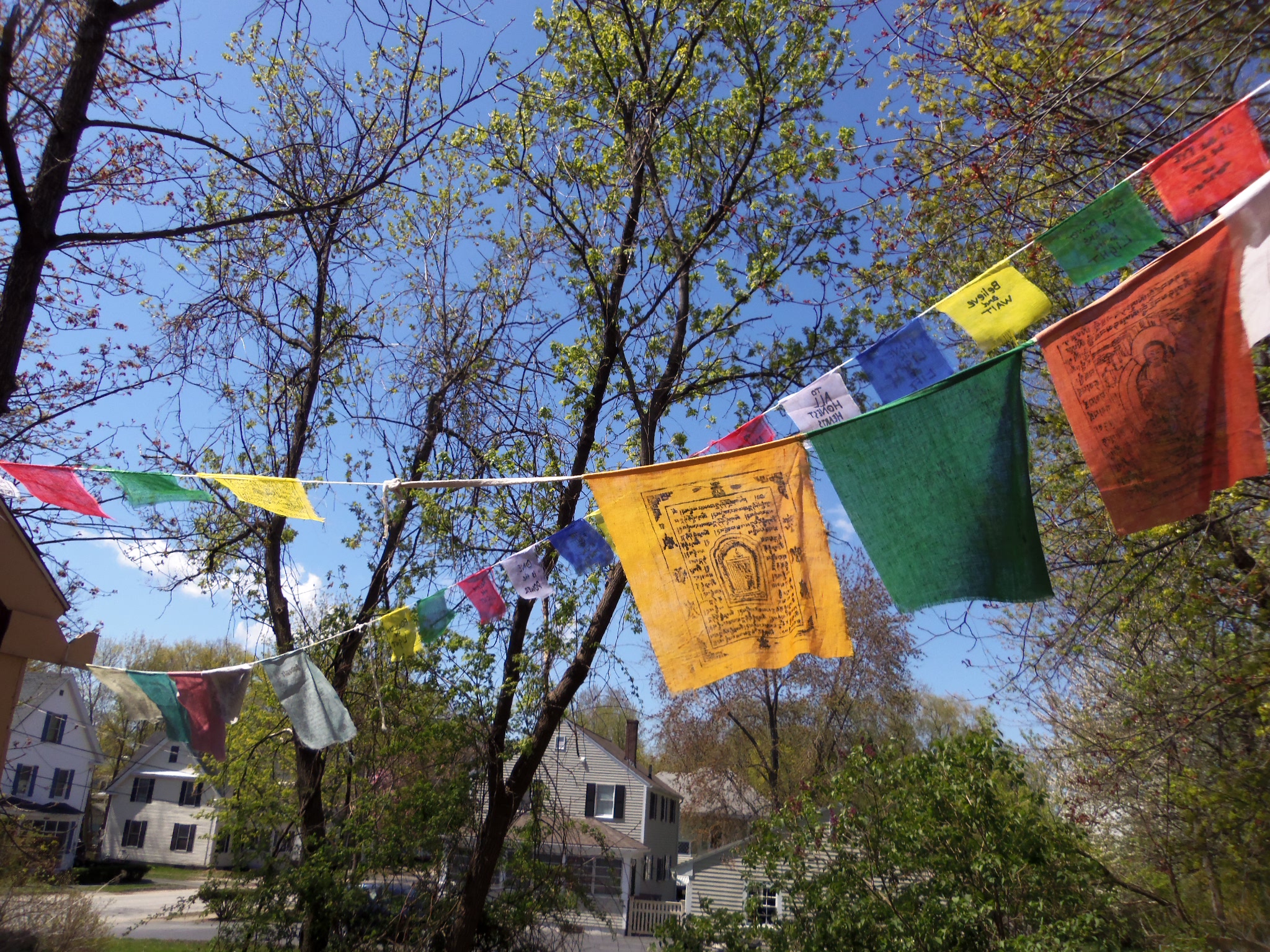
Each spring, new flags join the line in our yard.
Each spring, new flags join the line in our yard. The second strand, at the rear, has quotations from James Nayler, a powerful minister in the early Quaker movement.

The Apostle Paul has urged Christians to pray without ceasing.

I view Tibetan prayer flags rising in the breeze as joyous reminders my heart can do likewise.
FLOWERING MEMORIES

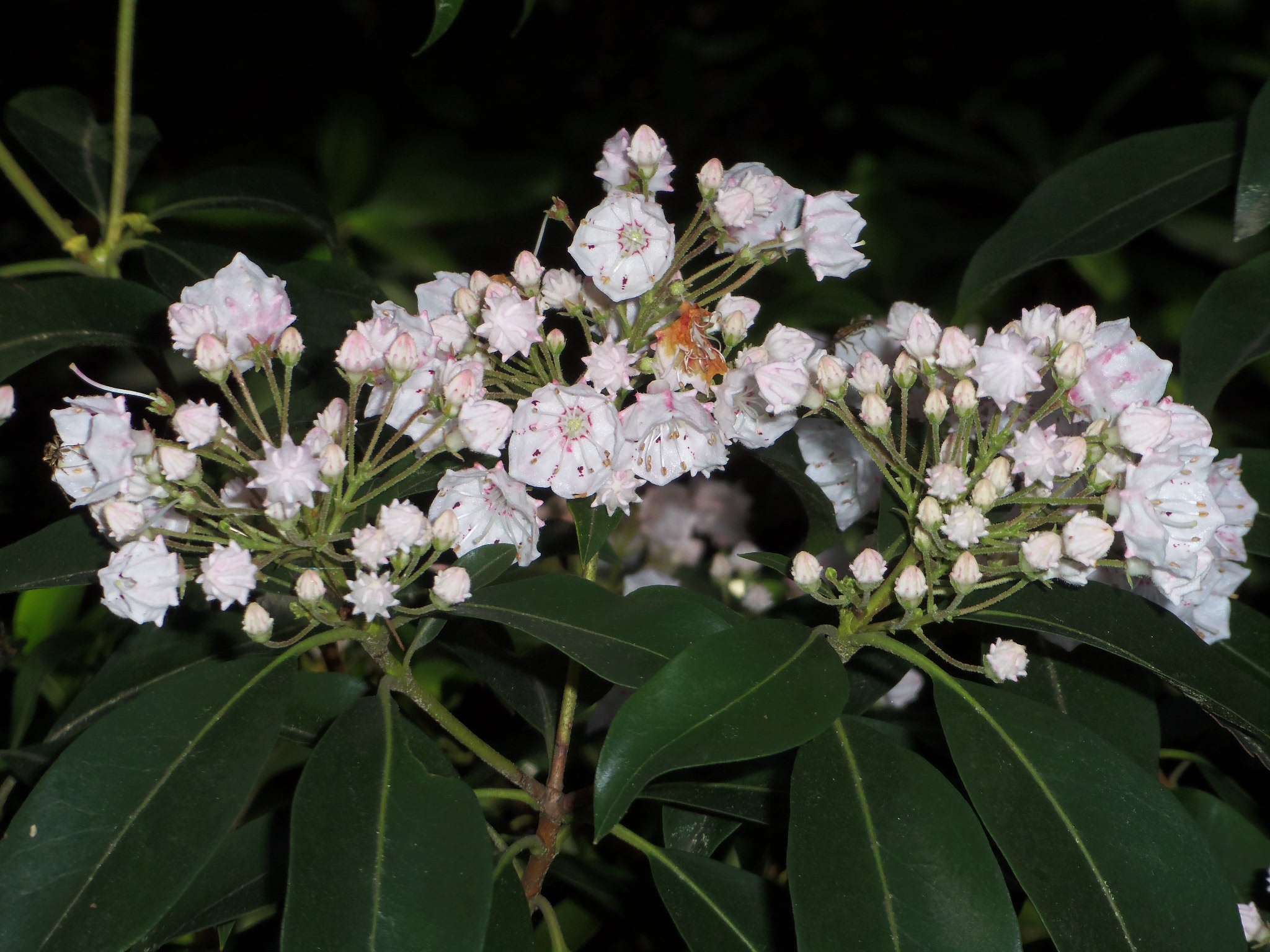
Mountain laurel have taken hold in our Quaker burial ground. Now, if I could only get them to do likewise in our yard.

My fondness for mountain laurel springs from my days in the ashram in the Poconos. Those tiny white clusters like origami that open into tiny teacups are, I was told, the state flower of Pennsylvania, and protected by state law.

My fondness for rhododendron goes back even further, to backpacking a section of the Appalachian Trail as an 11-year-old Boy Scout and coming upon Roan High Knob in full bloom in North Carolina.

Joe Pye weed is something I’ve learned to appreciate here, after we bought our annuals at the Conservation District sale.

Add that, as it thrives, to our azaleas.

Rhododendron and mountain laurel line the lane under tall pine in our undisturbed Friends burial ground.

SPRING MILL

kodak1 022

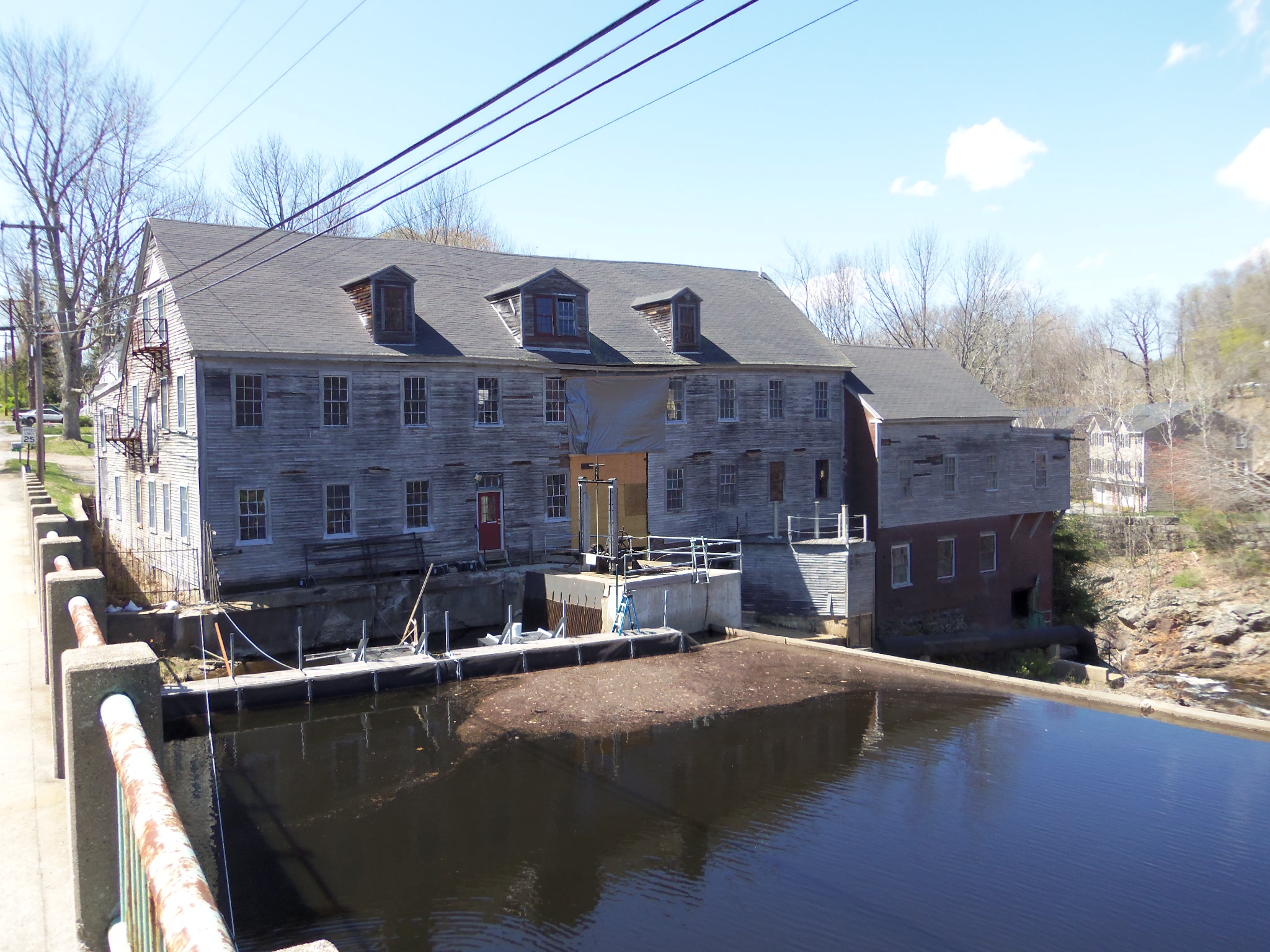
Streams that could be harnessed for water power were prized in earlier periods of American history, perhaps nowhere more than in New England. Here are views of a mill on the Great Works River (fittingly named by Quakers) in South Berwick, Maine.
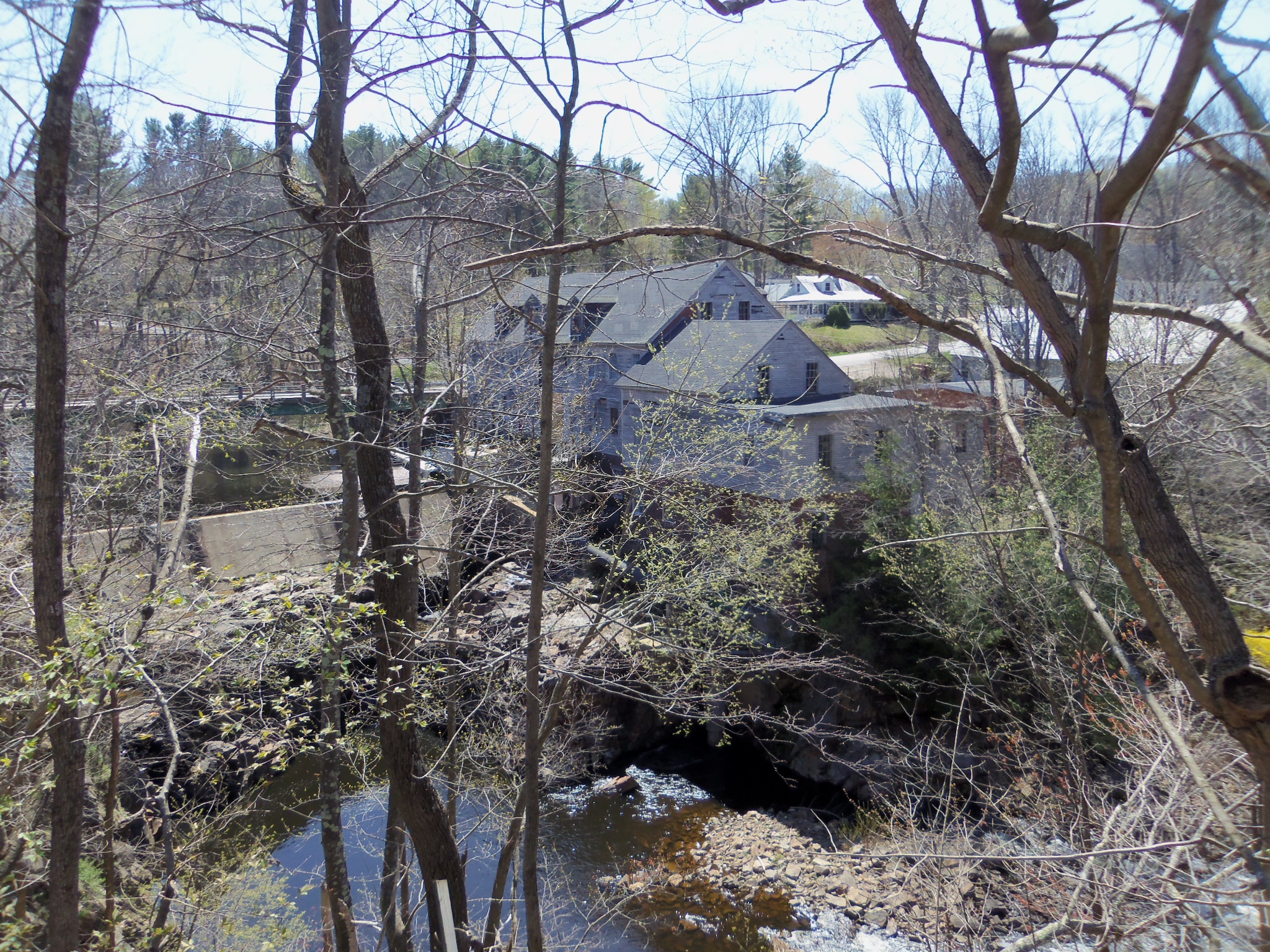
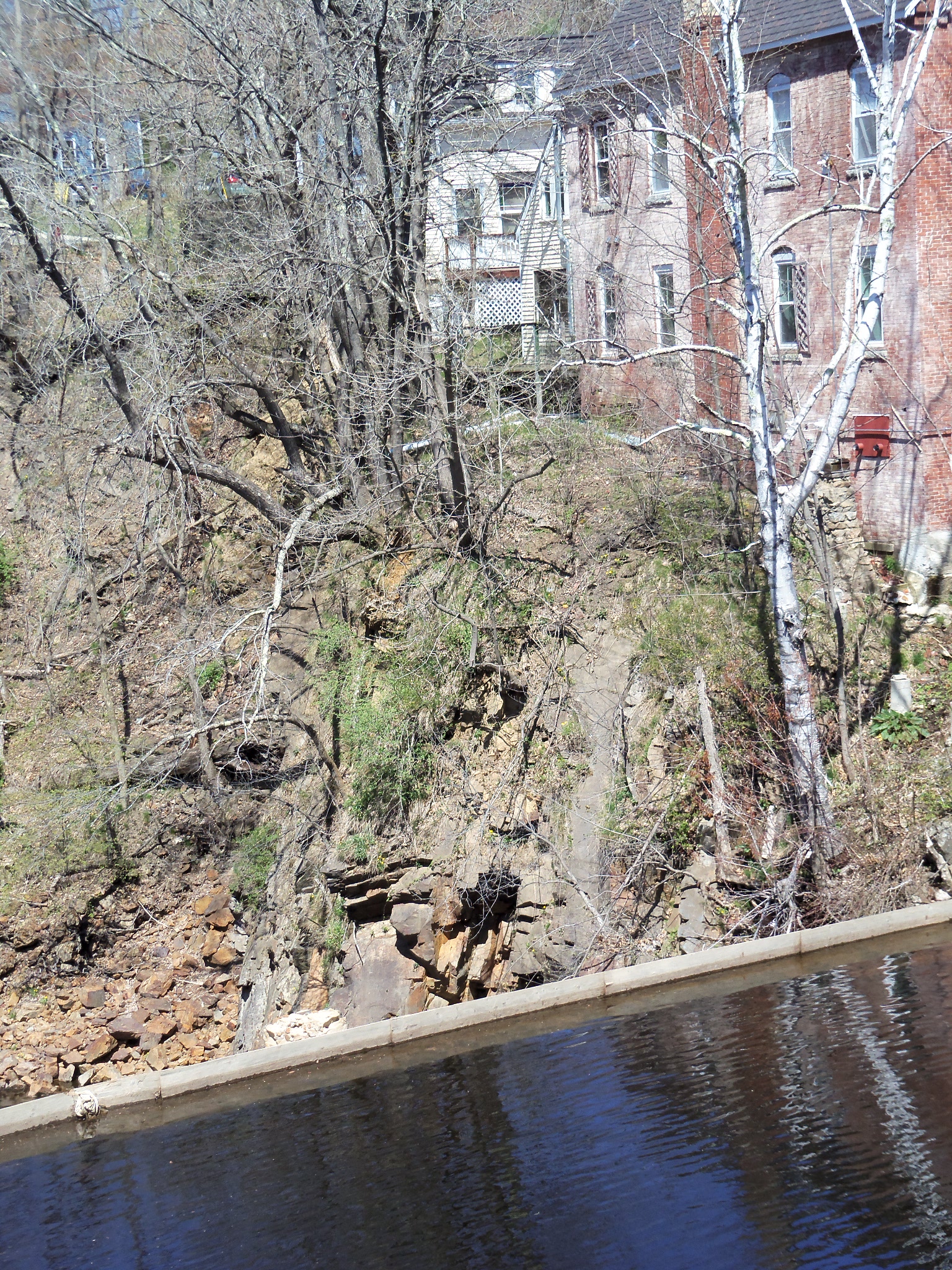
The leafing trees will soon obstruct this view of the mill perched on the edge of the falling water.
Houses, too, perch at the edge of the drop-off.

GARRISON HOUSE

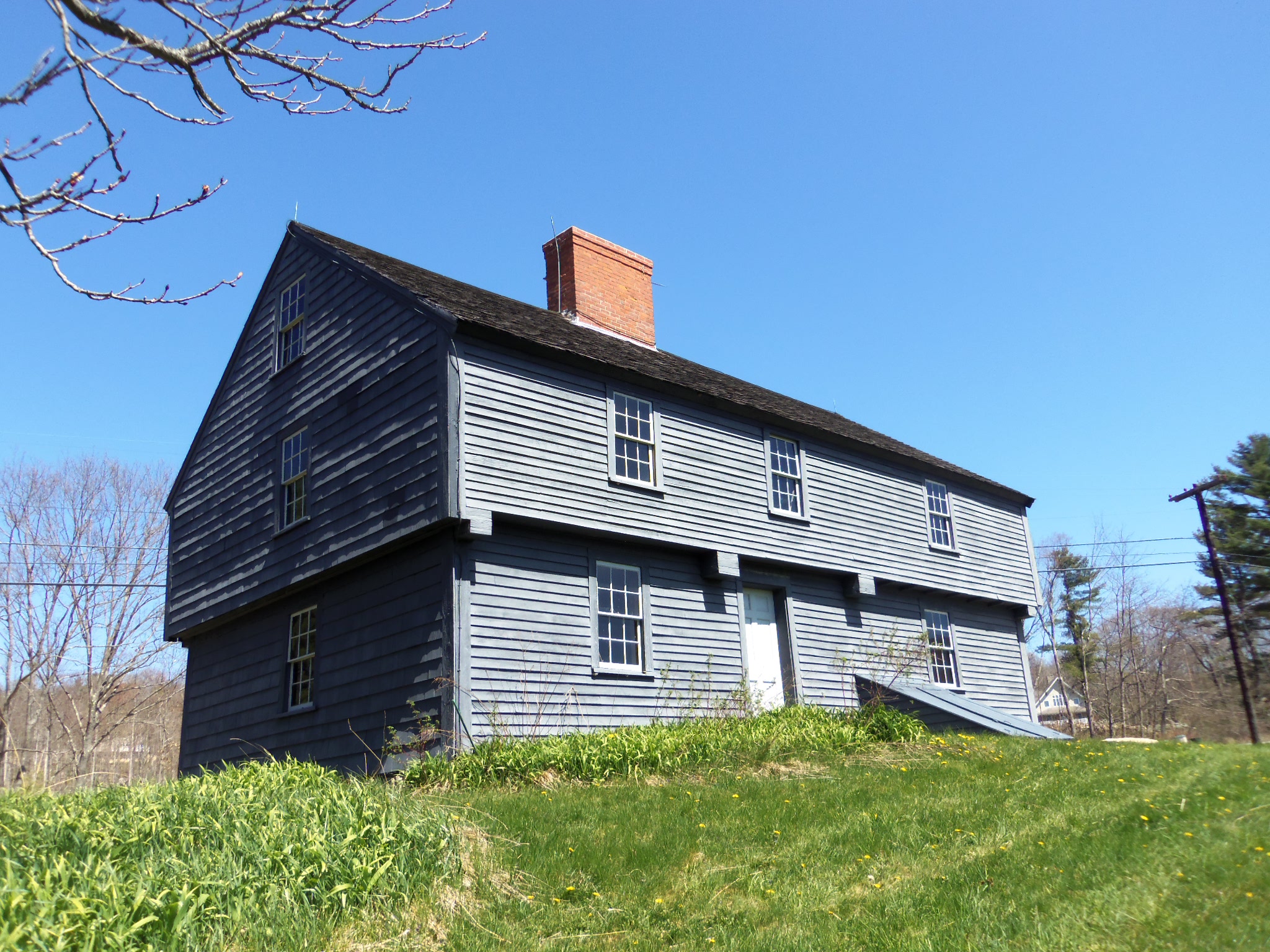
The distinctive overhang design allowed for self-defense from within.

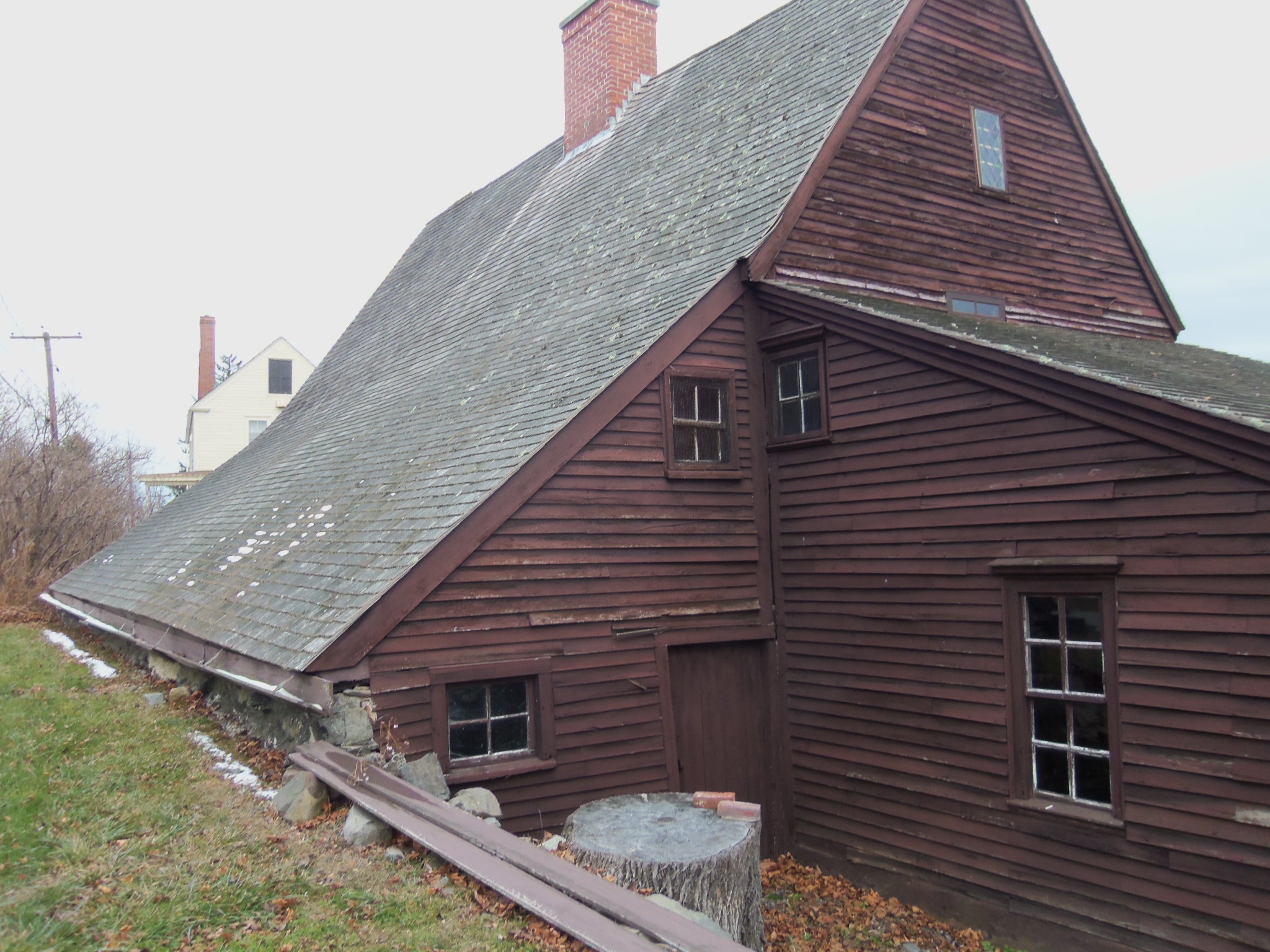
From the outbreak of King Philip’s War in 1675 until the conclusion of the French and Indian War in 1763, much of northern New England was under an ongoing threat of violence along its frontier. Nearly all of the English settlement in Maine was pushed back to a few towns nearest New Hampshire, and many villages, including Dover, suffered devastation and massacre.

Indeed, officials ordered many residents to construct fortified garrison houses, like this reproduction along Cider Hill Road in York, Maine, where families could retreat for armed protection when an alarm was sounded.

The site overlooks the inland tidal salt marshes that give rise to the York River. The hay from such spots was prized, even though feeding it to cows would produce a distinctively salty milk.
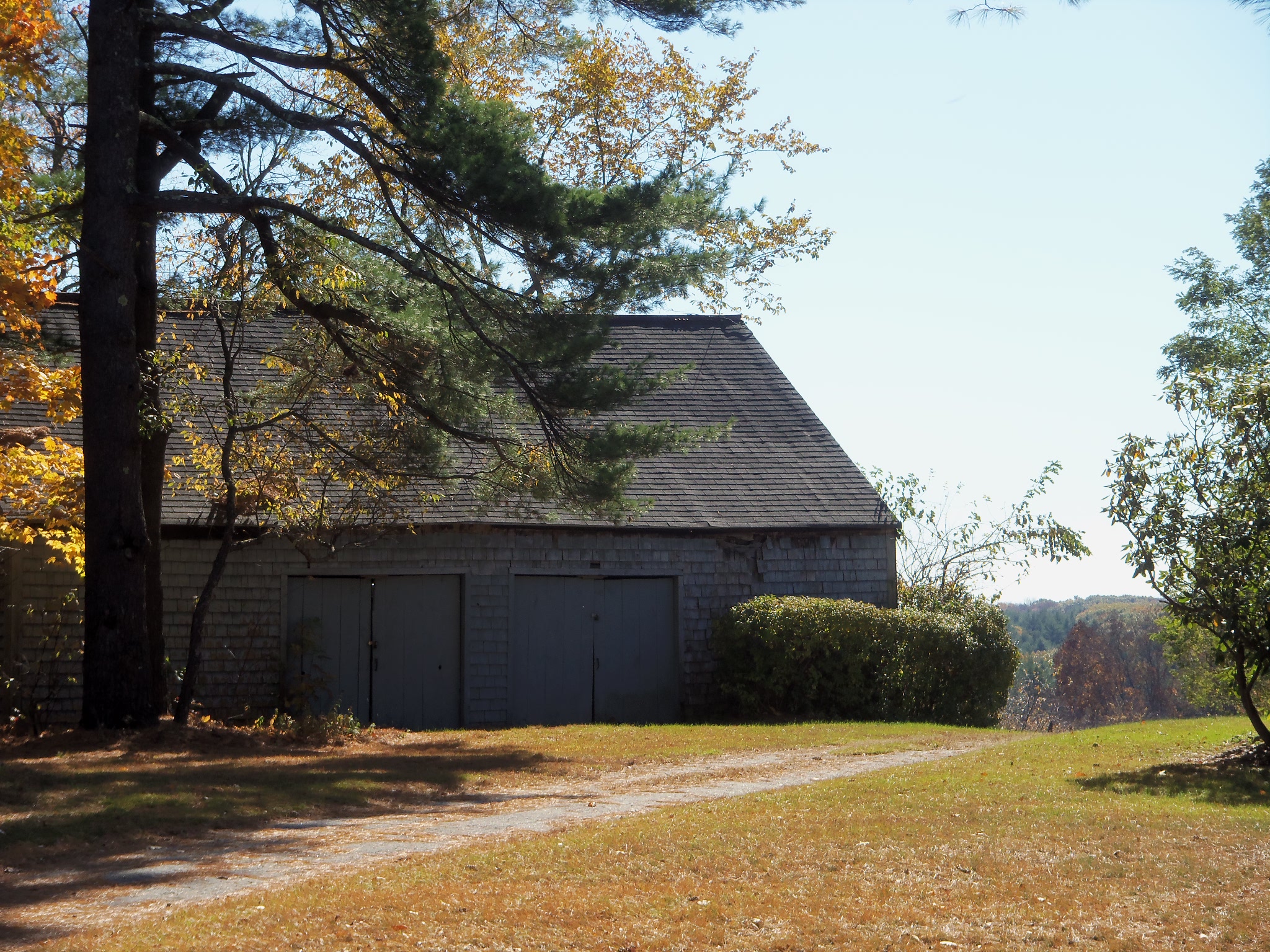
Also on the site is a more traditional New England style of construction -- shingle siding that weathers to gray.
Also on the site is a more traditional New England style of construction — shingle siding that weathers to gray.