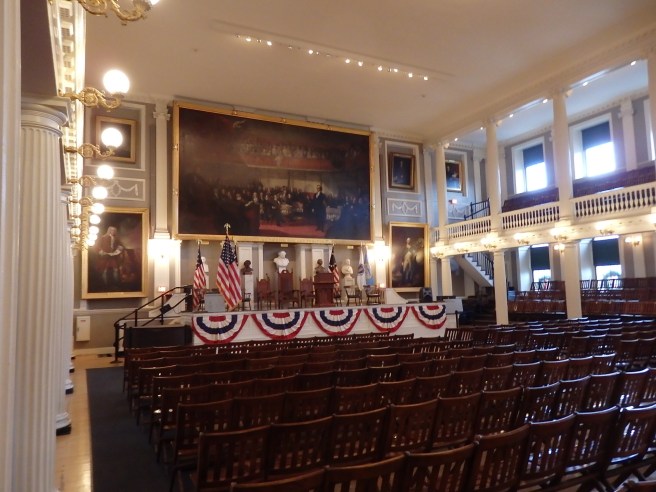
Just imagine the figures who have spoken here through the course of American history.
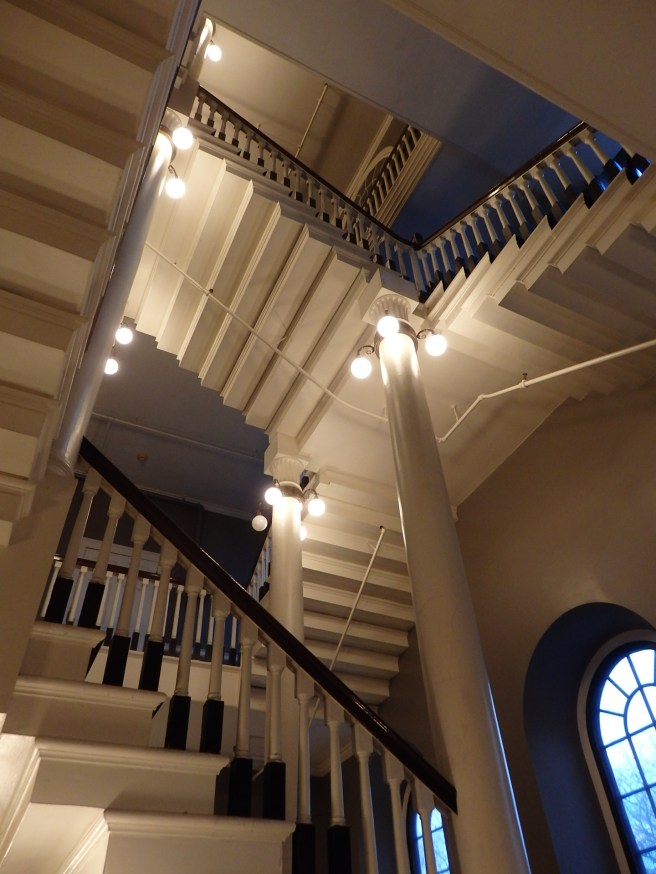
Maybe it’s all a reflection of classic proportions, but so much in Peter Faneuil’s historic town hall and marketplace simply feels right ever since it was erected in 1742 and enlarged in 1805 under Charles Bulfinch’s masterful design.
Boston is a rich and varied destination – the Hub of New England, or the Universe, as they used to say. Living a little more than an hour to the north, we’re well within its orb.
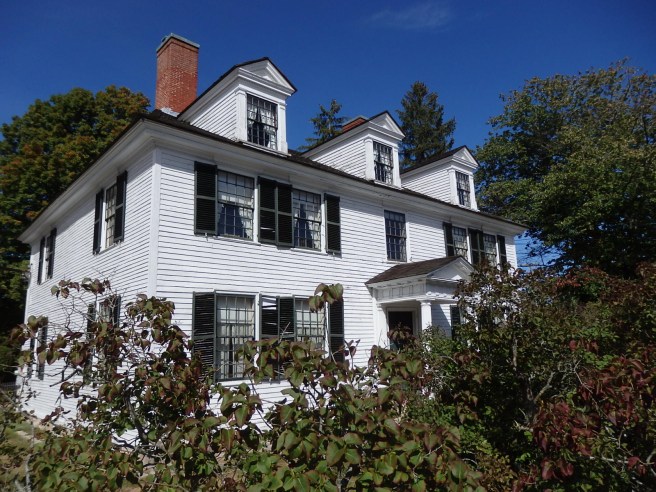
Novelist Sarah Orne Jewett (1849-1909) was born in this 1774 house owned by her grandparents, which she would inherit from them. The site, sitting in the heart of South Berwick, Maine, just a few miles from us, is now owned by Historic New England and open to the public.
Like many New England houses, additions have kept growing to the original structure.
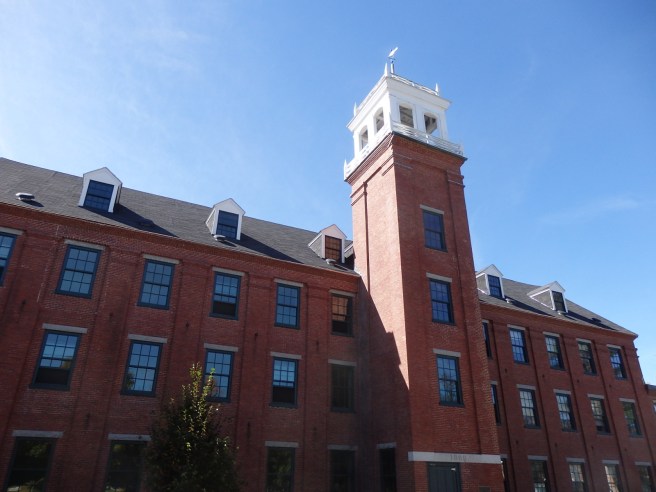
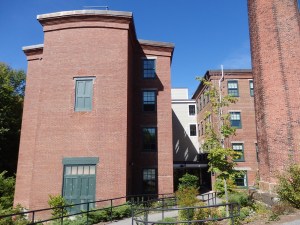
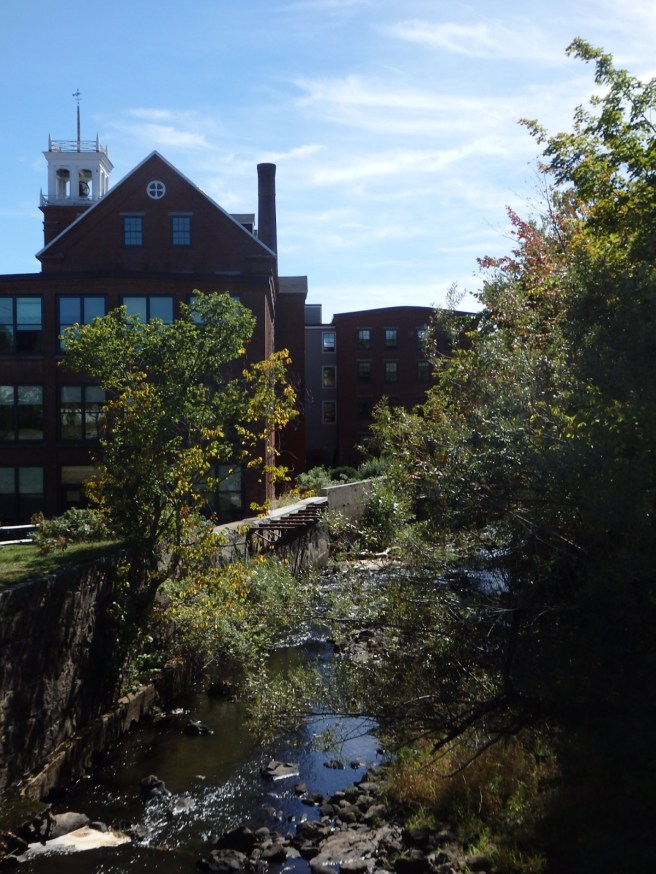
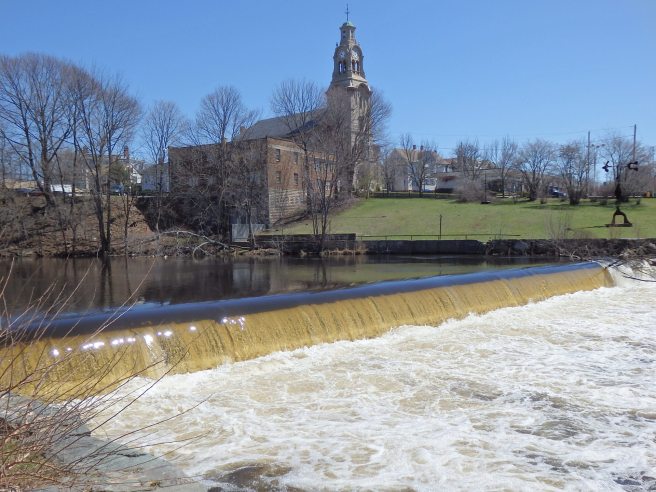
Not all of New England’s water-powered mills sat along major rivers. This woolen mill in North Berwick, Maine, was founded by Quaker William Hill, beginning in 1862, and made blankets for Union soldiers. The Great Works River itself had been named by earlier Quakers.
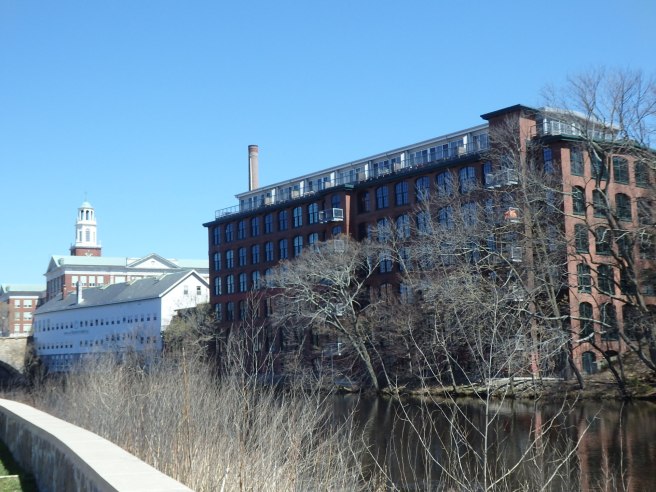
The mill has been renovated into residences and offices.
My fondness for old mills, by the way, did prompt a novel, Big Inca.
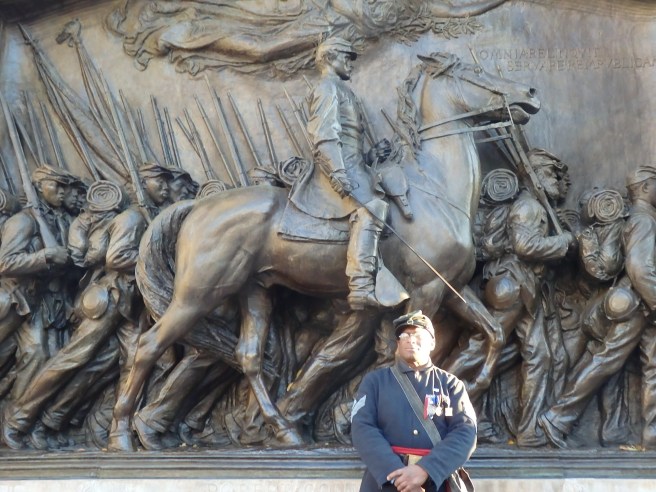
I didn’t ask the name of the reenactor, lower right. He was proud of his unit, and now stands representing all of them.
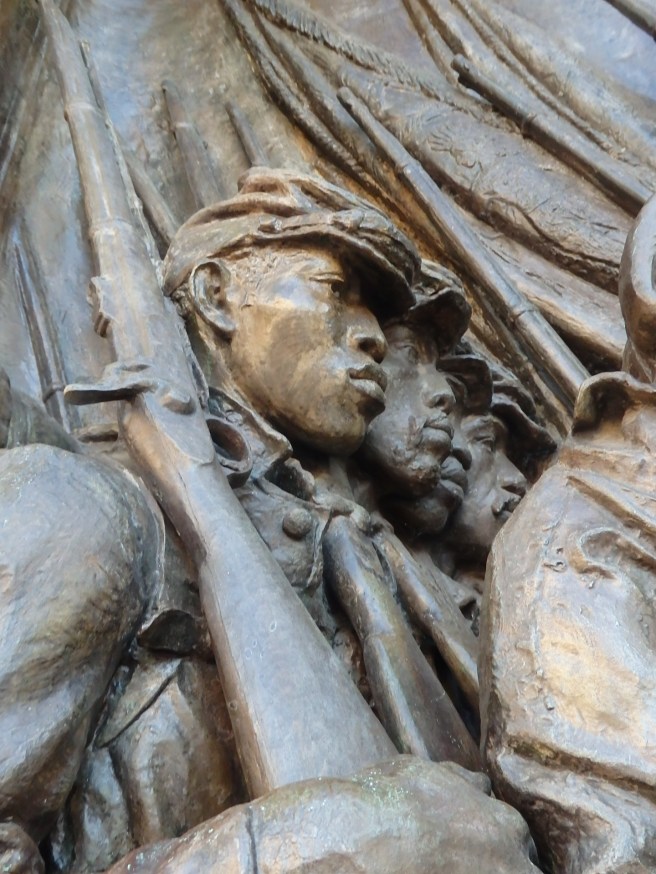
Public sculpture typically celebrates famed men or mythological figures, but the Memorial to Robert Gould Shaw Memorial and the Massachusetts 54th Regiment, which sits across from the State House, is in a league of its own.
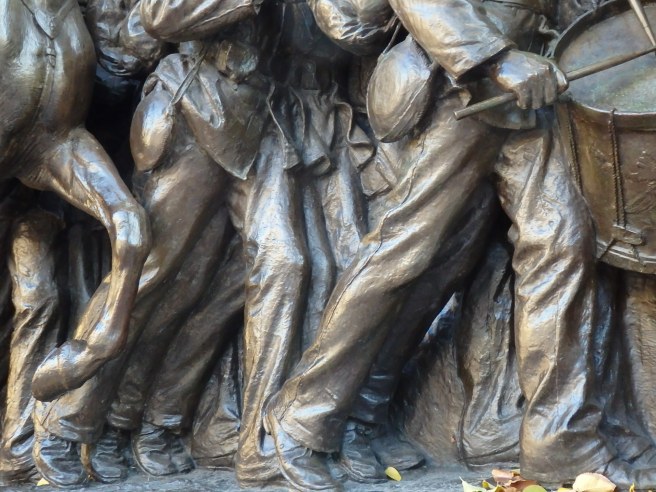
Within its unified design, the focus turns to each of the enlisted black soldiers as they resolutely march to battle to free slaves. Every face is unique, sympathetic, tragic, and each body moves with muscle, even anger and justice. If August Saint-Gaudens had created no other work, this masterpiece would have sealed his reputation.
Each face is unique and distinctive.
The urgency and motion compressed into the relatively narrow sculpture is amazing. By the way, as the reenactor pointed out, the artist knew he was placing the canteens on the wrong side of the soldiers. It was a matter of artistic license.
Boston is a rich and varied destination – the Hub of New England, or the Universe, as they used to say. Living a little more than an hour to the north, we’re well within its orb.
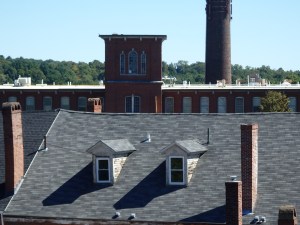
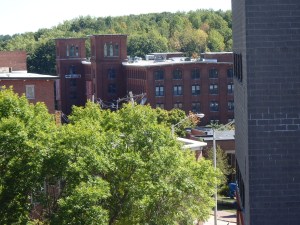
In the heart of downtown …The Cocheco Millworks stretch through downtown Dover.The Washington Mill complex picks up on the other side of the Cocheco River.
Hard as it is to imagine, Dover once had twice as many mills along the river, plus tanneries and other supporting enterprises.
My fondness for old mills, by the way, did prompt a novel, Big Inca.
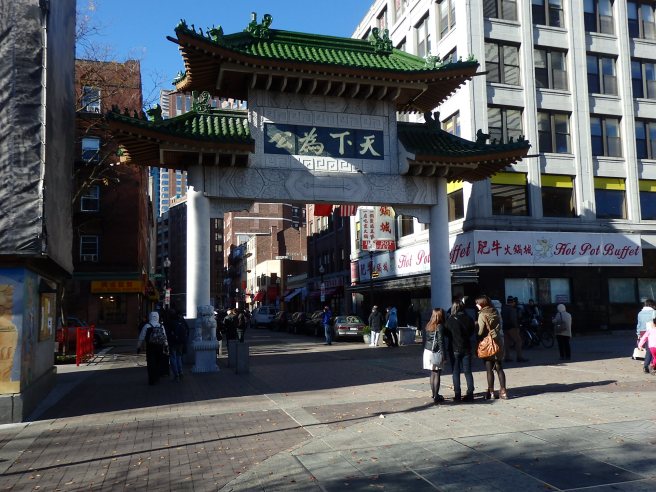
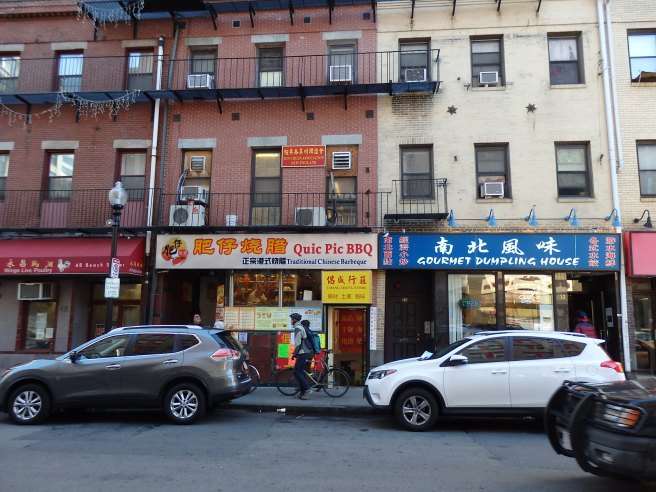
Chinatown is a delightful contrast to much of Boston’s more Yankee reserved style. We recommend feasting on dim sum on a Saturday or Sunday morning, but be sure to arrive early – the restaurants are soon packed for the inexpensive rounds of adventurous platters.
You never know quite what to find in its shops, either. A resourceful puppeteer I know discovered the perfect fabric in one of its retailers aimed at, shall we say, exotic dancers? She was hardly the type, and the owners were amused.
The city is a rich and varied destination – the Hub of New England, or the Universe, as they used to say. Living a little more than an hour to the north, we’re well within its orb.
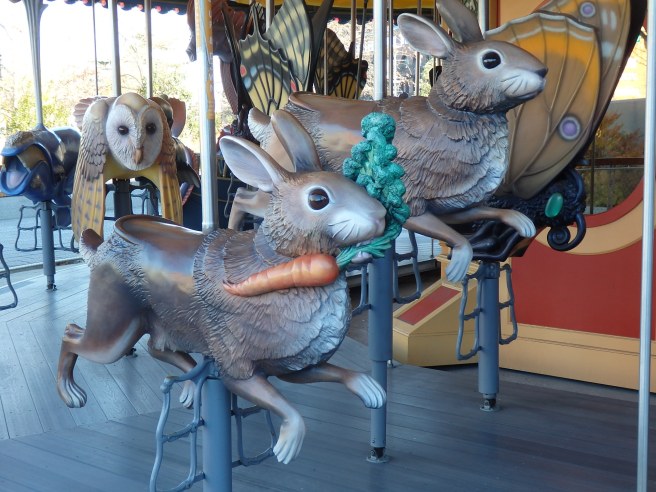
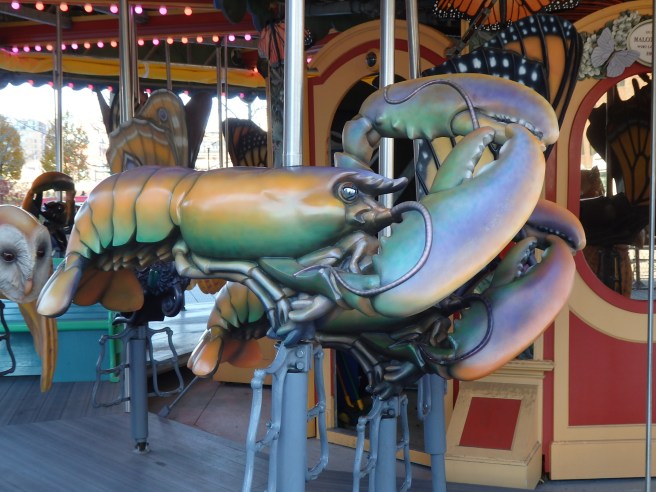
The animals circling on the carousel in the Rose Kennedy Garden atop the Big Dig are a vast improvement over the days when the Expressway overhead was jammed.
Boston is a rich and varied destination – the Hub of New England, or the Universe, as they used to say. Living a little more than an hour to the north, we’re well within its orb.
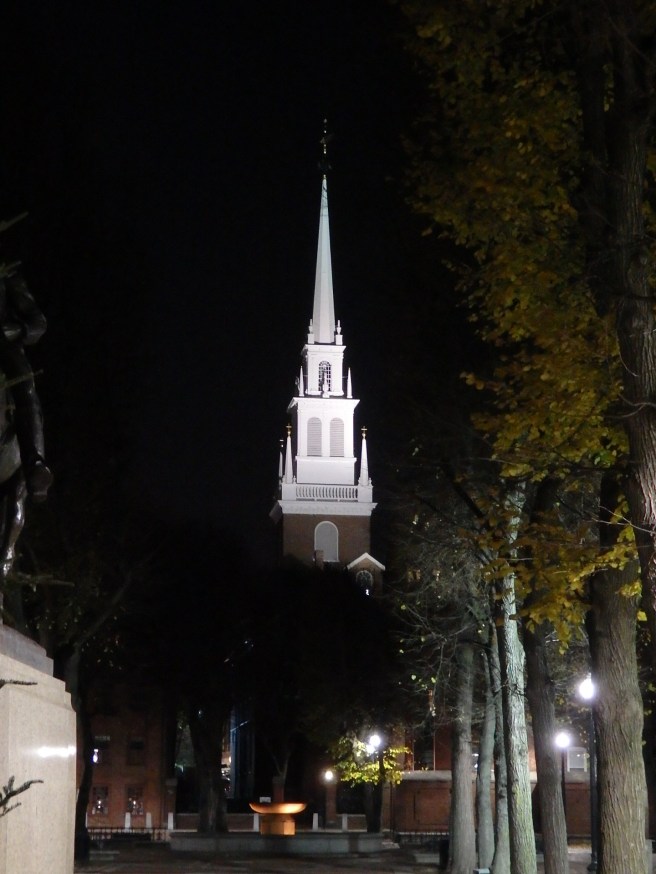
Lanterns in the spire of North Church signaled directions to Paul Revere and other riders at the outbreak of the American Revolution. The race to Lexington and Concord was on.
Boston is a rich and varied destination – the Hub of New England, or the Universe, as they used to say. Living a little more than an hour to the north, we’re well within its orb.
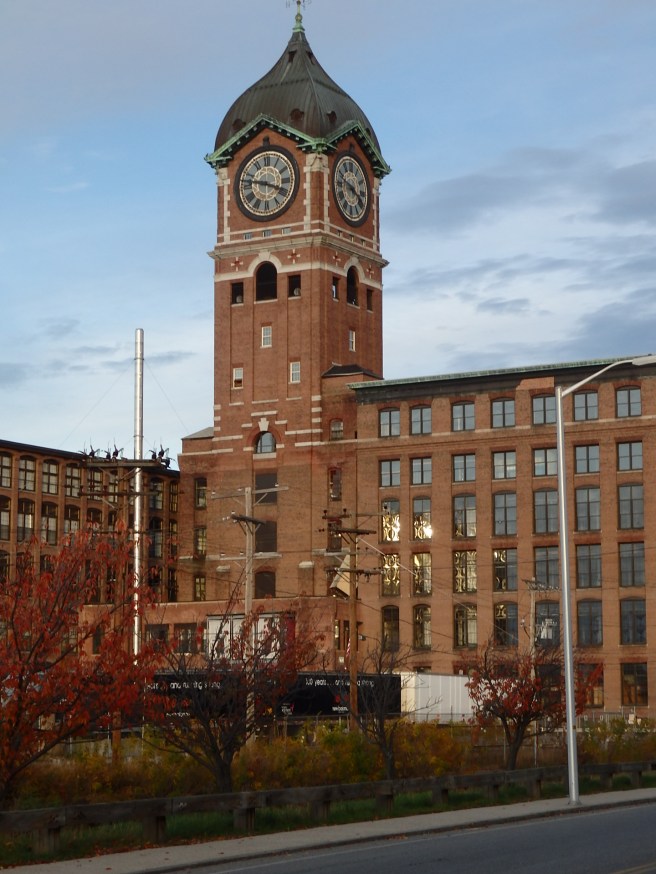
The clock tower of the Ayer Mill in Lawrence, Massachusetts, overlooks the Merrimack River on the other side of the wing to the left. It’s an impressive sight.
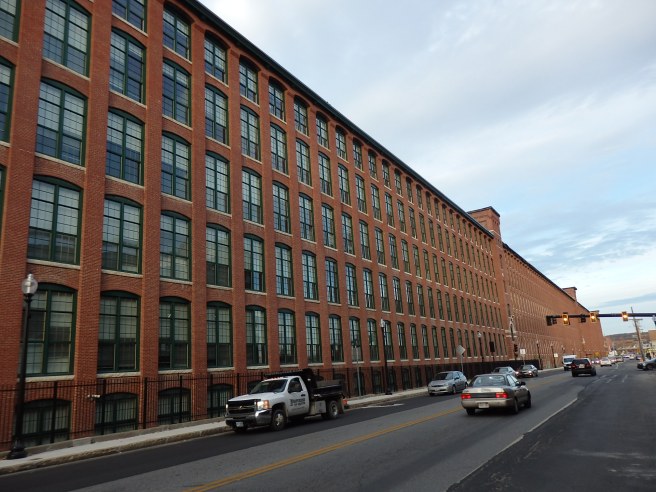
While water-powered mills sprang up all across New England, thanks to its abundance of falling waters, the riverbanks of some locations became jammed with factories that employed thousands. The Merrimack River, for instance, had major industrial clusters at Manchester and Nashua, New Hampshire, and Lowell and Lawrence, Massachusetts, all relying on the use and reuse of the same water carefully shepherded downstream.
Many of those landmark buildings have been lost over time – fire, neglect, and urban renewal have taken their toll – but those that remain can be truly impressive, especially now that they’re being repurposed and renovated into charming, flexible centers of entrepreneurial innovation and center-city living.
Lawrence, with what was once the biggest dam in the world, is a prime example.
Hard as it is to imagine, this group of mills was once dwarfed by those on the other side of the Merrimack River as it rolled through Lawrence, Massachusetts.

 Jnana's Red Barn