Not just any old daisies

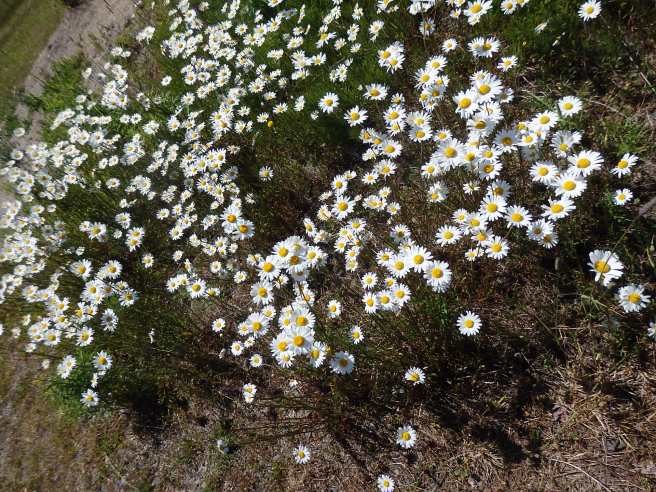
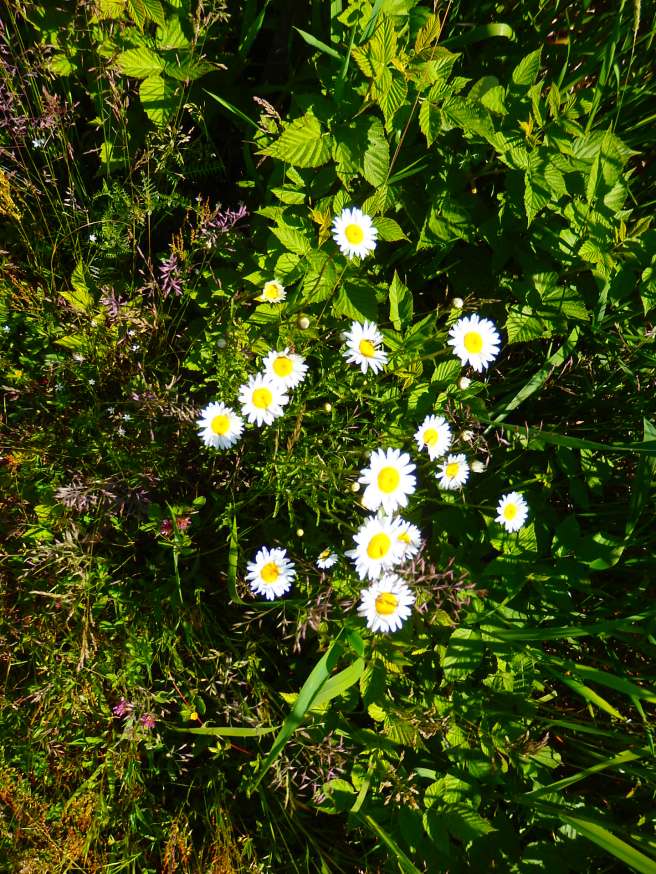
My wife is quite fond of wild Ox-Eye Daisies – not the bigger and, to her view, coarser Shastas. But she’s usually saddened each year when the Black-Eyed Susans arrive about this time, announcing the end of the Ox-Eyes’ blooming. Not so in Eastport, where, to her delight, some continue through August.

Our city even has a forested state park

Eastport may be a city, but much of it is still forest.

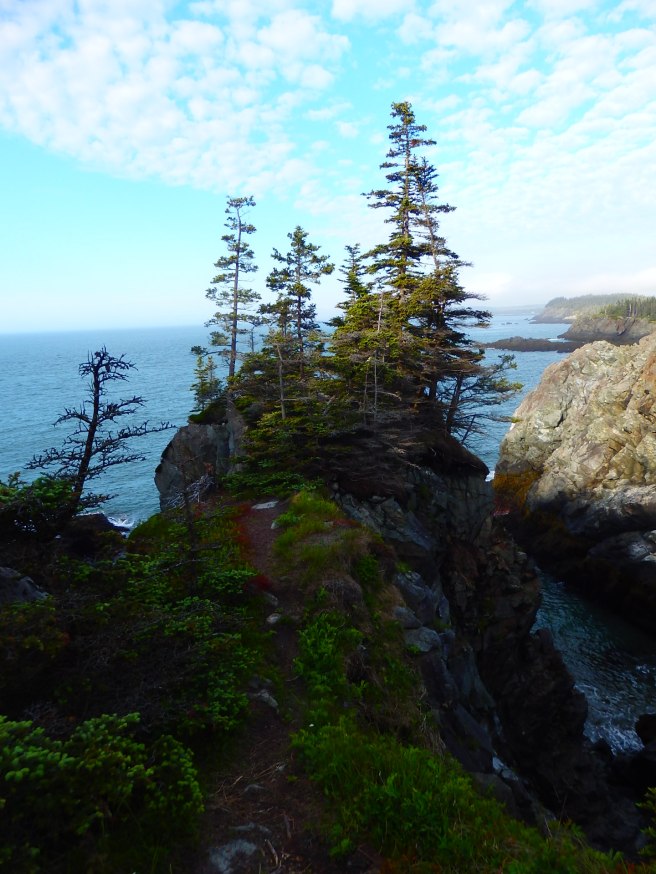
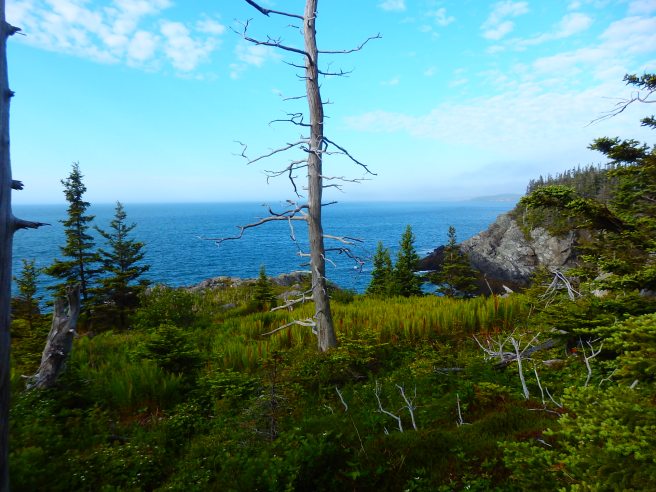
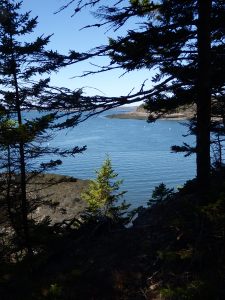
Shackford Head, between Broad Cove and Deep Cove, has one of those. And it’s a state park. Mercifully, it even escaped becoming an oil refinery in the 1970s and ’80s, thanks to some dedicated citizen action.

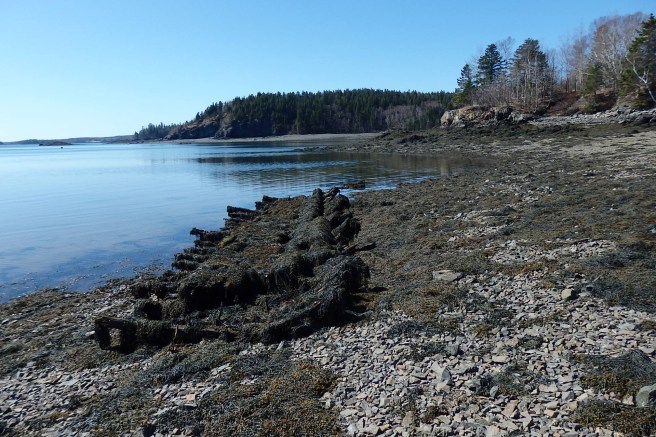
This is all that remains of five Civil War ships that were burned between 1901 and 1920 at Cony Beach at today’s Shackford Head State Park. The vessels were brought close to shore and set aflame to release metal for scavengers to collect at low tide. This is Cony Beach with Shackford Head beyond.

I should note that the Shackford family, so prominent in the settling of Eastport, had roots in Dover, New Hampshire, before spreading into Newburyport, Massachusetts, and then shooting up here. It seems that our house was built in the 1830s by one of them.

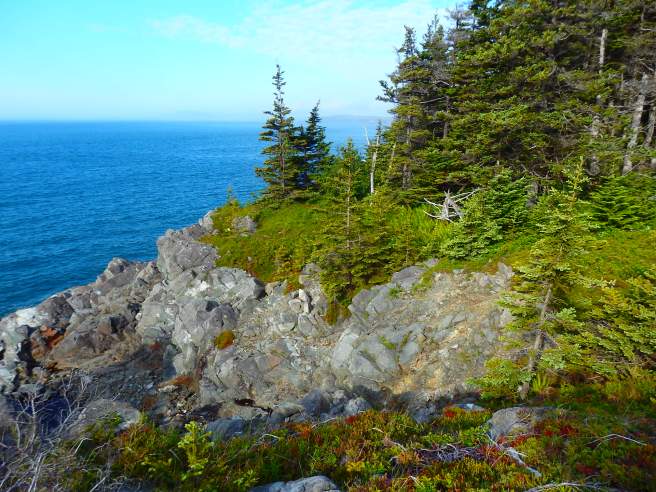
Apart from that, the 90-acre state park allows for some delightful hiking and vistas without having to drive miles from home. You know,  needed a quick fix of more nature.

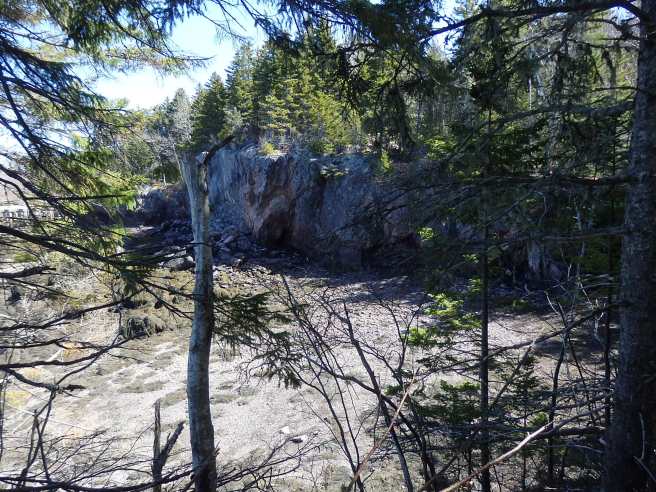
The shoreline can be quite rugged but have a pocket beach below.
Deep Cove flanks one side of the park.
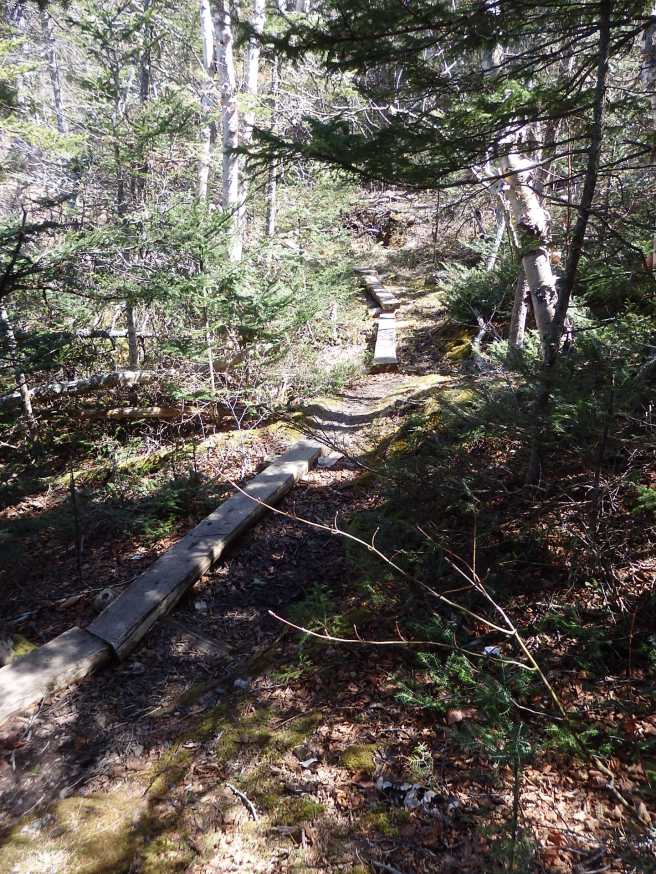
Sometimes a trail takes to a plank walk over muddy stretches.

We live on the 45th Parallel

Marker along U.S. 1’s coastal route in Perry adjacent to Eastport.

We’re halfway between the Equator and the North Pole. It means we have some of the longest winter nights in the continental U.S. and some of the longest days in summer.

As well as the shortest winter days and shortest summer nights.

Quite simply, we’re not just further east than the rest of the continental U.S. but also further north. Take a look at the map, if you must.

Here’s the full inscription.

Even untended, they’re glorious  

“We usually think of a Poppy as a coarse flower; but it is the most transparent and delicate of all the flowers of the field,” Celia Thaxter enthused in her classic An Island Garden book based at the other end of the Maine coast. Noting that the “Poppy is painted glass; it never glows so brightly as when the sun shines through it. Wherever it is seen, against the light or with the light, always it is a flame, and warms the wind like a blown ruby.”

After a half-page of descriptions of the color range of its many varieties, she quotes an unnamed English master of prose, “The splendor of it is proud, almost insolently so,” and then Browning’s line of “the Poppy’s red effrontery.”

Here on Moose Island, after blazing intensely, they give way all too soon.

To me, they glow like miniature suns.

How fitting, with our sunrise now approaching 4:42 and sunset around 8:19 – and nearly 17 hours of visible light.

Up from the ashes of 1886, our downtown

Devastating downtown fires were a big hazard for 19th century American cities, large and small, from New York, Chicago, Boston, Baltimore, Pittsburgh, and St. Louis down to Portsmouth, New Hampshire, and Portland and Bangor, Maine, closer to home. (For the record, San Francisco actually suffered more from the fires than from the 1908 earthquake just before them.) It’s a long list, actually, and some center cities were leveled by flames and intense heat more than once.

Eastport was one of them, with great fires in 1839, 1864, and 1886 – the last one barely missing our house but leaving the rafters spookily charred.

That blaze, in October, started in one of the sardine factories on the waterfront and spread quickly, consuming almost every building along the harbor.

An antique store window is fun to browse, even when the shop’s closed.

Remarkably, the city rebounded quickly, with most of the Water Street buildings completed and reopened within the next year or two – many of them designed by the same architect and resulting in a visual unity for the five-block stretch.

Today the entire downtown district is on the National Register of Historic Places.

Still, here’s what we have. Put another way, every city needs a center, and a shopping mall just ain’t the answer.

The big challenge, of course, is finding the right mix of business and residence to keep it vibrant. Eastport’s off-season populace falls short of what’s needed but just may be changing in the aftermath of Covid-19.
We have art galleries, thank you.

A downtown is more than a place to shop, for one thing, though that helps. It should be pedestrian friendly, with places to stop and sit and meet folks and chat or maybe just stroll afterhours. Cafes, restaurants, and pubs help, too. A post office and banks as well. Throw in a few theaters, nightspots, galleries, churches. Then offices, hair stylists and barbers, upstairs residences, even a hotel or more.

A tucked-in amphitheater overlooking the harbor actually has concerts in the summer. It also provides one more place to simply sit and relax.
The street’s not one-way but should be, if we could only conveniently connect it as an easy round-trip..

Tell us something that makes your community special. Where would you take us if we visit?