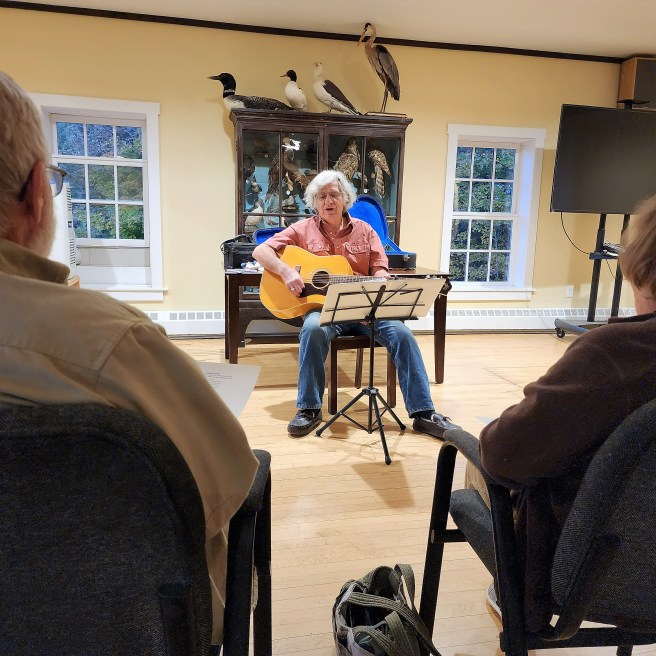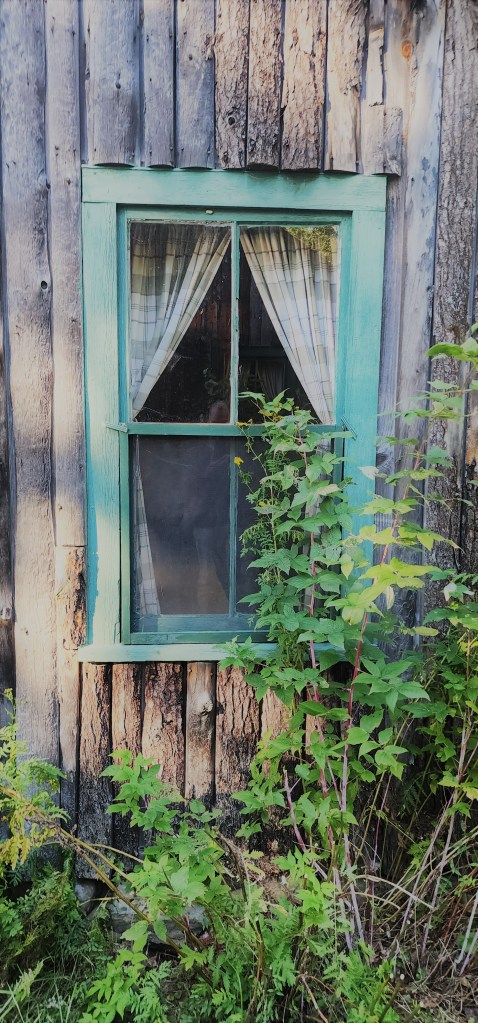
As you can see, Stephen Sanfilippo is more than a maritime historian. He can sing his research findings. Small concerts like this one upstairs at the Pembroke public library are one of the delights of living Way Downeast.
You never know what we'll churn up in cleaning a stall

As you can see, Stephen Sanfilippo is more than a maritime historian. He can sing his research findings. Small concerts like this one upstairs at the Pembroke public library are one of the delights of living Way Downeast.

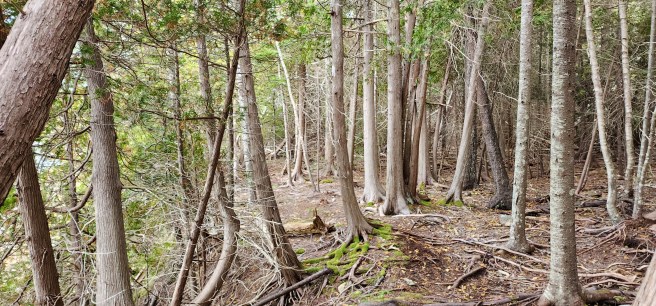


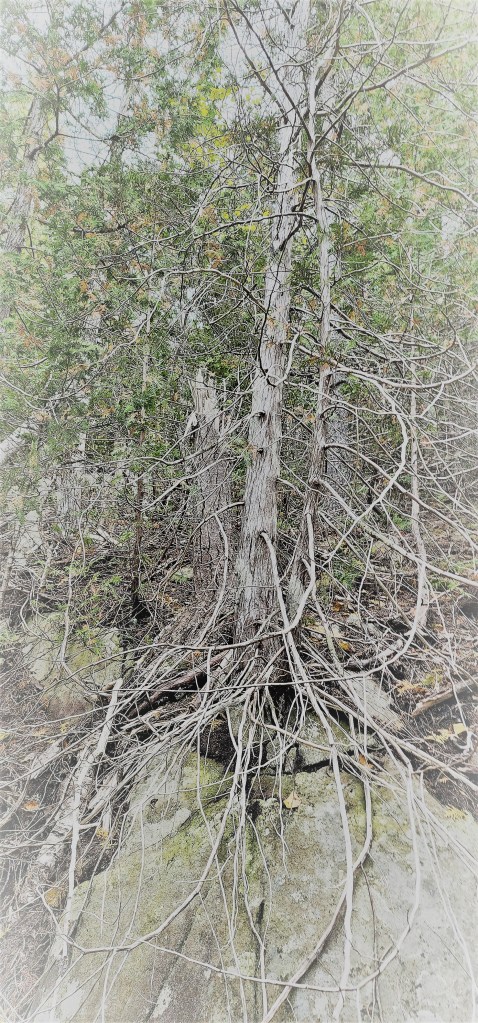

Cobscook Shore’s 15 well-maintained reserves around the bay offer the public prime opportunities for hiking, picnicking, fishing, and water access for kayaks and canoes. This is a personal favorite.
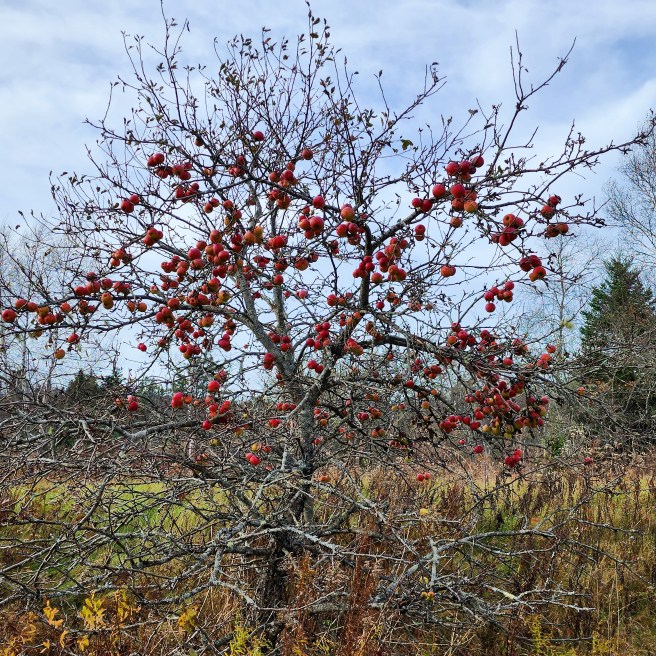

The trees are found everywhere around here. As are the deer that eat all the fruit they can reach.
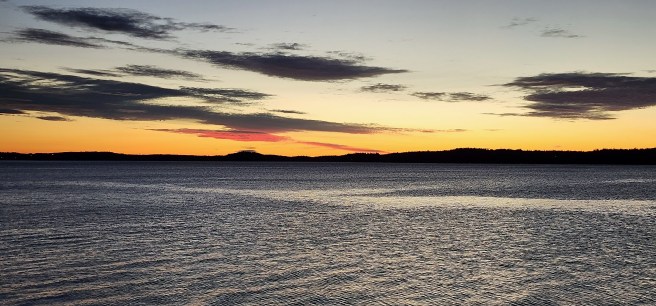
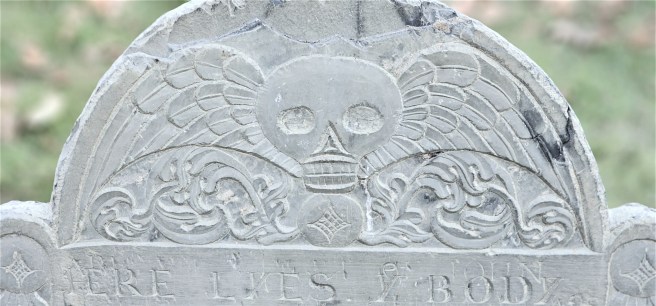
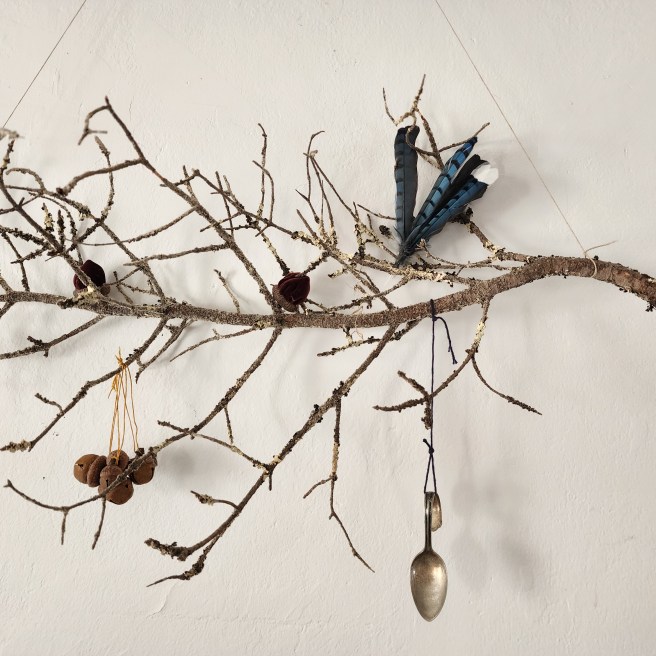
Yes, the tiny one-inch ball with its moon Charon, at one-half inch, out on that branch.

We won’t get into the shock of the dwarf status revision within the lifetime of some of us, in part in consequence of the discovery of that moon.

As a further twist, the Aroostook system has two Plutos, one inside the Houlton tourism center, where it represents the orbs’ average distance from the sun (40 miles in the scaled version), and this one presenting its more current placement in its wildly elliptical orbit, a relative 33 miles from Presque Isle for the next 20 or so years.

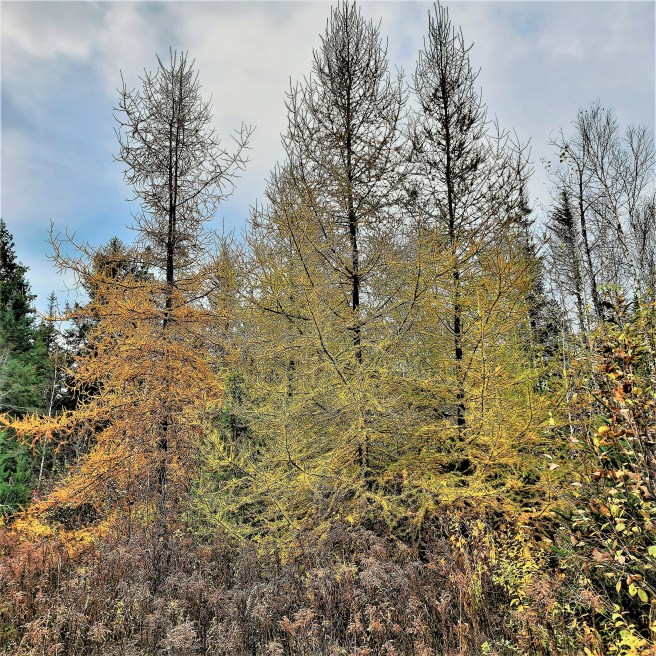
A boreal larch tree, also known as hackmatack, is a member of the pine family, it is one conifer that changes color every fall and loses its needles. The species grows in wet soil and withstands extremely low temperatures, reasons it’s found widely around here.

Its bright yellow autumn color is shared with birches, also found widely hereabouts.
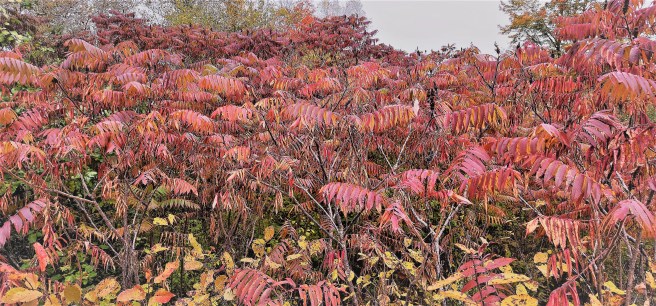
And let’s not overlook the red punch of sumac.
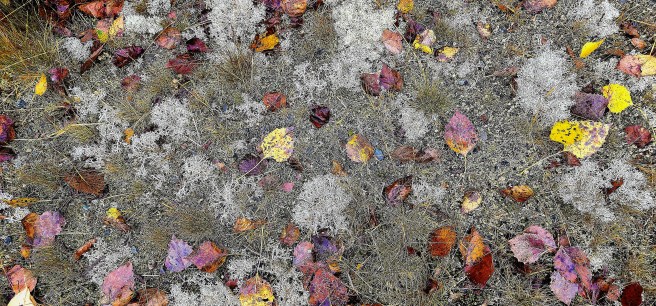
All too soon, it’s over.
With a 21.3-inch diameter and placed 31.7 miles from the sun in Presque Isle and having many moons too small to be presented at this scale, this stormy mystery orb also hints at the vast span of our solar system.

By this point in the drive, I’m really struck by the emptiness of the solar system and the space beyond. It’s essentially a vast, overwhelming nothingness. These are like pins in the proverbial haystack. And then, take heed of the incredible balance of forward motion and the sun’s gravity holding each one in place.
Science can attempt to answer the “How” in our ponderings, but as for the “Why,” if one even exists? That would mean facing questions of religion or theology. I’m not even touching on the mythological dimensions of these specks in the night sky.
Is it all an accident or some intentional mathematical outcome? Hmm, is there a neo-Calvinist turn in this thinking? We have miles to go yet.
In my previous visit to Aroostook County, I remember my amazement at passing this puzzling presentation only to encounter Saturn about 20 minutes later. Now I know it wasn’t one person’s quirky obsession.
Supposedly my Zodiac identity, and likely not yours, the model sits 20.7 miles from the sun model at the bigging of the display. Here its diameter is 22 inches.

The reason for the angled arm that lifts the planet is to present the axis with its extreme tilt, pointing its North Pole permanently toward the sun.
And we think a midnight sun at the height of summer’s a big deal? How about the endless darkness at the South Pole?
When you stop to think about it, the labor and care supporting this solar system presentation is astonishing. Just whose flash of inspiration came up with the calculations of our central star and its orbiting bodies, starting by placing Earth a mile from the sun?
And then came all the craftsmanship not just with the heavenly bodies but also the concrete bases and metal arms plus landscaping and the willingness of landowners to make room for the displays on their properties and tourists poking around. In all, 700 volunteers were involved one way or another.
For a large county with a small population, it was a truly astronomical undertaking. And there’s more …


Greek temple revival style house along U.S. 1 in Robbinston.