CHANGING STYLE, CHANGING TASTE, CHANGING DIRECTION

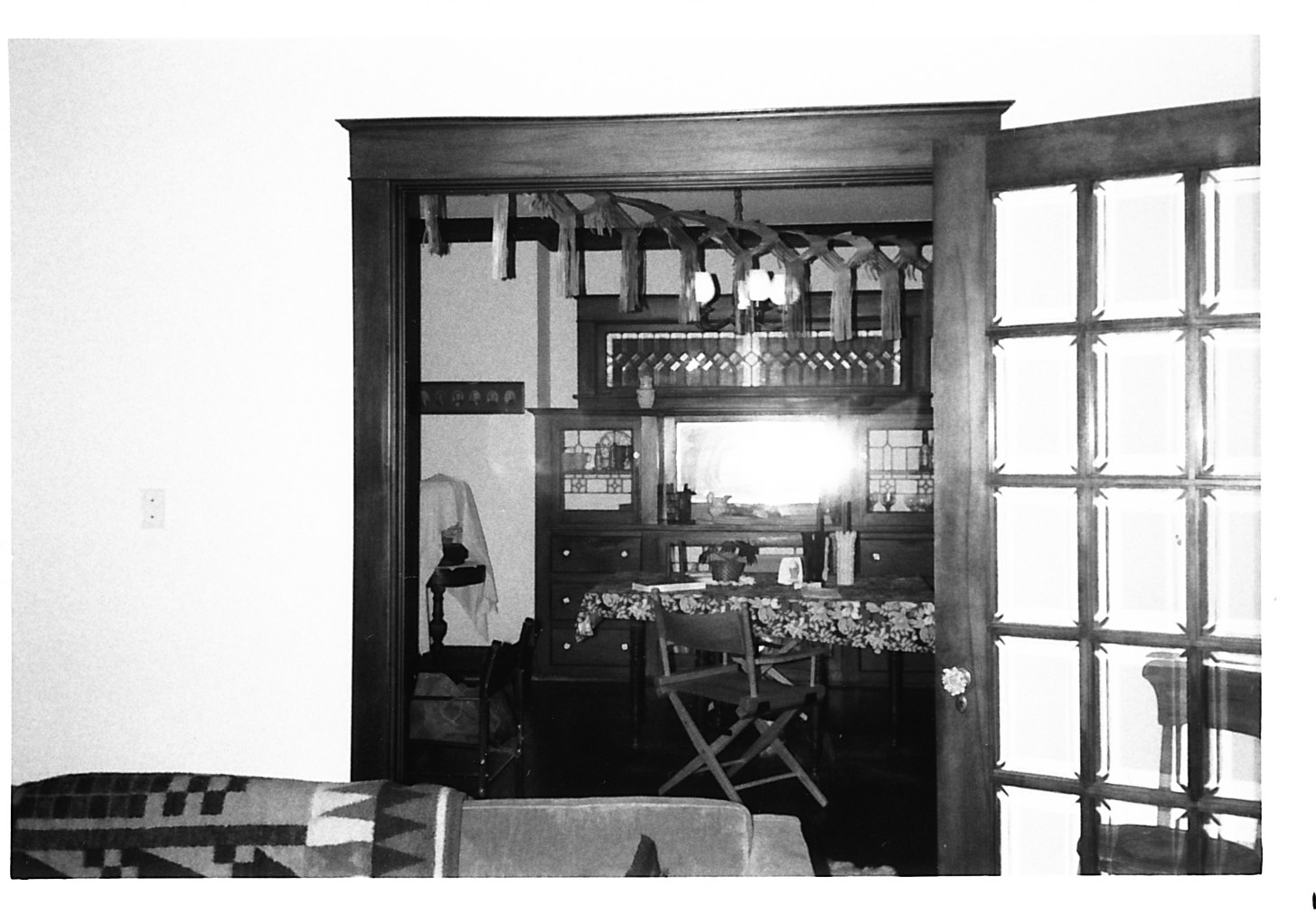
Driving any of my back routes to the beach, I pass impressive houses that have views of the water. Often, they’re old estates reflecting established money. Some are infused with history. Some are large, with four or more chimneys. Others are cozy cottages with four-season porches.

For much of my life, I would have dreamed of owning such a place.

Lately, though, there’s been a sea-change in my perspective. Part of it is no doubt my arrival at a point in life called retirement, although for me it’s been more a matter of culminating focus on the Real Work, as the poet Gary Snyder calls it. Another part of it has to do with stripping away all of the competing visions of where I thought my life might have been heading. The two dovetail, actually.

When I was starting out, I held often contradictory goals. As one date once admitted, she couldn’t decide whether I’d been in a corner office in a Manhattan tower or in an artist’s garret 10 years hence, and she wasn’t far off the mark, even before the ashram intervened.

Of course, the corner office and the house overlooking the water both assume a sizable income, and that was never in the offing for a journalist unless I somehow became publisher at a young age. Unlikely from the outset, but all the more so once the hippie movement kicked in.

Even so, as a writer, there was always the dream of the blockbuster novel that became a hot movie, but my work kept veering more and more toward the experimental while the publishing industry kept constricting. You get the picture.

You could add to that the possibility of a wealthy girlfriend or the talented one whose career took off big time, but both of those went up in smoke. Or whatever.

Come to think of it, the dream wasn’t just about houses. You could figure in the shiny cars, too, or a sailboat or global travel.

The vision, as it turned out, included an entire lifestyle. An exteneded family with a handful of my own kids, at the least, running around. Many friends and business acquaintances, along with political connections, all coming to stay in the guestroom or guesthouse. A fully stocked library with an impressive collection. An art collection, too.

What it didn’t include was the life I’ve wound up living. Much smaller scale. As a writer, what I really require is blocks of uninterrupted time and solitude. Let’s be honest. A studio can be not much larger than a closet, for that matter.

As for the big place? It would need household staff, for one thing. And a long list of handymen.

What I have instead is an old house and its barn in a small city, along with a common car with 250k on the speedometer. It’s more than enough to handle, even before adding the family.

On top of it all, I also have a shelf of books with my name as author.

WITHOUT A DOMINANT LEADER

As I wrote at the time:

My spiritual work from my Yakima years on has always been within a collegial circle, rather than with a dominant leader. In this, much of my reading/study of Scripture has been along the lines of Arthur Waskow’s book, Godwrestling, a Jewish communal tradition of arguing with the text, asking if the writers had it right, if there were alternate outcomes, and so on. This is quite different from the legalistic approach taken by fundamentalists of all stripes or even much of the mainstream.

Quaker Theology has published my piece, “The Quaker Enterprise of Metaphor,” laying out an alternative way of thinking, one based on personal experience more than speculation or splitting hairs. Your mention of Kaballah reminds me of a volume I got as a present, The Jew in the Lotus, about an individual who discovered the mystical and varied sides of his heritage while traveling in a small delegation to the Dalai Lama, who was curious not just about angels being everywhere but also about keeping a faith alive in Diaspora.

Over the past few years, I’ve been connecting the dots of an alternative Christianity, one that apparently flourished before the Nicene Council in 325 C.E. and resurfaced in the early Quaker movement, which had to couch its articulation because the Blasphemy Act still included capital punishment. This line of reasoning remains controversial, and I hesitate to say too much too early in my writing. Essentially, “Christ” is something other than the historic person known as Jesus – more along the lines of the Judaic Sophia and the Greek Logos concepts or principles. (So I had to laugh when you reminded me, regarding the spelling of Chanukah, of Jesus’ last name! No, it’s not Christ! It would have been Joshua bar Joseph!) This version also points away from the conventional teaching of Trinity, or of Jesus as God incarnate, and toward a different framework. Just don’t try this on your more conventional neighbors, even with chapter and verse from the New Testament. They’d be really baffled by the short version: Christ is bigger than Jesus.

In all of this, I recognize that something happens in the meditative silence, or “waiting worship,” no matter how we try to define it. In sitting, especially among others, I’m somehow reconnected to intuition and deep emotions, as well as to the other people in our circle. And without it, I really can’t write poetry. (Prose is another matter.)

Still, as my wife asks, how does this make me a better person? I hate to think what the replacement would be!

WORKING BEHIND THE SCENES

For me, one line of career growth involved a growing recognition of the importance of working behind the scenes. As I watched the conductor Max Rudolf eschew stardom and New York for music-making in Cincinnati, I perceived something quite different from Leonard Bernstein or Herbert von Karajan’s being in the celebrity spotlight. Similarly, Glenn Thompson, the first editor to hire me, had a knack for giving other people credit for his own ideas and visions, and then pushing them forward to completion – including the new Wright State University I attended my first year and a half of college. Glenn, too, was the one who impressed upon me the importance of keeping a personal journal.

Another line stemmed from the illustrations accompanying profiles of serious authors that showed intensive revision of a single page of work. This was much more complex than daily deadline writing, even when the copy desk had finished its round on the text itself. Extended interviews, such as those in the Paris Review, demonstrated how vastly different individual writers functioned, too: fastidious Nabokov, for instance, contrasted to runaway Kerouac.

Still another line reflected economic changes. A few months before my graduation from college, the Wall Street Journal, which had expressed interest in hiring me, instead laid off several hundred reporters and editors. Rather than moving to a big city, as anticipated, I wound up laboring in out-of-the way communities, which presented me with other experiences and insights. As my career grew, I worked largely behind the scenes, editing other people’s writing and presenting the day’s stories and photos for our many readers. I was fortunate to have a series of bosses I admired and respected, and making them look good was also one of my priorities. Again, it was working behind the scenes, an approach I later realize had also been my father’s. In the long run, the economic changes have continued to buffet the publishing industry, from books and magazines to newspapers themselves, all struggling against decline and marginalization. Over the years, we’ve watched the declining importance of reading and writing among the general populace: the term “famous novelist” going from Hemingway and Faulkner to Mailer and Heller to Stephen King and Anne Rice, for instance. Or who now can name a newspaper editor or publisher, after the likes of Scotty Reston, Ben Bradlee, or Vermont Connecticut Royster? Or a major poet, after Ginsberg or Plath?

From my college years on, I’ve taken a route tempered by the hippie influence, which initially challenged many of my assumptions and goals and led to the yoga ashram instead of graduate school – or even law school, which had once appealed. The ashram practice worked to crush much of my ego, instilled a degree of humility, and opened me to spiritual awareness and discipline, before sending me forth again on a journey that eventually brought me into Quaker circles, or the Society of Friends, which I much later discovered was the faith of my Hodson ancestors. Crucially, the practice of meditation – first as a yogi, and then as a Quaker – also opened an appreciation and understanding of poetry for me in ways the classroom could not. Maybe it was just the silence as a breath of light.

In my personal writing, what has unfolded is more a practice of meditation, reflection, collection of otherwise random thoughts and feelings, and inner playfulness, than a quest for any “finished” product. Not that a set of poems or a polished novel in hand does not also give pleasure.  So here we are, backstage, as it were. Or, with the blog, in the loft. Not a bad place now, is it?

AN EXTENDED VIEW OF MY OWN VOLUMES

It’s now been 12 months since my first ebook appeared at Smashwords – a list that now presents six of my novels and a full-length poetry collection. That’s in addition to my poetry chapbooks appearing at other presses.

First, I want to thank all of you for your support and encouragement. What you’re seeing is the fruition of a lifetime of writing that’s now, finally, coming to light. I cannot imagine trying to write seriously without a desire to share it with others – especially when I hear you tell of ways it speaks of your own experiences or sparks related memories.

I also want to acknowledge the fact that these are not works I could write today, not for a decline in ability but rather because each of us evolves and changes over time. My energies, inspirations, perspectives, and focus are different now than they were 10, 20, 30, or 40 years ago. I look at these works and find much that is wonderfully baroque or surreal or passionately intense and realize I’m in a much different sensibility today – yes, I’m happy to have these souvenirs from the journey, these touchstones and treasures, but they come from my younger years and their visions and even the different companions who shared my life back then, in contrast to the household I cherish now. More than ever, I’m ever-so-grateful I set aside the time over the years to draft and revise then, rather than waiting for my retirement years as so many wannabe writers do.

Let me just say there’s much more coming in the next 12 months.

And thank you.

ABOUT THOSE ROMANTIC MOONLIGHT WALKS ON THE BEACH

If we can believe their proclamations, two things single women in this part of the country typically seek with a partner are romantic candlelight dinners and long strolls on a moonlit beach.

The dinners, we can suppose, are either at elegant restaurants or in his dwelling (where he displays his gourmet cooking skills to her fullest appreciation), either way with suitable wine in sparkling stemware. Let’s just hope he remembers to ask her beforehand if she enjoys his signature dishes. (Mea culpa, on my end.) I don’t think hamburger and fries, by the way, go with her candlelit setting.

From observation, let me add that the restaurants often wind up as intimidating experiences for the would-be couple. When my wife and I go out, we expect to laugh, to banter with the wait staff, to be entertained by the possibilities of food and ambiance. When we were reviewing dining spots, even the disasters turned into fun-filled adventures – OK, if we’d been paying full fare, we would have been justifiably miffed. As columnists, though, we got our revenge.

The nighttime beach, though, is another matter. Having had opportunities to spend time approaching midnight on local beaches, I can tell you few couples are found strolling there, much less romantically. Except for a few nights in prime summer – the days hovering around the century mark, the night’s nippy and windy. The moon, for its part, is in its fullest stages only a few nights each summer, and many of those are cloudy. Without a bright moon, it’s impossibly dark near the water – even spooky, with or without sea fog rolling in.

You can come to love the ocean that way, but it’s a stark environment.

For romance, though, I think you need a driftwood fire. Plus the right wine and a corkscrew.

Wine? It’s the one thing both events seem to have in common.

REVISITING THE PERSONALS

Finding yourself single after the dissolution of a marriage or the death of a spouse is bewildering, at best.

The loneliness and grieving can be nearly unbearable, and emerging from that into some kind of social scene is, well, a lot worse than high school ever was.

Trying to find the right place to meet appropriate potential partners is no less challenging. You hear all kinds of suggestions, from health club to Laundromat, and all of that’s problematic. These days, as a male, I’d look at a yoga studio, just saying …

Another of the complications is the fact – well, it was a quarter-century ago – that the available women were concentrated within the bigger cities, while the corresponding men were an hour or more away, beyond the suburbs.

In the time since then, a number of online dating sites have appeared, and I’ll let others relate their adventures and successes or failures.

But when I was available, the personals ads began to flourish. Out of necessity, I suppose. They even had their own free booklets, like TV listings.

Coincidentally, around the time I remarried, there was a blowup at my newspaper when the publisher went livid over a personals ad where one hopeful had described himself in opposite terms to the usual cliches. (He touted himself as fat, lazy, unemployed, and the like, as I recall.) It was enough to get me and now-elder stepdaughter (and fellow writer) to start reading the Boston Sunday Globe’s more varied ads for insights in the ways people perceived themselves or tried to portray their desires. Usually, they churned out short resumes full of contradictions or things only others could adjudge. “Beautiful” or “handsome” was common, usually preceded by “very,” but that’s something purely for the viewer to decide, thank you.

At any rate, a few entries would stand above the crowd.

One, for instance, described herself as a “Land’s-End kind of gal,” and you really do get a good sense of her in those five words. (We gave her ad a B+ or A-.)

The all-time winner, though, was along these lines: “Happy blue-eyed plumber in search of articulate, well-poised woman to bring (something) into my life. Children a plus.”

He alone could say if he was happy, and “blue-eyed” certainly told the reader about looks. “Plumber,” meanwhile, indicated responsibility and economic status. As for children? Few novelists deliver as much with such economy.

The ad, we noticed, ran just once.


THE UNENDING MYSTERY OF MUTUAL ATTRACTION

To my mind, one of the great questions about the human condition is just why an individual is romantically attracted to one person but not another.

We can start with physical attraction, of course, which opens a whole list of possibilities. Since I’ve always been a heterosexual male, I suppose my checklist would start with blonde, redhead, or brunette, although I must confess that on a few women, bald can be incredibly stunning. By the way, I happen to love long hair, which to my good fortune my wife possesses. We can move on to blue-eyed, true green, hazel, or brown eyes. And that’s even before we get to height or shape or … you get the picture.

Of course, things get really complicated after that. How much do we want the other to share our deepest interests, even to the point of being a mirror image of ourselves, and how much do we want them to differ? Where are the crucial points of commonality and mutual life’s mission – and how much deviation can we accept or allow? And just how do our emotional styles work together … or clash? What about our attitudes toward money, time, wealth, possessions? How much risk can we tolerate? And so on and on.

For me, keen intellect is essential. One who reads widely, at that. And then there is the spiritual side as well as strong ethics.

On top of it all, one of my measures, if pressed, would ask if this is someone I’d like to gaze on over the breakfast table. And, I could ask, is hers a voice I would always enjoy hearing. Would she always have fascinating stories and insights?

No matter how much I once tried to refine the list, though, something was always missing. In all my years between the collapse of my first marriage and the beginning of the one that counts, I came across a few women who were top candidates on paper but, when we were together, nothing clicked. So what was the missing magic? In the end, I still haven’t a clue.

I come back to this question of mutual attraction when I consider the Apostle Paul’s counsel, “Better to marry than to burn” (1 Corinthians 7:9), and ask, “What if heterosexual marriage does not quench the burning?” My examination of Scripture long ago led me to conclude that the ideal of Christian marriage is not so much the bearing of children but rather the “suitable helpmeet” and that, in turn, points toward monogamy and a unique kind of balance I see as more than an equality in the relationship. You can see where I’ve landed on that debate.

Of course, that also spurs another question – one that involves keeping the focus and the flame strong. Anyone have any suggestions there? These are, after all, central enigmas of our human condition.

FASTER! FASTER?

I hope nobody’s getting whiplash from the wide variety of my recent Red Barn postings. Much of it I’d scheduled ahead, anticipating the usual rhythm of the seasons. And then the book-length publications jumped in, along with a few other surprises.

As we bounce from one category to another, I’m feeling like somebody’s turned up the speed on a merry-go-round. Way up. As you might sense, life’s been getting chaotic around here. More than usual, that is.

But as I’ve been hearing from others, that’s not unique. Seems May, especially, has everybody on the run while much of the winter cycle wraps up and summer events start to kick in.

And we thought it was a long winter? Maybe (and I hope this isn’t too heretic) it wasn’t long enough?

Oh, and now I’m thinking of all those house painting projects still ahead. The ones I can’t put off any longer.

GETTING FLOCKED

Don't mock these humble birds. They're great fundraisers, as I remarked in a post the other day. Now he's the rest of the story, the one I thought I'd published long ago ... but hadn't.
Don’t mock these humble birds. They’re great fundraisers, as I remarked in a post the other day. Now here’s the rest of the story, the one I thought I’d published long ago … but hadn’t.

At a party one night in our Smoking Garden, a friend was telling about a fundraiser her church youth group had done back in Massachusetts.

“That’s a great idea,” I said. After all, she was a United Church of Christ pastor with all kinds of connections. “UCC,” for short.

Next thing I knew, a big sign and box appeared in our Quaker meetinghouse, warning Friends to buy flamingo insurance. This is New Hampshire, remember, not Florida.

One night after our party, our renowned sculptor Jane and her husband had come home to find her flock of pink flamingos missing from their yard and garden, but a sign stood in their place: “They needed to be quarantined.”

Uh-huh. I was as baffled as anyone that Sunday as we entered the meetinghouse and faced that big sign and its box of warning.

Here’s how it worked: you could donate any amount for insurance, but if someone else trumped that figure by offering more, you could still get flocked. And if you were flocked, there would be an envelope for another donation for their removal. In other words, you could get hit coming and going.

Then the plastic birds – and wooden cutouts – began appearing in Friends’ lawns. Folks living in apartments weren’t immune, either: the birds showed up strung around balconies or in the backseats of cars left unlocked or wrapped around cars that had been locked.

For the most part, it was great fun – even for the police officers called out to investigate rustling sounds in the night. We had no idea who was in on it, and nobody from our Smoking Garden party guest list was looking guilty.

When we were hit, one of our neighbors laughed and explained why she knew we hadn’t selected the birds as permanent decor: “You’re too organic.”

(Ouch!)

The Sunday morning the operation came out in the open, a guest to Meeting told me, “We did the same thing, down in Connecticut.”

“UCC?” I countered.

“Yes, how’d you know.”

“Just a lucky guess.”

So it had been the Meeting’s kids who were keeping the secret, along with a couple of very, very discrete adults. The money we raised went to the Heifer Project. Our children had to decide what kind of animals they’d send to the Third World – something big, like a cow, or something smaller, like a lot of chickens? And then they took a field trip to the project’s New England farm to check out all the options.

It’s a much better story than the one about my ex-wife’s two birds – the ones a friend of hers stole from my yard after the separation.

 Flocked

 our Lady of Pink Flamingos keeps taunting
“Have you been flocked?”

where’s it going, our summer of plastic flamingos?

 poem copyright 2014 by Jnana Hodson