LEONARD SPRINGS: WHAT’S HIDDEN UNDERFOOT

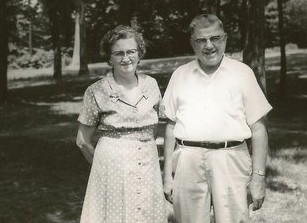
One set of my poems of return, discovery, and loss is centered on the Leonard Springs which were hidden a half-dozen miles from the university I attended in my first sustained leap from my native Ohio.

On my return, we lived at the edge of town rather than on campus, and the springs were in a ravine just over the edge of our view from the kitchen. Few knew of their existence. Now, as I find online, they’re a public park and treasure.

~*~

Much of southern Indiana sits atop a thick limestone bed, some of it quarried for the construction of large-scale buildings worldwide. Over the ages, the bedrock has been riddled as slightly acidic water chiseled passageways and cave systems below the ground surface. Learn to read the landscape with this awareness and you come to recognize the widespread karst features, including sinkholes where cavern roofs have collapsed – some could easily hide a large truck or even a barn. There are also the sinking streams that vanish back into the earth as well as open mouths concealed in fields and forests that would swallow an unwary trespasser. So this hardness is laced with underground mystery and motion.

I already possessed some familiarity with this terrain from childhood camping and hiking trips, and had even crawled through some small caves in nearby state parks. Commercial caverns had also instilled an awareness of the otherworldly character of underground chambers and passageways. But this time, as I now lived off-campus on Leonard Springs Road, far to the other side of town, I was newly married and free to explore. After residing and laboring in the foothills of Upstate New York, the Pocono Mountains of Pennsylvania, and the flats of what had once been the Great Black Swamp of northwest Ohio, I had come back to Bloomington as a research associate. This sojourn would be all too short – a little more than a year and a half, though not by design – but long enough to acquaint me with the hardscrabble backcountry and its peculiar character.

Our garden sat in one sinkhole, and our waste water probably flowed into another (there’s no accounting for our landlord’s septic system). While I’m not a caver (as many spelunkers prefer to be called), I did become intrigued by the meandering channels beneath the meadows and woodlands beyond our house. From what Roger Pfingston writes more recently of his neighborhood on Stouts Creek, a similar locale a few miles to the north, I can suspect that much of the Leonard Springs terrain has since been ripped up and developed into housing.

What I leave, then, are field notes of the layering I experienced then, and a testimony. The poems in Green Repose present these. For your own copy, click here.

Green Repose 1

FROM THE FLAT GRAY FIELDS

As I said at the time …

Standing in the blank fields of Ohio … gray March … the utilitarian cemetery … beside my mother’s grave, knowing soon my father, too, would be planted here.

As it turns out, not as soon as I envisioned. He recovers somewhat. Several years later, I return to the spot, this time with my sister. We explore more, find other great-great-grandparents buried in a cemetery two or three miles away – not at all where I previously thought.

This time, I begin to appreciate the section numbers of township maps, as I place my ancestors’ farms, how often they abutted each other. How many, only a mile or two from this spot, back when these lands were mostly forested.

A native, a student at a then-new state university, a journalist who worked on three of its daily newspapers (each in a different quadrant of the state), I’ve spent a third of my life in Ohio. Married there and, a few years after returning, divorced; nearly married there again, too. Many of my ancestors, I’ve learned, settled Montgomery County in its first decade.

Yet, reviewing my creative writing – the poetry, fiction, and essays – I find little that’s directly about Ohio. Curiously, those few passages typically appear in pieces about other places – Indiana, Washington State, the East Coast. What instead becomes apparent is the fact that my roots remain, complexly and paradoxically, embedded in Ohio. Unavoidably, in my years as an exile, much of my writing comes out of those Buckeye origins. Whether my years away have been the result of forced expulsion (job market, especially) or of self-chosen escape, I nevertheless carry inevitable values, images, and expectations that are not just Midwestern, but more distinctly, those of the Miami Valley. As I’ve delved into my ancestry, moreover, I find also a forceful sub-current of dissenting religious practice and witness in overlapping Dunker (Brethren), Quaker, and Mennonite farming circles planted there – and to these, mysteriously, it would seem, I’ve returned in new settings.

Surveying material currently available for submission turns up very little with even the word “Ohio” in it. (Some fiction, essays, and genealogical writing need more revision before their release.) The five poems enclosed (an offer of first North American serial rights for work you select) do, however, spring deeply from the state – not just the land, but also the emotions. Maybe it’s a sense of the lovers, who were also Buckeyes. Maybe the awareness of mechanical work and objects. Maybe the crossroads nature of the state, looking west (in one poem, the prairie that stretches into Illinois) as well as east, to Baltimore and New York (as in “oysters”) or even, as stated, England. Maybe the underlying naïve outlook that becomes vulnerable to betrayal. Or the dreams of acting (hints of Broadway or Hollywood). Whatever the combination, something of the state is compressed into the fabric of these pieces.

Here’s hoping they work for you.

~*~

For the record, they didn’t.


MEETINGS WITH REMARKABLE PEOPLE

G.I. Gurdjieff’s classic Meetings With Remarkable Men begins to look all too bland when I compare his subjects with people I’ve known over the years. Or even when I gaze around the room assembled for Quaker worship on Sunday morning. Admittedly, his travels are remarkable, especially for the time.

But without going into the details, let me say I’ve been blessed. Both men and women, all so remarkable in their compassionate presence.

~*~

Now, whatever happened to that Gurdjieff circle back in Binghamton? The couple who had the ring of benches around one room of their apartment for their own meetings? Back before I found yogis and Quakers and Mennonites and …

A PHOTOS FOOTNOTE

Playing with my entry-level Kodak digital camera, I’ll have to admit, has been a lot of fun. And I hope you’ve been enjoying the results I keep posting here at the Barn.

But I’d never consider myself a photographer, especially after working with some of the best in the news business. After watching them cope with so many of the nuances of light- and shutter-speed adjustments in the days of negatives and film-processing, I can’t shake the awareness that this digital stuff is just too easy. (Well, I’ve written about feeling the same way about desktop publishing in comparison to the old Linotype craftsmanship back I started my journalism career.)

Yes, the real photographers today are still meticulous about getting everything right. They use tripods, slow-speed exposure, lens adjustments for depth and focus, and so much more. Whether to Photoshop an image later is a whole other discussion.

Maybe it’s in homage to their high standards that I’ve chosen (with rare exceptions) to compose or crop my pictures in the camera itself, using only the 5x zoom. Yes, sometimes the camera “sees” quite differently than I do at the time – color and light, especially, but I’ve chosen to stick with that rather than trying to “correct” it later. Art and crafts, after all, function best within limitations. Yes, too, my work is taken “on the fly,” rather than waiting hours for perfect conditions, the way a real photographer would do.

The bottom line? I’m getting fond of the funky results, even if some of the work of my former colleagues is so incredibly exquisite it often brings tears to my eyes. Never, ever, forget the gap between what they’re doing and what the rest of us are attempting with our cellphones and cameras these days.

~*~

Now, for an update: Our latest round of Christmas gifts brought me a new camera, a huge improvement, I must add, and one my elder daughter, in giving it a test run, almost didn’t return. I’ll admit, the Olympus is a lot of fun, even as I’m just starting to play with it.

But I must also confess, it still doesn’t change my perspective on the Real Photographers and the rest of us. Humility, then, in the face of brilliance.

TRAIL MARKERS AND FIELD GUIDE

As I noted at the time …

It remains work, except for that sense, in the practice of the art, of being alive. Aware. Totally there, at times. A balance, between inspiration breath within and exhalation the atmosphere without.

Yes, it would be wonderful if we were all so spiritually deep that pure worship and our daily work of gardening and cutting firewood would be sufficient. But from experience, we can see that too often what resulted from enforced exclusion of color and imagination from our lives leads, over time, to extinguishing personality our gifts, as a group, are diminished and rather than loving delight, a bitter boredom sets in bringing with it, the backbiting profits of Satan. Which brings us full circle!

I believe we are expected to bring something back to the world from our solitude. Expected to be visionaries and priests. But not, as some would claim, shaman not unless we want to stake our life on the healing power of the individual work. Perhaps, as was recognized in Zen some time ago, when we start writing and singing and painting from this experience, the spiritual movement is already past its zenith. Nonetheless we also know the power of the Zen-suffused works of painting, poetry, pottery, architecture, tea ceremony, various martial arts.

Tantra: as means of going deeper. Concentration. Vibrations. Here the importance of the work of art is not the surface itself but what it triggers within the psyche of the viewer. That is, the canvas we Westerners revere is not so important mere surface of paint. The reverberation within the viewer is, ultimately, the point of value. (All that the viewer brings to the work, or the use of religious icons in the Eastern Orthodox traditions.)

Art as discipline. Self-discipline. Form. Submission/obedience. Never ending practice.

Stravinsky’s “limitations make art.” Heifitz’s love of movies yet no time to attend.

Solitude. Prophecy. Communion. Community. Vision. Hard labor.

Magnetic center point of growth.

Simplicity/direction versus art/artifice.

A separate life, our art? Or integrated?

Having something to say to express. Versus blue smoke and mirrors. Spiritual man has no need to be clever. Distrust of tricks. (Difference between craftsmanship and trickster?) Rather, to stand naked. Irony? Sarcasm? Or loving concern for the good of all? Celebration! Creation/creating. Versus discovery. Contrived versus organic. Maybe everything is different when played on a blue guitar. Not at all!

Exploring the Mystery. Connections. Links.

Here I am, writing (a) fiction about (b) sex and drugs and other aspects of searching. Also, (c) poetry from my pre-Christian experience. Some of my fellowship would argue that’s not where I should be. Some have been praying for me through this period. The kind of work that could get me read out of Meeting. Is this acceptable activity for a free Gospel minister? All I can do is explore the Truth as it’s been given to me.

How, then, turning outward into community or the world? To be candid, including the desire to get laid, the poet’s quest, the troubadour. Yet most of us, as “artists,” are out of touch with our communities. This is a manifold argument, too complex and heated to explore here, except to say.

Perhaps we really do need to be actively intertwined with our community to write well. Not necessarily a community of fellow artists, either. Rather, an intimate fellowship. Speak honestly, critically. Now look at the faces on the magazine covers or workshop brochures. How few look like people you’d like to meet! How much anger, hatred, envy, darkness brooding comes through. How little serenity, how little joy. (Would I want any of them for neighbors? Even the ones whose work I admire?)

Yet through the act of writing, I’m also more aware of qualities in other workers. Interesting. One measure of admiration is seeing something in someone’s work and recognizing a quality I wish I had but know I don’t. So I read that with gratitude and admiration rather than jealousy. Fellow workers in the fields.

Think of the spontaneous and to our “trained” ears, trite verse composed and uttered at Ohio Yearly Meeting, that when shared received an immediate reaction: “I would like to see that included in the published Minutes” and it was, because it expressed a communal feeling.

In the ancient Shah’s court, the poet stood at one end, and the jester, at the other. When one moved, performed, the other remained absolutely motionless: the unspoken balance.

BALDING IN THE BACKGROUND

As I said at the time …

And you think I’ve raised a lot of questions already? Just wait till I begin pondering my wife! I’d start there, if I thought I could make any sense of it without all of the previous history and experiences, good and not so good. Yes, she and I both believe it would have been much better if we’d met, say, 12 years earlier … We would have been younger and more flexible, in many ways, than we were when our lives enmeshed. Or did I mention there are many parts of this getting older I just don’t like, all in addition to balding? She’s a most remarkable woman, incredibly talented and frustrating, highly opinionated and conflicted, too. We’ll just have to see where this all goes, especially in the transitions we see coming ahead.

Enough! What I am simply trying to do here is look under or around the all-too-often light give-and-take you and I have enjoyed and known, this time to more clearly see and identify the “differences” you so early noted while I so blithely remained ignorant or in denial. Through everything, though, you remain very special, mysterious, and yes, magical, in my life.

After all of this, for the record, it’s not snowing here – yet. And I’m off to the office, again.

As one funeral director ended our call on a night when I was the obituary editor a few months ago, “Stay well” – or better yet, as I’d add, “Stay faithful to all you are and believe.”

Fondly and ever gratefully yours.

SUNFISH ON A PAPER PLATTER

As I said at the time …

The image is simple enough, and direct: a sunfish transferred to paper, a child’s project in dull red poster paint. The specimen, found on a beach, measures fourteen by seven inches – larger than most of the fish caught back where I’m from, but nothing remarkable here. It has long, prominent spiny dorsal and pelvic fins (the anal fin’s much smaller), and a rather compact caudal, or tail, fin. While much of the scale pattern is apparent, it’s difficult to tell about pectoral fins. The gills and eye, however, are thick paint, and a band of dots runs most of the length of the body to the tail. The mouth, of course, is agape with a small, receding lower jaw. It’s the roundness of the profile that kindles my imagination – at least rounder than the way I would draw a fish or design a machine for the water. As soon as I acknowledge the underlying circle, it becomes drawn out, like a balloon pinched apart by two fingers.

Sometimes I picture a fish encased in a suit of mail armor, though I know that’s hardly the case. Rather, the intricacy of the interlocking exterior – like shingles on a house, rather than brick or stonework – fascinates my landlubber sensibilities. As I stare, the image becomes concave – the fattest part of the body, because of the scales, has the most openness, the least paint. Still, there’s no anticipation the fish will suddenly turn, either in attack or in flight.

I suppose that roasted over open flames or fried in a skillet, a meal might emerge. It’s larger than a typical trout, after all. The child behind the painting, however, now refuses to eat seafood of almost any variety.

The nature of fish is as mysterious to me as the array of the night sky, and to my mind far less mechanical than the knowledge of hooks, bait, spinners, and water depths prized by devoted fishermen. Jesus promised, of course, to make us fish for people, a far more elusive objective than any school underwater.

The paper itself has yellowed and crinkled, as I have.

A PILLAR OR MILESTONE

When I was asked to write a newspaper column two or three times during my senior year of college, I chose – out of the blue – to call it “A Corinthian Column.” Maybe it was just a quirky play on words, crossing the distinctive Greek architectural element with a then very vague sense of New Testament or even prophecy. At the time, my faith was somewhere between agnostic and logical positivist – and vehemently anti-Vietnam war and, to a milder extent, anti-Christian. Yet when someone asked, “Where do you think you’ll wind up, as far as religion goes?” I blurted, “Probably something like Zen-Quaker” – this, when I had little idea of either practice or, for that matter, the way that becoming a yogi a few years later would lead me here in the radical Christian sphere.

Decades later, being nominated to serve as clerk of our meeting had me feeling a similar sense of embarking anew. I could list a hundred reasons why I shouldn’t be clerk. First confession: my motto tends toward “Just do it,” and I worked under relentless daily newspaper deadlines. Either way, this means my patience easily wears thin in many Quaker business sessions. Process? I also wish we had a better system of upholding of our community than committee work. Even so, here we are, all the same.

In the interim, Corinthian Column abbreviates to “C.C.” – the same as Clerk’s Corner. When I set out, I intended to draft some short pieces for the congregation’s newsletter – holding each to just three paragraphs – for upcoming issues. Collect random thoughts on our practice, especially. Maybe even without much (overt) theology. So here’s what happened, Friends. Rarely did it hold to just three ‘graphs, though I usually kept it under a page of copy.

What has surprised me is the way these became pastoral letters after all, much the way the Apostle Paul did, in his own letters to the Corinthians. Yes, I largely avoided the theology, unlike Paul, though I address it elsewhere. The effort of living as a community of faith is interesting enough, as it is.

~*~

You may have guessed many of those newsletter items have now resurfaced in one guise or another here at the Red Barn. My intent this time is aimed at encouraging your own spiritual exploration and growth and possibly even some mutually enhancing discussion of how one tradition can infuse new life or understanding for another.

I love hearing of similar encounters from other directions.

MORE GREETINGS FROM THE PAST

As I wrote to a long-lost friend at the time …

Maybe it was the James Tayler concert broadcast from Tanglewood at the end of August, as I sat in the newly accessible and lighted loft of my barn and sorted through some files that had been long packed away. Maybe it was the martini that accompanied it. Or maybe it was simply an aspect of a larger interest these days, of simply trying to figure out how I wound up here after what’s often seemed a zig-zag journey through some rather disparate circles across the continent – a route that’s included divorce, a broken engagement, and finally a second marriage approaching 10 years now.

What I felt was a keen appreciation for you, especially, and Maggie and Ise, wondering how your life has prospered and, hopefully, deepened. Glenn got in touch with me a few years back, when he and Mary moved to a cabin in the New Jersey woods … and she didn’t drive. Am not sure she does yet, either.

At any rate, thanks to the Internet, I find two versions of your name both at the same address – can’t be too many who earned their law degrees where you did or started practice in that year. So here’s hoping.

If nothing else, I ought to thank you for introducing me to The River. Or should I say the ritual of repeated returning to The River for periods of introspection and, pardon the pun, reflection? That year of the Susquehanna; later, the irrigation canal bank in the desert orchards of Washington State and then three years along the Merrimack here in New Hampshire. Or the Cocheco, with its waterfalls that drop down just before passing through a stone arch in the big brick mill in downtown Dover. These days, it’s also the Atlantic, especially when my older one’s managing the seaside motel. This has been my summer for discovering the night ocean in all of its moodiness and mystery.

And now, revisiting my journals (which didn’t even start out to be journals, as I discover) as well as letters from the period has been eye-opening, and often delightful. What I remembered as being an essentially depressed period for me was filled with a lot of wonderful encounters and growth. To say nothing of humor, especially Maggie’s. And there’s so much I had forgotten, or that turns out to be different from my memory. More than ever, I think our Hawley Street (and subsequent apartments) would have made a better sitcom than Friends. Nor could anyone have played you better than you. Maybe Cosmo Cramer would have portrayed me. As for Glenn?

Life these days is, I must admit, even fuller, but that’s a long story. My wife’s an incredible woman who’s off seeing an architect at the moment about moving a charter school to the ground floor of one of our old mills, a lovely space overlooking the bend in the river where ships used to dock. (Right now the school’s on the fifth floor next door, with some amazing views of the town.) It’s just one of her (unpaid) jobs as chairman of the board. … Such as it is.

I’m hanging on, glad to have a union card, and wondering how much longer the entire industry can continue to give away the product online. Professionally, it’s been grim all over. Without planning to do so, about 24 years ago I made the decision not to continue in the management ladder but return to the ranks – something that’s allowed me to focus instead on my own writing, Quaker practice and leadership, and a personal life, including New England contradancing and choral singing, on occasion. And homebrewing, at least until we redid the kitchen. Etc.

Well, that’s a sketch from this end. I hope you’re in good health, feeling accomplished and fulfilled, and maybe even content. I would love to hear from you, however briefly – and maybe even give my wife an independent account of our by-now ancient history.

Best regards …