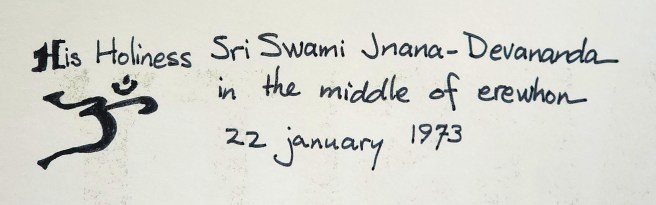
Opening page of the next volume has Box 16, Lima Hall, 45310 but nothing else. As a point of fact, she didn’t attend Ohio Northern until the fall semester but had that summer term as an introduction to college at the nearby state university. To her surprise, she passed that and was on to a new world.
First entry, next page, is 15:VII:73, Nikki’s birthday and Kat’s off for the summer. I was already entwined with the latter’s family. Helped Sam erect his backyard flagpole.
An entry on locking myself out of my apartment while shaking a rug over the banister. Keys left inside. Lights and air-conditioner were left on. I was in shorts, no shoes. Brady next door knew the way over the transom. Got my keys and I then headed off to her campus.
Call from Swami: “How’s that 17-year-old?” She thinks I need somebody about 24. Also, mention of upcoming New York Times piece on the ashram, by Judy Karlstad or Karlsrud: it was long and had six pix.
Mom and Dad dropped in, a surprise. They wouldn’t have found me if Kat had been home.
Coming back to my apartment at midnight Friday, saw Brady’s wife was in the street, telling me of a 17-year-old in her bed, he’s been jealous and beating her, she had him locked up. He’s been in jail since 13, she was pregnant three months at marriage, he was 18: trapped, no maturity. (You can’t make up stories like this, can you?)
Then five men in Day’s tavern baseball shirts, to her, “How’s your tomato? I bet it’s got hair on it!” Out of Holman’s, obnoxiously drunk. They went off driving and throwing eggs, twice. We, to police.
She said I talk sense, not knowing it was only yoga talk.
Monday, a call from Gene and Nikki: first conversation with her since before yoga. The same spacy, faraway.
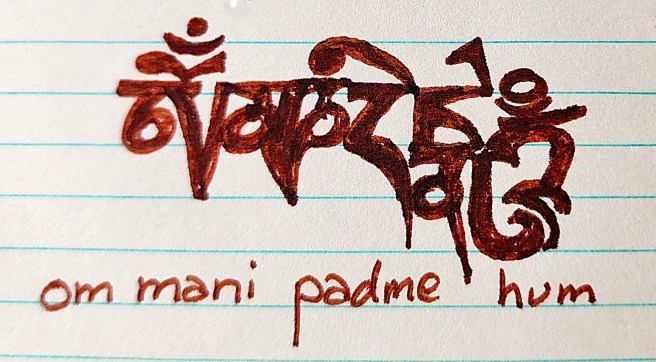
American Swami Rudrananda killed in plane crash. (He’ll show up later in these spiralbound journals.)
Girl in laundromat, two black eyes, hoarse voice, her birthday / same as Nicki’s / no diamond, lives in trailer in the country. Though we speak, no mention of eyes.
~*~
~*~
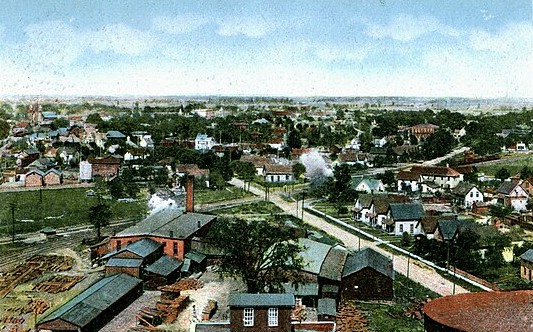
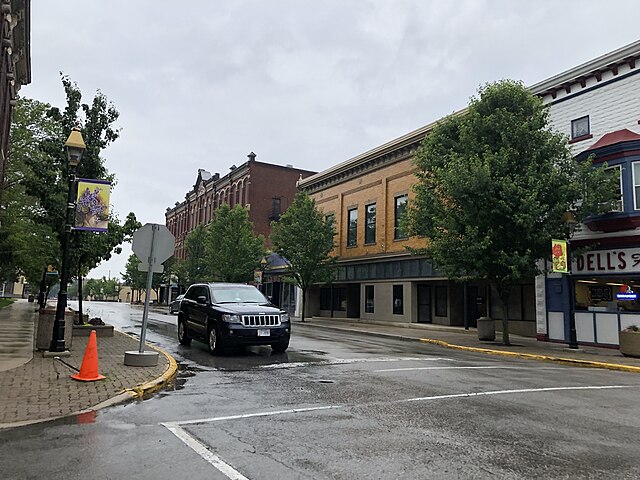
From a letter to Len: This is the flattest, most endless land you could ever imagine, and the people reflect it, having stripped off all the trees and driven out all the deer and Indians. … The local cops think we at the paper are all pinkos. … Kat and I went to Chicago to see the 41 paintings from the Hermitage and Pushkin museums.
So we would have stayed with Iris and Luis? I thought that trip was a year or two later.
Land left spiceless.
Len came out from Gotham for a visit and left this morning, back to the City. We apparently had a bottle of muscatel, or muskadibble, which whacked me. A legacy from a wino he once learned, after asking what was in the brown bag.
Also, late Tuesday afternoon, my one and only Scuba dive: heavy, like a backpack, throws me off-balance: we suit hot in humid air, flippers hard to walk in, throw you backward but easy to swim
No hair under mask: will leak
Every breath, I instinctively raise my head above water: reflexive unthinking: “Not me, not this!”
I’d never before used fins nor snorkeled.
Minnows or darters swimming up to my mask. Gold and black streaks rim their tails.
Brown and black snake in reeds three yards away. “Let’s clear out,” Bob says, remembering ‘Nam.
3:XI:73 / Last night, deeper, our relationship transformed. Her fears, and mine, unexpected, vanished. No hurt, “It feels strange.”
Her new face, of moon mystery.
~*~
From Spiralbound Flatland, with commentary from now.