Tom, an E.R.
surgeon grew up in Camden
southern California now
capable of handling the helm
the concept of “running
the rail down”
meaning skimming the water
yes, surf

I even got a spree there
where he is
You never know what we'll churn up in cleaning a stall
Tom, an E.R.
surgeon grew up in Camden
southern California now
capable of handling the helm
the concept of “running
the rail down”
meaning skimming the water
yes, surf

I even got a spree there
where he is
For 23 years after the appearance of my first book, I was stymied, as far as paper publication went.
Apart from the PDF publication of my second novel, in 2005, I couldn’t get a nibble. Not just the novels, either. Even my poetry books failed to garner print editions.
My on-the-job hours didn’t help either – nights and weekends. So much for networking.
~*~
Looking back, I can acknowledge how some writers’ circles have been very helpful along the way.
The first was an off-campus group in Bloomington gathered around the annual review Stoney Lonesome, named after a village in bucolic Brown County nearby. Once a month, its editors hosted a group that had a featured reader followed by an open mic and sometimes gentle criticism. It gave me the nudge to go deeper into poetry – “You’re hooked,” as one said – along with some great tips for submissions to the small-press scene. I was also invited to coedit an edition, which came out shortly I had relocated to Washington state.
I’ve never been one to be in a writers’ circle closely critiquing each other’s work. The time commitment was one problem, along with the difficulty of finding the right mix of participants. You know, like being a classical musician in a punk band.
There was a group in Baltimore during my sabbatical year, though I’m not sure where its core energy was. The highlight for me was a talk by Tom Clancy just before the movie version of Hunt for Red October was released. I don’t even remember where our regular meetings were held.
In New Hampshire, several open poetry mics took place on nights I could attend. One was weekly in Concord, filled with a hip young crowd and some edgy writing. I was the featured poet there on several occasions.
Another was a poetry group at the local Barnes & Noble, mostly young writers and good energy.
And then I relocated to the seacoast and got bumped to working the second shift, which did free up my Saturdays, if I could get up and away in time.
I joined the Poetry Society of New Hampshire, which had a major event each quarter – the same date, alas, as my ministry and counsel committee of New England Quakers met. The poetry group was more attuned to rhyme-tasters and school programs than to the avant-garde realm I’ve pursued.
Instead, a weekly series just over the state line in Massachusetts filled the gap. Held in a coffee house at the back of a boatyard and overlooking the harbor, Merrimac Mic had a lively bunch of regulars and gave me the featured reader spot multiple times. Isabell was a most appropriately eccentric emcee and organizer.
Performing your work before a crowd is a fine way of measuring its status. The energy of the audience can reflect whether the piece is effective as well as expose deficiencies. Besides, it’s an excellent way to pitch in with a group, as you would at a potluck dinner.
I’m not so sure about contests, but it seems to keep some other writers energized.
At the newspaper, I didn’t go straight from full-time employment to retirement. In the midst of some contentious contract negotiations, some of us were offered a chance to take a buyout. Then it was yanked off the table only to resurface on short notice. I took it.
That gave me a heavenly midwinter month where I indulged in a reading orgy, supported by the monthly severance checks. But the newsroom was short-staffed and wanted me back as a part-timer up to four days a week. Somehow, that felt quite different from the earlier tensions. I could choose which nights I wanted free, and I was no longer party to the office politics.
That’s how I had the Monday night off for a monthly Writers Night Out in Portsmouth, a wide-ranging mix of writers – filmmakers, ad copywriters, playwrights, public relations folks, in addition to poets, short-story writers, and novelists – who met over beer and appetizers or snacks. Writers’ schmooze, as I called it. Each of us briefly shared something about our latest project before the full gathering, accepted feedback, and then broke out into smaller clusters of similarly engaged individuals. Somehow, we weren’t competing with each other – I especially valued the perspective of a well-place sci fi writer and a younger multimedia artist – and the chatter was always helpful. The frustration of marketing was probably our No. 1 topic of discussion.
Those events ran about the time I took up blogging – or building my platform, as we were advised. It’s probably where I first heard about WordPress. And it’s definitely where I first heard mention of Smashwords. (What!?)
Yes, especially, Smashwords.
I hadn’t even considered the option of ebooks, and everything I’d heard up to that point was beyond my budget. Not so here.
Now, as I was saying about getting together with other writers? It really is essential.
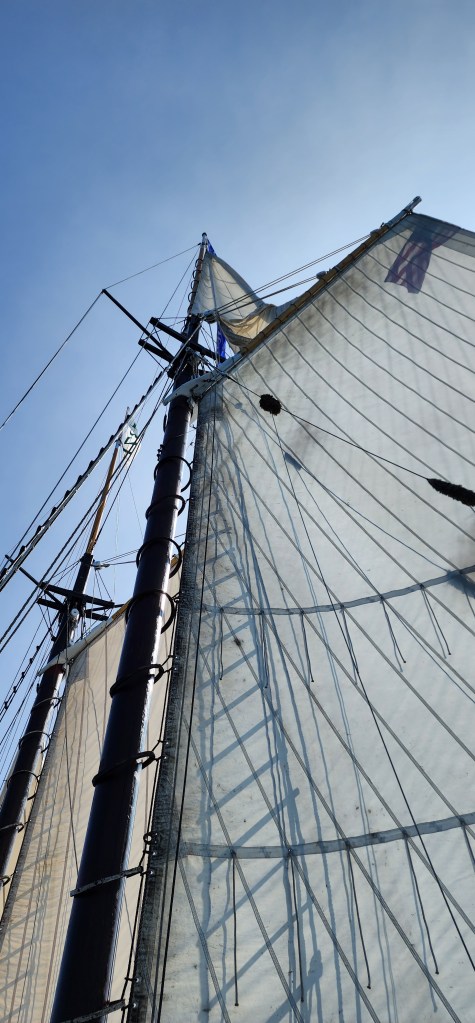
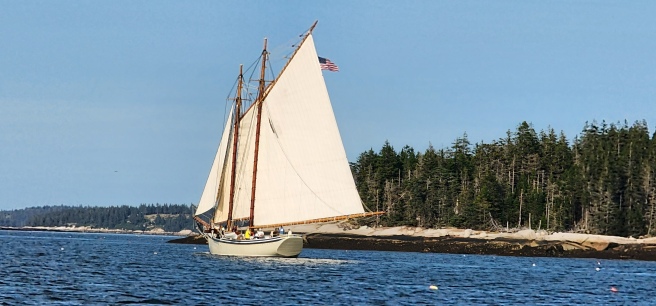
how would square-riggers look on these waters?
Lost behind a small island

finally, a shadow
and a tinge of warmth
As you’ve probably noticed in other posts here this year, I’ve been trying to recall some of the authors and books having an influence on the earliest drafts and later revisions of my novels. As I’m writing this, most of my personal library is still in storage – or other volumes, purged long ago to make room on my shelves for more – and my journals under wraps during the house renovations. I’m having to rely on memory, faulty though it may be.
Look, I don’t want these posts to be about some poor neglected novelist blah-blah-blah, but rather as one account of surviving in a writer’s life, maybe as a bit of advice or even encouragement for the next generation or two.
That said, I can state that my subway project sprang from Richard Brautigan’s Trout Fishing in America as its model. Think short, playful, imaginative with an image slash idea as its central character, like a children’s story for Woodstock reaching young adulthood. William R. Burroughs’ Naked Lunch also cast a spell as a free-floating state of mind.
For me, hitchhiking in subway tunnels was a fantasy symbolizing the hippie experience as I encountered it during my time living in upstate New York. You know, underground with urban roots yet flourishing out in the countryside where you could stick out your thumb and go about anywhere. Yes, though I didn’t fully comprehend it then, that Woodstock crowd was mostly from New York City and its suburbs.
The symbol even implied a degree of freeloading rather than responsibility.
While awaiting publication, the manuscript kept growing from its 1973 first draft, typed while sitting cross-legged at my beloved Olivetti 32 typewriter, through a revision shortly after that and probably another in 1976 before I packed up for the Pacific Northwest, where yet more would be added to the text with quite a backstory in addition to a superstructure out in the foothills somewhere north of Gotham.
This was well beyond the initial Brautigan flash. What I had was, in fact, unwieldy, and nodding toward Brautigan’s other fiction and a lot more. Unlike me, he kept most of his volumes short.
And then, somewhere before reaching my sabbatical in the Baltimore suburb of Owings Mills in 1986, the manuscript was greatly slimmed down, leaving many pages of outtakes I couldn’t trash outright. There was enough to create more novels, or so my inner trash picker insisted.
We’ll look at those as they took shape during my furious year of keyboarding on my new personal computer, however primitive the machine and process appear now.
In that sabbatical, I must say I was highly disciplined, keyboarding for four hours or so before taking a break, eating, even napping, and then returning to the work until two or so in the early morning. I had lived my adult life up to this point awaiting this moment, if it was far from what I had envisioned. Suburbs? Without a wife or soulmate? Heartbroken, in fact?
What drives an artist, anyway?
Beyond the yellow BMW 1600 oil-burning coup I was bopping around in – the one that was older than any of the women I was seeing.
A great deal of material and energy was there to be released, and I sensed this was my make-it-or-lose-it moment. As you’ll see.
Baltimore even had its own subway line under construction, reaching all the way out to where I was encamped.
Not that I would be there when it opened.
~*~
My first hick outpost, the one upstate, wasn’t as small as it seemed. Yes, it was a backwater, but the core was more populous than six of the places I would subsequently live in, if you didn’t count the university students in what I would dub Daffodil.
What my first actual job in journalism did have, though, was proximity to New York City, a mere 3½- to four-hour drive away. Despite the distance, the connection was vital, even vibrant. All of my new friends were from the Big Apple, and many of them were Jewish, as my college girlfriend was, even though she had by now oozed away from my presence, off on what I saw as troubling new places. At least none of them were Jonestown.
Starting with a summer internship before my senior year of college and picking up again after my graduation, a time of great emotional upheaval, exploration, and redirection. As I said, this was in the high hippie outbreak.
I presented the image that flashed before me, the gandy dancer who could have been a hitchhiker, but I should also acknowledge a freaky cartoon a housemate had created and handed me, with a face at a sewer grate mumbling “Duma luma, duma luma.” Those were the two prompts for the manuscript, seriously.
~*~
The inspiration also came from my first jaunts into New York City while living upstate, and later to the west in the Pocono mountains of Pennsylvania. Most of my buds and girlfriends had been from the City, as they called it. My early experiences turned into fascination during a period of great personal upheaval and growth for me.
Hippies seemed to be trying to go in two directions at once: back to the big city while hitchhiking out in the sticks. The original version was, in fact, published as Subway Hitchhikers in 1990 – the worst bookselling season in the memory of many publishers, thanks to the first Iraq war.
As I’ve ready described, in the 17 years between the first draft and the story’s first publication, the manuscript underwent a considerable metamorphosis as I moved across the continent in my day job. While living in the desert of Washington state, I even picked up a 1915 engineering book on the building of the New York subway system while browsing in a very small, small-town bookstore. (How did it ever land there?) Much of my expanding text was backstory on the central character, while the urban transit episodes shifted into something akin to an appendix. The result was an unwieldy epic. But I kept the outtakes, which took on their own life later.
Snoring.
Aversion to shopping.
Fire-building skills.
Sense of direction.
Love of the outdoors.
Immersion in single projects from start to finish.
Closing doors, turning off lights.
Trapping and transporting squirrels.
A readiness to catch bugs and crush them with my fingers on a daughter’s behalf.
brought latest Paris Review and Harper’s
as reading along with Vincent Katz pages
maybe stimulation
didn’t read anything, really, apart from some entries
in the free guide to lighthouses I had picked up
nearly a decade earlier


So here’s the official advice before setting forth:
We are very relaxed and informal on board, so bring comfortable outdoor clothes. If possible, use a duffel or collapsible bag to pack your gear. Hard suitcases are sometimes difficult to store in the cabins.
The weather may be cool or warm, so include pants, shorts, long and short sleeve shirts, a sweater or sweatshirt and a jacket. When the wind picks up, things cool off, so think layers when you pack.
Don’t forget your bathing suit, either for sunbathing or a quick plunge in the ocean.
Soft soled shoes are best, and an extra pair may come in handy. Sandals also work well on board or on the beaches we visit.
If you have a rain slicker, bring it along just in case. We do have extra rain gear on board if you can’t bring your own.
Also, if you can, check the weather for Camden, Maine online before you pack. It may give you an idea of the specific weather for your trip. But remember that it is always slightly cooler out on the water.
We provide towels, linens, blankets, pillows, and all the food and non-alcoholic drinks. We have an icebox on board for passengers to use if they would like to bring along their own beer, wine, etc.
Bring a camera with extra batteries, sunglasses, lots of sunscreen, a good book, binoculars, a journal, and your musical talents/instruments (if they are transportable!). If you want to sleep on deck under the stars, bring along a sleeping bag. Some folks bring charts or GPS’s to keep up with our route.
Once we leave the dock, we operate on 12 volt DC power. There are USB outlets for charging phones – please bring your own USB cord. We do have limited 110 volt AC power (like in your house) that can be used for medical machines and for occasional charging of batteries. Please let us know when you book if you will be needing 110 volt AC power to operate a medical machine.
One place I was appearing as a writer was in the small-press realm. Largely unseen and at the fringe of the literary world, its prolific, low-circulation reviews, quarterlies, ‘zines, chapbooks, and even full-sized books reflected a passion for literature, an intense mission, or outright ambition rather than an accountant’s commercial motivation. Many were marginally funded, mimeographed or photocopied, while others had more traditional printers, perhaps even typesetters, and a few of the biggest even had paid staff. Most were edited by dedicated individuals or partnerships; others by an institution or circle; and still others by college English departments, with either students or faculty as the team.
It’s where the action was – and remains.
Among the book publishers, Black Sparrow and Copper Canyon stand out, along with Shambala for a Buddhist focus.
In general, university book presses garnered more respect and financial backing and weren’t open to those of us who weren’t in a professorial track.
In college, I had been told of a widely recognized poet who averaged 20 rejections for every poem he had accepted in one of these journals. That was meant as inspiration to keep us lesser voices from despair.
Well, a few years later, I was getting about 20 rejections for every batch of five poems I mailed out. Still, I got more than a thousand acceptances. They usually paid me with two contributor’s copies, or did before the action shifted online. There are some fine online sites, by the way, if you look.
The track was how you were supposed to build a reputation and even entice an agent or editor. I think they were all too busy to notice.
A newspaper career was usually supposed to grow the same way: start out on a small daily somewhere out in the sticks, one with next to nothing pay, and work your way up. Or as one critic warned publishers, this was a process of eating your young. Or your seed corn, in another version.
(The highest income I ever reached, by the way, was the national median. And that was thanks to our Newspaper Guild contract, unlike most of our rivals.)
~*~
Acceptances created another challenge, drafting a contributor’s note.
I noticed that many of the writers listed their most recent book or two, but I really didn’t have that much. Others went with where they were teaching or working on an advanced degree. With my name distancing myself from the more common tag I used in the newsroom, naming the newspaper wasn’t really an option – and not that wise, anyway, if the content was of a controversial nature, as many still saw the hippie movement.
The solution, then, was to look for some bit that would make me more human. Do try it, if you’re asked to come up with something similar. Even be flip, if you can.
~*~
The World Wide Web has taken all of this in a new dimension, of course.
We bloggers are essentially producing ‘zines or similar small journals. We even have photography as a regular option, not a given back in the day.
I’ve even gathered my published poems along with newer ones and published them as free PDF chapbooks at my own online imprint, Thistle Finch, a sister to this Red Barn. Do look it up.
More crucial has been the growth of ebooks and on-demand print publishing, which I’ll discuss in an upcoming post.
Let me explain. After showing my tech-savvy elder daughter a few things about Facebook during a visit, I had one of those “whatever happened to?” moments and chanced upon my first lover’s FB site. That led to what we call falling down the rabbit hole, in this instance this one where her photos and posts made me happy to see what appeared to be a good life … at least until getting to the point where she related that her husband had passed. Forty years together? Impressive. How was she holding up after the loss?
As I continued:
A lot has transpired since we last communicated, but I can say on my end much of it wouldn’t have happened had you not been so much a central part of my life way back when. You really did change my direction. Thank you for the positive things that followed because of that.
Should you want to know more or to just chat, fire back. Or peruse my profile or my blog for a sampling of what’s really been – and continues to be – a rich life, maybe more than ever. Yours, of course, is likely to be more fascinating. Best regards, all the same. Peace …
Of course, I haven’t heard diddly.
do Fresnel lenses ratings run
up (from lowest)
to top, five (for highest)
or the other way around?
Turn’s out 1 is the strongest
5, the least

what are the others really thinking
or observing under their cheerful banter?
Let me confess to the allure of having an author’s photo and bio blip on the back dust jacket of a hardback volume. That’s always carried so much more gravitas than a mere newspaper byline – in my early days reserved only for major stories rather than distributed to just about every headlined item, in part to shift the blame for errors – or, one step up, the columnist’s thumbnail mug shots, for the truly honored writers. A magazine’s contributors page was a step up, especially when they included a full-color photo.
It’s not that being honored was essential – I was an anonymous, behind-the-scenes copy editor, after all – but more an acknowledgment of success, especially when it signified not being a hack. It’s just that everyone harbors a desire to be important, at least to someone, right?
~*~
For me, having the manuscripts but working on them part-time, I sensed myself racing a ticking clock. Would time run out on me?
The book publishing world was shrinking, as was daily newspaper journalism that provided my paychecks. Fewer houses were publishing fiction, and even those were in turmoil. They wanted blockbusters rather than the cottage-industry lines that previously prevailed.
Literary agents were struggling to support the writers they had and were less likely to take on new clients who would require more time and effort to promote. One, who had been considered hot just the previous year, replied to my query – a rarity, by the way – saying my proposal was an important book but not “commercially viable.” Another, equally acclaimed, vented her frustration with the changing publishing world and her struggles to cope within it.
Well, it did remind me of a letter I received from a newspaper editor I greatly admired during one of my job-hunting interludes. He was warm and welcoming, but confessed his career had turned into heading papers through their final days. From what I saw, he did manage some glorious sunsets.
My personal writing turned to several nonfiction projects that had commercial potential, but they, too, failed to break through the brick wall. One problem was that I was only a writer rather than an expert with academic or other highly placed credits.
It was a vicious circle. To get published, you had to have been published to some success.
~*~
It paralleled my earlier efforts to land a position on a major metropolitan newspaper. There had been some near misses, but the Union Leader proved to be a better fit for my remaining career. I even made it to the finishing line in a rapidly shrinking field.
In addition, “making it” as a poet was looking more and more like a dead end. Who can even name a living poet?