A friend sent me a copy of a letter I’d sent him years ago. August of 1966, in a church stationery envelope. It’s rather embarrassing.

As is the verse.
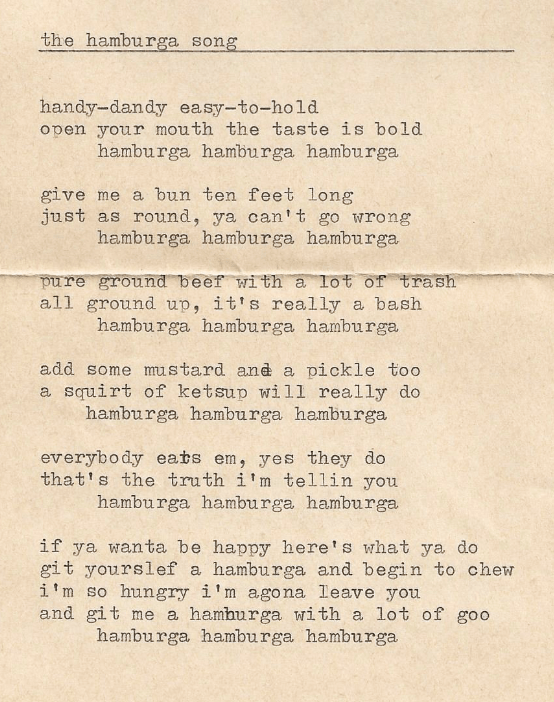
You never know what we'll churn up in cleaning a stall
A friend sent me a copy of a letter I’d sent him years ago. August of 1966, in a church stationery envelope. It’s rather embarrassing.
As is the verse.
A season in Kyoto, Barcelona, or back in the Pacific Northwest.
Extended genealogical research in England, Ireland, and Alsace.
The Peruvian Andes.
Alaska or Iceland.
Ascending Mount Rainier or Adams.
Weekends of concerts, museums, and theater in Boston.
A week at the Metropolitan Opera.
Visiting friends in Baltimore, New York, and the Pacific Northwest.
Canoeing or kayaking in northern Maine.
On the other hand, I’d still love to experience the Orthodox icons in the churches of Macedonia.
And even some time on Grand Manan Island, New Brunswick,
Using what I had previously thought of as life boats was a common practice during the cruise.
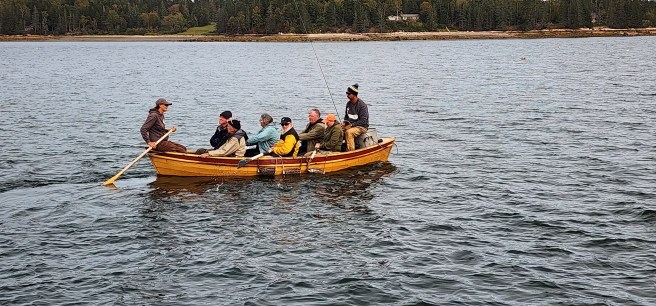
Babson Island a wet landing
wearing Converse high tops sans socks
a mistake
lucky I don’t have blisters
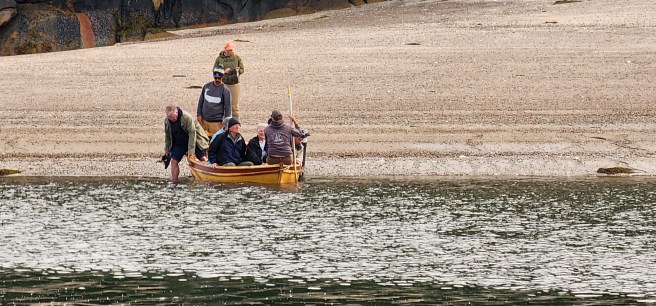
a fine-shell beach
unlike any we have to the east
I know of
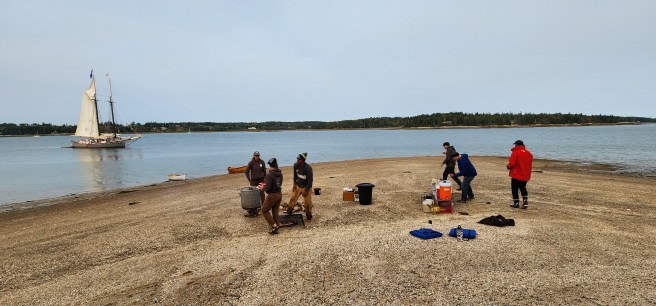
so here we are going ashore again
this time for lobster
Babson Island, Maine Coastal Heritage Trust
In my parallel universe, my real-life life, newspapers were caught up in technological “advances” that kept setting us back. Those changes had started well before my sabbatical break, but they were speeding up. Back when I was starting, perforated teletype tape meant we really couldn’t edit stories we received from the Associated Press or United Press International or similar services. And then scanning of typewritten pages made improving even staff reports physically difficult. After that came the early stages of computer screens and keyboards, where editing took about three times longer than it had with a pencil – moving that cursor around took more effort, certainly, and computer crashes were commonplace. These were all matters that impacted the emerging story of Hometown News, though I believe anyone working in a large business office would have parallel experiences to relate.
We forget how much reliability our laptops and PCs have gained. Does anyone else remember losing a draft to a static electricity spark that then erased whatever was on your screen? Or, for that matter, when it was a bigger power outage?
I could detail the shifts from letterpress and hot type to pasteup and eventually pagination or from typewriters and linotype machines to early computers to, well, the digital devices we have today or from letterpress to offset printing and now digital editions skipping paper altogether.
Or similar leaps in photography, as we see in following Kenzie.
~*~
Paid work occupies a large part of most adult lives. Even when it doesn’t, how we handle our money, wealth, time, and so on is a highly emotional issue, no matter what the dismal science of economics insists. (For that line of useful inquiry, go to the Talking Money series on my Chicken Farmer I Still Love You blog.)
I just couldn’t create characters without their having jobs. Well, most of them – the hippie farm had some of dubious means.
Besides, so much of a typical male’s identity and life purpose is tied up in his job, especially when he can take pride in it. The job even defines his social circle.
I didn’t want to add another book about a hopeful writer to the literature. What a cliché. Or a musician or actor or even a painter. How about a plumber or fireman or circus clown?
But I still needed a witness figure for the history abstracted to fiction that was before me. I defaulted to using a photographer, in part because I had wished I had taken up a camera, if only I could have afforded the time and a darkroom, blah-blah-blah, and in part because I had been a serious visual artist in high school. You can see those elements developing in Daffodil Uprising and later coming together in What’s Left, but they also play out in Pit-a-Pat High Jinks and Subway Visions. I’m a highly visual guy in my awareness and thinking, OK? The fact he was employed at a newspaper is one part I couldn’t evade.
I still value novelists who manage to set their story outside of the writing world, and that includes universities. Charles Bukowski gets points for me for his novel Post Office. Well, I guess that’s also where genres kick in, too. They’re about detectives and spacemen and billionaires and cowboys and so on.
Photojournalist? At the time of the first draft of Subway Hitchhikers, I didn’t have any models to draw from, but that quickly changed. I wound up working with some of the best in the business.
Over time, photography, the kind that required light meters and F-stops and film and darkrooms, became ancient history. That part I would have to intensely rework and explain as my books underwent revision, thanks to Cassia in What’s Left.
In contrast, Hometown News was primarily about work. I had no problem in this case where everything took place at a newspaper plant, though the economics of the surrounding community also emerged as a central thread.
Jaya became a more difficult case. Her career in the early drafts was drawn from my newspaper offices and hours, now vaguely abstracted to management in general. It would get more specific in the revised titles, where she specializes in nonprofits management. It’s a real job description in a major component of the economy. For that flash of inspiration, I could look to one neighbor in Dover and the impact she had statewide in peace and social justice matters.
cow skull and elk vertebrae from ridges above the Yakima Valley
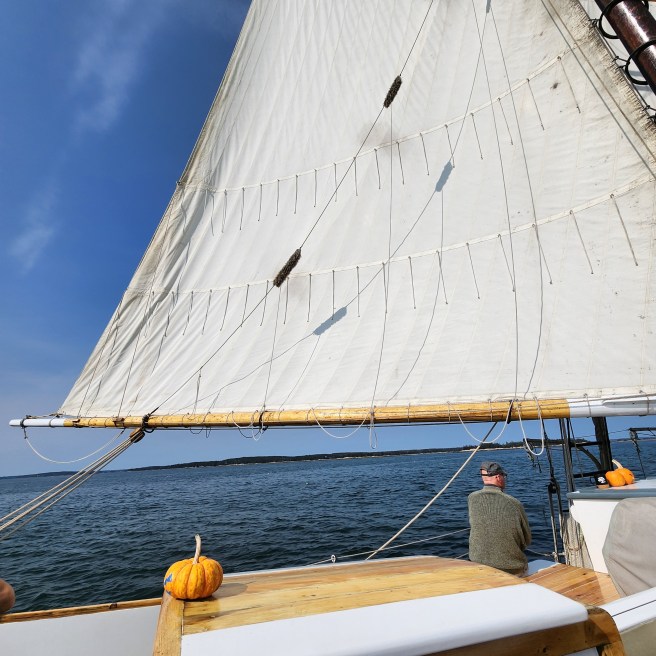
this is the great north of my life
including mosquitos
I wouldn’t want to go on a typical
ship cruise
or Navy vessel
the sea’s so blue with a sky to match
in the zodiac, I’m an air sign

the North Atlantic at night
a distant lighthouse here and there
the Milky Way
dawn where I live
While I’m thinking about visuals, let me mention a few ways they’ve helped me in creating my novels.
Not to slight dialogue, even when you nail it, or, for that matter, narrative, but a visual detail can be a great way to spark attention in a character development or a scene. It can make a passage visceral. It can rescue a connecting passage that’s gone flat or leaving you floundering for just the right idea.
I don’t know about you, but my memory overlooks a lot of telling specifics in the history I’m investigating. It’s not just memory, either, but so much that should be obvious but we simply block from awareness. That’s where I’ve found photographs to be a great prompt. Sometimes they even provide data, as my Orphan George blog demonstrates in posts examining family photos, when they’ve been available. Other genealogists can weigh in on ways snapshots and portraits have provided crucial data.
Through many of my moves, I didn’t even have a camera. I have no shots of many of the people who were central in my life, not even some of the lovers or places I’ve inhabited. The shots can counter my tendency to idealize. A bit of grit can restore some reality.
In the process of writing and revising my novels, I began collecting photos from magazines or other sources as prompts. This character in my book (often they’re a compression of several real people) might look like the one in this photo or wear something in that. Or here’s a small-town square that would work. They even allowed me to reconstruct a darkroom for Kenzie.
The Internet, of course, has made this backgrounding much easier.
We’ve already met a ferry. Most of Isle au Haut has national park status as part of Acadia. The boat takes foot-travel passengers, too.
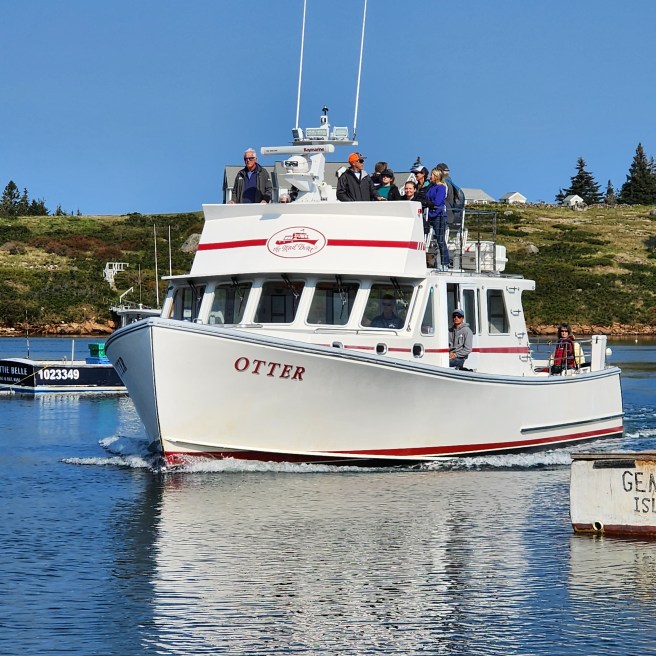
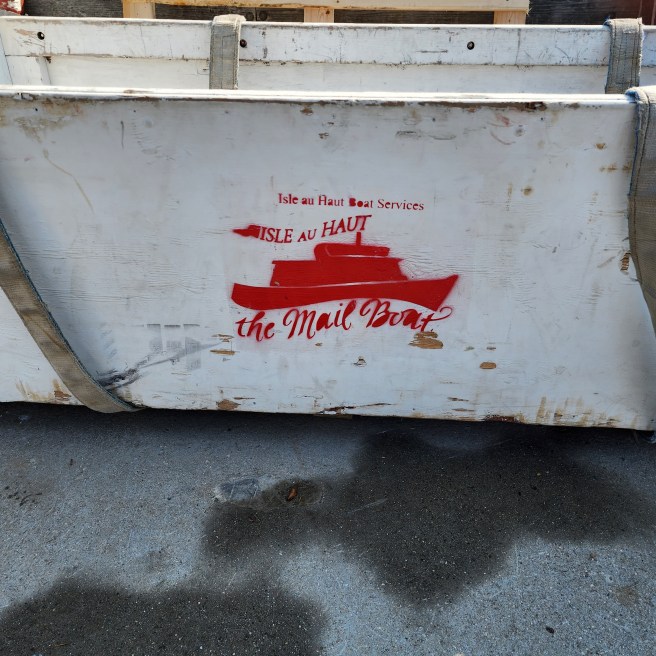

A scene along the way.
With my training as an artist, I have some strong feelings about book covers. Most of the ones I see leave me cold. I think they’re too cluttered, and most of them lack a strong graphic element – I prefer a good photograph though am coming around on the painted image argument – and I like a clean, easy to read impression. Some of the typefaces used for the title or the author are nearly impossible to make out.
I did have a friend who was a professional illustrator for a Fortune 500 corporation. CAD (computer assisted design) was overtaking the field, and he felt it was destroying his artist’s hand, the one with the Rhode Island School of Design sharpened skills. His aspiration was to design old-fashioned book jackets, and while his style there wasn’t my cup of tea, I could see its appeal. Fortunately, he conceived a children’s book that took off, in part because it was based on a Pete Seeger song, which did get buyers’ attention. And led to many more all on his own.
I still don’t understand all the nuance, though. Is it true that a certain strand of fantasy is supposed to have a specific element woven into the cover to alert a potential reader that this is the subgenre she’s looking for? You know, maybe a touch of moonlight or a small bat in flight or a golden glimmer in someone’s eye?
I am learning, though. A cover makes a promise with a reader, so I’ve heard at Smashwords.
My thoughts on cover design and some of my favorites appear in earlier posts here at the Red Barn.
Self-publishing requires much more than merely producing a compelling text.
Naming a book is hard enough. For the record, I found naming What’s Left to be my most difficult, as I’ll explain in a future post.
In the world of books, and not just ebooks, a strong cover is crucial.
If you can afford to hire an illustrator or graphic artist to design yours great. I’m envious.
My first novel, in paper, wound up with an “art designer” misfire. Rather than respecting the black-and-white photo of passengers in a subway car, a flat yellow lotus shape was cut into the image with the title and author credits inside that field. It didn’t fly. In addition, my name wasn’t left as simply Jnana, as I desired. It was the full yoga version, an additional five syllables or 14 letters. Well, it kinda has a 1950s feel, even with some graffiti on its walls, but the action was all high hippie ‘60s and early ‘70s. I’m now wondering if getting a tagger to do the cover would have been a more successful alternative. I’m sensing it would have been a more in-your-face result. Buy me now!
For my first round at Smashwords, I hired a book designer who was, I seem to recall, living in the Czech Republic. Emailing made everything easier, including paying him via PayPal, which was new to me. Since he had a deal with a stock agency for low-cost photos, I rifled through its online pages filled with shots that might fit my need.
It’s harder than you’d think.
A good cover isn’t a poster. It’s more like a billboard on a much smaller scale. And your potential readers are zipping by.
The right photo turns out to be a rarity. It has to somehow reflect the story and still attract a buyer.
Even when you find a good fit, there can be problems. For instance, the photo I settled on for Hippie Drum was a black-and-white portrait of a shirtless young male playing a set of Conga drums. It even looked a lot like me at the time of the story. Little did I know how many viewers it repulsed.
There is debate over showing a person’s face on the cover. It can limit a reader’s perception of your central character, for one thing, and one reader’s ideal can be an instant rejection from another.
If you’re going the human face route, you may find the perfect photo with one slight flaw. She’s a redhead while your character’s brunette. It may be easier to tweak the book to fit the cover.
The experience of tweaking a character to fit the cover image.
There’s also a debate over a painted or drawn artwork versus a photograph.
When I got around to designing my own covers, I came upon a drawn image of a single daffodil bloom. How perfect and I still love it. And within the title I inserted a peace emblem for an “O” in DAFFODIL SUNRISE.
A few years later, when I changed the title, that cover went out of circulation. That peace emblem just didn’t work with the new version’s Kindle print-on-demand cover, either.
I have to admit a special fondness to the ones on Subway Visions, Yoga Bootcamp, and the Secret Side of Jaya – none of them photos.
 Jnana's Red Barn