
As he had told me:
urchins once filled all the shoreline rocks
till the Japanese market opened up
flights from Bangor
fishery now tightly licensed
hoping for recovery

An old-fashioned farm windmill was doing whatever on one island we passed.
You never know what we'll churn up in cleaning a stall
As he had told me:
urchins once filled all the shoreline rocks
till the Japanese market opened up
flights from Bangor
fishery now tightly licensed
hoping for recovery
An old-fashioned farm windmill was doing whatever on one island we passed.
Damn Cassia! She even tore apart my first published novel, Subway Hitchhikers.
A lot had happened in the nearly three decades since the book was first published – and even more since it was first conceived in 1973. Gee, that’s more than a half a century.
As I came back to the story after the release of What’s Left, my first task was to bring the tale more in line with the rest of the series, starting with the name of the lead character. Kenzie was an advance over the hippie-era Duma Luma, which rather echoed Wavy Gravy of Woodstock renown. His earlier legacy of being a lama reincarnated in Iowa was also downplayed if not entirely erased. Besides, there had been reports of such things actually happening since my book was first published. I have no idea how they turned out, either.
Another big job involved changing the original structure of short present-tense chapters flashing against past-tense ones, like subway trains passing in opposite directions. It was a creative touch but quickly confused the reader. A more conventional chronological-order storyline took its place.
That was accompanied by a new plot based on Kenzie’s monthly trips down to Manhattan to study with his Tibetan Buddhist guru in a tenement on the Lower East Side. That development added a handful of other devotees to the characters and realigned any who had previously existed.
Some of the Tibetan details now reflected tales I had heard from a more recent friend who was studying to become a Buddhist nun. Never mind that her experiences came decades after his or that there might not have been a Rinpoche residing anywhere near the Big Apple. Rival yogis, however, were plentiful.
Tibetans by the early 21st century? Our favorite dining option in Manchester, New Hampshire, was a Nepali restaurant that featured momos, a steamed dumpling staple in Tibet, too. The owners and staff were quite honored when an authentic Buddhist Rinpoche dropped in and approved of their dishes.
My, I have lived in a changing world. When’s the last time you even saw a subway token, by the way?
The freewheeling hippie-era fantasies of my book were soon followed by some creepy downsides. Hitchhiking out on the open road had turned sinister. Subway surfers, seeking the thrill of riding atop the cars in the tunnels and on the elevated lines above the street, were being decapitated and worse or worse by immovable objects in their trajectory. And the onset of homelessness during the Reagan years created whole villages surviving underground, as Jennifer Toth reported in her book The Mole People: Life in the tunnels under New York City, which was published just four years after my novel.
In addition, Long Island Newsday had assigned a columnist, Jim Dwyer, to its new subways beat, leading to a nonfiction book, Subway Lives: 24 Hours in the Life of the New York Subways, which came out only a year after mine. Now that’s some tough competition. No wonder I didn’t hear from him after sending him a comp copy for review when my book came off the press.
By that time, though, I was living an hour-plus north of Boston and entering a time of my life when I’d be riding its MBTA trains about once a week – perhaps a thousand fares one way and back with girlfriends and later family on my visits. Familiarity with underground mass transit hasn’t lessened my fascination.
Still, since Subway Hitchhikers had been about hippies, I had to admit they had largely fallen into disrepute or self-denial. But that’s not how the book stands now, something that’s reflected in its current title, Subway Visions; Along the tubes to nirvana.
As for today? Here I was, with my fascination with subway systems, asking my favorite lifeguard about her experiences in Boston during her freshman year of college. She must have been taking the cute little cars of the Green Line, right?
Instead, she emphatically told me how disgusting they are, miserable on hot days and packed at peak hours – and, especially, the fellow passenger, an utter stranger, who puked on her feet in sandals.
I didn’t dare show her my book after that.
Thorndike, traffic jammed before the train station.
I park on grass down the line
hope the engine sans heat plate doesn’t ignite a fire
one train pulls out just before I can buy my ticket
but sunny, definitely – a 25-minute delay
Old Swedish dining car
meaning prime cutting-edge 1950s
cardinal tattoos on somebody
what faint blue mountains were in the distance
before the 220 turnoff?
return trip train car sinks on one side
before leaving the festival stop
worrisome, slows the run back to terminal
its sharp curves especially front car’s detached before final run
to fairgrounds and back
just passed an old sardine carrier
turned private yacht
Local traffic
sardines as a reminder of where I’ve settled
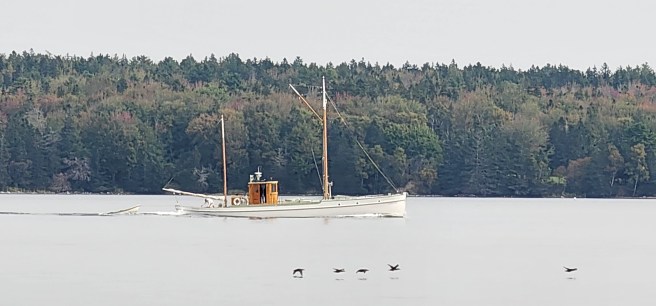
when the Louis R. French was based out of Lubec
and owned by American Can in Eastport
she had an engine and no masts
faring something like this
I’ve been caught off-guard several times while wearing my gray Louis R. French historic schooner hoodie around Eastport. (Well, one of them. I now have three, but that’s another story.)
The first encounter was at the county courthouse in Machias while researching the deeds to our home. A registrar asked what I knew about the boat and I started replying with the history. She smiled and said, “My dad worked aboard it,” back when it was a sardine carrier based in Lubec, the town just south of Eastport. During that stretch, the masts were removed and the vessel was powered by an inboard motor.
The second time was when a friend, a legendary ship pilot, smiled and said he rode many times aboard it as a kid. Bob did correct me, saying the French wasn’t a sardine carrier but a freighter carrying cat food to Canada. (“Cat food to Canada?” Sounds like a title to me.) His family did own canneries in Lubec, Eastport, Portland, and a few other places. That’s yet another history to consider.
The next incident came while leaving my dentist’s office and his wife ( a.k.a. center of operations) Mary, blurted out, “Lewis R. French? That was my family’s boat.” For 50-some years, in fact, or the time it was based on our waters, when her Burpee and Vose families possessed the vessel. From her I learned that during the Prohibition, the French was an active rum-runner. Sardine carrier? Huh? The missions do get more interesting, no?
She also said something about ghosts. Well, if they could talk.
She does have the book published later, but I do suspect some of those details are missing.
The most recent account came while watching a big cruise ship come into Eastport. A woman standing nearby saw my hoodie and then told me she used to work in the office when the French belonged to Seaport Navigation. (She confirmed that my dentist’s wife’s families were among the owners). The headquarters was on the second floor of a waterfront building that she pointed to, one where friends of ours have their gallery and apartment, and said she never got tired of the view. She remembered typing up many documents regarding deliveries of canned sardines to the railroad line in St. Andrews, New Brunswick. Shipping them from there rather than by truck from Maine was much cheaper. By this point, the French was Seaport’s backup ship.
So sardines were still part of the story.
Rather than being a retreat to the hills, as I initially saw the period between her future father’s leaving Daffodil after college and his return a few years later, I now see him undergoing a major slow-motion transformation amid frenetic surroundings.
For him and for me, this was a personal High Hippie time, pro and con, no longer a mere interlude to a landing somewhere in the future but a rich mix of its own.
And now, thanks to the daughter, Cassia, I had a better sense of where the larger story was headed.
Before writing and publishing my novel What’s Left, I had depicted his situation in two parallel volumes – Hippie Drum and Hippie Love – one full of near misses when it came to new love, while the other (R-rated) more often connected.
As I returned the drawing board with Cassia standing beside me, I had to admit the dual presentation was a luxury that did nothing to advance the overarching story. The two conflicting books, while beginning and ending at the same points, ultimately confused the reader. Still, it was a valuable experiment for me to file away. Thanks, Cassia.
Reuniting them into one book was a bigger challenge than you’d think. Finding the right tone, verb tense, and balance were only a start. More clearly profiling Kenzie’s country and in-town circles plus his workplace required another big effort.
If I ever do another novel, I don’t want more than four or five characters, if that. (Fat chance.)
~*~
Helpfully, What’s Left now gave me a clearer sense of Cassia’s aunt Nita as a central figure. Only a year older than Cassia’s future father, she now expanded from being his guardian angel, as she was in Daffodil Uprising, into something more of a magnet and Wise Woman who came and went as needed as he underwent crucial encounters, many of them emotionally painful.
~*~
In my revisions to what now stands as Pit-a-Pat High Jinks, I also wanted a better integration into the urban parallel to Kenzie’s life at the time, the subway novel, which would undergo its own thorough reconstruction.
My own job hours at the time would have been too constrained to allow the escapes to the Big Apple that I compress into Kenzie’s timeline. I didn’t even have a two-day weekend – only Sunday off after a late Saturday night, and then Wednesday; four of my days I had to be at the office by 5 or 6:30 in the morning, and it was brutal. In one of my later career positions, however, I did have a floating three-day weekend, which I adapted to Kenzie’s situation. Once every month he could head off somewhere, which soon became jaunts to New York City.
Another thread that I strengthened was his introduction to Tibetan Buddhism and subsequent growth in its practice, giving him a good reason to be heading off to the big city as often as possible.
~*~
In the years after moving from Binghamton, the scene of the action, and off to the ashram and beyond, I lost touch with all but one person from that period. Well, make that two, but he was an older sports editor who had nothing to do with the hippie scene. The other was a former girlfriend where the parting had been mutual.
As for the rest? I wondered where they all went, though I’ve even forgotten most of their real names. Why couldn’t I have been more snide, like calling a character “fat, stinky Frank” or “gaunt Ellen”? Nicknames were only a move in that direction.
As I revised, though, I now had the Internet at my fingertips.
Satellite maps allowed me to see that two – and maybe all three – of my housing sites there had been demolished. (I’m wondering whether I even tried driving past them in my calls on the newspaper editor when I was with the features syndicate. I don’t recall.)
And then a few ghosts from my past reconnected, first from the ashram years – I hadn’t been ostracized after all – and then my former housemate in upstate New York, the one who forms the basis for Drummer in the story.
He event came up with his wife for a visit in Dover. It was about time I met her. She was a much better fit for him that the Latina who commanded his devotion in the book. (I couldn’t invent a character like her out of thin air, by the way. She really was a center of attention in any room we shared.)
Back in the day, he had gloried in a full naturally blonde Afro back in the day, only now it was shaved bald. His smile and intensely blue Nordic eyes were the same, along with his eternally goofy outlook on life, but that chrome dome was disconcerting.
It was time to catch up.
“Did Jnana really have long hair?” my elder stepdaughter asked.
“Oh yes,” came the reply.
Somehow that was enough to get one of my younger generation to relent from their vow to kill me if mine grew out again.
“If you’re writing hippie novels, you might as well look the part,” she conceded. So I got their permission to grow a ponytail. Maybe she was just tired of what was called a combover for the balding.
He also filled me in on some of mutual friends. One was an OB-GYN in inner-city Philadelphia. Another, a federal attorney in upstate New York. Yet another was a functionary for the United Nations. And the biggest lover of the lot had settled down to raise a large family while working as a social services executive. So much for one of my hippie circles.
I even found a girlfriend, via a Chicago Tribune photo and story, who remembered very little of the time and only vaguely pictured me. She had been much more of a presence in my life, even at our distance, than I was in hers, it turned out. I had even hoped she’d be The One.
In fleshing out the characters in my pages, I now had a second Summer of Love to draw on as well as related experiences. I could ask people about their own hippie identities, and many of the thoughts filled earlier posts here at the Red Barn.
While connecting the dots for one figure whose account to me had never neatly added up, I broke out weeping. Signs of adolescent abuse were abundant. I suspect one of her teachers as a villain, but have no proof, of course. Is he even still alive?
As for the others?
Let’s be honest. We freaks weren’t as close as we’d like to think. I hate to consider that the despised fraternity brothers of college may have had the more solid connection.
So what did happen to those who shared the farmhouse? And most of the lovers?
Not that I’m thinking they’d make another novel. Not unless a unique structure surfaced, say something like postcards.
Vassalboro,
how many times I’ve driven an hour to worship,
even my own home Meeting
sunflowers outside the window
a gray morning
ten of us, now eleven
so many of the surnames from Dover
arrived here and abouts
edgewalkers
part of a message
the Zoom view of the Meeting room
shows only me
surrounded by white walls
“green walling,” a term I just learned
no, a green washing
by conniving corporations
a carpenter tells me of working on the renovations
of the schooner American Eagle
all new to me
but not for long
I don’t know about you, but I’m finding myself spooked when another social media platform suggests I “friend” someone I know has deceased. It’s not just a one person, either.
It’s even scarier when the next suggestion in their line is a former lover who scooted off from our engagement.
Even if there are some things I’d like to clear up with them, I must admit it’s too late for this round of mortal life. In one case, I was set for reconnecting only to hear she was in the final stages of Hospice care.
Another disturbing reaction to these pitches is the seeing how hard it is to remove an outdated site by anyone other than the account holder. Yes, as I was saying about deceased. Perhaps you’ve been a member of a group that’s run into a similar problem, where someone set up the site and then moved on without leaving the administrative details. Beyond that I’m seeing instances involving people who live alone, or did, and receive no obituary. That’s where I find this can get creepy.
As I said, how about you?
Can we really communicate with the dead?
I’m turned about so much
we don’t connect to the guidebook
in my hand
across from Brooklin
on Blue Hill peninsula
wooden boat school renown
and the magazine
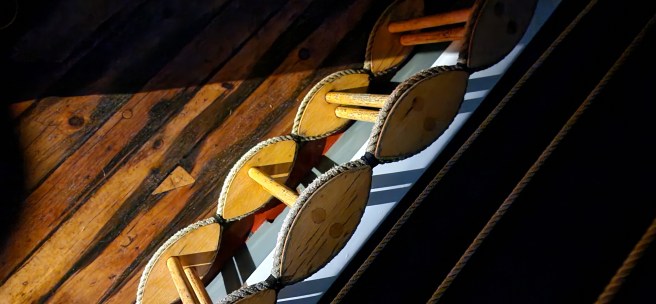
I’m so turned around
the overnight air was humid
we thought the early morning sun
was the moon
we could look at straight
like the nearly full moon
Sometimes, in writing, at least, starting at the end and moving forward is the way to go. Now that I had What’s Left as the ending of my hippie series, I could revise the earlier books to provide a more uniform development. I had hoped the process would involve simple tweaks.
I was wrong. A thorough overhaul was ahead.
Crucially, Cassia gave me a clearer idea of her father, the aspiring photographer. And in filling him out in the revisions, he went from being known simply as DL to Kenzie, to conform with What’s Left as well as present a more substantial figure.
She had also grown up at the edge of the campus where he had come to study. (Just as I had.) In my return to the university as a research associate, I lived at the far fringe of the college town and saw faces of the community that were quite different from my undergrad experiences.
Some of these played into her story, What’s Left, but others were woven into the transformation of his undergraduate years, what would emerge as Daffodil Uprising rather than Sunrise.
This time, it was more character-driven rather than action.
It’s also darker, including an ominous air and an admission that the hippie movement was often drab rather than psychedelic. Drugs and sex could have serious downsides, and Vietnam weighed heavily on the spirit.
Yes, Bloomington was a gloomier place than I had wanted to paint it, but now, thanks to Cassia, I could acknowledge Gothic and tragic sides – even a paranormal streak.
The plot was restructured into a full four-year chronology, and the hippiedelic excesses, as well as Kenzie’s situation of being a reincarnated Tibetan monk, were toned down or erased.
Age differences, from freshmen to seniors, took importance in the nurture of a student community. And there were significant new characters, including Lee Madbury, named after a New Hampshire highway exit sign.
The college dorm of the first half of the book was loosely modeled on the Men’s Residence Center, which was suffering from neglect on high. I am happy to see via Internet that what I call Mulberry Row in the book has been renovated into the Ralph L. Collins Living-Learning Center, one that’s not all males, either. Sometimes hard reality follows the dreams of fiction.
In moving the second half of the book more off-campus, I imported a large and once-impressive Victorian apartment house from my upstate New York hippie experience after I had graduated. Instead of having the Susquehanna (as well as the Upper Mississippi from yet another one of my personal relocations) just a block or so away, we now have the Ohio River. The distances do create a bit of a joke for folks closer to the action.
I originally thought Daffodil was about hippies. It’s really about the rise of the modern mega-university. David and Goliath with a dash of counter-culture in the face of the military-industrial complex. Really sexy stuff, right? Except that our kids and grandkids are burdened with huge debts in the aftermath of seeking its credentials. I’m thinking of it more as tragedy, with the focus essentially on Cassia’s future father, lost as he was. It might even be seen as a critique of the hippie outbreak. And did my failed engagement a decade and a half later also seep into the story? I was now looking at these events about a half a century later.
~*~
Cassia also gave me a clearer understanding of her aunt, Nita, who had functioned as guardian angel for her father in the campus years. In the revisions, Nita becomes a more central thread through the entire series.
And, thanks to What’s Left, Cassia was freed to comment on her father’s college years life. Why not? She had the advantage that looking back that history allows.
~*~
Cassia even had me adding subtitles to my novels. They’re commonly used for nonfiction, but somehow rarely for fiction. Well, why not? Adding “the making of a hippie” does give a browser (meaning a human rather than an online device) a clearer idea of what might be inside the covers. Should I have used that for the title, rather than what I did?
I do like the colorful batik flowerbed by MsMaya that now adorns the cover, even if I miss the bold single daffodil of the earlier version. To me, it more aptly conveys a sense of the era.
Daffodil The revised story now carries more heft and is, to my eyes, something of a baroque book.
Well, if Kerouac thought his experiences were remarkable, why shouldn’t I, looking at my own? And he did write in big bursts that released a lot of pent-up energy.
 Jnana's Red Barn