We’d get the phone call. “You promised a story.” We knew we’d been very careful not to do that. Instead, it was, “I’ll look into that” or “I’ll pass that along to the appropriate editor for a decision.”
My favorite was the caller who claimed to be good friends with the publisher, who had promised the coverage. Followed by our response, “You know she died twelve years ago?” And their embarrassed silence.
Of course, it’s not just stories.
People read into the most carefully crafted texts and then respond to only the parts they want to hear while tuning out the rest. Or they just plain tune out. It’s called the theory of cognitive dissonance. If they think you’re agreeing with them, they’ll bend the message their way. If they think you’re critical, they’ll shove you out altogether.
Often, all tripping over a tiny detail or two.
~*~
Oh, how I came to hate the telephone when I worked in the newsroom! If you want further proof, just go to my novel Hometown News.
In the aftermath of major disasters, the wire services run a list of victims, something I used to think was to inform the editors of local newspapers of potential links to their own circulation area. But then my boss told me to run them.
“Why?” I asked. “We don’t have that much space for wire news.” Meaning national and international stories.
“Everybody’s from somewhere,” he answered. And I soon learned how true that was.
In fact, here in New Hampshire, we’ve come to expect a Granite State angle in almost every breaking story.
Longtime visitors to the Red Barn are likely aware that I spent four decades as a newspaper editor – experiences that feed into my latest novel, Hometown News.
It’s meant working nights, holidays, and weekends – rarely on a schedule matching the general public’s. And it’s always meant “working under deadline,” where an internal clock is always racing to finish the task on time (or else!). In addition, it’s also given me some insider looks at the surrounding world itself: having a celebrity standing a dozen feet behind your back is just another regular occurrence. (For the record, they often look quite different than they do on television.) Even as a cub reporter, I saw dead bodies, got inside the county morgue, checked out small plane crashes, met ex-movie stars, faced some stiff competition from the pros on the rival paper. Looking back, I sense how often I was in over my head and wonder how I ever survived.
These experiences have also fed into the Red Barn’s category of Newspaper Traditions, where I’ve written about:
The best newspaper ever” The glorious final days of the New York Herald Tribune were like no other newspaper. Nothing like fighting hard to the bitter end.
Chancing Upon a Profession: Glenn Thompson’s influence hit me, among many others, in one medium-sized city. He had a knack for finding talent.
Hot Type: In the days before phototypesetting and then digital publishing, newspaper production was a highly skilled craft. Here’s an admiration for the long gone masters.
Living Under Deadline: When your career hangs on meeting deadline after deadline, with no room to spare, you begin to live differently from other people.
The Art of Writing a Headline: Trying to steer readers to a given news report with just four words can be a real challenge. Take it from a pro.
Editing Obituaries: Announcing someone’s death and funeral arrangements can be more precarious than you’d imagine. This post, one of the most popular at the Red Barn, became a WordPress Freshly Pressed selection.
Four Measures: Just what makes “news,” anyone? Here’s one take.
Police Calls, 10 P.M.: Well, there is some behind-the-scenes banter, even when calling the cops.
One Phone Call Too Many: And then sometimes the facts get in the way of what looked like a great story.
Local, Local: How you define “local” news can backfire when it comes to your readers. Especially when it’s boring.
Bias: Sometimes those who accuse journalists of being biased should first look at themselves in the mirror.
The Shrinking Page: Like many other products, the newspaper page has been shrinking. It’s about half as wide as it was when I entered the trade.
The Human Imprint: Not too long ago, the editors and publishers were well-known public figures.
Objectivity, for Starters: There really were some strict standards and practices.
Windy City Perspectives: The tower of the Chicago Tribune holds some special memories for me.
Painful Neutrality: Again, maintaining a discipline of objectivity comes at a personal price.
Free of the Entourage: David Broder was the best of the breed. I wish I’d said hi.
End of the Line: One of the last editors who put a personal stamp on a paper was David Burgin. Maybe that’s why he was always getting fired.
Get Out of the Way: Real reporters are invisible observers. TV’s imitation inserts itself on the story.
You Read It Here First: Plagiarism has always been a dirty practice. Here are a few examples.
Reality Check: When it comes to seeing “liberal media,” some people fall off the far right of the world. The one that’s still flat.
A Logical Conclusion: The more conservative the nation’s editorial pages become, the more circulation declines. Think about that.
Death in the Afternoon: The newspapers published in the afternoon once had the blockbuster circulation. Here’s why they vanished.
Beware of Unintended Consequences: There are times embarrassing things slip into print. Lewd expressions, especially.
Beware of Survey Conclusions: Marketing research can lead to bad choices. It helps to put the findings in perspective before taking action.
So Much for Romance: And then there was the reporter’s lament as he returned from covering a large singles’ mixer.
I invite you to visit or revisit the postings, especially if you’re new here. And I promise there are more ahead.
~*~
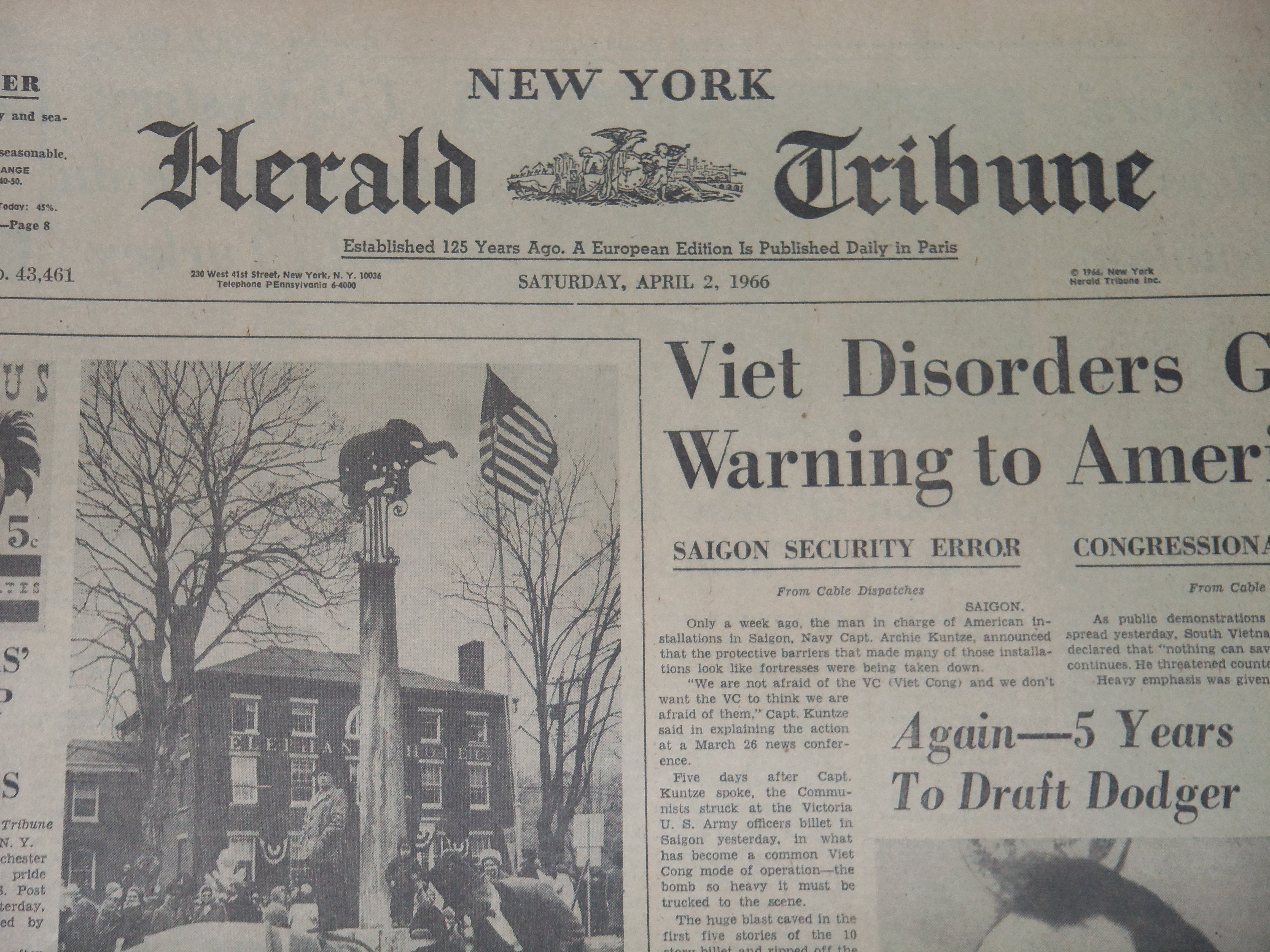
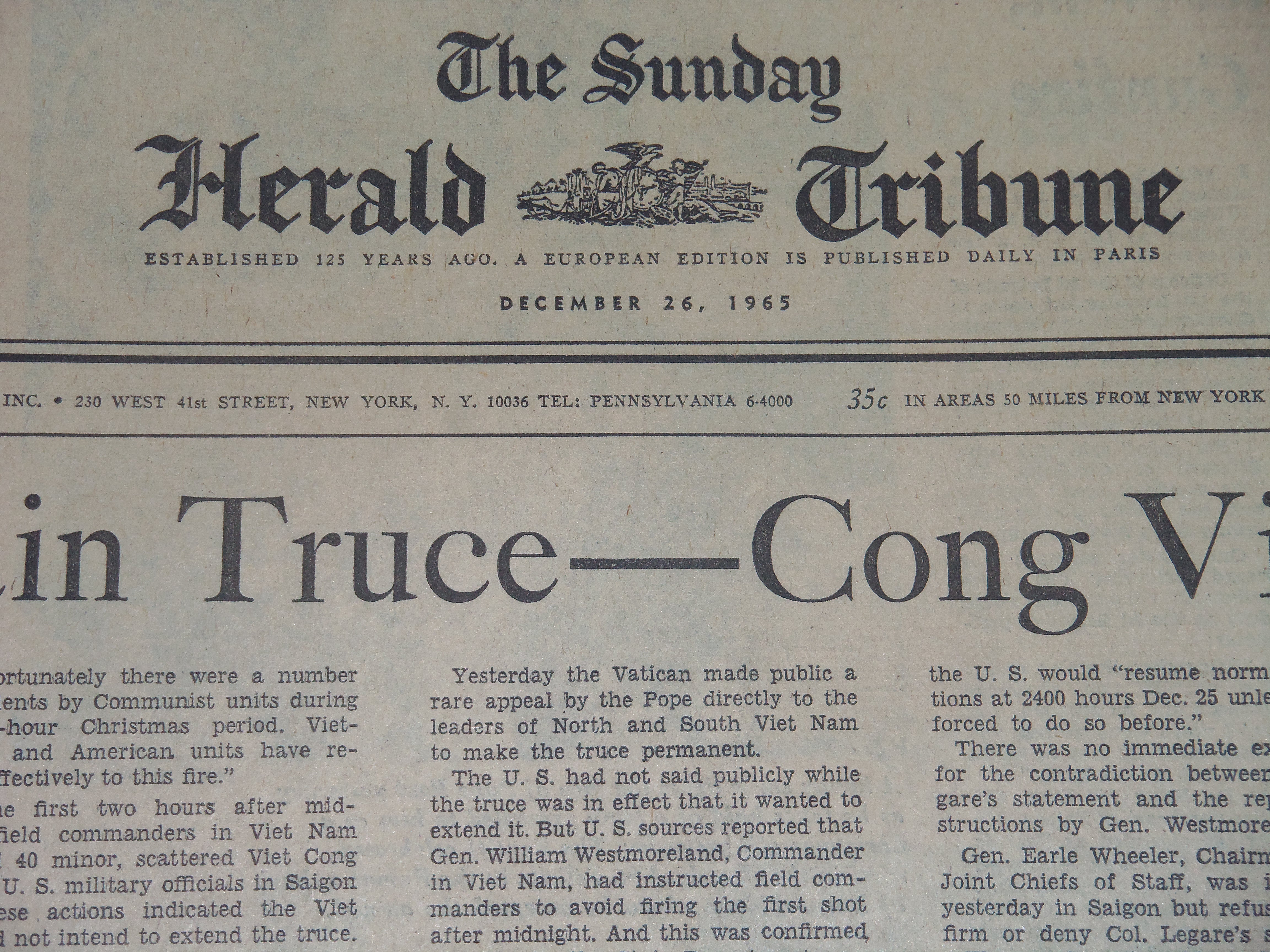
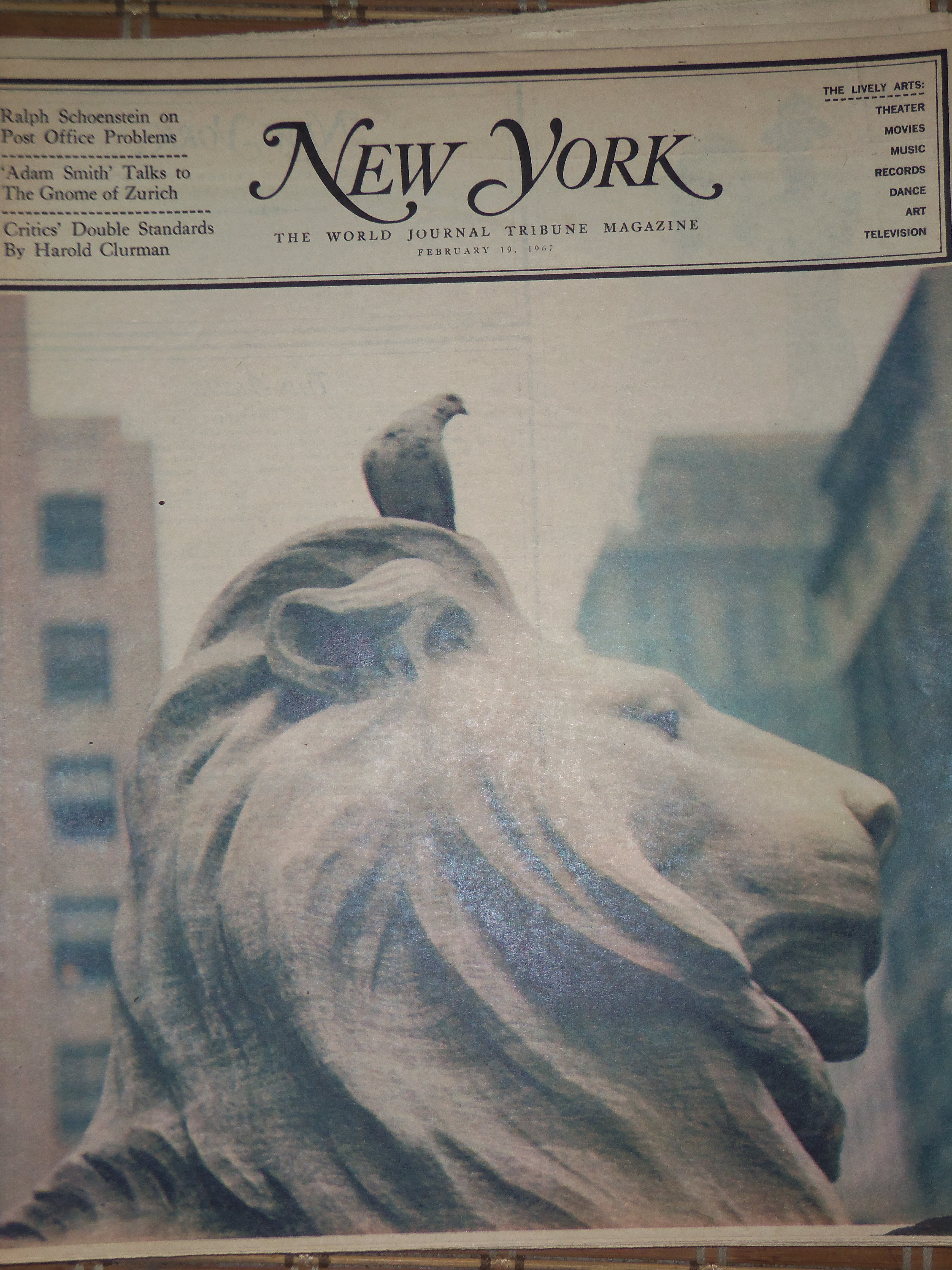
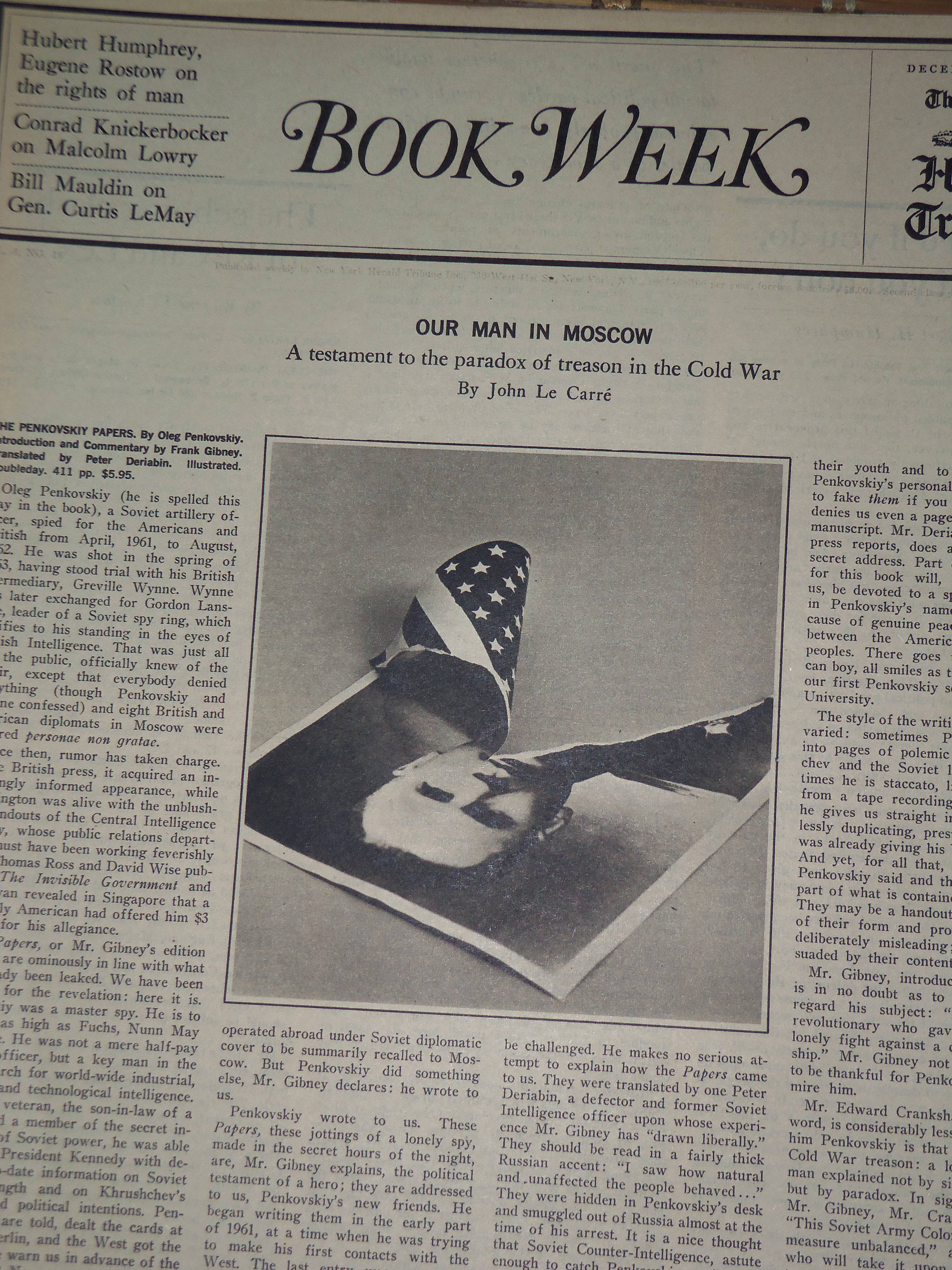
While we’re at it, here are some pages from the New York Herald Tribune’s final years, when it established itself in my mind as the most elegant and exciting newspaper ever. (Remember, I was still a teen and a budding journalist.)
The daily edition.And Sunday.
Among the Trib’s legacy was New York Magazine, which originated as the Trib’s Sunday glossy magazine. It was classic. And Book Week reflects a time when books were really important, at least in the eyes of the informed public.
The Sunday mag.And the books review section.
~*~
Not all of the exciting journalistic action took place in Gotham or Fleet Street or Chicago’s competitive shootouts, though.
Much of the most dedicated and innovative work emerged in small communities in the heartland where a few individuals could make an obvious difference. That’s the story I explore in my latest novel. In some ways, it’s Tom Peters’ Pursuit of Excellence meets Dilbert on steroids. It might even resemble some places you’ve labored.
~*~
To find out more about Hometown News or to obtain your own copy, go to my page at Smashwords.com.
Relying on survey results alone can be dangerous. One paper I worked for launched a very successful Sunday edition after a survey had told them, Don’t do it, it will be a disaster. Instead, the publisher trusted her gut – and won.
Around the same time, when Doonesbury was the hottest comic strip across the country, another paper’s survey told them it was the most hated item in the paper. Fortunately, another survey found that it was also the most popular.
I’ve learned to regard an intensity factor – not just whether something is popular, but how high in ranks on a scale. Yes, in those days, everybody read Peanuts, when you were looking at your top ten comics, but when you weighted for top-three intensity, it was easily topped by Garfield, Far Side, and Cathy.
So when it comes down to most hated or most loved, if you listen to the complaints, you turn boring and bland. There’s nothing to excite anyone.
I can look to symphonic programming with the same message. Yes, works by living composers upset a lot of listeners. But when you rely on the chestnut classics, you quickly turn stale.
Reporters and editors live in dread of accidentally publishing a lewd expression. It’s not just the list of four-letter words themselves or the inevitable typographical errors. (You know, the embarrassing “pubic” for “public.”) The innocent double-meaning can be the worst. The famous “Colonel Screws guest at banquet” headline that went through five or six editions before getting caught. Or the caption for the Supreme Court justice about to climb the staircase to a second-floor dinner: “Justice Douglas prepares to mount women” instead of “mount stairs with women.”
As one of our colleagues would remind us, quoting one of his mentors, “It takes a dirty mind to put out a clean newspaper.”
It used to be that every city had two newspapers – one in the morning, another in the afternoon. Or more. One was Republican, at least on its editorial page; the other, Democrat. You had a choice, and you had keen competition.
Frequently, the afternoon paper had the bigger circulation. Often, too, it concentrated on the hometown news and features, while the morning rival took a more serious tone, including more national and international coverage.
But then something shifted: afternoon circulation numbers began shrinking. We thought it had something to do with what we were publishing. The reality, however, had to do with the workplace. First, fewer Americans were working in factories – they weren’t getting off at 3 in the afternoon and heading home. And second, fewer workers were taking public transportation – they were driving, instead. And that meant they weren’t reading one paper while waiting for the bus or the train, and then reading the other for the return trip. As for the leisurely late afternoon before supper, it had vanished: they weren’t getting home until 6 or later.
One by one, the once prosperous afternoon editions folded or moved over to morning. And now you know why.
As far back as three decades, when I was selling editorial-page columnists and cartoonists to newspapers, even openly liberal editors had become shy of picking up anything except conservative voices.
As a consequence, we’ve had no new voices to speak from the left, especially not in general syndication. Think about it.
Meanwhile, newspaper circulation has been plummeting.
Could it be those conservative voices are deadly dull? (At least, when they’re not shrill?)
Not long after arriving in town, I was walking past the managing editor’s office, which was crowded with three heavyset men accusing the Union Leader of being liberal media.
This was the same paper the Boston Globe’s news columns always called “the archconservative Union Leader,” never mind that by this time the political expressions stayed in the editorials and opinion page.
Still, it made me realize how far to the right some of the criticism originates or how isolated from the mainstream it exists. Or even how far it deviates from commonly accepted definitions.
Once, as I was being escorted around the Detroit Free Press newsroom, we bumped into a nationally syndicated columnist who was being given the VIP treatment.
Since I, too, was a guest, I had to bite my tongue.
A few weeks before, he’d ripped off the opening paragraph of our copyrighted lead story in the Yakima Herald Republic and opened his own column with it, nearly verbatim, without attribution.
As you know, that’s plagiarism – intellectual theft.
Despite heightened efforts to stem it, I suspect it’s long been part of the public information stream, to one degree or another.
Once, for instance, a small-town radio personality read my published concert review word for word over the air as if he had been there. Again, no attribution.
Or a Monday TV newscast read a photo page, without the photos, as if it was theirs.
More recently, we’ve had to shake our heads each time a certain television station says “W*** has learned,” because we know it’s code for “W*** read in this morning’s Union Leader.” At least they’d rewrite the story.
And then there were all of the charges and countercharges between the wire services and the big city papers, each accusing the other of taking stories and putting new bylines at the top.
But that could lead me to tell of my experience as a cub reporter at the Cop Shop (police station), where the rival newspaper ran my piece as its lead the next day. The reporter whose name appeared at its beginning had taken my carbon paper draft from the waste can.