DESERT DANCES

Appealing to the heavens for rainfall was only one of the reasons for dancing. Your feet could pray as well as your hands in this landscape.

~*~

Somehow, the novice begins dancing, if only in his head. Something simple, at first, until familiarity gains ground. Feet, legs, torso, arms, and hands eventually follow. A reel leads into a jig. Thought and emotions balance. Head and heart dialogue. With confidence comes freedom. More and more, the aspirant concentrates on partners or the group or motion itself, rather than his own next step or position. The music becomes more textured, until the hornpipe stands as the liveliest structure. So it’s been in this landscape. This is not just any desert, for there’s nothing generic about any detail encountered closely. With both people and places you come to know dearly, you find nuances and subtle contradictions will blur any sharp image. It’s easier to describe someone or something you meet briefly than what you know intimately. To say desert is dry and sunny misses the point, especially if you arrive in winter. At first, like so many others, we didn’t even consider this valley as desert, for it has no camel caravans or mounds of shifting sands with Great Pyramids on the horizon. One word or phrase can be misleading. Even the Evil Stepmother from folklore and fairy tales must have possessed some redeeming qualities. Could we be more specific than “evil”? Simply selfish? Or was she mean, jealous, domineering, afraid of whatever, from the wrong party? Suppose she was really a victim of some deep abuse? The portrait changes. Has anyone detailed how she dances? In the end, it’s either entertainment or worship, depending on the individual’s orientation.

~*~

Kokopelli 1For a free copy of my newest novel, click here.

END OF THE EARTH

The mythologies of Greece are easily countered by those of India, China, Tibet, and Japan in the Native tales of the Olympic Peninsula and the coastal tribes of the Pacific Northwest.

Sit down by the fire, then, and listen. Some of the voices are millennia old.

~*~

For a free copy of the complete American Olympus, click here.

Olympus 1

WHILE SUBMITTING TO LITERARY JOURNALS

As I said at the time …

It’s a quirky process, this exercise of seeking homes for personal work – the reactions of editors and readers so idiosyncratic and varied that the same piece can be considered too intense, by one, and not raw and bloody enough, by another. I can never predict who will accept what, no matter how long I’ve known a publisher or journal.

Contributor’s note? Just say I hope soon to be tent camping again.

THE SCOUT HOUSE

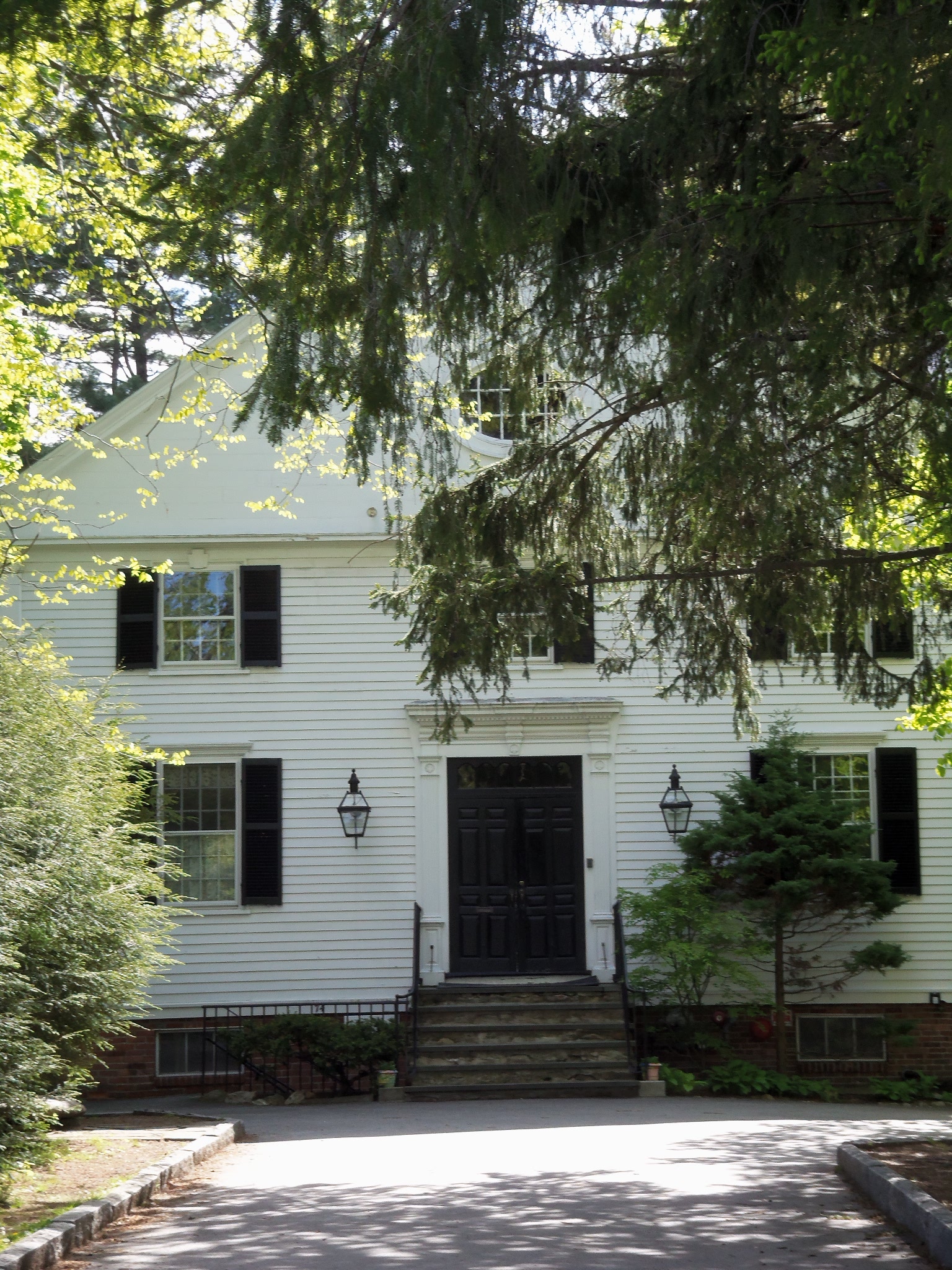
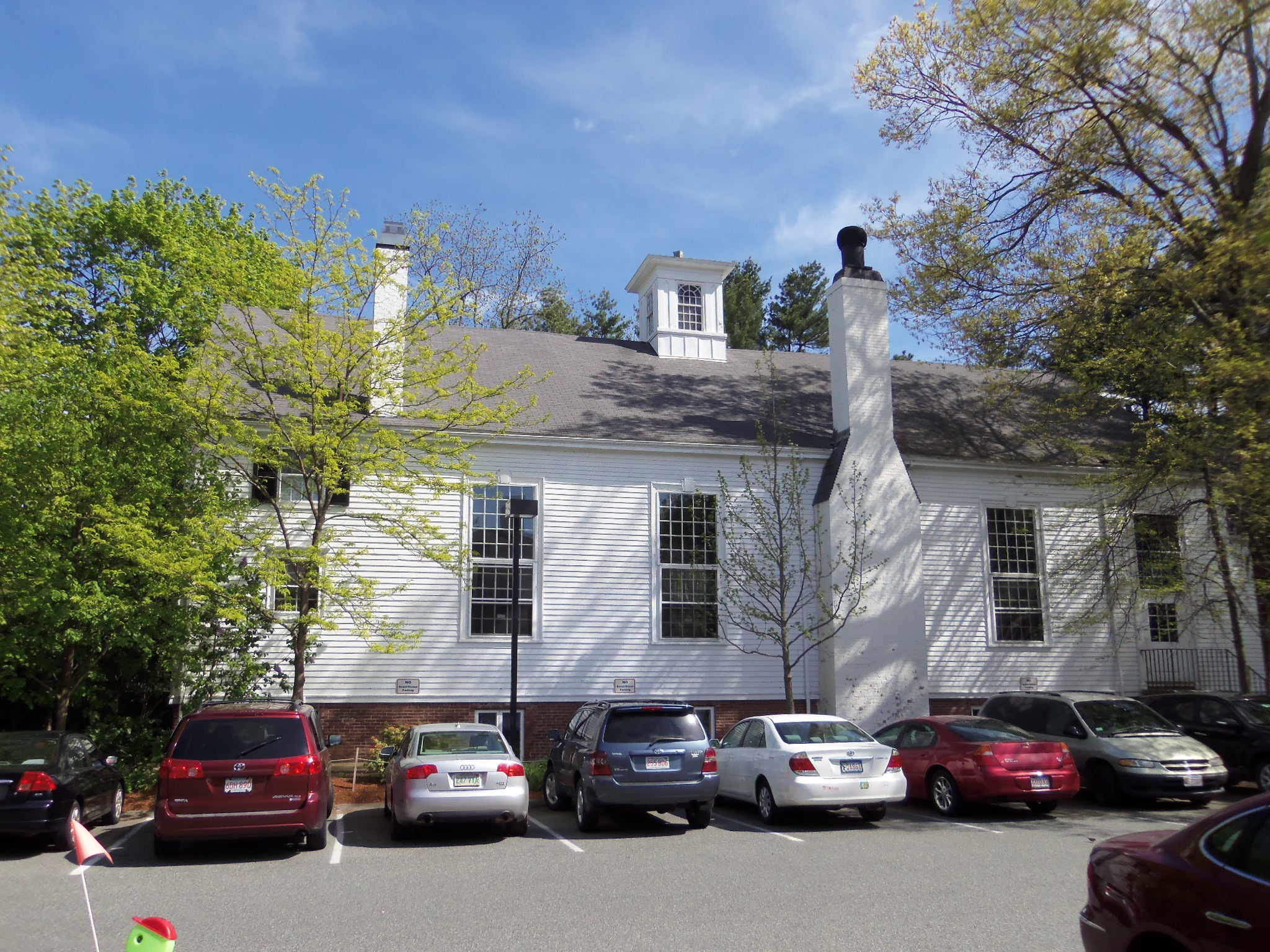
The tradition of New England contradancing flourishes inside the Scout House in Concord, Massachusetts – a former barn now owned by the Girl Scouts and rented out by the folklore enthusiasts. Monday nights are legendary, and weekends are packed.
Seen from the side.
Seen from the side.


LIBERATING IN THE END

A central question facing compositional artists of all stripes (in contrast to performing artists like actors, dancers, and musicians) is the matter of determining when a work’s finished.

How do you know?

Is just out-and-out satisfaction a measure? A trusty one? Hmm.

Let me suggest some others.

Sometimes it’s a sense that you just can’t go any further with it. And if it’s in a state beyond notes and fragments, maybe that’s it. You’ve hit a wall, a property line, or just the shore or riverbank. So you stop. Period.

There are times, admittedly, when you think something’s finished and put it aside only to find, on returning, it needs more – revision, for starters, and maybe additions and major restructuring. (A friend spoke the other evening of drafting a memoir in the third-person and then redoing it in the first-person, the kind of change I’ve done in some of my fiction. And Brahms had an early symphony that became a piano concerto, if I recall right.)

Working under a deadline can simplify matters. Time’s up! Next!

Nice, if you happen to have an advance or pipeline of delivery or the concert’s coming up.

Novelists might even find doneness appears as the time they find their focus obsessing with the book under the one they’ve been tackling.

Some poets will say that once it’s published, they can let go of it. Finito!

~*~

In the bigger picture, the “finished” question isn’t just about having a manuscript ready. For a writer, it’s ultimately about landing the work in a reader’s hands. A place where a dialogue can begin. And getting that manuscript from a polished draft into circulation can be a huge, energy-depleting limbo, especially if your life is filled with competing claims on your time.

In short, you can either focus on seeing that one work through to publication – or you can create the next one, while the inspiration’s still hot. For me, as I tried to balance my writing life with a journalism career, personal relationships, spiritual practice, and so on, I wound up with a huge backlog of finished material. At least I’d wisely not put off the writing for retirement, as had a number of colleagues I’d known – none of them ever managed to fulfill that dream.

What I did find, though, was that the unpublished work became a burden of its own. Its emotional weight inhibited new work. Why bother? It even had a way of twisting my sense of identity – who was I then and who am I now? Think, too, of the relationships that fed into one work – and the people I’m with today. As in lover or spouse.

So the experience of having my book-length works finally being published brings the “finished” consideration across yet another threshold – the matter of being liberated. I can let go of trying to hold that memory, treasuring that epiphany, honoring that friendship.

Should I have just trashed them long ago and moved on into other, non-literary endeavors? Just think of the hours that could have been directed instead to overtime pay, which would make my retirement more secure. Or travel or …

Maybe it’s just a case of hoping for acknowledgement. Hey, here I am!

Still, it’s what I’ve done.

What I have is a feeling of being true to a responsibility carried to its completion at last. What happens from here is, well, liberating any way it goes.

BACK AND BACK AND BACK

As I said at the time …

You’re home once more, with many fresh laurels, I hope. On my end, the computer’s fixed and I’m dancing with some frequency again. At least between some heavy allergies. (Birch pollen at the moment; pine comes soon.)

I’m still in shock from Sam Hamill’s “To Eron on Her Thirty-Second Birthday” – she’s always a twelve-year-old tomboy in my memory! Impossible, it seems. And that was back when I was still married and my wife studied painting under John Bennett’s wife, Ellensburg, Washington … back in his Vagabond days. Small world. Am still trying to figure out when and where I heard Bill Stafford read. Yakima Valley College, I believe. Will the parts of my life ever come together?

Yes, you certainly are a moon-child, with all of the sign’s gentle humanity. Violet, a variant of purple, the cancer-sign’s color. Star, like the moon, of the moody night. Well-named, it seems! For whatever reason, more of my serious relationships have been with women born under the sign of Cancer than with any other; in fact, there have been no Gemini or Libra, which are supposed to be a natural fit for me. Go figure!

~*~

My, what ancient history this, too, has become!

TAKING WHOSE TIME?

Got a rejection letter last week. All authors, and especially poets, are used to them. What was striking for me was that I hadn’t sent off any hard-copy submissions in the last three years. Repeat, THREE years.

As I’ve explained, a while ago I shifted over to online-only submissions as a consequence of much higher acceptances that way and of simplifying the difficulties of trying to maintain duplicate sets of files. (One for online, and a duplicate for hardcopy.)

So it took the editors of this particular journal more than three years to decide? What’s their problem? No wonder they’re feeling swamped!

This also touches on the issue of exclusivity in sending out work for publication. In the old days, meaning when I started, you didn’t dare send your work simultaneously to different periodicals. It was more a kind of serial monogamy. Or serious business.

Although the hard-and-fast requirement started melting, I stayed with exclusivity more as a matter of keeping track of what was out where – but I did keep an unmentioned caveat: after six months, if I’d heard nothing, it was fair game to send out again. In more than a thousand acceptances, I don’t recall more than a half-dozen cases where this became a problem.

Suppose I could look up the five poems to see if they’ve been published elsewhere in the interim, but frankly it’s not worth it.

You might have even seen them here, at the Barn.

NEW ENGLAND COLLEGE ART MUSEUMS

Some of the best art museums in the country are found at New England’s universities and colleges. In other parts of the country, the larger ones would be the region’s jewel. But here they often sit in the shadow of some pretty powerful competition. Some, like Harvard, charge admission, but others are blessedly free.

A crown jewel at Harvard.

Here’s a sampling from our travels and travel plans:

  • Yale University Art Museum, New Haven, Connecticut: Reopened after extensive renovations, this is quite simply the best university art museum in America; possibly, the world. And admission is free.
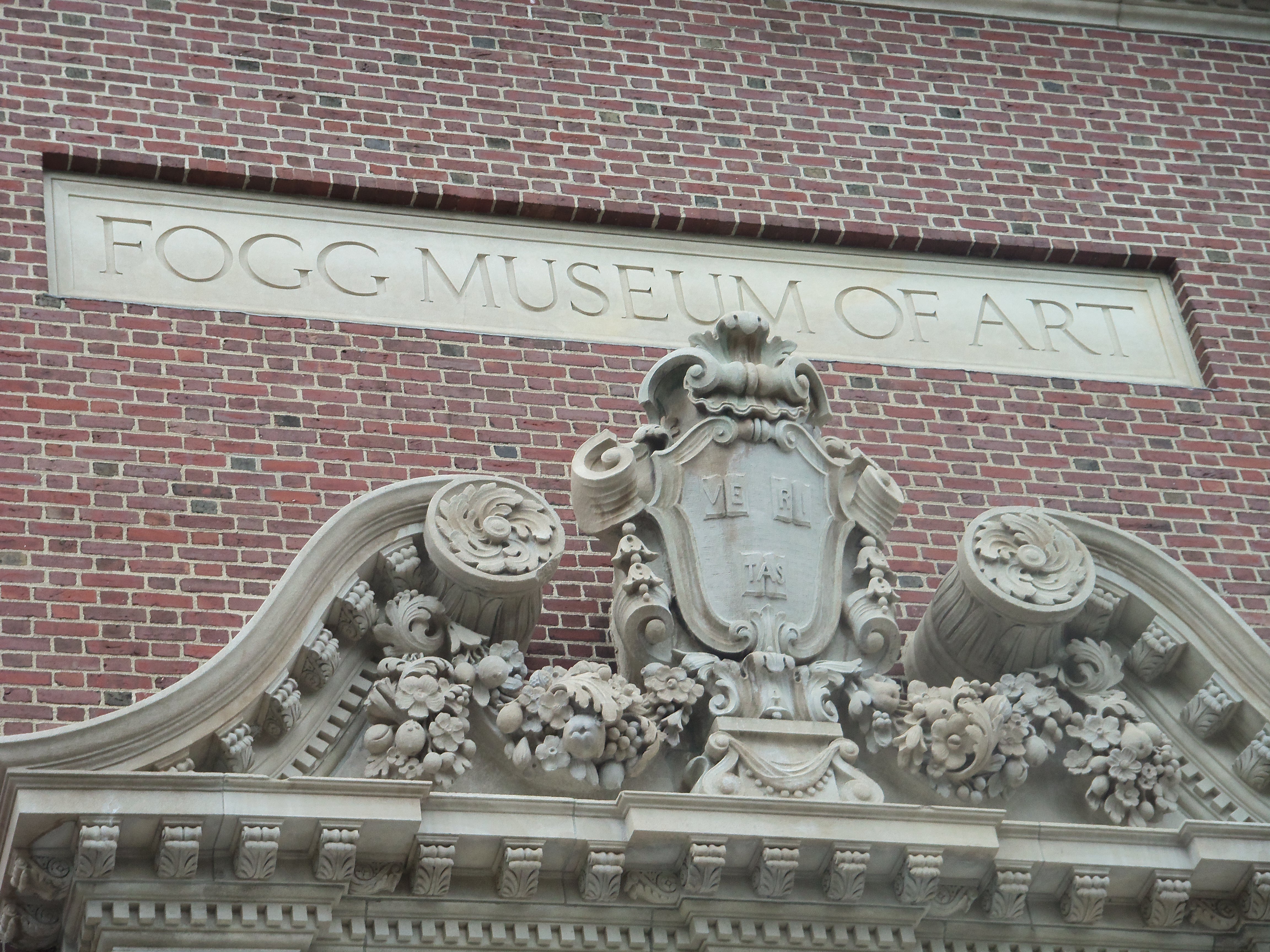
  • Fogg Museum, Harvard University, Cambridge, Massachusetts: This newly renovated jewel delivers a fine array of Old Masters, although I’ll emphasize its Turner, Blake, and Whistler for variety. Admission ($15) includes the Sackler and Busch-Reisinger boutique galleries, now under one roof for the first time, thanks to a contemporary, glass-pyramid roofed addition by Renzo Piano Building Workshop.
  • Smith College Art Museum, Northampton, Massachusetts: I wasn’t braced for the magnitude of this collection when I zipped out for an hour lunch break during committee meetings just down the street. I’d run into examples from its collection in art books (it has five Childe Hassam paintings on display), but its range of Impressionists and outstanding regional and American landscapes is worth the whirlwind, even before getting to the old European masterpieces. Am I off-base in thinking this display nearly rivals Harvard’s?
  • RISD Museum, Providence, Rhode Island: As the collection for the Rhode Island School of Design, New England’s premier art school, the museum is smaller than one might expect, with a respectable sampling of earlier eras, often masterworks by lesser known artists.
  • Williams College Museum of Art, Williamstown, Massachusetts: An unanticipated but celebrated gem in the western part of the state. We’re told it’s worth the trip.
  • Hood Museum of Art, Dartmouth College, Hanover, New Hampshire: Wonderfully diverse, with uncommon awareness of the Americas and Africa, it mounts an impressive array of special shows and is part of the Hopkins Center for the Arts.
  • Bowdoin College, Brunswick, Maine: Small, with some emphasis on the regional past and the founders’ roots in its permanent collection. Renovations unveiled in 2007 more than doubled the exhibition space, moving the entrance to a glass cube to one side of the building and opening the basement level, where visitors now begin their tour. The special exhibits make for some exciting use of the facility — a recent trip for me included a focus on Marcel Duchamp and his influence, downstairs, as well as prints by Dutch master Hendrick Goltzius, upstairs.

WRIGHT AND MORE WRIGHT

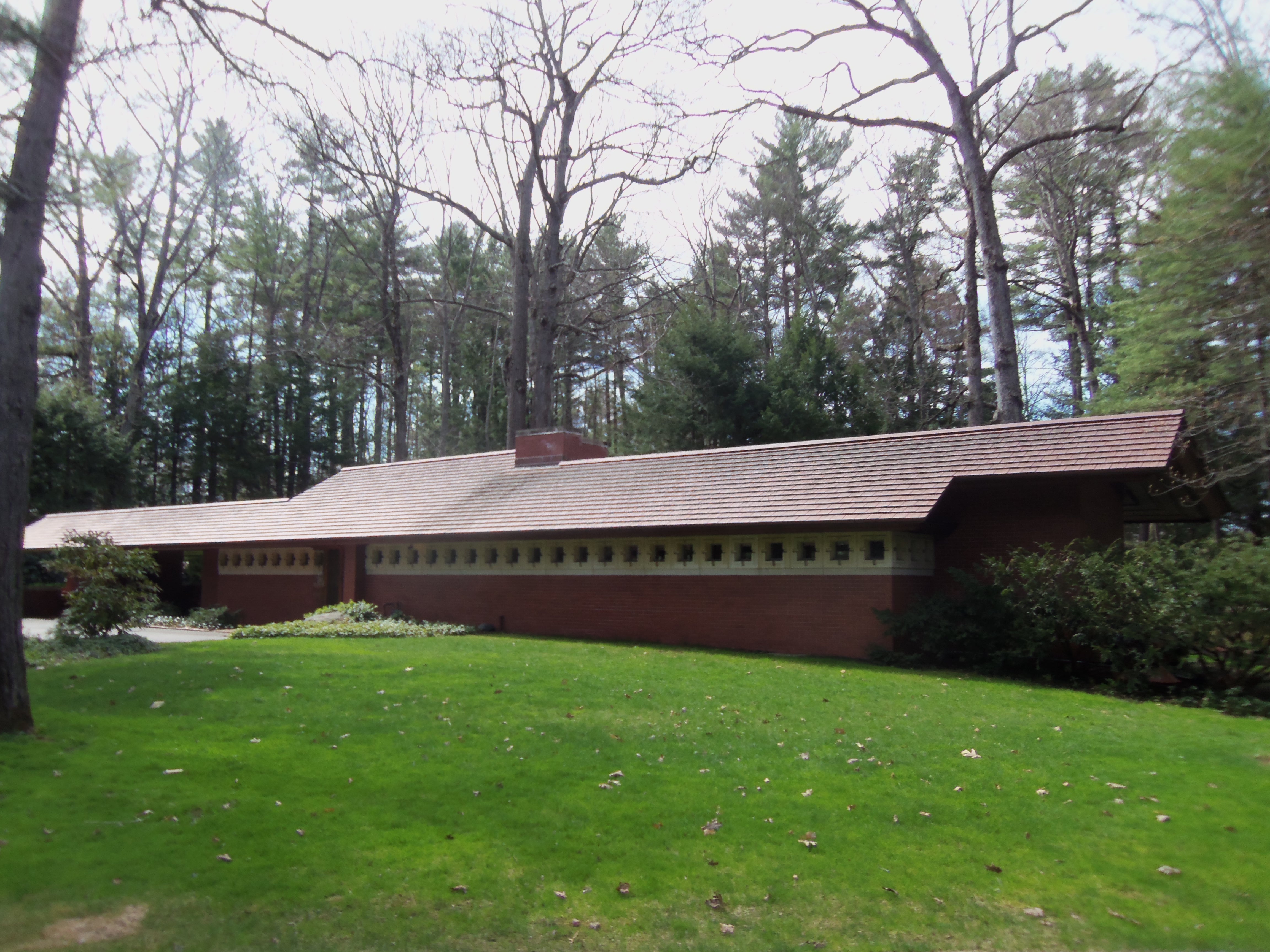
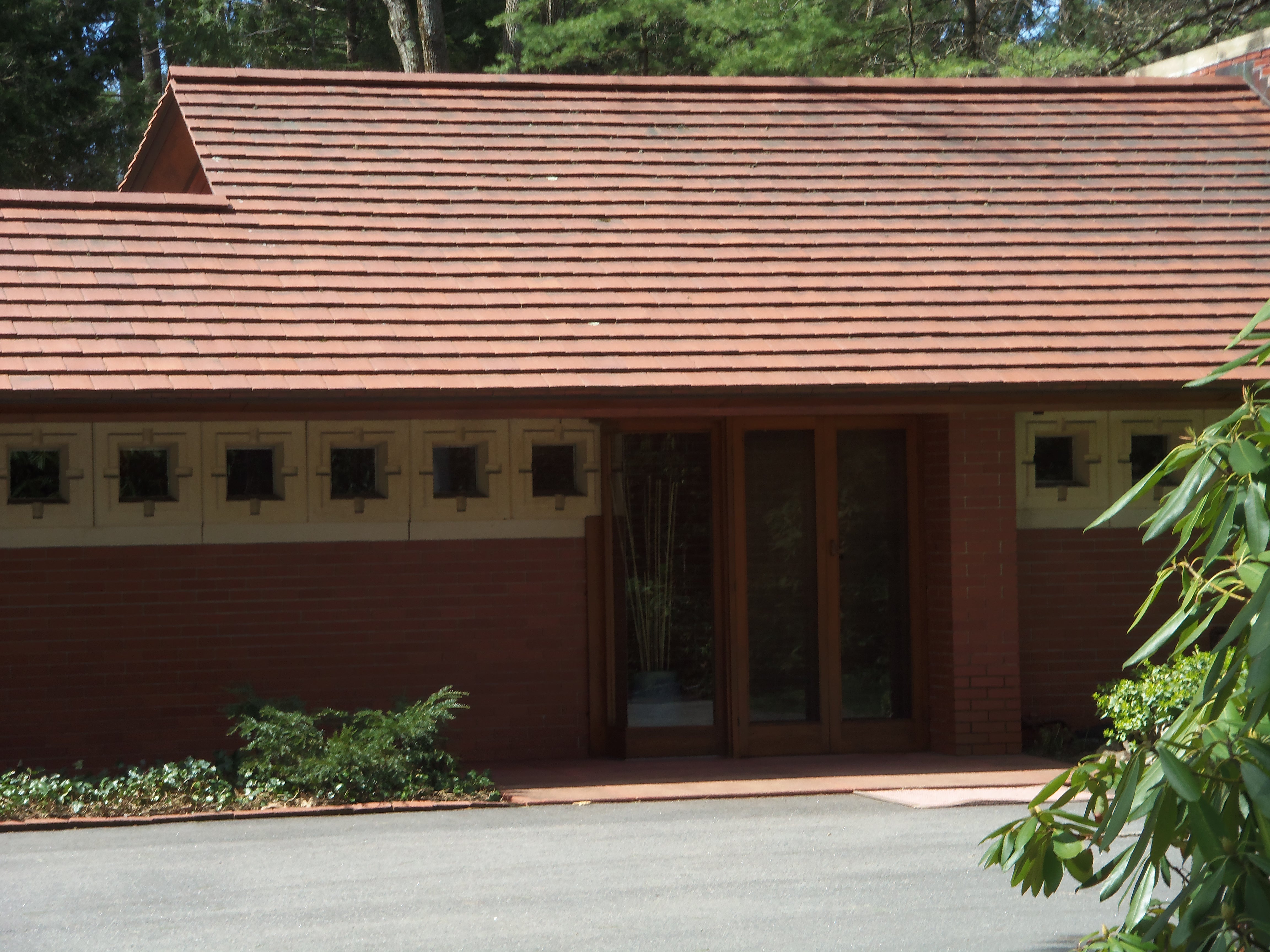
The Zimmerman House in Manchester, New Hampshire, is one of the few Frank Lloyd Wright structures in New  England. I remember chancing upon it on an evening stroll and thinking, "It's either by Wright or one of his students."
The Zimmerman House in Manchester, New Hampshire, is one of the few Frank Lloyd Wright structures in New England. I remember chancing upon it on an evening stroll, looking at the lights in the windows, and thinking, “It’s either by Wright or one of his students.”
Now owned by the Currier Museum of Art in Manchester, New Hampshire, it's open for tours.
Now owned by the Currier Museum of Art in Manchester, New Hampshire, it’s open for tours.
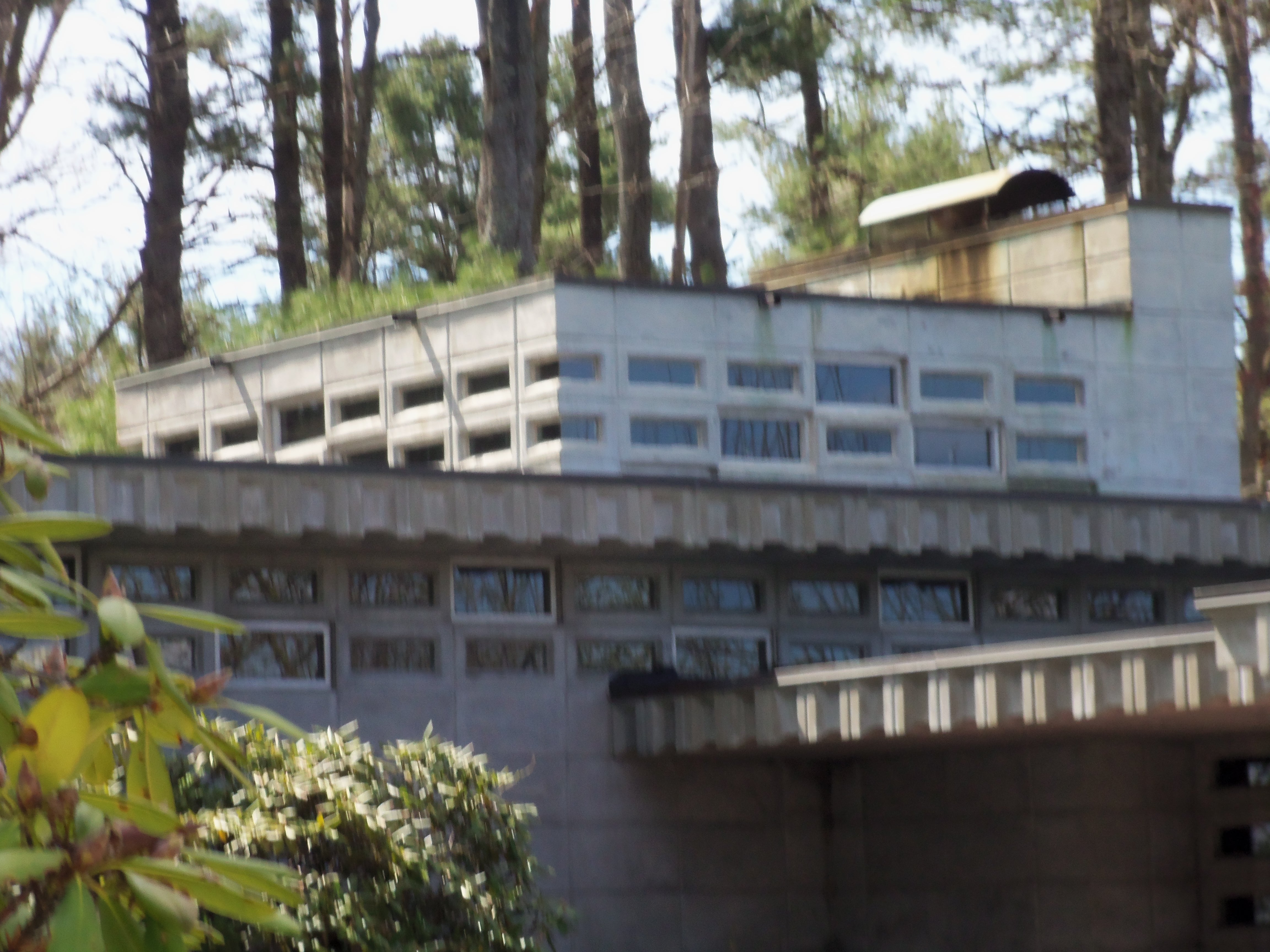
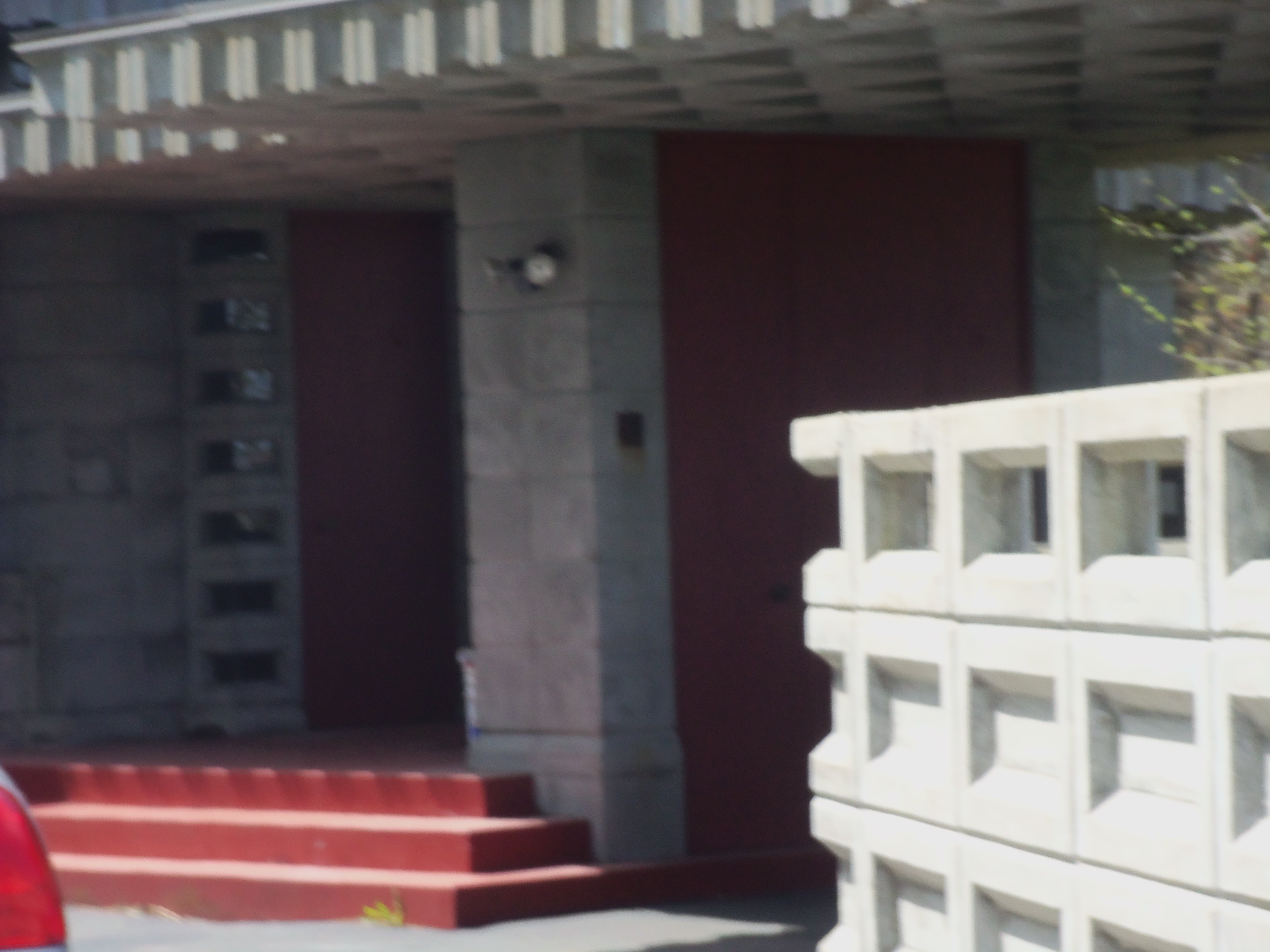
Just a block away, though, is an example of his more mass-produced Usonian project.
This one's still a private residence.
This one’s still a private residence.


NEW ENGLAND ART MUSEUMS

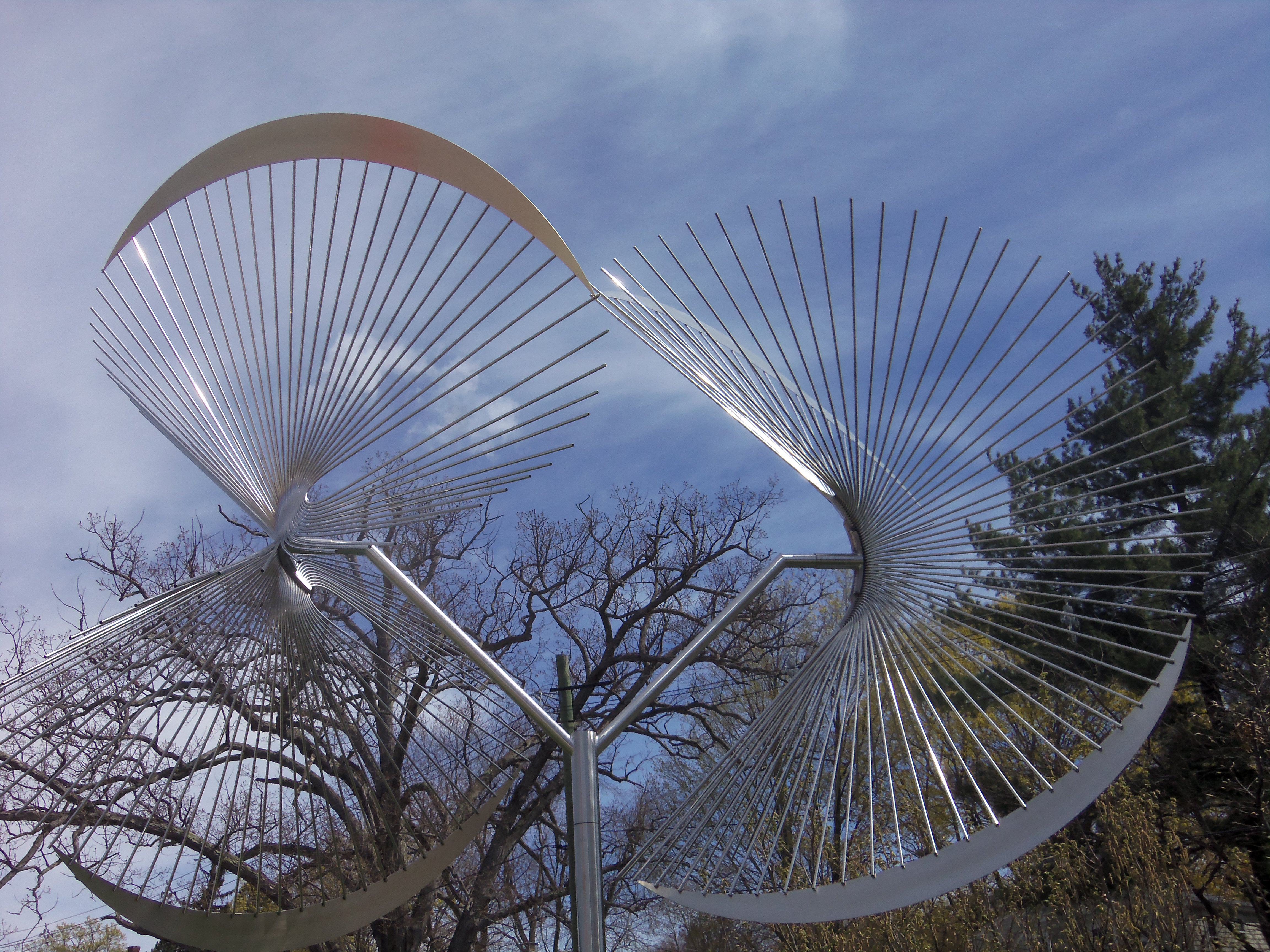
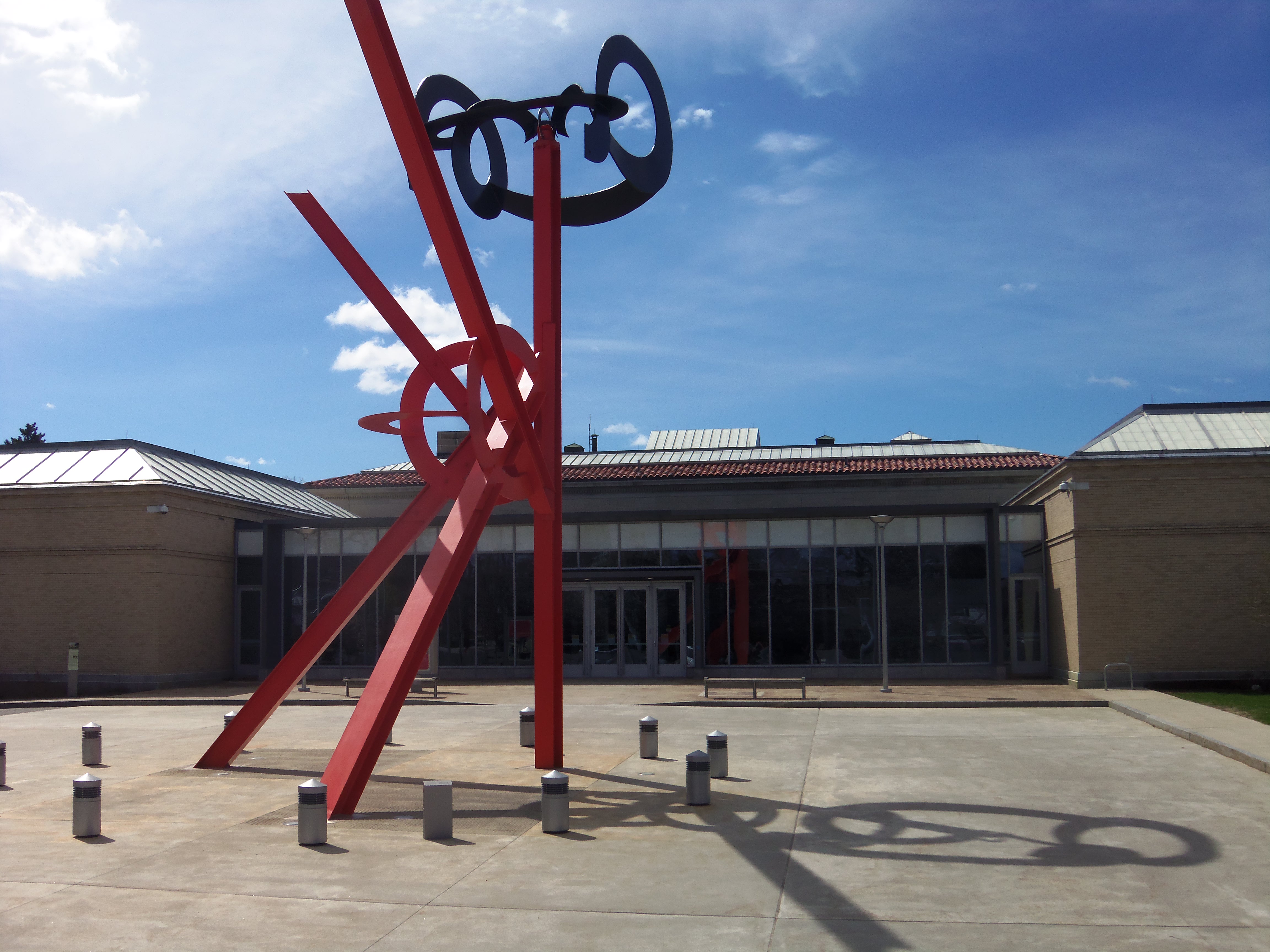
A fitting fanfare as a welcome in Manchester. It moves in the wind.

Growing up in the American Midwest, I had the impression that New England was, well, uniformly cultured. Moving here at the end of the roundabout route that emerged, however, I was surprised to discover how unevenly that Culture was distributed. It was essentially centered in Boston. Or more specifically, Huntington Avenue in the city’s Back Bay neighborhood, in the Theater District, Museum of Fine Arts Boston, and Symphony Hall, plus Harvard Square in Cambridge across the Charles River.

For perspective, New England has only one major-league professional orchestra, the Boston Symphony, compared to eight in the Midwest – Cleveland, Cincinnati, Detroit, Chicago, St. Louis, Kansas City, Milwaukee, and Minneapolis. (Well, maybe seven these days, after the disastrous events in the Twin Cities.)

The underlying reason, I’ve sensed, arises in the historic ownership of New England’s economic base – the textiles mills, especially, along the rivers and streams – by the fabled Boston Brahmins. In other words, while New England’s products sold around the globe, the profits flowed into Proper Bostonians’ mansions, and these, in turn, endowed the great cultural institutions.

*   *   *

The Currier Museum of Art in Manchester, New Hampshire.

The region’s art museums, on the other hand, provide another slant on this legacy. I’ll argue that the largest, wealthiest galleries are not always the most exciting; when it comes to art collections, quality is often based on the gifts of a few insightful, daring donors. Since we frequently visit museums when we travel – and art museums, especially – here’s an overview of what we’ve found. Admittedly, we’ve missed some.

  • Museum of Fine Arts Boston: The Grand Dame comes with a stiff admission fee and all the air of a leading museum, and her strengths are impressive, indeed, especially in Impressionist painting and Asian artifacts. But there are also some glaring gaps, especially in Old Masters. The new American Wing has at least brought one shortage up to snuff.
  • Isabella Stewart Gardiner Museum, Boston: A block away from the MFA, Isabella’s quirky “playhouse” on the Fenway is one you either love or hate. With its galleries circling an impressive indoor garden, her idiosyncratic assemblage is displayed exactly as her will demanded; undisputed masterworks are left hanging between many third-rate paintings, detracting from the experience. Still, the egotism, pro and con, remains staggering.
  • Worcester Art Museum: Considering the current economic condition of New England’s second-largest city, the collection comes as a delightful, comprehensive surprise. From its powerful pre-Columbian gallery on the top floor through the Americans and the Old Masters below, visitors will find themselves richly rewarded. One small room featuring New England’s Childe Hassam and Edmund Tarbell is both confident and moving, an example of the wise presentation throughout.
  • The Wadsworth Atheneum, Hartford: The glory here is the large collection of American Illuminist paintings (a term I prefer to the Hudson River School), but the routing through the rest of the otherwise impressive collection becomes jolting. We are not led smoothly around, but rather thrown from dark Colonial rooms into brilliant Modernist department-store presentation and then back into dark caverns again. Senselessly disturbing.
  • Peabody-Essex Museum, Salem: Originating in the “cabinets of curiosities” ship captains were expect to bring back for display in their hometowns, this institution’s transformation into a vital force is a model of building upon a clearly defined mission. Recognizing Salem’s role as a principal port in historic China sea trade, the collection focuses on Asian art (both the works manufactured for export and works intended for native use) and on the region’s seafaring riches. I love the bowsprits and captain’s logs as much as the Korean and Japanese galleries. Many of the special exhibits have been incredible. Surprisingly, it claims to be among the 20 largest art museums in the country, based on its holdings.
  • Currier Art Museum, Manchester, New Hampshire: Here’s a moderate-size museum that has a wonderful sampling of art history, some renowned pieces from the 20th century, and justifiable pride in the Granite State’s own artists and traditions. Well worth revisiting.
  • Portland Museum of Art, Maine: Its Impressionist collection is a major coup. New York wept when the key donations were announced. Need we say more?
  • Farnsworth Art Museum, Rockland, Maine: Quite the surprise in a small working-harbor town on Penobscot Bay. Lively works of our own time, with a focus on Maine … and not just the Wyeths. Alex Katz, for instance, has helped the collection make some impressive purchases. We were delighted by a recent major show of Shaker artifacts, mounted with assistance from the only surviving Shaker colony, the one at Sabbathday Lake in New Gloucester.
  • Ogunquit Art Museum, Maine: This small, seasonal, seaside museum made its way into our hearts with a special exhibit of Edward Hopper paintings that turned out to be made on and around the site.