EVERYDAY BEAUTIES, IN RETROSPECT

After recently coming across some now-historic Playboy centerfold playmates online – models we adolescent boys worshiped – I was struck by how average they were in retrospect. Not surgically enhanced nor abnormally thin waists nor even fashionably tall, as we’ve come to expect. Even their hair looked like the girls we knew – or dreamed of knowing.

Looking back, let me say it was the smile, more than anything, that got us.

And then, in the midst of the sexual revolution of the hippie era came a feminist rejection of Hugh Hefner’s free-love philosophy, even as events pushed far beyond his now pathetically comic hedonism. Quite simply, he went one way and we went another.

Yes, the glossy periodical was a rich patron for short-story writers and novelists, interviewers, and cartoonists, no matter the reality they were window dressing all along. Still, in many ways, Playboy appeared as a hip rival to the more staid New Yorker. For a while, it was even Chicago versus Manhattan in the realm of publishing.

And then Penthouse and Hustler attacked Hefner’s little empire from the other side of the respectability divide.

Oh, how long ago that all seems!

These days I’m reflecting on the magazine’s admission it can no longer compete with the nudity that’s readily available online for free and its decision to go more respectable, as Esquire did decades earlier. No more centerfold? Wasn’t that the magazine’s identity? What else has been stripped away?

In light of today’s world of publishing, let me say, Best wishes!

Especially considering Tinder and the rest of the new social-media lifestyle.

TOO BIG FOR WONDER WOMAN? OR SUPERMAN?

My thinking on this starts with the lone-ranger or small-time candidates for the White House, some of whom actually have some good ideas about governing or the direction to take on specific issues. But then it expands to the demands of managing the full scope of the job at hand.

You know, even on a single issue, there’s the gap between thought and action. Or more specifically, between having an idea and pushing it through a hostile Congress, on one side, and the layers of bureaucracy assigned the task, on the other. How do you really know what’s happening at street level? Or how it would work there?

We see many policies that look good on paper but when put to the daily test of everyday people just don’t work out. Think of income-tax credits that are still out of range of helping a minimum-wage two-worker household. Go ahead and add to the list.

In other words, something looks one way from the top and quite different at the bottom. It’s a malaise that affects every multilayered organization, too – if you want to survive in your job, you tell the boss what he wants to hear. Add to that the way we bend a report to fit our preconceptions – if you like it, you bend it fully to your side … and if you don’t like it, you reject the entire package. (That’s the theory of cognitive dissonance, if you want more.) If you’ve ever played the game of “telephone,” you see how it works going around a circle. The word or phrase whispered in one ear at the beginning comes out sounding quite different at the end.

Making a good decision requires solid information to begin with, and that means having alternative sources of data to cut through the skewering of upward filtration. But it also requires moving the information down, and that’s where the lone-ranger candidates are most vulnerable.

I’m always amused by those who show up in New Hampshire and plunk their registration fee down thinking they could run a country. Some have never held public office before – not even city council or a school board seat. Some have run a business of some sort, but nothing of a scale of a state government or major city, much less a Cabinet department. And they think they can get an entire cadre of people to move in step together? I want some evidence before we get to any on-the-job training in public administration. Especially when it involves the most demanding job in the world.

The reality is that the presidency is not primarily an ideas-focused position. It’s people oriented.

That’s where I start to look at the candidate’s ability to put a campaign team together. Yes, fundraising’s part of it. But so is recruiting smart, dedicated people. How disciplined are they? How reliable? How mature? What connections have you established?

All of this quickly winnows out the lone rangers.

More and more, though, it’s also making me nervous about those survivors who wind up, however briefly, on the white pedestal. I don’t think a mere human can fill the expectations. Maybe even the expanding requirements.

And unlike Plato, I sense a philosopher-king could never possess the essential knowledge of daily life in arriving at a decision or enacting it. Why do I get the feeling the lone-ranger candidates seem themselves in this role, anyway?

Sometimes daily life itself feels overwhelming – too big for anyone. Even retired folks like me. I wish the White House hopefuls well, all the same. I expect the Executive Mansion has excellent maintenance, run by someone.
F*** U-TURNS

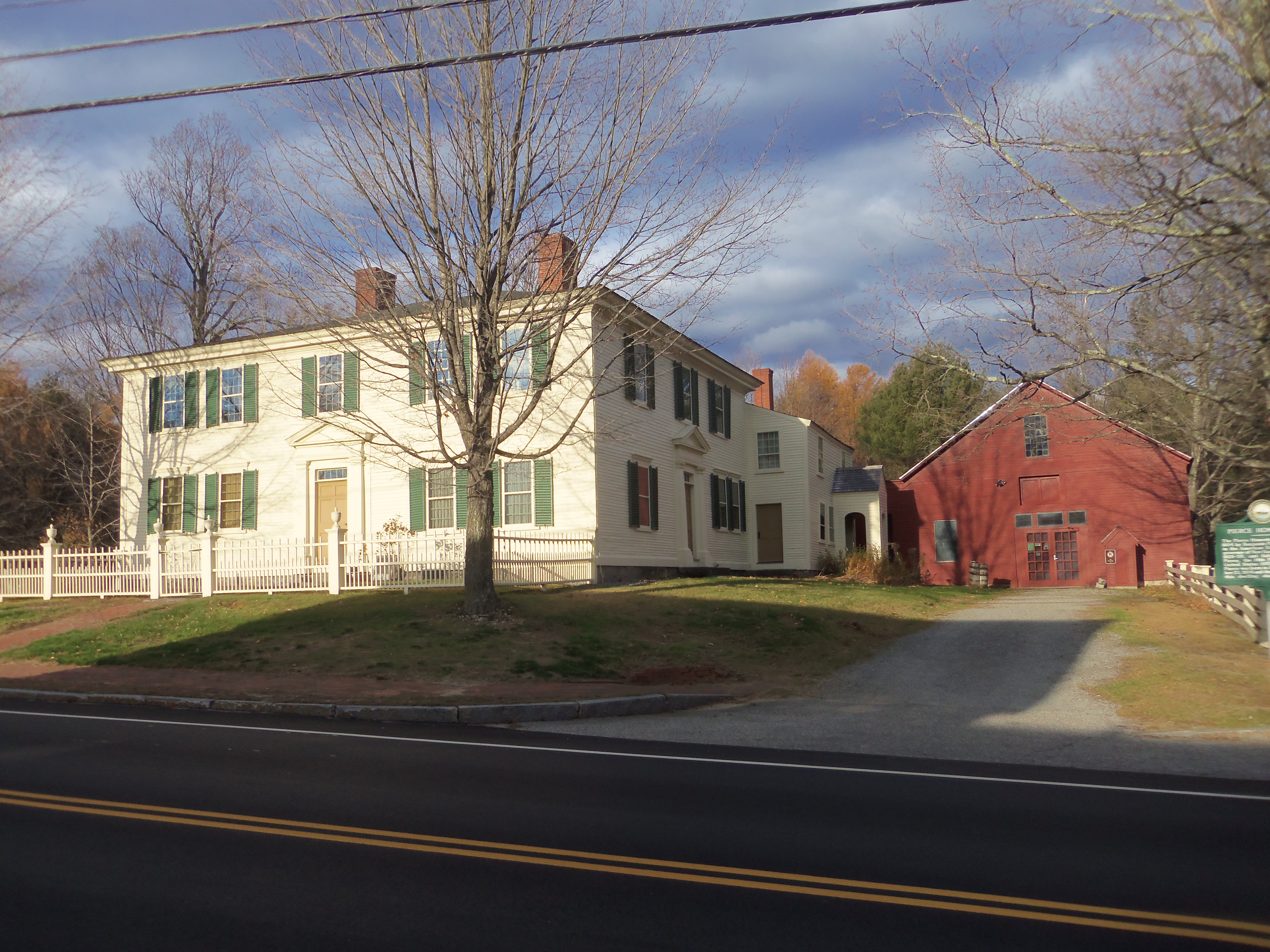
Next time you see one of those “No U Turns” signs on someone’s driveway, think about their side of the story and the audacity of some of the public.

We know an old farm in Maine that has a driveway connecting to both the busy highway in front of the house and a country road to the side. It gets plenty of “summer people” congestion at the traffic light, along with drivers who try to beat it by driving taking the driveway – or worse, just driving through the yard.

Recently, during a sudden storm, one SUV dodged in under the tree in the front yard to deflect hail, in the process mowing down hostas and other flowers before then backing hard into the parked pickup truck on the way out, and gunning it down the road.

Later, when one of the residents of the house was turning up the driveway from the side road, another car, crowded with tourists, came the other direction – and gave her the finger when she refused to back out so they could pull on through. Look, it’s her home, not theirs!

Their New York plates did nothing to soften the reputation.

STILL LOOKING FOR A BETTER PARTY FIT

The possibilities of a viable third party or even a fourth in the American political system have long intrigued me. The two-party model in its either/or delimitation has rarely seemed to offer a good fit for my leanings and convictions, especially when we’re trying to reconcile ourselves with a full slate of conflicting issues, and I’m sure I’m not alone here. (Where, for instance, is the fiscal conservative who’s willing to slash the military budget? Even before we ask about abortion rights or education support or environmental stands?)

Sometimes, the lines have been drawn along religious, economic, racial, or similar lines: Protestant/Catholic, white-collar/working class, WASP/people of color, and so on. Or east versus west of the river, those on the hill versus those in the valley, or even two corners of a state or its big city versus everywhere else. And it’s not always that clear, especially when lines – and identities – muddle.

In practice, many parts of the country find themselves having a single-party system by default. One side or the other dominates the elections, year after year. It has the money, influence, and power to override challenges or to simply bully everyone into line. Or else.

Add to that the ways local offices can go begging for candidates. School board? City counselor? Town selectman? How many people are willing to put in the long hours – often at no pay – and often at the end of much verbal abuse? Not that all in public service are entirely altruistic, mind you, but let’s give many of them their due respect and gratitude.

What it comes down to is the importance of alternatives at the local level. (Yes, we’re back to the dictum, All politics is local.) Does a second party in a community necessarily have to line up with a second one at the state or national level? Or can it instead connect with that third or fourth party and then wield some influence?

Let’s ask, for instance, what working models of Libertarian policy and administration at local levels can we look to? Without such community-level organization and practice, dreams of a viable third or fourth party influencing state and national affairs remain only notions. So it’s back to ground level, for real change.

ROLLING THE POLITICAL DICE

One of the Quaker objections to gambling or gaming is that it instills an expectation of getting “something for nothing.” We haven’t earned the money.

And it’s not charity.

In addition, the pot might come at the expense of those less fortunate than ourselves. (That, in practice, seems to be the case with the state lotteries now found across the United States, supposedly for the support of education.)

Listen closely to the campaign rhetoric for the “something for nothing” appeals. They come from both sides of the political divide. Then ask who’s really paying – the rich or the poor, especially. Who can most afford it? And who will most benefit? And where does justice fit in the mix?

WHERE ARE THE VOLUNTEERS?

Some years ago, as I recall, a New York Times op-ed piece mentioned that America’s reliance on volunteer service in public affairs shifted after World War I. We started turning more and more to paid workers – the ones we now call professionals.

Maybe some of it had to do with the shift from a rural and small-town society to big city life. And some of it, no doubt, as a matter of working inflexible hours in factories. Nowadays I’d add the shrinkage of local ownership, with executives who were expected to participate in public service, and the necessity of two-income families to make ends meet in the face of lower pay levels.

It’s a complicated issue, one that can lead to long discussion – maybe even some wailing.

I see it most directly in my Quaker circles, which function on an expectation that everyone in the faith community will offer service to the whole. That is, serve on a committee. I’m among those who are arguing that model needs to change to adapt to current conditions. Of course, it’s a matter many other groups – secular and religious – are facing. But it’s refreshing to read others who are thinking along similar lines. For one presentation, click here.

Maybe you have some helpful suggestions to add.

NOT JUST BETHLEHEM, THEN

In early postings about creating a suitable bibliography reflecting the hippie era, your comments suggested some of the best works are in the realm of non-fiction, in contrast to Tom Wolfe’s demand for the big novel. Yes, as we discussed, there are some good novels, the bulk of them proving that small is beautiful, in contrast to Wolfe’s standard.

My reflections the other day on Patti Smith’s memoir, Just Kids (2010), added the underground artistic scene in New York to the list and has me thinking just how different the hippie centers could be. Most of them, as I see it, eventually wound up around college campuses.

Some recent overviews of Joan Didion’s life work have brought her 1968 collection of essays, Slouching Towards Bethlehem, to mind. Without going into criticism that she concentrated on the scandalous rather than the broader scene, what is stirred in my revisiting her essays is how localized and fleeting the hippie outbreak could be as it developed.

Quite simply, what fit one neighborhood or time didn’t necessarily fit others.

Haight-Ashbury, after all, soon morphed into back-to-the-earth networks or even rural communes, along with other situations, leaving its name to linger as a legend.

I mention this simply as a reminder of how far we are from a clear understanding of this remarkable history, much less its continuing – and pervasive – streams of action.

As for the big novel? Maybe it’s still waiting to happen.

RUPERT IN THE FRAY

One of the more curious twists in recent American history is the impact of Rupert Murdoch, the Australian press baron who became an American citizen to keep control of his then fledgling television network.

Politically conservative, he’s nevertheless lowered the social standards of mass media. So much for values. He introduced dirty words to television and thus made them more acceptable in otherwise polite public discussion. His tabloid newspaper journalism, meanwhile, focused on celebrities and scandal in ways that have eroded serious political debate and public policy. That’s even without getting into his influence in Hollywood.

Put simply, we’re a less polite society than we were before his appearance. Or should we just say, cruder? That’s even before we get into the Fox News role as the Republican Party mouthpiece. Or all of the Murdoch-related phone-hacking uproar in Britain.

Now we might wonder how he’s reacting in private to the Donald’s emergence as the GOP presidential race leader. Someone from another television network, free from the Fox connection, all the same rising and then riding on the confrontational entertainment celebrity approach to political argument Murdoch’s nurtured.

Still, Murdoch’s far from the faceless corporate existence we see elsewhere. He’s passionate about print journalism, for one thing, and has been willing to take risks. But when people complain about “the media,” he’s still part of the mix, the one that almost always carries negative connotations. And, for the record, let’s point out it’s really corporate media, focused on big profits, rather than liberal.