NEW
NOON
TUNING
MOOING
MOON
You never know what we'll churn up in cleaning a stall
NEW
NOON
TUNING
MOOING
MOON
Every night, the canopy is spread
every morning, stowed away
how he manages a wood cookstove
eludes me
the galley’s tight and must be a hot space
on a hot or humid day
regardless, he starts at 3 a.m.
and there’s coffee by 6:30 all the same

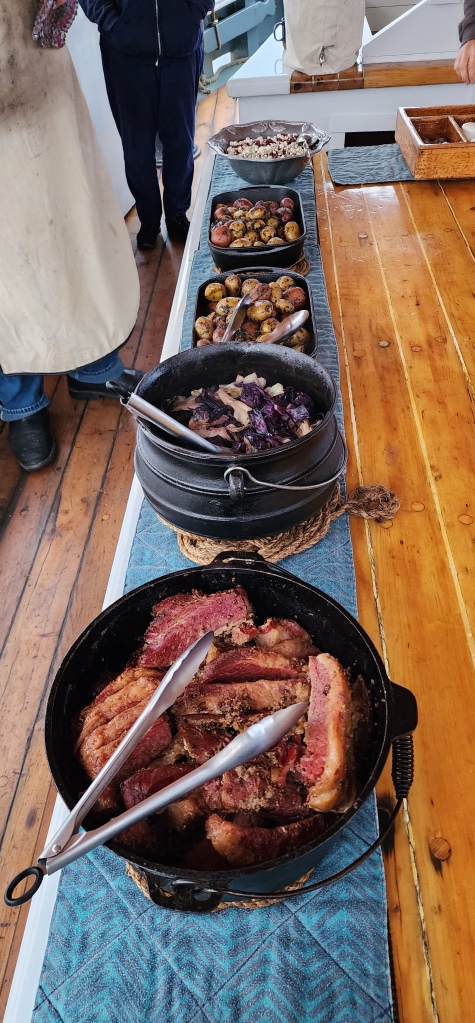
blueberry pancakes, slice of melon
cod chowder, a biscuit
roasted chicken drumstick, asparagus,
a risotto, Boston cream cake
lunch an excellent beef stew
and a great, crunchy sourdough bread
feeling like I’ve been here forever
in a good way
knowing it’s rarely this perfect
“no matter how much I eat
I keep losing weight on this ship”
sez male crew member
the cook’s apron
a variation on his overalls
the cook never learned wood-stove cookery
in culinary school
‘cuz he never attended one
in lighting a cook fire
the secret’s you have to stack
the firewood in tight
the galley’s quite crowded
the French burns four cords in a season in summer
Zen temple abbot and head cook
two most important personages
the cook also helps with the crew
mans an oar
hauls line, as needed
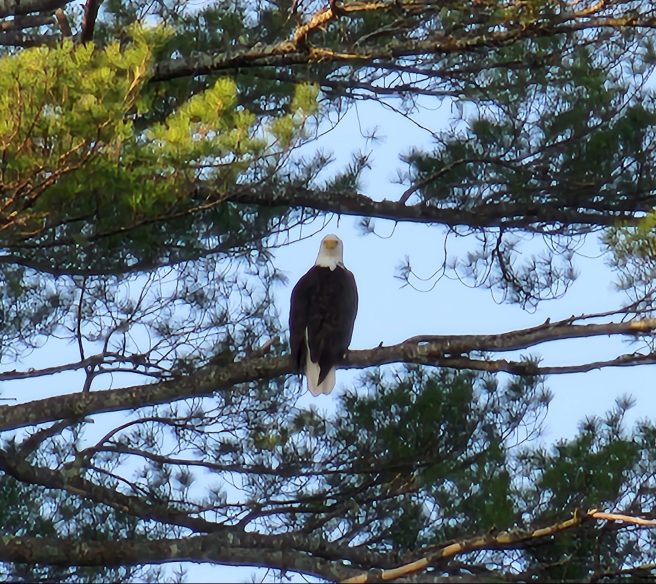
One looking regal.
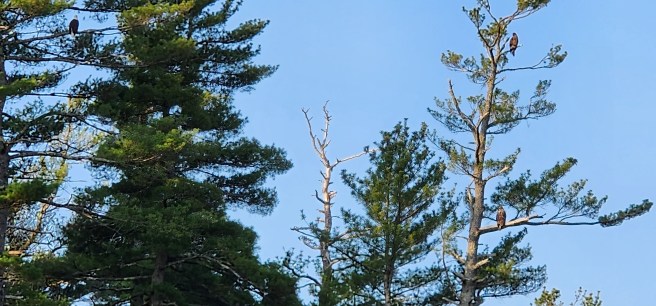
And three in one shot. Including the one in the first shot, as it sits in the upper left corner of the second.
Any expectation of having the back half of the upstairs finished before starting on the front slowly faded from reality. We definitely wouldn’t be moving goods from downstairs or storage into the new space anytime soon.
Just look at the ridgepole and it was obvious Adam would need to have elbow room to work freely up while attaching the new rafters before any wall could go in.

He did have to demolish the drywall and framing that had separated the front and back rooms, and with that came my realization that putting up new drywall any time before the entire upstairs was ready for that phase of work was premature. As would be painting the walls, ceilings, and floors. Duh!
Adam’s big shock came when he exposed the top of the existing dormer and found that there was nothing to speak of holding the descending rafter. What were they thinking?

It was one more impending disaster that had somehow kept ticking until being defused now.
~*~
The front half promised to be less complex than the previous section. There was no plumbing and only two rooms rather than four. On the other hand, the top of the stairs might add some complications.
I rather backed into this project, beginning with the elusive question, “What do Quakers believe?”
It led me to something much bigger, ranging beyond the Society of Friends, but springing from the seemingly quaint language of its earliest voices in mid-1600s Britain. There are good reasons the time and place are referred to as the world turned upside down.
Centering their experiences in three interlocking metaphors – Light, Seed, and Truth – they created what’s been called an alternative Christianity, and though their thinking and process have been diluted over the centuries since, their foundation remains revolutionary, startling, and challenging. I’ll argue that it’s cutting-edge contemporary, as well, in a time of disbelief and skepticism.

For one thing, how do you see “truth” as a verb? It becomes something quite different from carved marble or courtroom proceedings.
While some of the chapters originally appeared as chapbooks at Thistle Finch editions, this newly enlarged volume of essays is now available on your choice of ebook platforms at Smashwords.com and its affiliated digital retailers. Those outlets include the Apple Store, Barnes & Noble’s Nook, Scribd, and Sony’s Kobo. You may also request the ebook from your local public library.
The book now ranges far beyond religion and spirituality, by the way. Even atheists have their beliefs. Change the perspective, as I think I do, and you can find the exchange of first-hand experiences refreshing. How else can we talk about the deepest issues in life?
The move unites the essays in a single volume, rather than a series of four smaller chapbooks, and makes them available to a wider range of readers worldwide.
Do take a look.
For readers and for writers, the emergence of Smashwords.com revolutionized the publishing world. It also made self-publishing a much less risky investment for those of us who are indy authors, and let readers purchase books by unknown writers at low cost. It consolidated the platforms so readers of Nook or iPhones could read the same offerings as those coming from Kindle. It also offered an alternative to Amazon, which countered with Kindle Direct Publishing, meaning we could appear in both venues. Real competition can be a good thing, right? Essentially, it’s free for those who follow a few formatting guidelines and can design our own covers.
Since I’ve posted previously about the pros and cons of digital books versus paper, both for readers and for writers, I’ll focus today on my personal reflections on the development.
Getting my books “out there,” rather than collecting dust in a filing cabinet, provided a huge emotional relief. Twenty-three years had passed between the publication of Subway Hitchhikers and my Smashwords debut. And now the novels were available at the Apple Store, Barnes & Nobel, and other ebook retailers, as well as public libraries.
First out of the gate was Hippie Drum, drawn from my subway story outtakes, at the end of May 2013.
At the beginning of September came Hippie Love, using other outakes, and then Ashram in October, reissuing what had been Adventures on a Yoga Farm.
Daffodil Sunrise, developing more of the subway story outtakes, appeared in November.
Subway Hitchhikers was republished in January 2014.
So I had something along the lines of Lawrence Durrell’s Alexandria Quartet before the public or maybe a string of Jack Kerouac tales.
I then turned to my other big pile of drafting to extract Promise, which appeared in April. I intended to follow that one with two related novels, but the royalties weren’t covering the cost of having a designer create fronts for those volumes. Instead, Peel (as in apple) and St. Helens in the Mix would eventually appear as free PDFs at my Thistle Finch imprint.
That left Hometown News, my newspaper-based novel, for September release.
Getting noticed, however, was a different matter. Nobody was reviewing digital editions, or at least nobody of note. You can’t sign copies at readings or bookstores, either. What was left was largely social media.
And that’s where it stood until the beginning of 2018, when What’s Left joined the lineup. I’ll tell you more about that one and its impact on the earlier volumes in an upcoming post.
As for marketing and self-promotion? It’s still an uphill struggle. Do most users of Facebook even buy books?
… all classes of citizens should have some of their own number in the representative body, in order that their feelings and interests may be better understood and attended to.
Alexander Hamilton in Federalist No. 35


Wait till the tide rolls in.
No matter how large or small a community, there’s something about having a place we know as downtown that makes a difference. It’s like a center of gravity.
Forget the big banks, jewelry stores, or medical offices that are empty at night.
Here are some elements to consider.
 Jnana's Red Barn