It simply looks right

Looking up at the new roof’s overhang and fascia gives me a feeling of satisfaction. Far more labor, care, and skill went into these layers than I would have imagined. Our contractor is not one for shortcuts. He certainly intends for this dwelling to stand erect for another 200 years or more.


Consider that bold ‘John Hancock’ on paper

As a writer, I love what alphabet letters and words by themselves can do on paper, apart from any meaning. Just look at one man’s intrepid signature on the Declaration of Independence and try to imagine that document without it.

I used to love visiting a friend who was a professional calligrapher and type designer. This was her life’s work.

Are other writers also inspired by such visual artistry?

The Lilly rare book library at Indiana University puts on exhibits of historic volumes, not just their typography and inside pages but also their bindings, endpapers, and spines. This is part of a legacy every serious writer is indebted to.

In its reading room I delighted in periodicals from the 1700s as well as contemporary poetry broadsides, limited edition prints intended to be framed and displayed on walls or preserved in rich patrons’ collections. Who wouldn’t aspire to see their own work presented as such a creation?

And then there were the psychedelic rock concert posters for the Fillmore back in the 1960s. If words could dance, they certainly do so here.

~*~

Most people are baffled by the wealth that gets doled out to acquire a painting or even a bottle of very old wine. I’m not in their camp, either a collector or a scoffer.

I will, however, declare what some people spend for trendy items they assume will be valuable someday – baseball cards included – is utter folly.

What I will defend is those individuals who spend a fortune to preserve an exalted example of inspiration – and I worry about those who might use possession as an opportunity for ostentatious destruction. Consider the lost Buddhist statues in Afghanistan for the latter.

I raise this out of gratitude for those patrons who preserve examples of excellence.

~*~

While I lament the loss of the craftsmanship involved in the letterpress printing of my early days in journalism, I am recognizing that online design has come a long way in even the last decade. Much of it is truly striking. Still, even as an ebook author and a prolific blogger, I still hold a special place in my heart for fine paper that’s attuned to the words entrusted to it.

That said, what else do you know about Mr. Hancock other than his signature?
Just in time for the fireworks

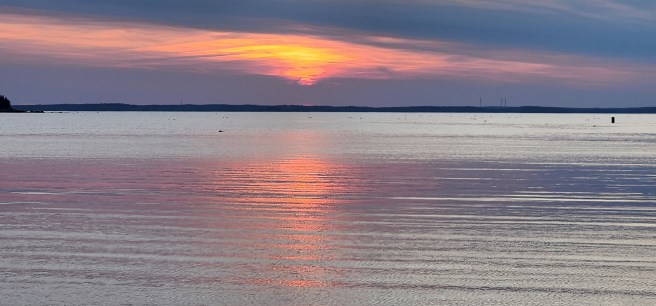
The poems in this rant aren’t in my usual voice, but they do address today’s political precipice, only from a slightly earlier historical perspective. And yes, that’s scary. Kinda like the Fourth of July fireworks that way.

For this month only, I’m offering the ebook for free at Smashwords.com during its annual July sales sweep. What do you have to lose? Remember, it’s free. I promise you’ll get a bang out of this.

Check it out at my author page at Smashwords.com.


The Appalachian Trail is the grandaddy of a hiking marathon

Other parts of the world have long had their pilgrimages, but in the United States, when it comes to doing that on foot rather than by car, I’d say the Appalachian Trail tops the list.

The public pathway was conceived in 1921, built by private citizens, and competed in 1937. It officially became the Appalachian National Scenic Trail in 1968.

Here are some other perspectives.

  1. Length: Almost 2,200 miles involving 14 states from Georgia to Maine. Parts of the path get rerouted over time, a consequence of urban development pressures, loss of access across private lands, or other factors. It’s touted as the longest hiker-only trail in the world. Pack animals and wheeled things are shunted to other options.
  2. Heavenly heights: The trail ascends many of the tallest peaks in the Appalachian Mountain system, including the Great Smokeys of North Carolina and Tennessee, the Green Mountains of Vermont, the Presidentials of New Hampshire, and Maine’s Longfellows, many of them rising above the tree line. Most of the trail is forests or other wildlands, although some sections, especially in the valleys, pass farmlands, follow roadways, cross bridges, or run into small towns.
  3. Backpackers: Sections traversing roadways often have trailheads that give day hikers or overnighters access for short treks, the AT is celebrated for its backpackers, carrying all of their food, clothing, and gear and camping each night somewhere in the wilds. Some, like my Boy Scout troop when I was 12, venture out for a week or two, but the truly serious folks are the ones who trek from one end to the other in a single season. They’re known as thru-hikers, and those who return to hike the AT from the other direction the next year are considered a “yo-yo.” An estimated 3,000 people set out each year to hike the entire length, with a fourth of them actually succeeding. In 2017, 715 northbound and 133 southbound thru-hikers were recorded.
  4. Weather factors: Winter weather in effect shuts down many sections of the AT, at least for thru-hikers. Since the weather warms earlier in Georgia than in Maine is the reason most of the thru-hikers start at the south end and head north, hoping the snow and ice have melted from northern New England sections by the time they arrive that far. Some veterans argue that the trail is easier in that direction, too.
  5. Self-discovery: As one gets a distance away from a road or peopled location, the terrain becomes more pristine. There’s less litter and debris and less noise, too. The hiker encounters not only nature, on gorgeous days and raw ones, but also personal challenges and inner resources.
  6. Dedicated organization: The AT is maintained by 31 trail clubs of volunteers and other partnerships and managed jointly by the National Park Service, U.S. Forest Service, and nonprofit Appalachian Trail Conservancy.
  7. Angels along the way: Thru-hikers tell of remarkable locals who routinely come to the aid of the travelers. Need a bath or shower? A lift into town for groceries? A phone call, back in the day before cell phones? (Maybe today that’s a recharge?) They’re there.
  8. Memories: Many of the experiences are unforgettable. The scenery, especially. But there can also be downsides: Rattlesnakes, copperheads, bears, as well as ticks, mosquitoes, and black flies. Or some brutal weather, even in the height of summer.
  9. Mostly protected now: Passage of the National Trails System Act of 1968 allowed the Park System to purchase most of the lands still in private hands, assuring the AT of a permanent route.
  10. It’s not necessarily free: Portions of the trail require payment for backcountry permits or park entry as well as for shelters and campsites. Otherwise, access it free. Your gear, foodstuffs, and getting there are, of course, expenses to consider.  

 The AT is no longer the only long trail system in America, but it’s still the oldest. To achieve its length combined with Continental Divide Trail (2,700 to 3,150 miles, depending) and Pacific Crest Trail (2,653 miles) is considered the Triple Crown of Hiking in the United States.