
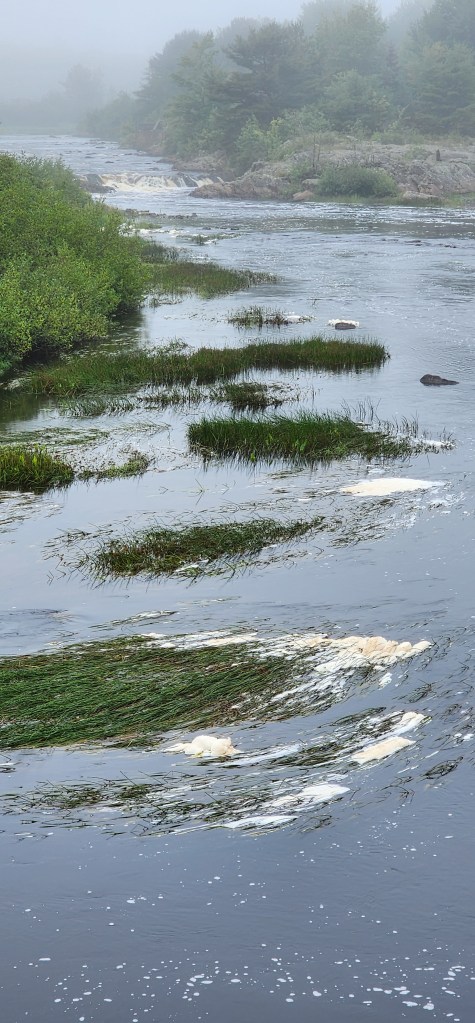
The 75-mile-long Machias River is Maine’s leading salmon habitat and was a major lumbering stream. There is little settlement or paved-road access upstream from here, the bridge in Whitneyville.
You never know what we'll churn up in cleaning a stall
The 75-mile-long Machias River is Maine’s leading salmon habitat and was a major lumbering stream. There is little settlement or paved-road access upstream from here, the bridge in Whitneyville.
It’s not just a whole different way of looking at religion. It’s about intense life experiences and the ways we talk about them, hoping someone else will understand.
Quite simply, I believe everyone has a “religion,” even atheists. Just listen to ardent sports fans for examples from the secular side of the equation.
My book embraces that universal situation and then turns to the unique spirituality of early Quakers and the ways they used metaphor to guide each other in a revolutionary social transformation. Many of their advances you take for granted, no matter your labels.
Do take a look at my ebook Light Seed Truth at Smashwords.com during its annual July sales sweep. What do you have to lose? Remember, it’s free.

… if each State had power to prescribe a DISTINCT RULE there could be no UNIFORM RULE.
Alexander Hamilton in Federalist No. 32
In my mindset, a product or service has a fair-value point. You know, it costs so much to make and distribute, even before factoring in a profit. If you’re selling it at a lower price, why don’t you keep it there all the time? Maybe my outlook reflects the one-price for all practice of Quakers who objected to the upper class who expected to get a discount over the poorer masses.
Beyond that, the concept of bargaining or haggling found in many cultures absolutely repulsed me. I still feel like poor artisans and farmers in those countries are getting cheated or at least cheating themselves.
Either way, I rarely buy much and usually shy away from the more expensive range of items. Quite simply, I’m just not a shopper.
In my two years working as a field representative for a newspaper syndicate, I did finally come to appreciate the need to have something special to motivate a potential buyer. We couldn’t offer “specials,” and in most markets, we no longer had competing newspapers vying for our latest product. It was frustrating. There was nothing to make an editor jump onto our latest comic strip or columnist or game feature, no matter how excellent these were.
In the book publishing industry, free advance reading editions and review copies were sent out in the hopes of creating a buzz, but for digital books, that is a more challenging effort. Giving somebody a coupon to order online just ain’t the same as handing them a paper book.
So just what can an indy author do to get reviews or, better yet, a word-of-mouth buzz?
Welcome to Smashword.com’s big July-long ebook sale, where writers opt to present titles at sharp discount or even free.
Remember, this year I have two recent works available for free and two other new works at half-price.
Check them out at my Jnana Hodson author page! And then look at many of the fine offerings by others, too.
They still charm me.
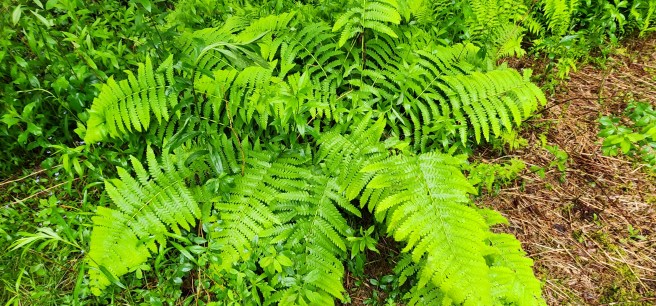
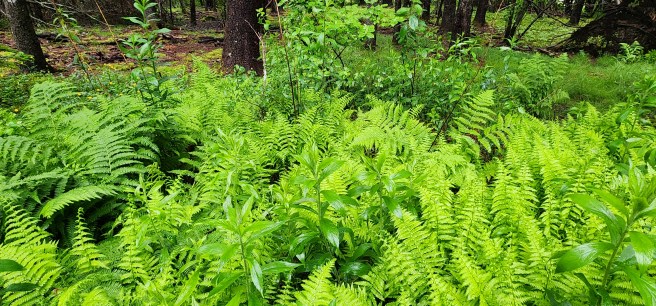
These are at the Cobscook Friends Meetinghouse in Whiting.
The poems in this rant aren’t in my usual voice, but they do address today’s political precipice, only from a slightly earlier historical perspective. And yes, that’s scary.
For this month only, I’m offering the ebook for free at Smashwords.com during its annual July sales sweep. What do you have to lose? Remember, it’s free.

Just go my Jnana Hodson author page at Smashwords.
Let’s go alphabetically. Shudder or cringe as you will.
What are we overlooking?

We’re not overrun with them, unlike Bar Harbor and points south and west.
Multilayered and deeply personal, Goatwalking: a Guide to Wildland Living is a rich blend of social activism, clandestine adventure, wilderness survival, political resistance, witness for justice, and spiritual growth and grounding.
It’s all based on Corbett’s experiences as a founder of the Sanctuary movement for persecuted Central American refugees. He escorted many of them on foot through the desert from the border to safety within defiant congregations across the Far West. On the trail, he was accompanied by milking goats who provided needed nurture – hence the title.
The book is as a much a journal as a history or social philosophy. As I found related elsewhere, when Corbett first came among Quakers, he knew more about Buddha than Jesus. But then, waiting for his next party to arrive at a remote chapel, he meditated on the crucifix on the wall before him and realized that if anyone could possibly know the terrors his charges had suffered, it was Jesus. Later, working with a dedicated priest, he was treated as an equal in everything but the serving of the eucharist – “I’m a Jesuit, a member of the Society of Jesus,” he was told, “and you’re a member of the Society of Friends,” or Quakers. “What’s the difference?”
His insights are as relevant today as they were when first published.
 Jnana's Red Barn