What do you know of the history of your home?

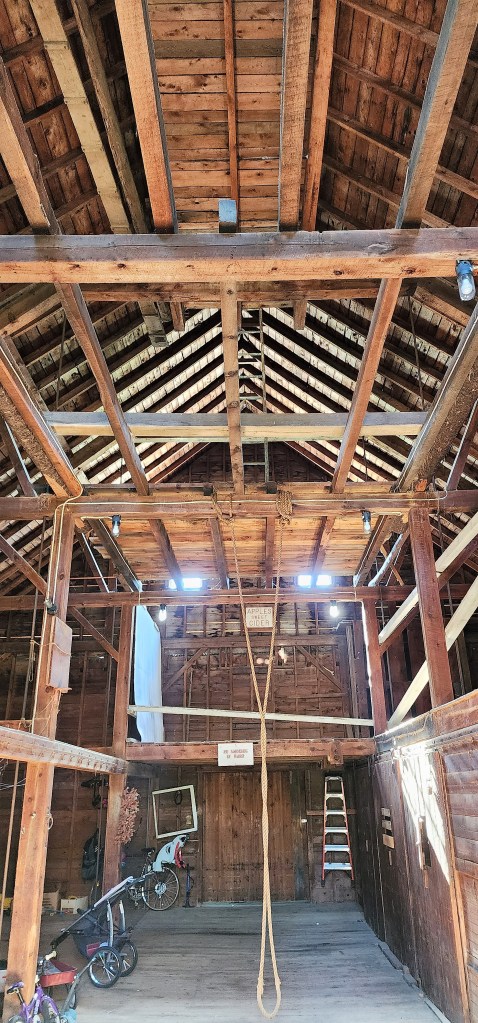
When our planned substantial renovations finally began last autumn, our contractor began uncovering particulars that indicated the house might be even older than we had reckoned.

It was enough to prompt me to follow up on friendly banter by more than one person who asked if I’d ever gone to the county courthouse to “run the deeds” back to the original owner.

Quite simply, no, not here or in the previous two homes I’d purchased and later sold as I moved on.

While I’ve done a great deal of genealogy, courthouse records were one line of research I’d never pursued. I had encountered other researchers who specialized in family properties and last wills and testaments, and I was grateful for what those legal documents added to the family picture.

Even so, do accept my disclaimer regarding some of the dates and locations that pop up as I applied that line of inquiry to our old residence. What I’ve gleaned and present here is in an attempt to get a big picture of the lives that have intertwined with the house we purchased and renovated. Some of the connections are admittedly soft and subject to further revision. I am surprised by how many gaps remain.

Keeping that in perspective, I did finally trot off to the Washington County courthouse in Machias, an hour away. Let me say that digitalizing the archived records has made this field much easier and more accessible, and the registrar of deeds and her staff proved to be very helpful and friendly.

The fateful day my curiosity about our house finally led me to the registrar of deeds in Machias came about while I needed something to round out the day while my computer was in the repair shop a mile or so away.

To get the bigger picture, I set forth with a sense of trepidation. Armed with little more than the plot number of our lot, I anticipated technical complications, a tangle of legalese requiring translation, and dark, dusty confines. Instead, I was pleasantly surprised to find the room well lighted and organized the staff both friendly and helpful. Better yet, the transactions have been digitalized in an easily navigated system. The original records were also at hand, should I desire, and I wouldn’t have to interrupt anyone to help me follow these.

Each transaction included a reference to the book and page numbers of the previous purchase, which was all you needed to trace the line of owners.

If only it were that easy.

~*~

Running the deeds means starting with the most recent transaction and working down through time, document by document.

Despite its modest appearance, our house has an unexpected significance, as you will find.

There are good reasons I’m calling my findings a genealogy of an old house. We’re surprised by some of the characters who’ve lived here.
Taking the subway to now

Damn Cassia! She even tore apart my first published novel, Subway Hitchhikers.

A lot had happened in the nearly three decades since the book was first published – and even more since it was first conceived in 1973. Gee, that’s more than a half a century.

As I came back to the story after the release of What’s Left, my first task was to bring the tale more in line with the rest of the series, starting with the name of the lead character. Kenzie was an advance over the hippie-era Duma Luma, which rather echoed Wavy Gravy of Woodstock renown. His earlier legacy of being a lama reincarnated in Iowa was also downplayed if not entirely erased. Besides, there had been reports of such things actually happening since my book was first published. I have no idea how they turned out, either.

Another big job involved changing the original structure of short present-tense chapters flashing against past-tense ones, like subway trains passing in opposite directions. It was a creative touch but quickly confused the reader. A more conventional chronological-order storyline took its place.

That was accompanied by a new plot based on Kenzie’s monthly trips down to Manhattan to study with his Tibetan Buddhist guru in a tenement on the Lower East Side. That development added a handful of other devotees to the characters and realigned any who had previously existed.

Some of the Tibetan details now reflected tales I had heard from a more recent friend who was studying to become a Buddhist nun. Never mind that her experiences came decades after his or that there might not have been a Rinpoche residing anywhere near the Big Apple. Rival yogis, however, were plentiful.

Tibetans by the early 21st century? Our favorite dining option in Manchester, New Hampshire, was a Nepali restaurant that featured momos, a steamed dumpling staple in Tibet, too. The owners and staff were quite honored when an authentic Buddhist Rinpoche dropped in and approved of their dishes.

My, I have lived in a changing world. When’s the last time you even saw a subway token, by the way?

The freewheeling hippie-era fantasies of my book were soon followed by some creepy downsides. Hitchhiking out on the open road had turned sinister. Subway surfers, seeking the thrill of riding atop the cars in the tunnels and on the elevated lines above the street, were being decapitated and worse or worse by immovable objects in their trajectory. And the onset of homelessness during the Reagan years created whole villages surviving underground, as Jennifer Toth reported in her book The Mole People: Life in the tunnels under New York City, which was published just four years after my novel.

In addition, Long Island Newsday had assigned a columnist, Jim Dwyer, to its new subways beat, leading to a nonfiction book, Subway Lives: 24 Hours in the Life of the New York Subways, which came out only a year after mine. Now that’s some tough competition. No wonder I didn’t hear from him after sending him a comp copy for review when my book came off the press.

By that time, though, I was living an hour-plus north of Boston and entering a time of my life when I’d be riding its MBTA trains about once a week – perhaps a thousand fares one way and back with girlfriends and later family on my visits. Familiarity with underground mass transit hasn’t lessened my fascination.

Still, since Subway Hitchhikers had been about hippies, I had to admit they had largely fallen into disrepute or self-denial. But that’s not how the book stands now, something that’s reflected in its current title, Subway Visions; Along the tubes to nirvana.

As for today? Here I was, with my fascination with subway systems, asking my favorite lifeguard about her experiences in Boston during her freshman year of college. She must have been taking the cute little cars of the Green Line, right?

Instead, she emphatically told me how disgusting they are, miserable on hot days and packed at peak hours – and, especially, the fellow passenger, an utter stranger, who puked on her feet in sandals.

I didn’t dare show her my book after that.

Being subjected to the laws they pass, too

The House of Representatives … can make no law which will not have its full operation on themselves and their friends, as well as on the great mass of society. This has always been deemed one of the strongest bonds by which human policy can connect the rulers and the people together. It creates between them that communion of interests and sympathy of sentiments of which few governments have furnished examples; but without which every government degenerates into tyranny.

James Madison in Federalist No. 57

Takin’ a country train

Thorndike, traffic jammed before the train station.
I park on grass down the line
hope the engine sans heat plate doesn’t ignite a fire

one train pulls out just before I can buy my ticket
but sunny, definitely – a 25-minute delay

Old Swedish dining car
meaning prime cutting-edge 1950s

cardinal tattoos on somebody

what faint blue mountains were in the distance
before the 220 turnoff?

return trip train car sinks on one side
before leaving the festival stop

worrisome, slows the run back to terminal
its sharp curves especially front car’s detached before final run
to fairgrounds and back

Ten big prize winners I’ve known or at least met

  1. Elinor Ostrom, Nobel Prize, economics
  2. Clarence Page, Pulitzer Prize, commentary
  3. Dick Locher, Pulitzer Prize, editorial cartoonist
  4. Gary Snyder, Pulitzer Prize, poetry
  5. Jeff MacNally, Pulitzer Prize, editorial cartoonist
  6. Jesse Haines, Baseball Hall of Fame, pitcher
  7. Jesse Owens, Olympic gold medalist, runner
  8. Marcy Nighswander, Pulitzer Prize, photography
  9. Ritter Collett, Baseball Hall of Fame, sportswriter
  10. Steve Curwood, Pulitzer Prize, investigative reporting