When passion gets terribly tangled

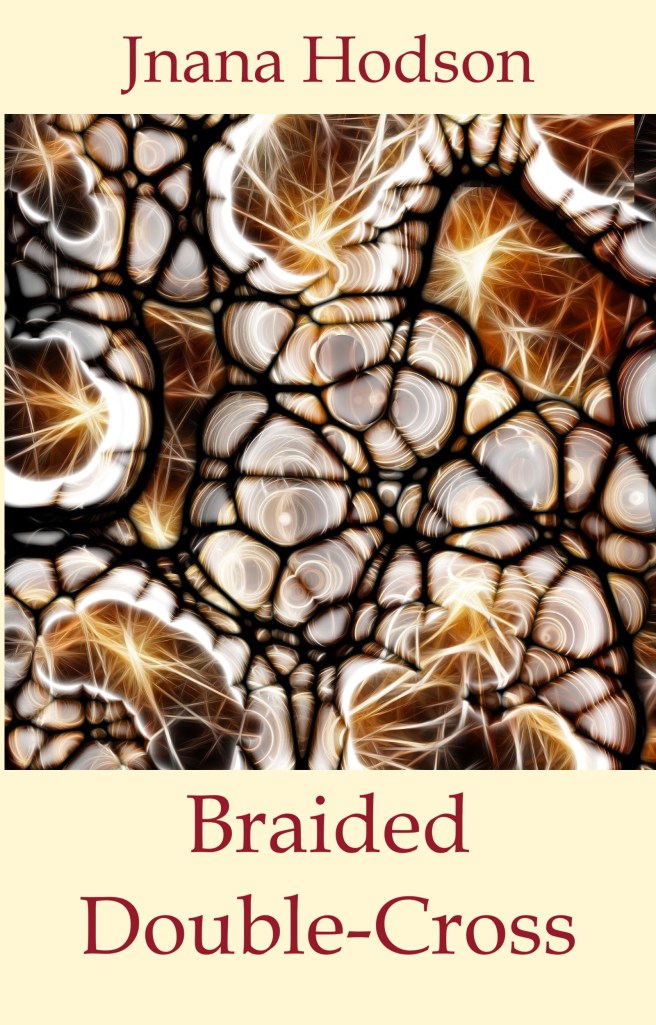
Have you ever been in a committed relationship, only to be struggling against what you later learn was a triangle? The third party doesn’t even have to be another person, for that matter, but secrecy does tip the balance.

The desire was still there and burning, hoping for reconciliation and renewal. Just don’t call yourself a victim, OK? Not as long as you were actively engaged in the scene.

As for the evidence? In hearing your side, who knows what was factual or imagined, other than the reality of your feelings.

Move on, then, with the memories. Don’t say it wasn’t love, especially of an adolescent sort. Or maybe even your first time.

Having originally appeared in Thistle Finch editions, this collection is now available on your choice of ebook platforms at Smashwords.com and its affiliated digital retailers. Those outlets include the Apple Store, Barnes & Noble’s Nook, Scribd, and Sony’s Kobo. You may also request the ebook from your local public library.

The move makes the poems available to a wider range of readers worldwide.

Do take a look.

Reclaiming Passamaquoddy

Living adjacent to the tribe’s Sipayik reservation opens new perspectives in my awareness. It’s not quite osmosis, but perhaps a willingness to listen.

One of the big breakthroughs for the tribe has involved access to 36 wax cylinders from 1890, the first field recordings ever made, when anthropologist Walter Jesse Fewkes came to Maine to test the Edison equipment before he headed off to Navajo and Hopi lands.

For decades, the recordings were kept in museum vaults, unknown to the tribe. And then, slowly, they came into consciousness, first through taped copies full of scratchy static and more recently cleaned up into digitalized files that tribe historians are carefully gleaning.

As a writer, I believe in the power of stories and the importance of language itself.

Here are some of the insights I’m hearing from my neighbors.

  1. Dwayne Tomah’s reaction on hearing the recordings the first time: “I wept. These were my ancestors speaking and singing to me.”
  2. The language has only two genders – animate and inanimate.
  3. Its wider family, Algonquian, features prenouns, a form shared only with Japanese and Korean.
  4. Translations from a tribal side, rather than a nontribal institution, can be revealing. For instance, rather than “Trading Song,” it’s more accurately “Let’s Trade.”
  5. The recordings preserve more than the language itself. There are also the stories, songs, and advices, sometimes with context.
  6. The Tides Institute’s latest map of our region portion of Maine and New Brunswick includes the Passamaquoddy place names. Tribal historian Donald Soctomah has used that to explain hard-to-translate subtleties, such as those describing qualities of water encountered in canoeing in a specific location.
  7. A Passamaquoddy-English dictionary, still growing, is available online. It has a range of expressions for anger that are totally missing in English.
  8. The language is being taught in elementary schools. (For generations, it was banned, even in homes.)
  9. The recordings are helping the tribe’s branch in neighboring Canada in its quest to gain First Nations status. One song, for instance, refers to what’s now the location of Saint Andrews.
  10. Even a few commonly understood words spoken among the tribe are rebuilding identity and pride, even when the rest of us watch on.

Acid test poet: Philip Whalen (1923-2008)

As a Reed College student, Whalen lived in a rooming house with Gary Snyder and Lou Welch, making for a trio of fine poets. There, through Snyder, he was introduced to Zen Buddhism after earlier dabbling in Vedanta yoga and Tibetan Buddhism. In time, he would emerge as an ordained priest at the San Francisco Zen Center.

Although suicide cut Welch’s life short, Whalen and Snyder remained close friends for life. I had no idea just how close until coming across David Schneider’s biography of Whalen, where the appear as complementary opposites – little brother helping bigger brother through key shifts in survival.

They were considered Beat poets from the start of the movement but soon moved away from its poetic conventions. Whalen, preoccupied with the movements of the human mind and awareness, blended mundane details immediately before him with timeless, erudite quotations from a world of sources. The results were a unique and absorbing mental dance on an unseen energy field.

I also enjoyed his novel, You Didn’t Even Try, dealing with a failed marriage.

He came a long way from the Dalles, a village along the Columbia River in Oregon where the eastern desert begins.

When a vision takes shape

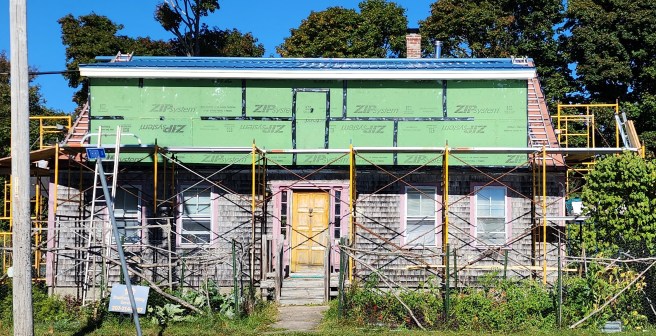
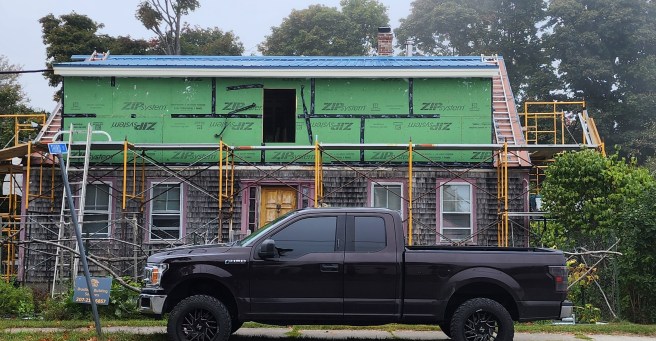
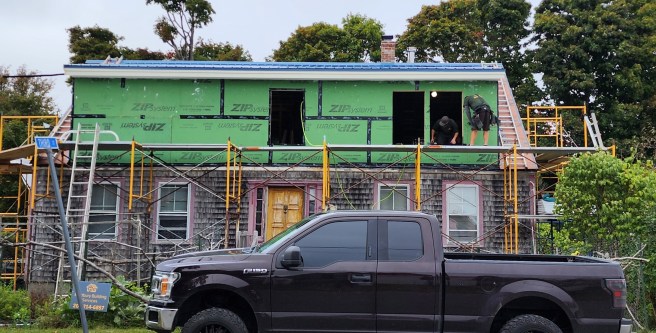
Our home renovation project work continues, but for long stretches it seems like nothing’s happening. Those unseen details are important, all the same.

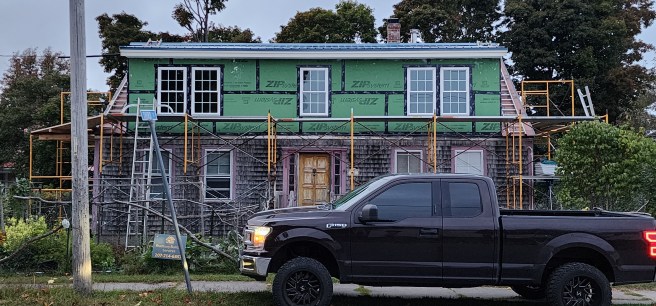
And then, seemingly in a flash, developments become obvious.

The latest example is on the front upstairs, now that the roof is raised, the top’s covered in standing-seam metal roofing, and the windows are finally obvious.

I must admit being a little nervous about the planning, inside and out, but now that they’re in place, I’m feeling excited and even confirmed. Whew!

Now, for some cedar-shake siding!

It’s as close as I’ve come to a romance novel

The model in the photo I selected for the original cover of the story that stands today as Nearly Canaan was nearly too perfect. I even had to tweak the description of Jaya on the pages inside to make for a better match. Much later, I came across other photos from the shooting and was appalled.

In yoga circles, it’s what we would call Maya.

Apparently, I had shifted Jaya’s spiritual identity from Sufi much earlier than I recalled. Now that I had a solid backstory for her in my novel Yoga Bootcamp, I could turn my attention to the messy trove that had sprawled into three big books. Thanks to Cassia from What’s Next, I was now intent on distilling them back into one. Trying to compress them into the maximum 120,000 upper limit of a big novel meant having to hone more than one hundred pages of manuscript. And that’s before I decided to add a fourth section for fuller closer.

~*~

At heart, I was trying to figure out just what had gone on in my first marriage. I’m still not sure. And note I had said “gone on,” not “gone wrong.”

But I also wanted to say something about the influence of the landscapes where I’ve lived. In fact, I came to think of them as major characters. If only I could have allowed them to speak? The first was pretty bleak and, for a small town, rather petty. The second had its beauty and its rough spots. The third, their intended Paradise, initially appeared desolate and unforgiving.

Place as a character? How about the Mississippi in Huckleberry Finn? The story wouldn’t have been the same if Twain had started on the Ohio River, even though it was larger than the Mississippi where he did.

Naturally, I had to abstract real people and events and in doing so, I settled on some big flips. Jaya emerged as the older partner in her marriage, for one, which gave a fresh twist on a December/May romance.

Along the way, the story became one of overlapping couples, a contrast of marriages that were close to Jaya’s home. It’s almost like the mirrors in an amusement park house of mirrors, to my way of thinking, not that the story started out that way.

Yeah, we’re supposed to avoid religion and politics. That leaves some pretty big gaps in the meaning of life and, as I’m seeing, in relationships, too.

If you haven’t noticed, changing the novel’s name from Promise to Nearly Canaan is a Biblical nod. Well, I had previously been calling it their Promised Land.

Developing Pastor Bob and his wife, Wendy, provided a big advance for the revised novel. They might have had serious reservations about her as a heathen, but they were still intrigued and at points even supportive. That marriage also had its problems.

I definitely wanted to avoid having southern Indiana in one more of my books, so I shifted the scene of the middle section to the Ozarks of Arkansas. There are a lot of similarities, from what I’m finding.

In addition, I wanted Jaya’s career to be as volatile for her as newsroom management had been for me. She needed to work weekends and nights, too. Beyond that, I did have an experience of being paid from “soft money,” as grants are sometimes called, and having a very good neighbor work as regional director of a social action agency provided me more inspiration.

By the way, the cover photo I settled on for the revised edition did require some tweaks on Jaya’s physical description on the inside pages.