AN UNFOLDING GREEK TRAGEDY

For past several weeks, the hottest news story across New England has been over what will no doubt be a textbook case of how to kill your own golden goose in corporate America.

The business is a family-owned chain of 71 supermarkets that has somehow managed to carve out the region’s highest profit rate in a notoriously thin-margin field while simultaneously paying its workers more than its rivals — along with profit-sharing and bonuses — while keeping its prices well below those of the other grocers. (You can imagine, for one thing, that the pilferage that undermines many groceries is nonexistent at Market Basket. Its workers are loyal, at least to the executive responsible for the success — a man who seems to know not just each of them but their family members as well.) Add to that a great deal of flexibility for store managers to respond to customer requests and you can understand the wide variety of ethnic foods found on the shelves; consider the fact that our local Asian restaurants choose to buy their tofu supplies at Market Basket rather than the wholesalers, and you get a sense of how that policy pays off all the way around.

In recent years customers have turned in droves away from the competition, and their loyalty is palpable. Lately, I’ve found parking spaces are always available right by the front doors of those underpopulated stores, unlike Market Basket, where the parking lot and aisles are always overflowing.

Given the win/win/win realities of the still growing Market Basket chain, nobody was prepared for the directors’ decision to ax its successful president. Well, half of the board’s decision.

The half that wasn’t prepared for the impassioned backlash from the public or its own workers, who have essentially shut down the operation.

The board’s decision, as far as anyone can see, was based more on lingering bad blood in the Demoulas family that had previously erupted in a notorious 1990 lawsuit that nearly forced the sale of the company, this time apparently heightened by greed. Seems there’s  a $300 million reserve fund, for one thing.

But if the side that ousted Arthur T. Demoulas and his top aides thinks it can manage the company better than he did, it’s produced no evidence to date. Indeed, each day brings another public relations debacle that has gone unchallenged and signs the victorious side of the board is unaware of what’s happening on the streets. Brand loyalty, as the lore goes, is priceless. And it’s hard to win back. If they’re hoping to sell the chain, its value is plummeting by the hour. How often, after all, have you seen managers and workers stand together in solidarity as they are now?

The daily drama is not subsiding.The region’s newspapers, led by the Boston Globe, have been covering the details thoroughly, and I’ll point you in that direction.

For now, there are the petitions to sign and emails to send.

Here’s one example that was sent to the independent board members:

~*~

Dear All,

I have shopped at Market Basket for 30 years. I appreciated the low prices as well as the availability and quality of ethnic foods. When I learned that the employees were also the highest paid of any grocery in New England, that cemented the choice. I’ve barely walked through the door of a Hannaford or Shaw’s in 15 years.

Yesterday, I went to my local Market Basket, but only to sign the petition and cheer on the workers. I then I bought my groceries at Shaw’s and planned a trip to Costco.

You have had a business model that serves customers, employees, and owners. That this model would be thrown over for no discernible reason except personal animosity and greed is beyond me. I do not know or care if ATD is a good or terrible human being. I do believe he is a supremely competent one. He has run a business that gives customer the lowest prices, employees the highest compensation, and  the owners considerable profit, while maintaining zero debt and ensuring the stability of the company. I have paid close attention to every news report I can find to see if there was any substantial reason for ATD”s removal. Nothing I have heard or read has indicated that new management has better ideas, or for that matter any ideas at all. That, in addition it cared so little for the loyalty and dedication of its employees that made the model work is the final straw.

You’ve lost another customer.

MAKING TIME FOR THE WORK

As I said at the time …

There’s no denying the importance for a writer to have a physical space where the work-in-progress can be left out in the open, safely behind a closed door, between sessions. Where there’s no lost time putting everything away, only to have to bring it out again in order to resume where one left off. This doesn’t have to be a dream space, either.

But making time for writing is even more crucial. Being able to get a thought or line down on paper, while it’s fresh. Of finding large blocks of time to engage in the interior dialogue of characters as they emerge amid your daily errands and nocturnal dreams. (Like babies or demons, they possess you.)

I’m not alone in finding my practice of writing becomes part of a larger juggling act, especially when I’m already working fifty-hour weeks as a professional whatever somewhere else. Especially when those hours are outside the “literary” field altogether. Then there are the needs of a home life to contend with, and, in my experience, a faith community, too. For instance, I’ve found that as long as I’m employed as a full-time journalist, my off-duty hours leave me only enough hours to (a) write and revise or (b) focus on submissions and correspondence or (c) attend and give readings and other public events; but there is no way to do two of the three (much less all three) in the same period.

On top of it all, the work takes as long as it needs. Or, like the old-house syndrome, every repair or renovation project will require at least three times more time and money than you budgeted.

JUST A ROLLING STONE

Lately, thanks in part to a great yard-sale find, I’ve been revisiting a lot of Bob Dylan and realizing how many phrases that pass through my head originate in his lyrics. Or at least the ones that also have a musical line. I came to him in late ’62 or early ’63 and was a loyal fan until he went electrified and left the activist and folk scenes. Count me among the contingent that felt betrayed.

OK, I’ve come to recognize and even admire a lot of significant material he wrote in the years since. The man could turn a phrase, for certain, even when he was drawing heavily from others.

The line, “Like a Rolling Stone,” had me wondering about its relationship to the naming of the band and the rock magazine, all three products of the ’60s. Did the song prompt the other two?

Turns out the band was formed in ’62; the song, ’65; and the magazine, then a tabloid newspaper, November 9, ’67. But, in another twist, the band took its name from Muddy Waters’ 1950 “Rollin’ Stone.”

As for the popular phrase, “A rolling stone gathers no moss,” the line points to John Heywood’s 1546 translation of the Roman-era Pubilius Syrus. So it’s been rolling around for some time.

~*~

Also from the ’60s was my discovery of the common Pennsylvania road sign, “Beware of Rolling Rock,” along with the brew. I suppose looking at the connection between those two would be like asking which came first, the chicken or the egg. Or even why the chicken crossed the road before or after.


BACK TO THE SCENE

The groundhog story continues. Not to be content with the early raids on our garden, the attacks on our beds resumed. Lush Brussels sprouts plants that had been three feet tall were now mere spikes, and in the latest round we lost some kale and squash plants. Neighbors are relating their own losses, including peppers.

I did notice a small entryway had been dug out under our firewood stacks and eventually saw a pointy nose and beady eyes regard me. Not once or even twice but enough to make me suspect the worst. So I moved the trap from the garden and placed it near the entrance.

To my relief, I did find that the trap my wife bought at a yard sale a few years ago does indeed work, and that cubes of cantaloupe prove irresistible to the critters, but even that is taking its own turns. The first time the device was triggered, a bit of Brussels sprouts stem included as bait kept the shutter from locking … allowing an escape. Would the villain learn to avoid my means of entrapment?

I reset the trap and by lunchtime returned to check it out. Although both shutters had been triggered, a ‘chuck was propped up OUTSIDE, one foot on the top as it peered in, likely wondering how to get back to the bait, as if adding insult to my intentions. It seemed I’d been conned again. But, just in case, I circled around and closer examination revealed another was couched inside. One down, at least one more to go.

The short version of what followed includes a trip to Maine, just over the river. Released from confinement, that one bolted through the forest … straight toward New Hampshire.

For my part, back home, hoping they’re slow learners driven more by their guts than their brains, I reset the trap in pursuit of the other. Two hours later, I was back in Maine and evicted that critter, which dashed straight into the river and started swimming toward New Hampshire before rounding back to shore. I was grateful it was still high tide but dismayed to see what confident swimmers they can be. So much for that barrier.

Back home again, seeing new diggings around the firewood, we face the reality of having at least one more living under that neatly stacked firewood. If this keeps up, I’ll have to buy another melon today. At least I’m grateful we didn’t try growing our own; they would have cleaned ’em out, meaning I’d still have to buy one to use as bait.

All that's left of the once thriving Brussels sprouts.
All that’s left of the once thriving Brussels sprouts.


PUBLIC MAGAZINE SWAP

One of the most popular services at our local library is a small cart in the hallway where patrons leave magazines they subscribe to. The periodicals become free for the taking.

Considering the cutbacks in the library’s own subscriptions (accompanying the cuts in the hours the building’s staffed and open), it’s a major service.

We feel good leaving our now-read copies, and feel grateful when we pick up others for perusal.

It’s quite an impressive array still coming in the mail. Hip, hip, hooray!

SUMMER CRAFT

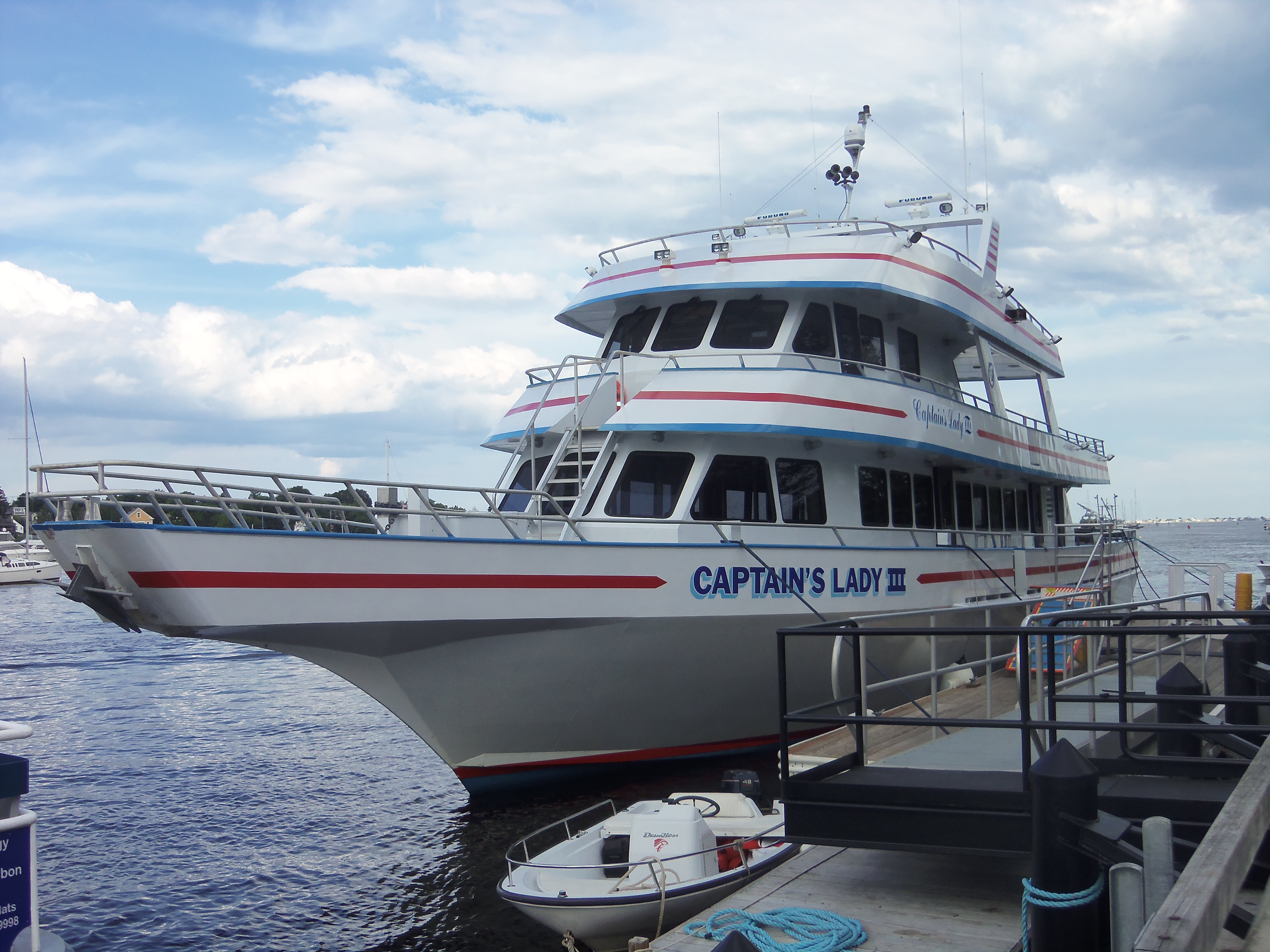
Boats are tied up in a row along one dock in Newburyport, Massachusetts. The harbor opens into the Atlantic.
It's a great place to take off on a whale watch.
It’s a great place to take off on a whale watch.
It's a working harbor with treacherous currents, yet mooring comes at a premium.
The working harbor has treacherous currents, yet mooring comes at a premium. The mouth of the Merrimack River is on the horizon.

FURROW

Like the American bison that dominated the prairie, the continuous ocean of tall grasses, which for so long spread from a corner of Ohio into Montana and Colorado, has been decimated. Homesteaders – seized by a fever to possess farmland of their own – sowed apprehension in their furrows. Inhabitants and land itself now lay open to chronic infection. After each harvest, the Breadbasket of the World, the Interior States of the American Soul, is left vacant, a stubble desert awaiting rebirth. Descendants of those who made this band agriculturally productive bear both its blessing, in economic output, and curse, as if no one can entirely escape the desperation that prompted settlement in the first place. In the recesses of the psyche, inheritors of these spaces must likewise sense themselves to be buffalo-people, and then fear they, too, may be heir to this fate. Pushed to the fringes, the intrinsic beauty and spiritual potential of the heartland are easily overlooked, both by the remnant population and the world’s policy-makers. Today’s farmers are mechanics, first and foremost. Cry, then, for harmony and healing – a proper reentry into Canaan, a taste of balm in manna. Look, ultimately, to the surviving bison and tall grasses with their underlying lavender shadings. Respect the faint drumming, growing louder.

A PROSPEROUS TURN

Demand for wool in the first three decades of the 19th century shaped the boom years of agriculture in New Hampshire, at least until the invention of the cotton gin allowed for a cheaper clothing alternative – a condition that was accompanied by a changing American workplace and economy.

The brief but prosperous boom financed many of the Granite State’s landmark large farmhouses and barns as well as the nearly ubiquitous stone fences that are still visible, some in the most unexpected remote forests.

Pay attention while driving along country roads, and you’ll often notice stretches where each house seems to be an evolution among the others. I suspect that what happened was they were all built by one craftsman carpenter and his crew – perhaps itinerants who would stay for a season of erecting a house before returning home – who were invited back in another year to build another, each one to customized specifications. The chimneys, for instance, reveal a progression away from the massive central fireplace of the Colonial era to the use of multiple chimneys after the Revolutionary War – something that has me thinking of how much firewood these houses must have consumed through a winter.

Kodak10 080

It’s possible, of course, that the carpenters and masons and others came to live in the neighborhood as well. But one thing I feel certain: the resident commercial farmers, faced with the demands of their flocks and fields, did not have the time or perhaps even skills to build houses like these.

Kodak10 084

Kodak10 073

Kodak10 075

Kodak10 079

Kodak10 087

Here are some of the fine examples found in a village along a ridge in the town of Deerfield, a neighborhood known as South Deerfield. There are more, I should mention, than I could capture in this outing. Meanwhile, I’d like to know more about the site of the popular Mack Tavern, with its fiddler’s throne to protect the player from the wild dancers.

NATURALLY, SHE HAS REASON TO WEEP

You may remember my writing of the wildlife we have in our yard, even though we live in a city. Maybe I was even bragging, a tad.

Meanwhile, our garden was looking better than ever. Some of it was likely a consequence of all the seaweed we’re using for mulch, plus the compost. Some of it a matter that we got just about everything transplanted on time, and some a reflection that my being free from the office has allowed a little more help with the weeding and harvesting.

On top of everything, the weather has been uncommonly cooperative. There were no late frosts in May, though there were nights we had to bring plants under cover as they “hardened off” before transplanting. We largely avoided a wet June, which kept the garden slugs under control and meant the strawberries didn’t get waterlogged. (They’ve been very tasty. The berries, that is.) July has brought rainfall as needed and also stayed out of the tropical range of oppression.

And then, about a week ago, disaster struck. A groundhog (apparently dwelling under a shed three houses down the street).

We had some near misses in the past, but nothing like this. One year, in fact, a band of possums evicted the groundhogs from their burrow. My wife’s always like opossums.

Overnight, half of our Brussels sprouts and a half-dozen heads of lettuce were obliterated. The rest were wiped out a day or two later, despite our efforts to fight back. Without the possums coming to our rescue, my wife’s taking this personally. For that matter, so am I. What about all that teaching about peaceful coexistence, anyway? What if the other side just doesn’t care?

Living in the city, we can’t resort to the usual line of defense, either, the one many vegetarians no doubt practice. No, a .22 is not an option here. You can run down the list of other weapons and strike them off one by one. Children and pets, after all, live in the neighborhood.

So here we are, mopping up and hoping the cantaloupe slices in the Hav A Heart trap do the job. And wiping our tears.

At the end of Round One, the big trap came out, along with some impromptu fencing. The Brussels sprouts at top right had been capped, which means they're done growing for the year. The lettuce, as you see, was leveled. What we did discover is that groundhogs can read, when they want. Mark's garden was also hit.
At the end of Round One, the big trap came out, along with some impromptu fencing. The Brussels sprouts at top right had been capped, which means they’re done growing for the year. The lettuce, as you see, was leveled. What we did discover is that groundhogs can read, when they want. Mark’s garden was also hit.


WITH OR WITHOUT A PULPIT

If I speak of pastoral Friends, it’s often because I often see there some attempts to respond to problems we, too, face. There are ways their side has adapted from broader society, just as we have, in our own manner. We typically share periods of open worship, though theirs are admittedly much shorter and often filled with prayer requests. We share some common difficulties, starting with the “herding cats” problem or the attempt to transport a hundred frogs in a wheelbarrow; at least we don’t have to go through the trials of hiring or firing a pastor. But there are times, admittedly, when I wish we had someone who could devote more full attention to the demands of our Meeting.

Visiting among pastoral Friends can be challenging, as well as rewarding. There are often differences in language and understanding – same-gender marriage being one. Sometimes we can see ways we fail to reach out into the wider community; I recall one minister telling of making a pastoral call here in New England, where he entered the kitchen of one of his parishioners to find the man seated under a bare light bulb, wearing an undershirt, smoking, and drinking a can of beer. “I go because it’s the neighborhood church,” the pastor was told, as if we should be so inviting. Sometimes it’s the insights from our Puente connection, and the life of Cuban Friends as a community of faith. These encounters certainly help me look at Dover Meeting from fresh perspectives.

Some of the most interesting dialogue among Friends has been happening in the journal, Quaker Religious Thought, which is found in our Meeting library. It’s not just that we share a common root, but also that we face a common future that fascinates me. Often, our experience has more in common than we might care to admit. Sometimes there’s even strength in numbers.