ESTABLISHING MY CREDS

Longtime visitors to the Red Barn are likely aware that I spent four decades as a newspaper editor – experiences that feed into my latest novel, Hometown News.

It’s meant working nights, holidays, and weekends – rarely on a schedule matching the general public’s. And it’s always meant “working under deadline,” where an internal clock is always racing to finish the task on time (or else!). In addition, it’s also given me some insider looks at the surrounding world itself: having a celebrity standing a dozen feet behind your back is just another regular occurrence. (For the record, they often look quite different than they do on television.) Even as a cub reporter, I saw dead bodies, got inside the county morgue, checked out small plane crashes, met ex-movie stars, faced some stiff competition from the pros on the rival paper. Looking back, I sense how often I was in over my head and wonder how I ever survived.

These experiences have also fed into the Red Barn’s category of Newspaper Traditions, where I’ve written about:

  • The best newspaper ever” The glorious final days of the New York Herald Tribune were like no other newspaper. Nothing like fighting hard to the bitter end.
  • Chancing Upon a Profession: Glenn Thompson’s influence hit me, among many others, in one medium-sized city. He had a knack for finding talent.
  • Hot Type: In the days before phototypesetting and then digital publishing, newspaper production was a highly skilled craft. Here’s an admiration for the long gone masters.
  • Living Under Deadline: When your career hangs on meeting deadline after deadline, with no room to spare, you begin to live differently from other people.
  • The Art of Writing a Headline: Trying to steer readers to a given news report with just four words can be a real challenge. Take it from a pro.
  • Editing Obituaries: Announcing someone’s death and funeral arrangements can be more precarious than you’d imagine. This post, one of the most popular at the Red Barn, became a WordPress Freshly Pressed selection.
  • Four Measures: Just what makes “news,” anyone? Here’s one take.
  • Police Calls, 10 P.M.: Well, there is some behind-the-scenes banter, even when calling the cops.
  • One Phone Call Too Many: And then sometimes the facts get in the way of what looked like a great story.
  • Local, Local: How you define “local” news can backfire when it comes to your readers. Especially when it’s boring.
  • Bias: Sometimes those who accuse journalists of being biased should first look at themselves in the mirror.
  • The Shrinking Page: Like many other products, the newspaper page has been shrinking. It’s about half as wide as it was when I entered the trade.
  • The Human Imprint: Not too long ago, the editors and publishers were well-known public figures.
  • Objectivity, for Starters: There really were some strict standards and practices.
  • Windy City Perspectives: The tower of the Chicago Tribune holds some special memories for me.
  • Painful Neutrality: Again, maintaining a discipline of objectivity comes at a personal price.
  • Free of the Entourage: David Broder was the best of the breed. I wish I’d said hi.
  • End of the Line: One of the last editors who put a personal stamp on a paper was David Burgin. Maybe that’s why he was always getting fired.
  • Get Out of the Way: Real reporters are invisible observers. TV’s imitation inserts itself on the story.
  • You Read It Here First: Plagiarism has always been a dirty practice. Here are a few examples.
  • Reality Check: When it comes to seeing “liberal media,” some people fall off the far right of the world. The one that’s still flat.
  • A Logical Conclusion: The more conservative the nation’s editorial pages become, the more circulation declines. Think about that.
  • Death in the Afternoon: The newspapers published in the afternoon once had the blockbuster circulation. Here’s why they vanished.
  • Beware of Unintended Consequences: There are times embarrassing things slip into print. Lewd expressions, especially.
  • Beware of Survey Conclusions: Marketing research can lead to bad choices. It helps to put the findings in perspective before taking action.
  • So Much for Romance: And then there was the reporter’s lament as he returned from covering a large singles’ mixer.

I invite you to visit or revisit the postings, especially if you’re new here. And I promise there are more ahead.

~*~

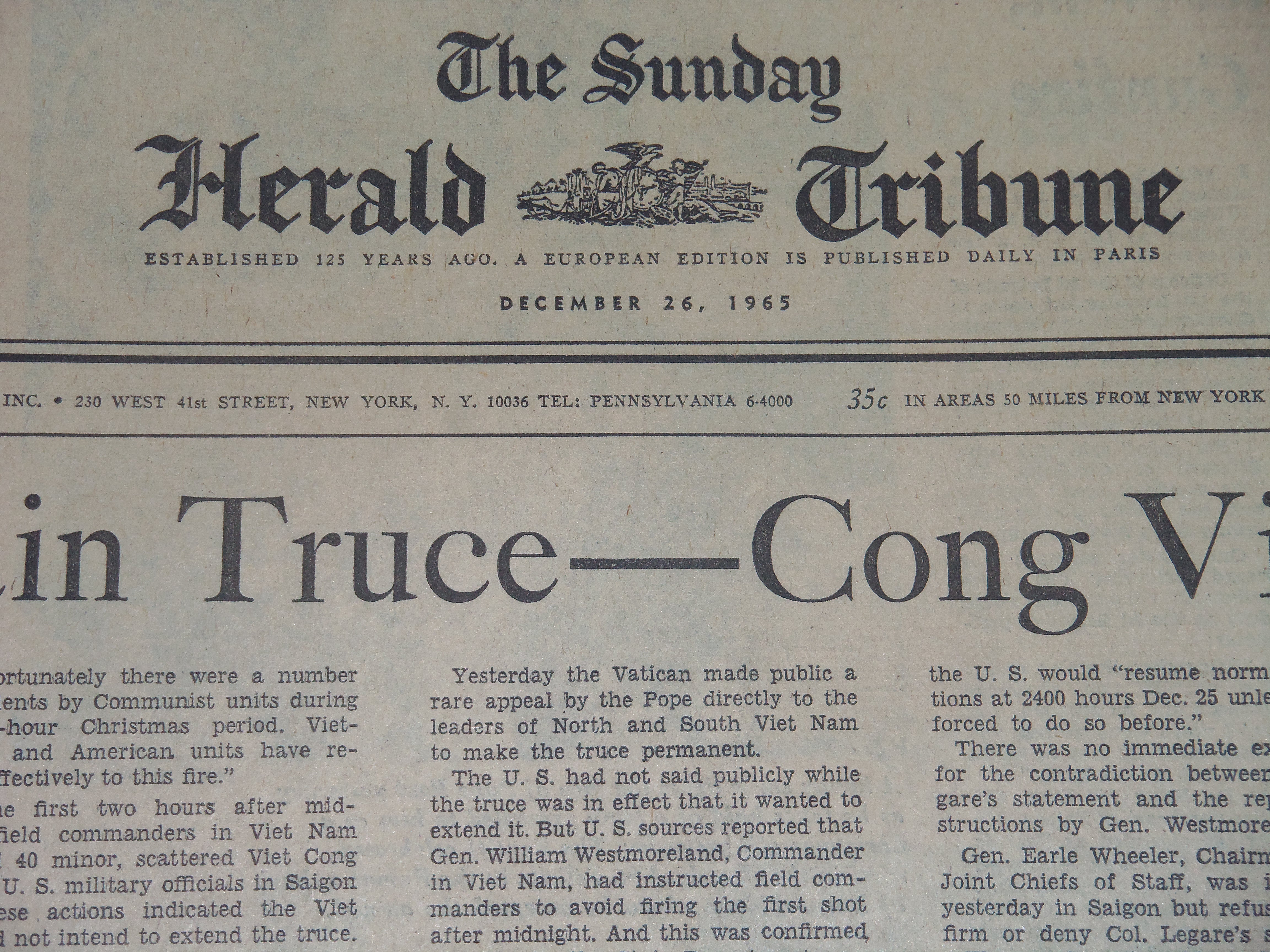
While we’re at it, here are some pages from the New York Herald Tribune’s final years, when it established itself in my mind as the most elegant and exciting newspaper ever. (Remember, I was still a teen and a budding journalist.)
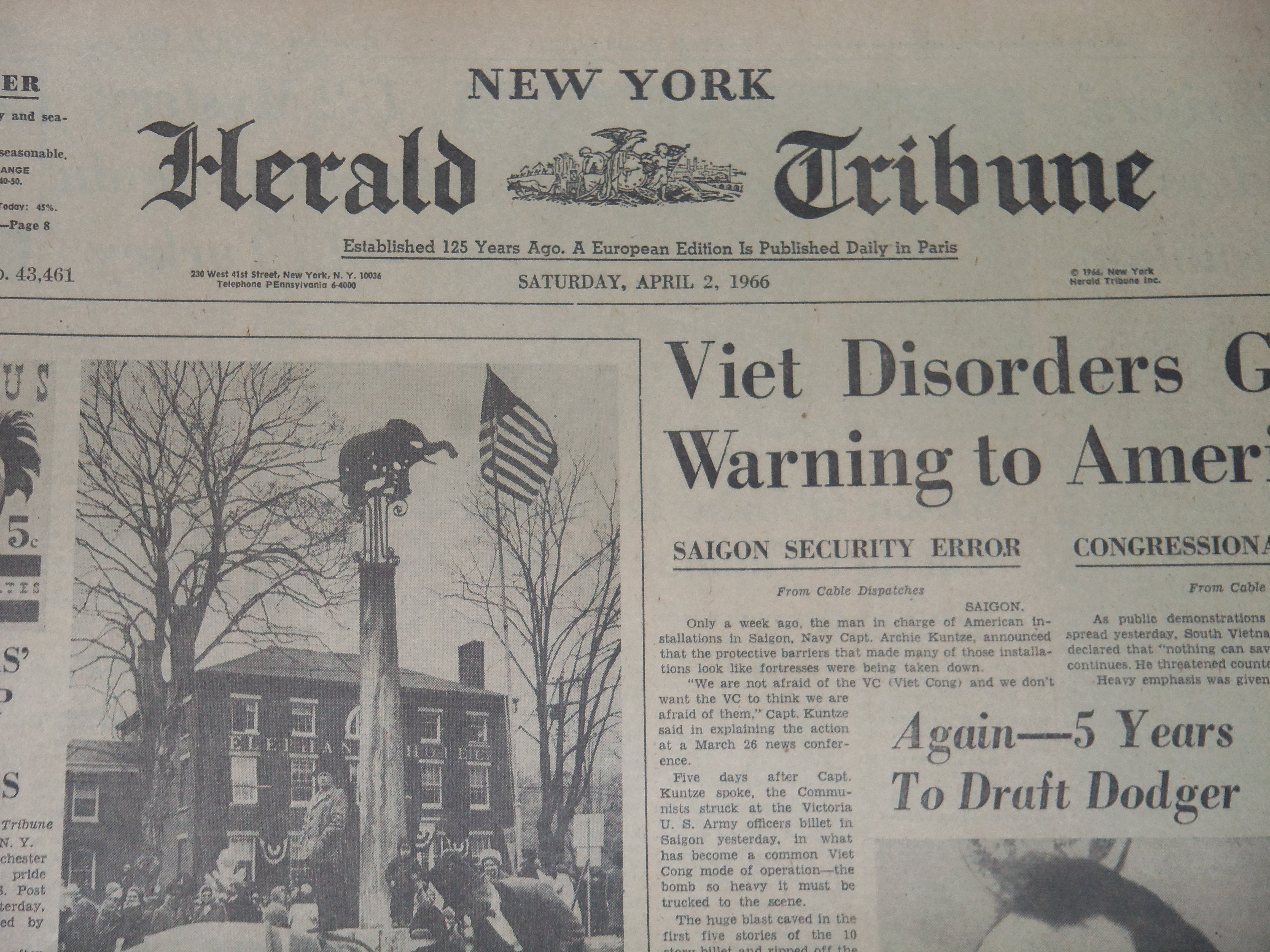
The daily edition.
The daily edition.
And Sunday.
And Sunday.

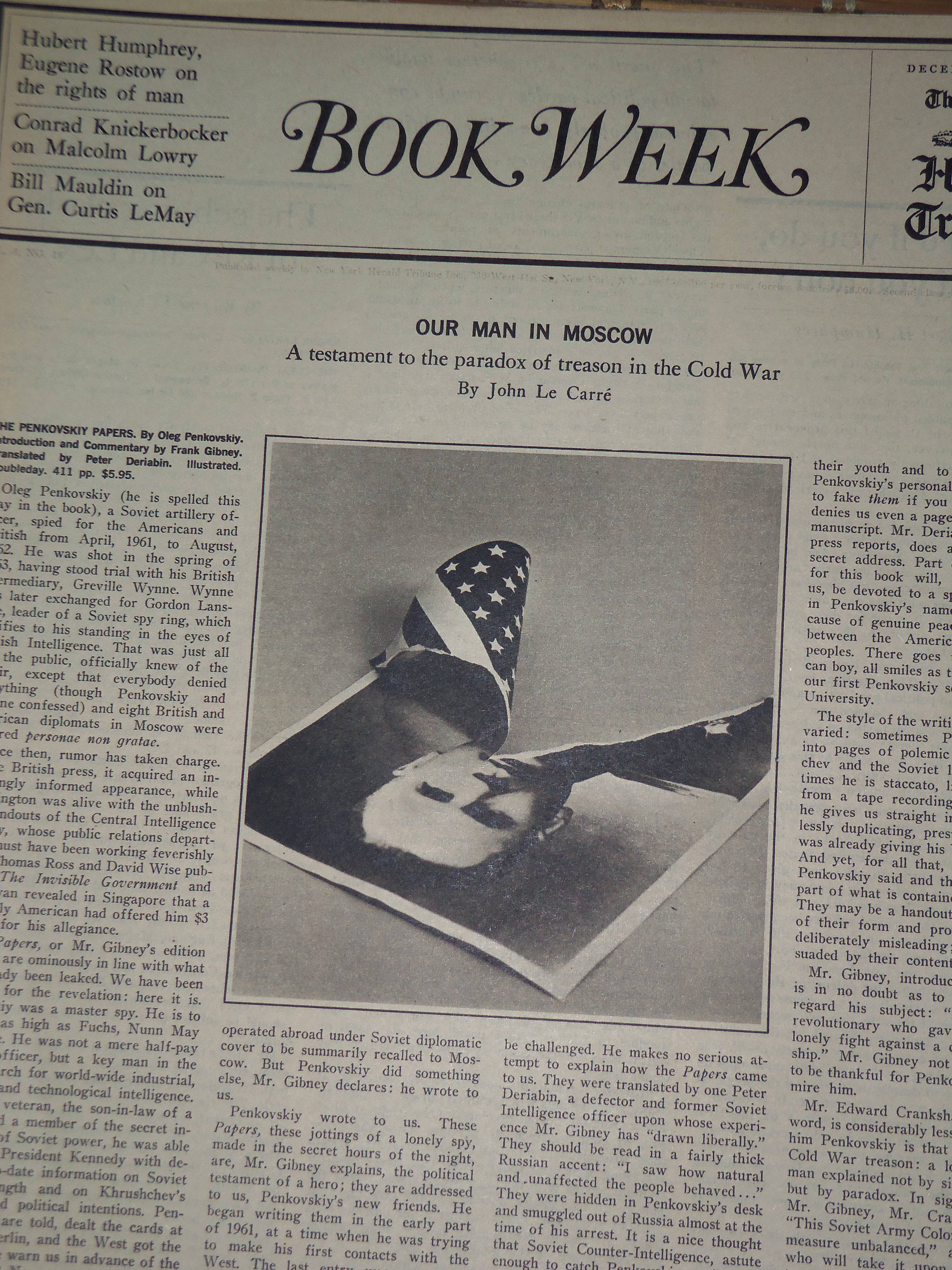
Among the Trib’s legacy was New York Magazine, which originated as the Trib’s Sunday glossy magazine. It was classic. And Book Week reflects a time when books were really important, at least in the eyes of the informed public.
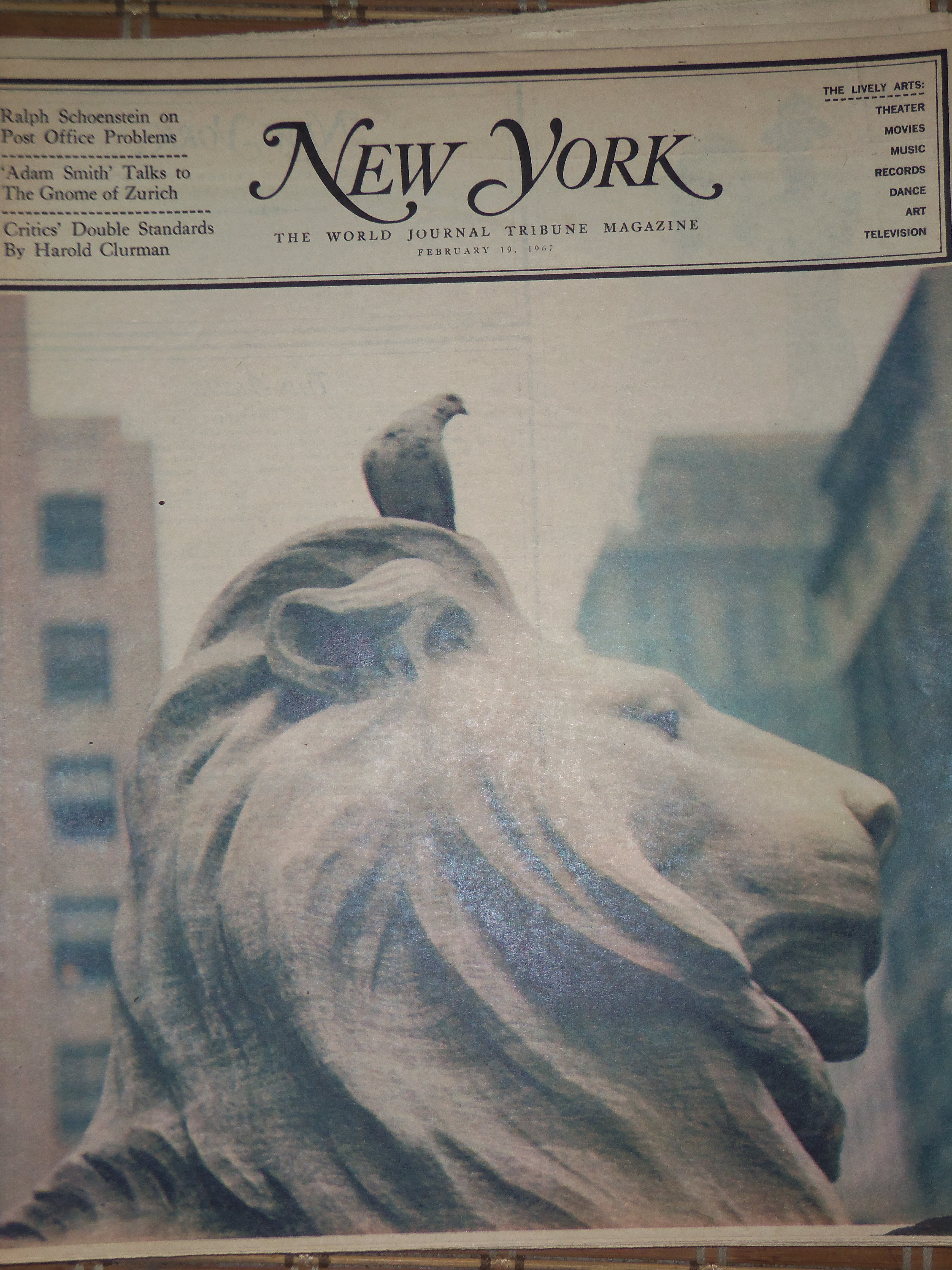
The Sunday mag.
The Sunday mag.
And the books review section.

~*~

Not all of the exciting journalistic action took place in Gotham or Fleet Street or Chicago’s competitive shootouts, though.

Much of the most dedicated and innovative work emerged in small communities in the heartland where a few individuals could make an obvious difference. That’s the story I explore in my latest novel. In some ways, it’s Tom Peters’ Pursuit of Excellence meets Dilbert on steroids. It might even resemble some places you’ve labored.

 ~*~

To find out more about Hometown News or to obtain your own copy, go to my page at Smashwords.com.

RUNNING WHILE I CAN

So we’re having coffee once again, one of my favorite authors and I, and while he’s a decade younger than me, I still marvel at his relentless output.

Why do you pace yourself that way, I ask.

Because time’s running short, he answers.

As I said, he’s a decade younger.

Maybe we should talk to an older painter we know, a good decade-and-a-half ahead of me. The one who’s still painting furiously. Quite possibly better than ever.

BULLETIN TIME

So here I am, looking at a catalogue of “every Sunday bulletin subscription service and other ministry resources.” You’d be surprised by some of the products addressed to a Quaker meetinghouse, and I’m still wondering why church furniture has to be so uniformly ugly. This one, however, catches my imagination.

If you’ve ever been part of a congregation that has ushers, you likely remember how they hand out a leaflet while leading you to a pew. The folded paper would have a colorful image on the front and a meditative reflection on the back. Inside, mimeographed back in the days I remember, was the order of service and an array of announcements. I have to say that the graphics have improved in recent years, and I rather like the format that opens into three leaves, rather than two. For a moment, I consider this as an alternative to our announcements period, at least until I realize that someone would have to type and print them. Still, the thought of ushers revives my meeting’s concern for having greeters at the door.

As I look over the samples, however, I must admit how foreign most of them are to our experience. The one with a large American flag and a kneeling soldier over the words, Lord Jesus, is especially troubling. Others seem superficial with their platitudes or cliché. Maybe there would be shock value in some, with their communion cup and bread or photos of country church spires. One set proclaiming nature’s splendor comes close, if it weren’t for the cutesy texts, while the set I find most acceptable is aimed at black congregations – which isn’t quite us, either. Not with all our blue eyes and master’s and doctorate degrees.

I guess if we ever have a need of weekly bulletins, our best option would be to feature work by our resident artists – Brown, Carolyn, Connie, Edi, Gail, Jane … and, of course, the children. Now that would be inspiring.

COUNTING TO SEVEN

Dover, where I live, is proclaimed as the oldest permanent settlement in New Hampshire and the seventh oldest in the United States.

Counting gets tricky, because there were earlier settlements that were abandoned. As best as I can determine, then, here’s the list the counts to seven:

  1. St. Augustine, Florida, 1565
  2. Santa Fe, New Mexico, 1607
  3. Newport News as Hopewell or Elizabeth Cittie, Virginia, 1613
  4. Albany, New York, 1614
  5. Jersey City, New Jersey, as Pavonia, New Netherlands, 1617
  6. Plymouth, Massachusetts, 1620
  7. Dover, New Hampshire, 1623

While I found Weymouth, Massachusetts, as Wessagussett, 1622, the town itself notes 1630 as its settlement. And Taos, New Mexico, 1615, was abandoned by its Spanish missionaries in 1640. As I said, counting gets tricky.

WHAT MAKES A VOICE DISTINCTIVE?

You have to wonder what makes some voices so distinctive. Maybe it’s what makes a master. They way a few notes instantly separate Mozart from Haydn or announce Beethoven. A few strokes, a Rembrandt from Vermeer. Any number of writings.

I think of particular musicians, too. The conducting of Max Rudolf, for certain.

The way God claims to know each of us by our voice.

AFTER THE TRAGEDY

Here in New England, the battle for control of the Market Basket supermarkets remains the biggest news story – but with a storybook twist. Rather than ending up as another soulless corporate bottom-line victim, there’s been a resurrection.

The bitter DeMoulas family feud finally led to an agreement less than a week ago in which the Good Guy (aka Arthur T) buys out the other half for roughly $1.5 billion. Ownership stays here at home. And, yes, there have been cheers all around in this remarkable alliance of stakeholders – managers, workers, loyal shoppers, and their communities – against the faction that fired the Good Guy and his visionary leadership.

The boycott held through August. The parking lots were vacant. Workers saw their hours cut. Some managers were fired … and now they’re back.

There’s almost a party atmosphere in the stores, but nobody’s slacking. Managers began showing up to work at midnight just an hour after reports of the agreement surfaced. Suppliers offered to deliver goods directly to the stores, rather than the distribution center, to speed the restocking of depleted shelves.

Many details remain to be ironed out, and a lot of damage will take time to repair. But at least there’s also a rainbow.

SPACE FOR DECOMPRESSION

It’s hard to believe five years have passed since we made the loft of the barn much more usable.

When we moved here, the loft was accessible only via a second-floor catwalk from the master bedroom, and getting there and back could be tricky, especially when snow was piled on the deck.

I’ll save the home renovation project description and photos for another time, and just mention that it involved removing the catwalk, deck, bedroom doorway, and barn loft doorway, installing stairs inside the barn and lighting in the loft.

What it essentially did was give us another 450 square feet of usable work and storage space – especially once we replaced the leaky roof two years ago. (Gee, I think that’s the size of some of those Ikea model apartments.)

Admittedly, it’s not someplace you linger for much of the year. It’s not insulated and there’s no heat, so you do little more than dash in and out in January-February or July-August, but for me it’s been a huge blessing.

As I wrote in August 2009, an “especially humid Tuesday: No Rick yesterday or today.” Our carpenter/master electrician was “off on another project.” We were in no rush, anyway. Still, enough of the project had progressed for me to note, “Having the top of the barn – the Squirrel Piss Studio or Jnana’s Red Barn or the Summer House – finally available as usable space is mind-boggling. At last! Ten years. A time for decompression, unpacking. The difference in scale as a result of the larger space (framed posters, for instance, now appear so much smaller).” I detailed more effusively in my journal. What I noted was “t

he array of items: places I’ve gone off to, to live. Sometimes unwillingly. The skulls – steer, horse, dog. Elk bones. Shells.

“So much to discard, too. My burgundy valet bag, an artifact of the past (after 9/11, nobody travels with one). Burgundy, LAL’s color. Same as the Chevy. The specially designed coat hangers, with their folding hooks – open for the hotel, closed to slide into the bag. Those two years, a ‘backpack for business travelers.’

“A Quaker altar: a candle on a piece of squared birch firewood, the side with bark facing the sitter; incense; in time, flowers or dried arrangement; Bible, Gita, notebook?

“I sit in the space and recall how Roger Pfingston could sit for hours in front of a blank piece of paper without writing a word. Maybe smoke a cigar. Now see it as his way of meditation and self-collection.”

The space also gave me a place to resume hatha yoga exercises after way too long a hiatus.

I love having large surfaces where I can spread out the pages for a poetry collection and rearrange the sequence. I’m not one who works easily with a crowded desk, unlike many of my colleagues. No, it’s Zen order or Quaker/Shaker simplicity I desire.

The loft is far from the year-round office studio I’d envisioned when we moved here. To get there, though, apart from the money, we’d have to cover the wooden underside of the roof I’ve come to enjoy viewing. The feel would become much different than the funky, well, summer cottage I so much enjoy now – even when it’s fall and spring rather than summer when I most use it.

Besides, to be candid, as I’m able to clean out and dispose of more and more, and as I move increasingly to online, paperless writing and submissions, I don’t really need the big office of those earlier dreams. At least that’s what I’m thinking now.

Who knows what’s really ahead.

FORGET THE STEEPLE, IT’S ALL THE PEOPLE

One of the most revolutionary concepts the Society of Friends has upheld is an understanding of “church” as a body of believers – not as the building (“the Methodist Church” beside the river) or the organization (“Presbyterian” or “Congregational”) or a hierarchy (“the Vatican” or even a nearby bishop I once heard quoted as saying, “I am the church.”) This sense of a gathering of the saints is the reason ours is a “meeting” of the church – of the believers – and why we gather in a meetinghouse, rather than calling the building itself the church. For that matter, early Friends typically referred to the gathering place of other denominations as a “steeplehouse,” thus emphasizing a distinction between the building and its users.

Keep your eyes and ears open, though, and you’ll observe the inevitable turns that try to fit us into those other concepts. Calling us, for instance, “the meetinghouse people” or our organization the Dover Friends Meetinghouse, rather than Meeting. While there is something quaint about referring to a “Quaker Church” down the road, it misses the point entirely. For us, a church does not burn to the ground – its martyrs may burn at the stake or we may burn with a passionate cause, but the church itself will be found everywhere, with many different individuals, and at odd moments. In fact, in this understanding, “church” even becomes a verb – something that can happen on a street corner or a field or our workplace as easily as in our historic meetinghouse. As I remember one couple saying, “We were unchurched and then we discovered Quakers.”

By extension, the Society of Friends was envisioned as being a people of God, modeled loosely on the Jewish people, with much of the teaching and practice coming down at home through generations of families. Whatever shortcomings Quakers have experienced in instilling the continued practice in their children, we remain a people of faith – one chosen freely, and experienced both personally and together. We meet, indeed, in many ways.