ARID SHADOW

The conditions that created the desert where we lived created what was sometimes called a “rain shadow.” It was ironic, actually, considering that we got far more sunlight by living on that side of the Cascade Mountains than if we’d been in, what, the rain glow?

Sometimes, though, it seemed to dry up all of our emotions, too.

A journey into the murky places of endless fog, mist, and rain, in contrast, could do wonders in the soul.

~*~

Olympus 1For a free copy of the complete American Olympus, click here.

ROUND AND ROUND WE GO

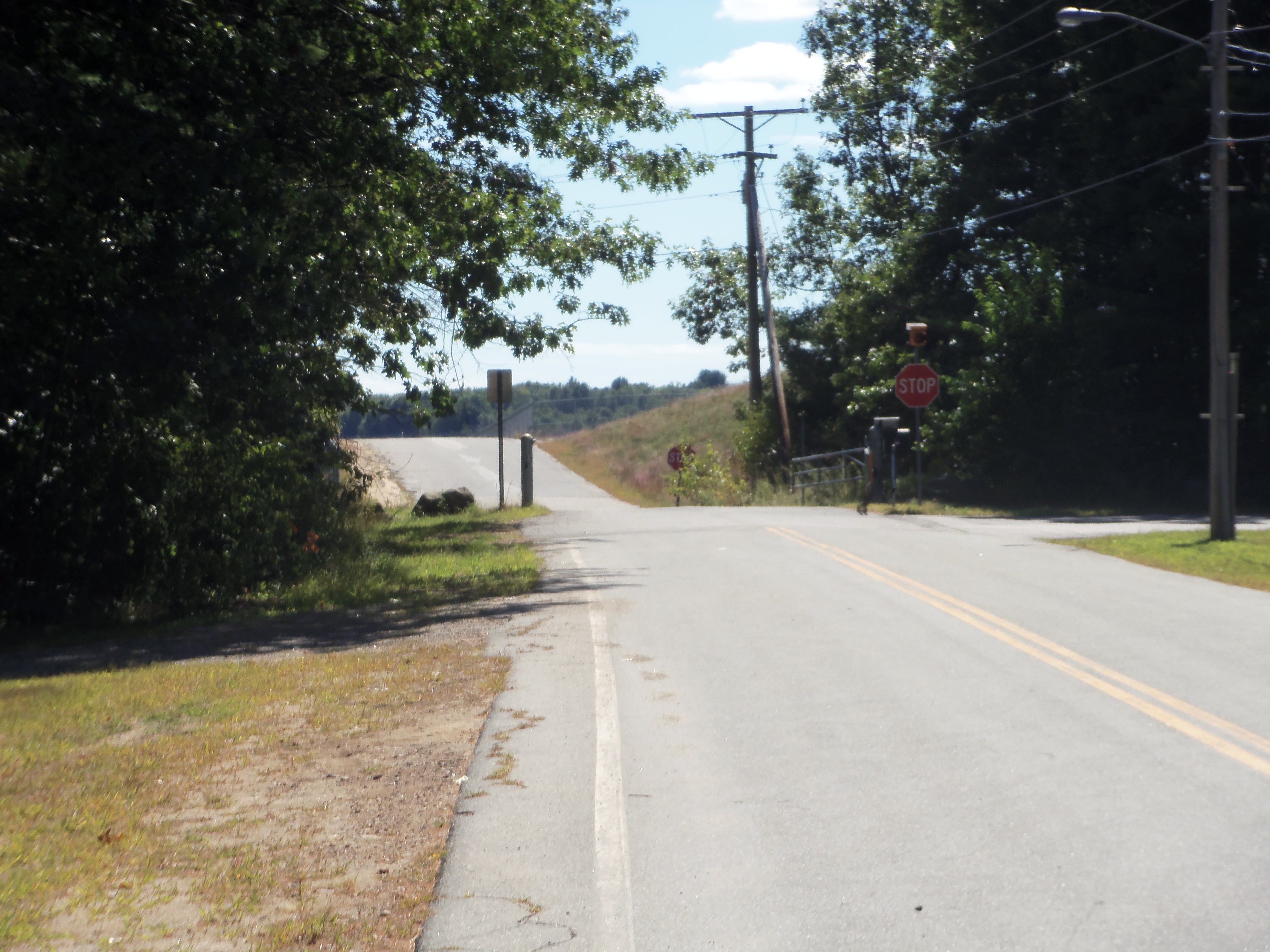
Fair warning, especially when there's no backup.
Fair warning, especially when there’s no backup.

Drivers from other parts of the world are often terrified by New England’s use of traffic circles at busy intersections. We’re not the only people to use them – Washington, D.C., has some of the worst – but they do become landmarks. In New Hampshire, for instance, a set of directions might mention the Portsmouth Traffic Circle, or the one at Epsom or Stratham or Alton or Lee, shown here.

It's when you add traffic that things get fun.
It’s when you add traffic that things get fun.

Other terms for the routing around a central island include “rotaries” and “roundabouts.” What Romans call theirs would be unprintable in a family-friendly blog like this.


THE SCOUT HOUSE

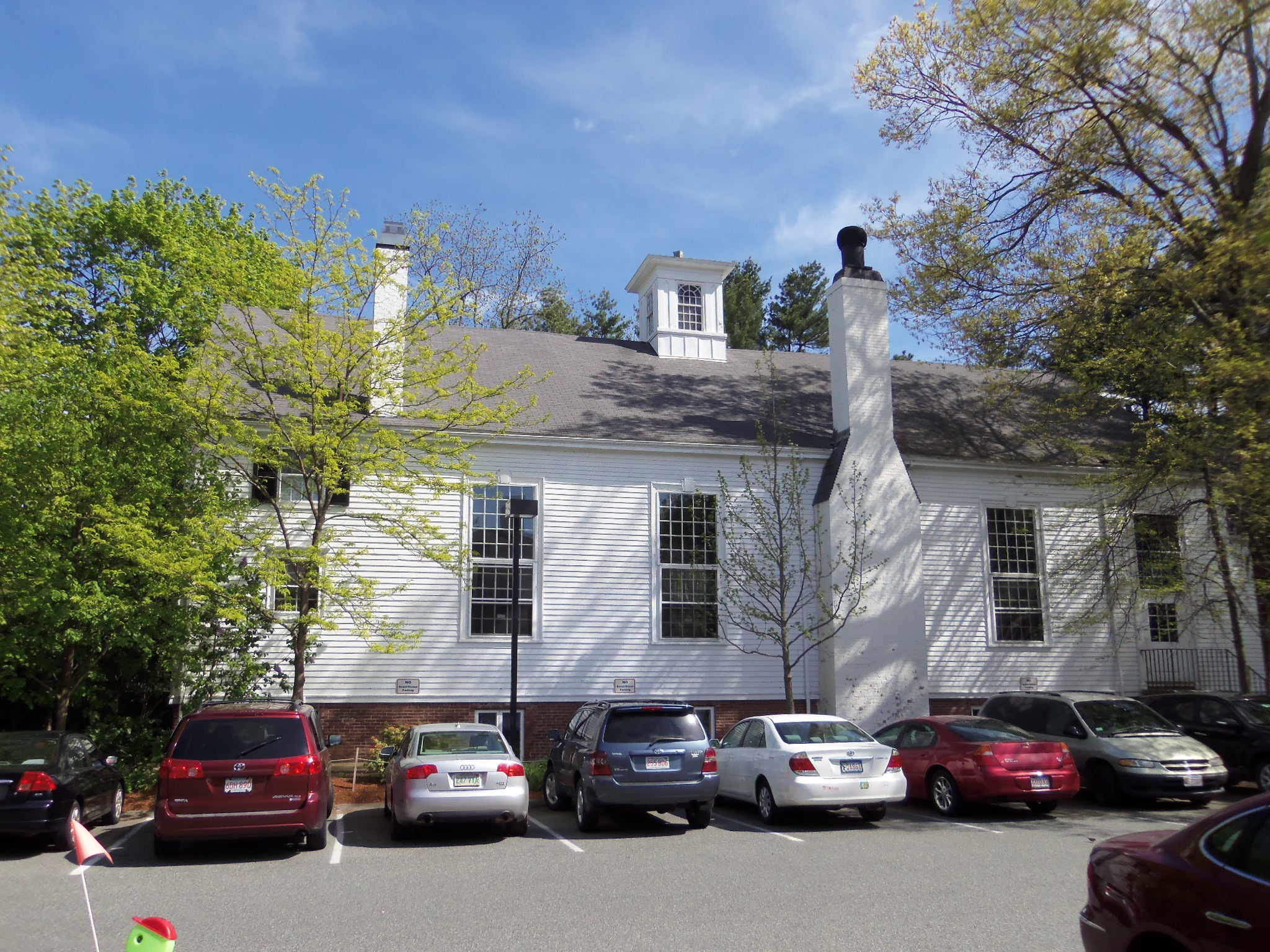
The tradition of New England contradancing flourishes inside the Scout House in Concord, Massachusetts – a former barn now owned by the Girl Scouts and rented out by the folklore enthusiasts. Monday nights are legendary, and weekends are packed.
Seen from the side.
Seen from the side.


EVERYTHING HAS A PRICE?

Driving back from the coast along a rather honky-tonk stretch of highway the other night, my headlights flashed across this sign:

INTEGRITY
— —
FOR SALE

At least, that’s what I think it said. The two blanks, I’m finding, may have said Residential Brokerage.

Still, considering our public life today, the message is disturbing.

How do you read it?

LIBERATING IN THE END

A central question facing compositional artists of all stripes (in contrast to performing artists like actors, dancers, and musicians) is the matter of determining when a work’s finished.

How do you know?

Is just out-and-out satisfaction a measure? A trusty one? Hmm.

Let me suggest some others.

Sometimes it’s a sense that you just can’t go any further with it. And if it’s in a state beyond notes and fragments, maybe that’s it. You’ve hit a wall, a property line, or just the shore or riverbank. So you stop. Period.

There are times, admittedly, when you think something’s finished and put it aside only to find, on returning, it needs more – revision, for starters, and maybe additions and major restructuring. (A friend spoke the other evening of drafting a memoir in the third-person and then redoing it in the first-person, the kind of change I’ve done in some of my fiction. And Brahms had an early symphony that became a piano concerto, if I recall right.)

Working under a deadline can simplify matters. Time’s up! Next!

Nice, if you happen to have an advance or pipeline of delivery or the concert’s coming up.

Novelists might even find doneness appears as the time they find their focus obsessing with the book under the one they’ve been tackling.

Some poets will say that once it’s published, they can let go of it. Finito!

~*~

In the bigger picture, the “finished” question isn’t just about having a manuscript ready. For a writer, it’s ultimately about landing the work in a reader’s hands. A place where a dialogue can begin. And getting that manuscript from a polished draft into circulation can be a huge, energy-depleting limbo, especially if your life is filled with competing claims on your time.

In short, you can either focus on seeing that one work through to publication – or you can create the next one, while the inspiration’s still hot. For me, as I tried to balance my writing life with a journalism career, personal relationships, spiritual practice, and so on, I wound up with a huge backlog of finished material. At least I’d wisely not put off the writing for retirement, as had a number of colleagues I’d known – none of them ever managed to fulfill that dream.

What I did find, though, was that the unpublished work became a burden of its own. Its emotional weight inhibited new work. Why bother? It even had a way of twisting my sense of identity – who was I then and who am I now? Think, too, of the relationships that fed into one work – and the people I’m with today. As in lover or spouse.

So the experience of having my book-length works finally being published brings the “finished” consideration across yet another threshold – the matter of being liberated. I can let go of trying to hold that memory, treasuring that epiphany, honoring that friendship.

Should I have just trashed them long ago and moved on into other, non-literary endeavors? Just think of the hours that could have been directed instead to overtime pay, which would make my retirement more secure. Or travel or …

Maybe it’s just a case of hoping for acknowledgement. Hey, here I am!

Still, it’s what I’ve done.

What I have is a feeling of being true to a responsibility carried to its completion at last. What happens from here is, well, liberating any way it goes.

UP NIMBLE HILL

Nimble Hill Road is quite a contrast to the congestion around the mall and big-box stores on the other side of the turnpike.

The town of Newington, just over the bridge on our way to Portsmouth, is easily misunderstood.

With a 2010 population of a mere 753, it often appears to be little more than the Spaulding Turnpike exits to the mall and big-box stores plus a few apartment complexes and a section of the Pease International Tradeport industrial park.

It also has a major electrical generation plant contributing heavily to the property tax base – a major, major factor for any municipality in New Hampshire as it addresses public finances.

The town is also surrounded on three sides by tidewater, including ocean docking on its eastern edge.

But the place was also severely impacted during the Cold War when the U.S. Air Force used eminent domain to acquire 4,255 acres to construct an air base (now turned into the industrial zone) mostly in Newington. The noise of bomber-sized jet planes taking off and landing did little to enhance the neighborhood as a place to live peacefully in those days – the frequent interruptions even forced the grade school to find a quieter setting. After all, its runway, now used by commercial, private, and National Guard flights, is among the longest in New England.

Given those factors, few people would have much incentive to take the Nimble Hill Road exit from the turnpike.

As it turns it, the road presents some classic New England just before culminating in a dead end near the runway. The historic district is a treasure.

Here’s a taste of what you’d see.

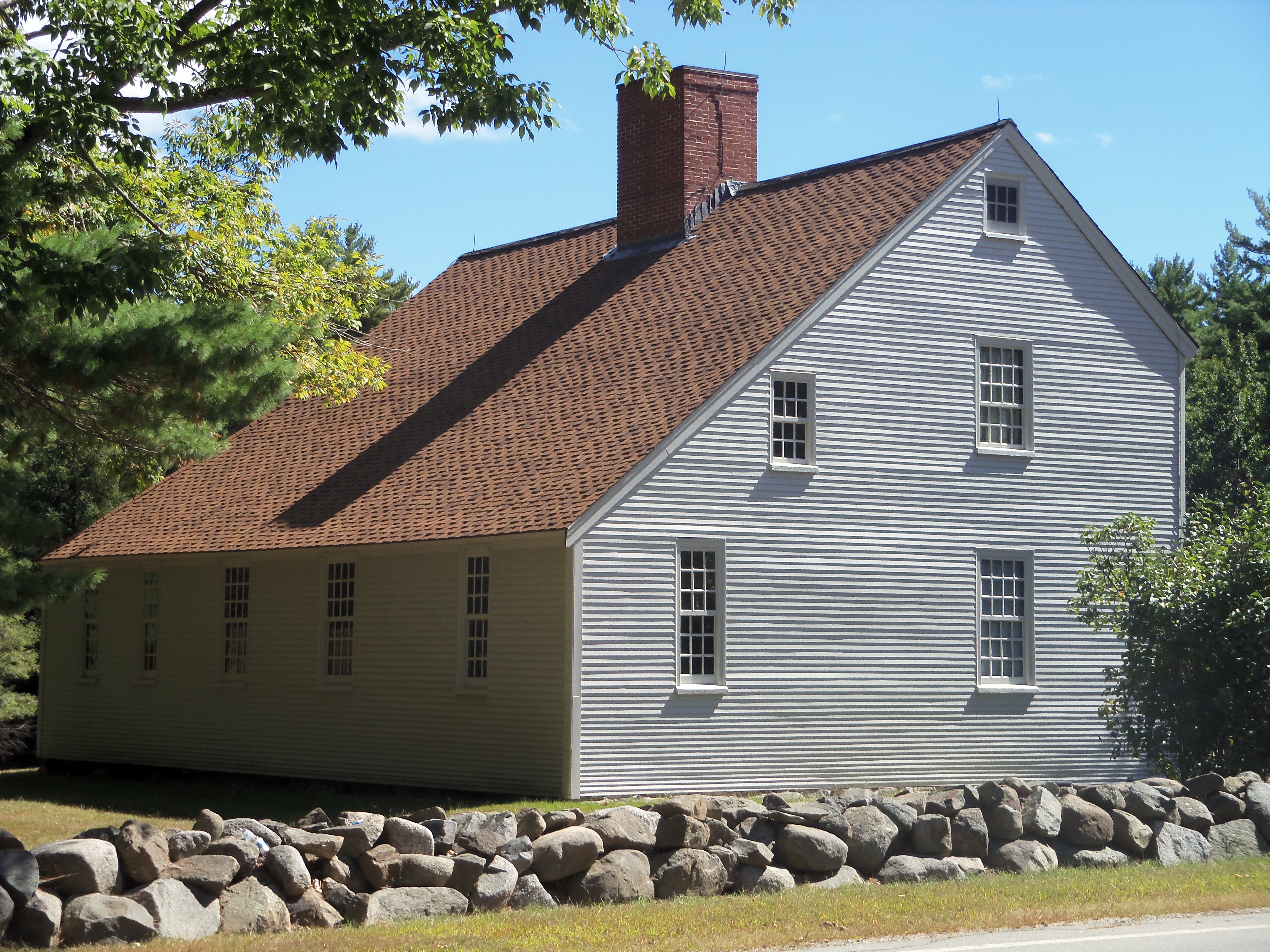
The 1725 parsonage includes a salt-box addition as an early renovation.
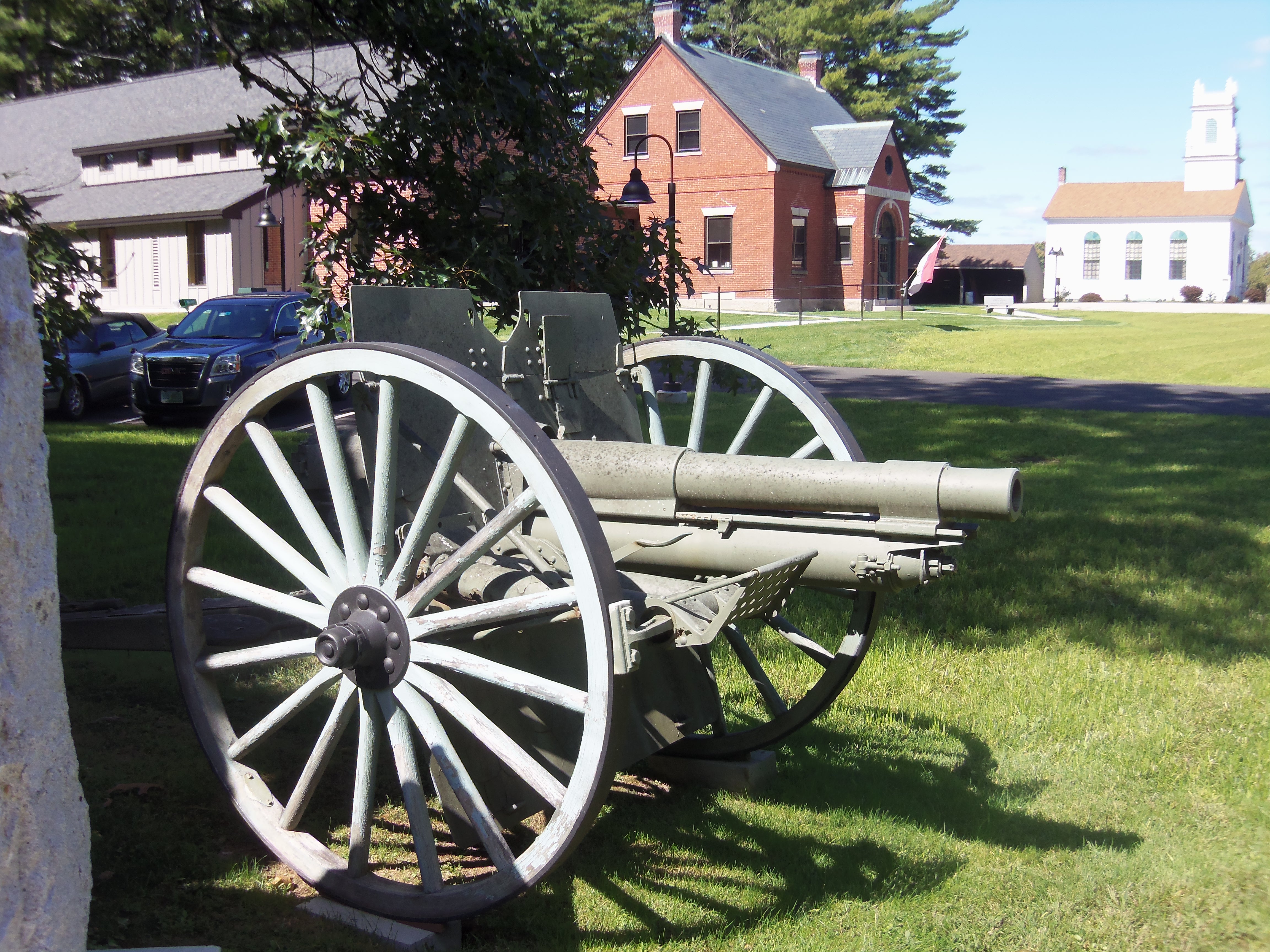
A cannon is part of the town monuments near the center of the Parade where the militia practiced. More Newington men served in the Siege of Louisburg (13) and War of 1812 (12) than in World War I. The background includes the well-funded library and 1712 meeting house, said to be the oldest in New Hampshire. (Hope they mean oldest in continuous use, since I know of two Quaker meetinghouses that are now private residences.)
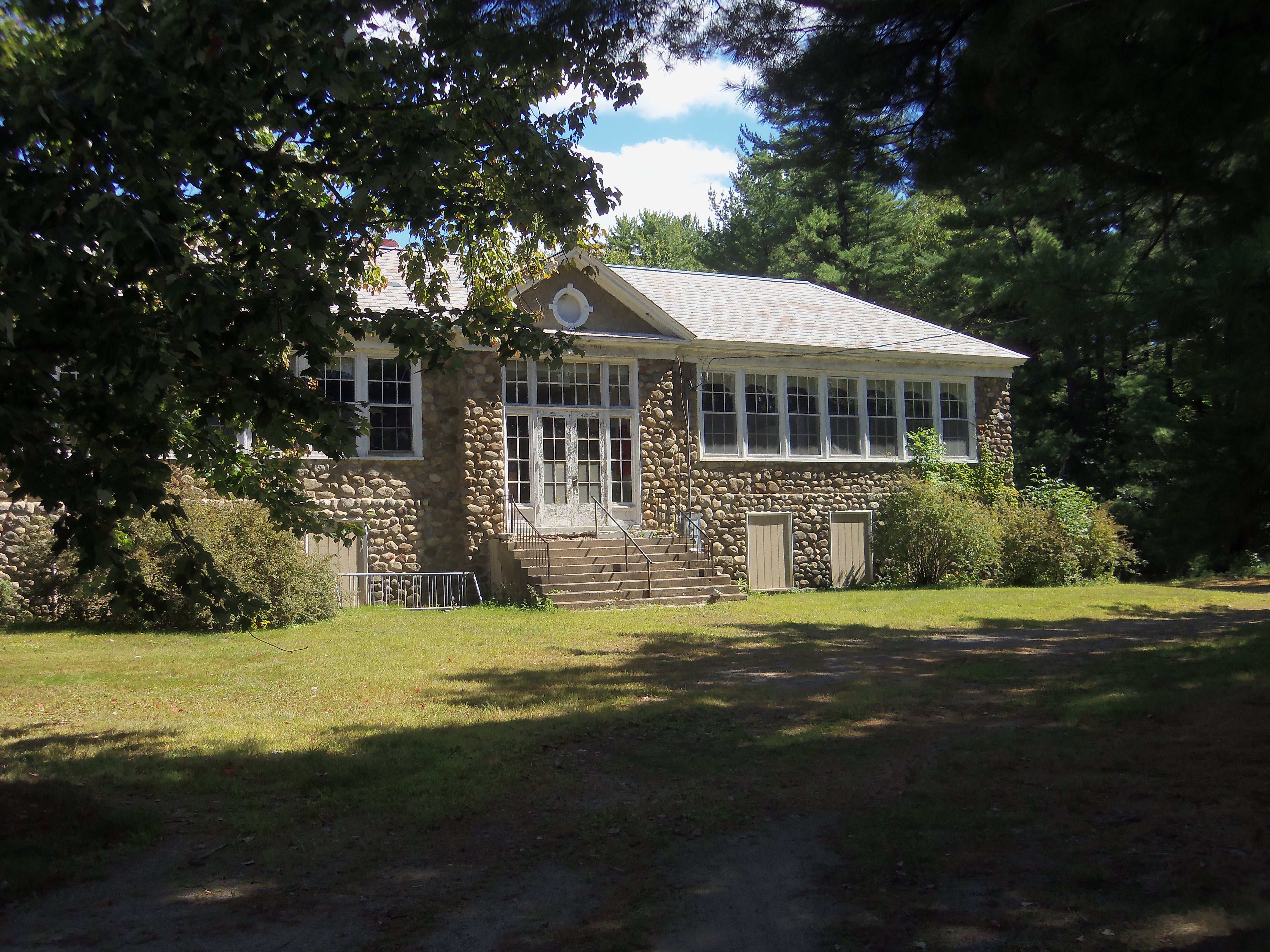
The elementary school fell victim to loud noise from Air Force bombers.
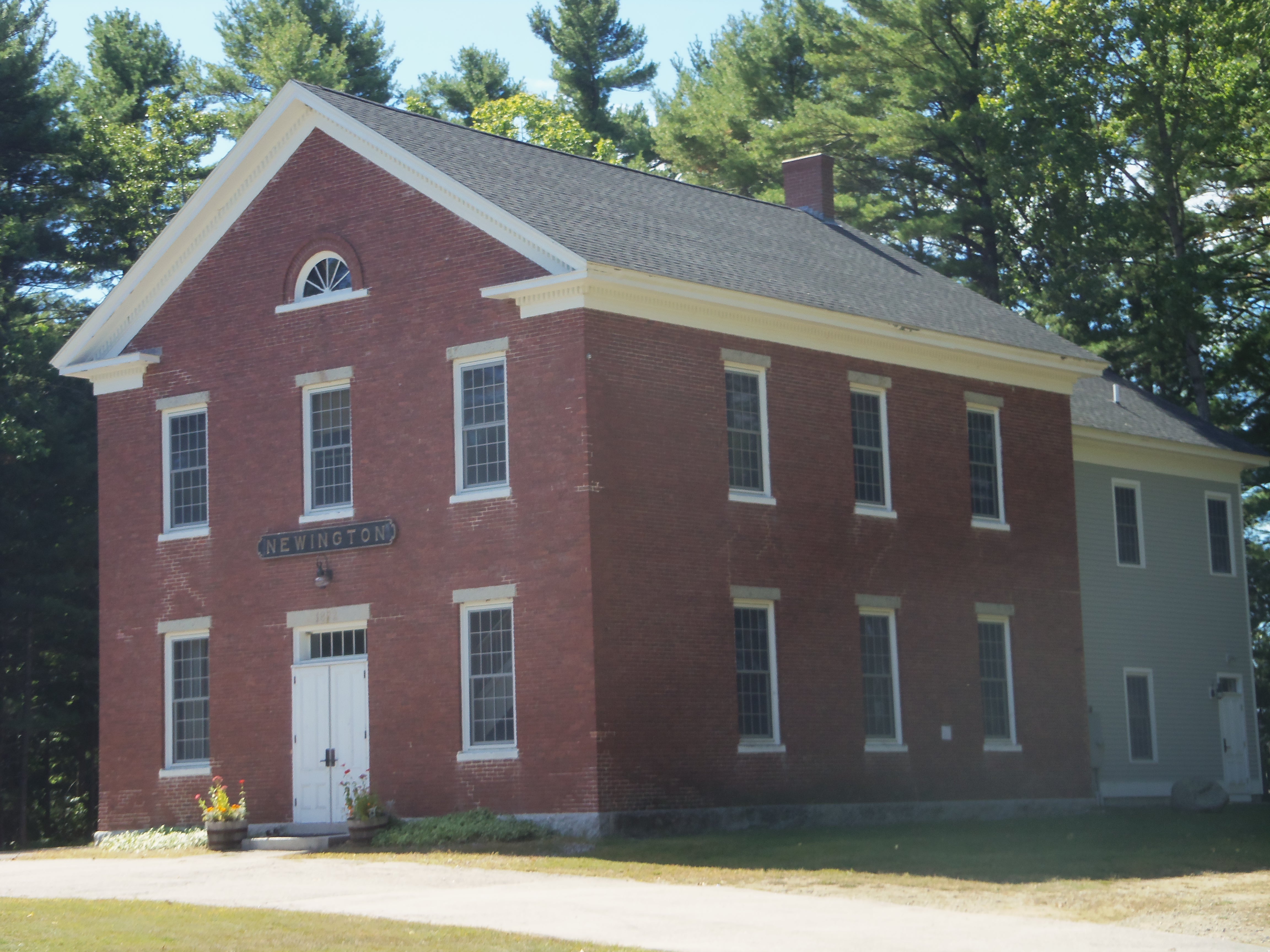
The 1872 Old Town Hall once also housed the school.


ON THE ROAD AGAIN

We’ve entered vacation season (not that we Friends don’t travel widely throughout the year). While it also means that our attendance is likely to be down through the summer, it also means we’re likely to have visitors from, well, just about everywhere – people I expect we’ll welcome warmly.

It also means we’ll have the opportunity in our own travels to attend other Meetings, something I strongly encourage. For the truly adventurous, worshiping with Friends in the “other” streams can be stimulating and thought-provoking. A pastor? A choir? Hymnals? I always learn something. Last time, it was silent singing. Another time, that the Evangelical Friends can have just as much of a cat-herding condition as we do. Memories of a humorous exchange with the baritone sitting next to me in the choir.

There’s also a curiosity about us, too. “Why did you choose us?” – that, in the pastoral meeting style, rather than the unprogrammed worship a dozen miles away. I could have given any of a dozen reasons, but eventually got down to the part, “Besides, I have the book” – meaning a collection of historic essays and oral histories made before the village was flooded by a Corps of Engineers dam, and the new meetinghouse built out along the highway. And then, in the give-and-take of quick conversation, receiving that priceless look and gentle reply, “It’s all fiction.” As a writer, I had to laugh, knowing all too well how difficult it is to get any story right. The quick exchange followed by some suggestions of sites to poke about afterward, if I had time.

I come home with a renewed appreciation for every visitor who ventures through our doorway. With a little more flexibility in our own open worship. With my own additional chapter to a well-used book on the shelf behind me. And with an expanded awareness of our body as a Society of Friends.