a slice of rubber Swiss cheese in the mail … no envelope, either, just a tag with my name, address, and postage
blown-glass Galileo weather globes
bottle of dishwashing detergent and two towels on our wedding
You never know what we'll churn up in cleaning a stall
a slice of rubber Swiss cheese in the mail … no envelope, either, just a tag with my name, address, and postage
blown-glass Galileo weather globes
bottle of dishwashing detergent and two towels on our wedding

Campobello Island, New Brunswick, viewed from Eastport, Maine.

Ours doesn’t come indoors until the day before Christmas and rarely is it decorated before dark. Long ago I learned the price of pushing the tradition to get the job done earlier in the day. Nope, it’s not a task to be done more efficiently.
Last year, we cut ours at Moosehorn National Wildlife Refuge with a permit. You’d be amazed how few natural trees measure up. We’d see a good one only to find two growing close together. Separated, they were lobsided and had bald spots. This one caught our eye but we then passed, thinking it might be too open. A mile or two or walking later, we returned and decided to give it a try after all.
Here’s to the wonders of the tradition of sitting in a mostly dark room early morning or evening and enjoying the lighted branches.
The pagan origin of many of the winter holiday’s customs is something I’m all too aware of. For starters, Jesus was likely born in the springtime, not the December 25 Roman festival of Saturnalia, honoring Saturn.
I’m not against acknowledging the winter solstice and the wonders of its long nights, but here are some other dark sides to consider. Not that I want to dampen anyone’s spirits.
Thanks to Good Housekeeping
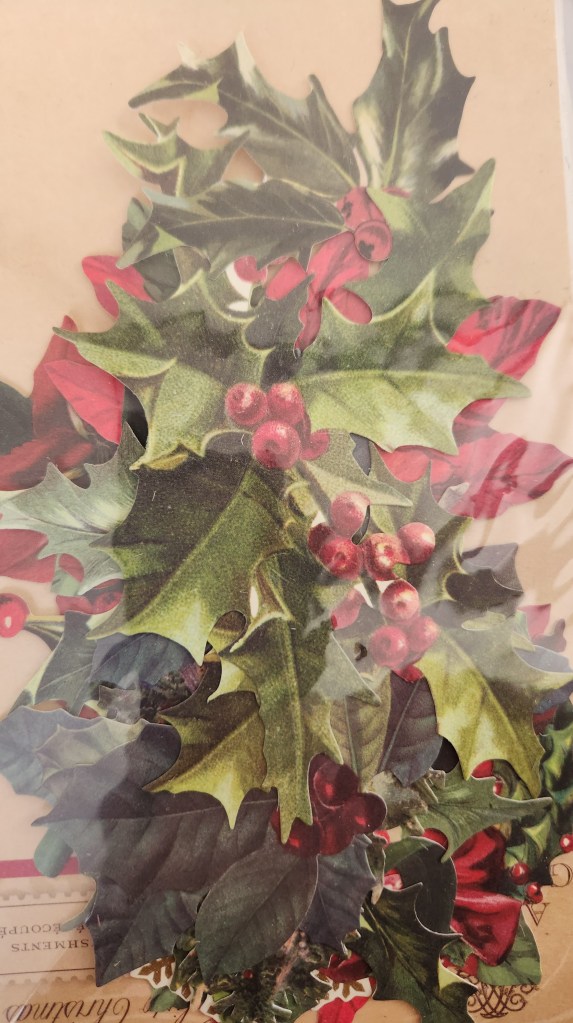
Some things are timeless.

The coincidence of ending my list of favorite writers with Dr. Williams M.D., is appropriate. All but eight of the writers I cite are American, and one of his goals was the establishment of an authentic American voice. Or, as it turns out, voices. And the majority of the writers are from the second half of the 20th century or later.
Williams was an influence on many of them, and he was generous in his encouragement, even if he had met them just once.
I first encountered him as an assignment for a contemporary poetry I was taking at the beginning of my junior year of college. I opened my textbook on a rainy Saturday morning while visiting a friend at another college in Indiana and was soon entranced. The reliance on imagery was unlike anything I’d previously read. Returning to them is always refreshing and unexpectedly surprisingly.
I have a fondness, too, for his short prose, often drafted on a hidden typewriter between patients back in an earlier era of medical care. I’m not sure I’d call them short stories, not in the sense of being deeply crafted like those of Dubus or Lee I’ve mentioned or of being abstracted from real individuals, but they are direct flashes of humanity.
What makes him stand apart from the other big figures of the emerging American poetry – Ezra Pound, T.S. Eliot, Edward Arlington Robinson, Marianne Moore, Wallace Stevens, among them? His form, for one thing, openly reflected American voice patterns, as did his subject matter, arising from everyday circumstances of the common people, for another. I appreciate Kenneth Burke’s insight that poetry was, for Williams, “equipment for living, a necessary guide amid the bewilderments of life.” I’ll extend that to the fiction I love, too.
Looking at his upbringing, filled with Spanish and some elite schooling, I more fully appreciate the fact that he is the one who worked to free us to listen to our own voices rather than some nasal, high-pitched affection for our culture.
the fog’s burned off
but still hazy
with another schooner far off to the left of the Angelique
a sailboat comes between us
another windjammer’s way off on the horizon
while we skirted a sandbar
Camden grows as we approach
the Congregational spire for navigation
perhaps there’s a third behind her

entry into crowded harbor even in shoulder season
a bit tricky
especially when a pleasure boat backs into our path
shouts of “get back!” or “keep moving” finally heard
Coast Guard a bit more astute
the transom of one sailboat ASTARA also the name of our messmate
should they get acquainted sometime
haven’t seen a Kroger product for ages till now
the logo popping above someone’s pack
My messenger bag has a conspicuous stain
its first
remaining as a badge of honor
or oarlock grease
as I’m getting off, “This is all you have?” as in surprised
while I’m realizing how much I overpacked
now to send off a deposit for next year
(which I did)
John Shackford senior definitely explored what would become Eastport in 1782, and, as one account expressed the encounter, “determined to remain and make provisions for the safety and comfort of his wife and children preparatory to permanent settlement.”
The early years of Eastport and its Moose Island are generally fuzzy. Legally, the pioneer white inhabitants were squatters. Captain John initially settled at Broad Cove at the neck of what became known as Shackford’s Head, and soon afterward built a mile-and-a-half away, at the edge of today’s downtown and what was soon known as Shackford’s Cove.
In one version,
“The Shackford family originally settled on Shackford Head, where Revolutionary War veteran Captain John Shackford began a homestead in 1783. … He built accommodations for curing the fish he hired caught by the Indians and some white fishermen … He also erected a strong storehouse of logs, where he kept and sold such merchandise as met the requirements of the fishermen and Indians; the fishery and storehouse were in full operation, and he set about building a dwelling house and planting part of his farming lands. Everything being ready in 1784, he set out in his small sailing vessel, the Industry, for Newbury, and brought to their new home his wife and two children, John and William Shackford.”
The Indians, mind you, were Passamaquoddy, who are still vital component of the community.
In the other version, “In 1787, having built a dwelling-house near the shore, at the foot of Shackford Street, he brought his family, consisting of wife, sons John and William, to their new home in the wilderness …” Not only is the date different, but also their address or its equivalent.
As I said about fuzzy? The consensus for the Shackfords’ arrival seems to be 1783/1784, the end of the Revolutionary War.
Jonathan D. Weston’s recollections had the Shackfords as one of the first six white families in town, arriving in the spring of 1784. Five years later, Weston calculates, the number of households had increased to 22 or 24, “the heads of one-half of these families were either men of English birth or those who had adhered to the royal cause of the war.” Either way,
“John’s little craft was the first vessel owned in the place, as the fishing business up to that time had been done in open boats. Among the vessels subsequently owned by him were Delight, Hannah, Sally, and Patty,” two of them apparently named for his daughters. Patty, meanwhile, “plied between Eastport, Portland and Boston, and was the first freight and passenger boat employed on this route. She was commanded by his son, John.”
While that jumps ahead in our chronology, it does reflect the family’s identity as shipmasters and perhaps also shipbuilders. Shackford Cove wound up with four shipyards along its short shore.
From the start, even before being named Eastport, the small frontier community on Moose Island comprised of a handful of families gained a reputation for “sheltering and sharing the gains of adventurers, smugglers, and gamblers.” Not to cast a shadow over the Shackford family integrity, right? Or making a nice profit?
Welcome to America’s Wild East.
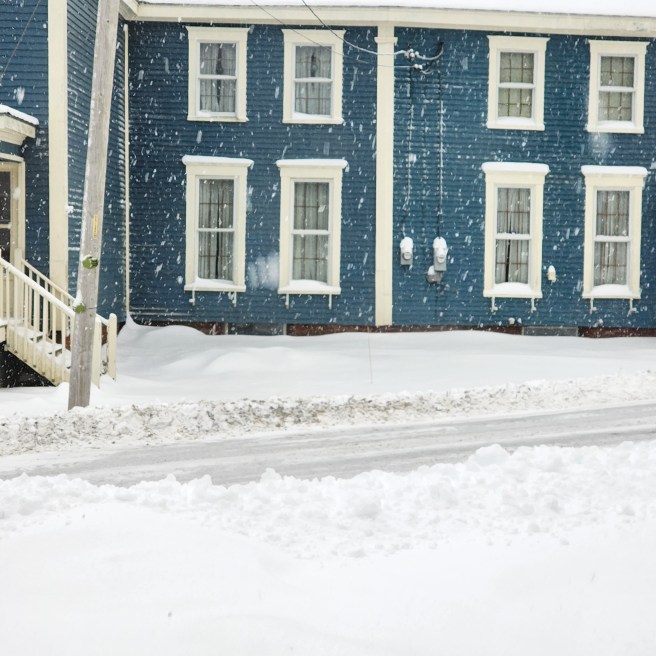
It’s that foot-tall wall of compressed flakes at the end of the driveway that concerns me. The stuff the city’s snowplows leave us in clearing our streets.
Not that I don’t appreciate having cleared pavement once I get out.
 Jnana's Red Barn