A true confession of one writer’s life, in perspective to date

If we’re counting from the time I got hooked on what became a journalism career, I’ve pursued a writing life for six decades now.

It began with hope, of course, including the dreams of glorious success and celebrity. You know, prizes and bestsellers and fame plus fabulous romance, family, and social life all reflecting intellectual brilliance. These were all wrapped up in the dream of a teen and beyond.

The reality, as you’re probably already about to pipe up, is that the practice of writing – whether literature or any of its other forms, including newspapers – is ultimately grubby work with none of those high-life perks for most of its faithful ranks.

That side’s not any different from all the fine pianists in our communities who never solo in public, despite their talent and passion, or the athletes who exercise daily and play unpaid in the parks on weekends, or a minister’s lifetime of well-crafted, scholarly Sunday sermons. The list of examples can go on and on. Practice, as I’ve come to embrace, is essential in many life activities, even in medicine and law. Forget the results, just do it.

While daily journalism paid my bills for most of my adult life, I was shunted to the editing side of the field, sharpening the prose of other reporters and correspondents and crafting headlines to capture the essence of their dispatches for a parade of readers rather than appearing under my own byline. Spare me the liberal elite label of the rabid right, please; real journalists, unlike the folks at Fox, put their leanings aside before touching anything. Facts are facts, which I see as important in fiction and poetry, too. Well, let’s not rule out their role in anything smacking of rationale behavior.

As far as my own writing pursuits went, I engaged in my free time in what I consider “the real stuff” – poems, fiction, work somewhere in between – much of it getting published in underground literary periodicals around the globe. It was enough to sustain me in the larger quest, no matter that the big successes kept eluding me, despite some near misses.

So here we are, at the beginning of another new year and a birthday soon to follow, and I have to admit the impact of aging, this time from the perspective of a writer. Narrow that to novelist, poet, blogger, and Quaker. One who finds there are still too many piles of drafted material remaining in the way to wherever comes after.

While I don’t have a new major writing project on the horizon – especially no new novel – I am feeling drawn to see what might still have energy in some of the drafts I’ve done in support of my earlier literary projects. There may be some fresh lessons to be gleaned or perhaps even wisdom in the light of time. It’s even an opportunity to reflect on a writing life.

An important elder for me has been the poet Gary Snyder, usually at a distance. This time, it’s from his Zen perspective of reaching an advanced age, almost a generation ahead of me:

My wife is gone, my girl is gone,
my books are loaned, my clothes
are worn, I gave away a car; and
all that happened years ago.
Mind & matter, love & space
are frail as foam on beer.

So for now, I’ll be going through the piles and clearing them away – before someone else has to. Yes, sort through the debris and move on.

It’s one more step in the practice of writing, something like daily prayer, something that needs to be done even if it seems nobody’s listening.

Now, let’s see where it leads.

Remembering my barn

A barn is a reminder of work once at hand. Some of it is ongoing, while in other instances it was and then put aside, perhaps for another time. Cows – even imaginary – won’t wait long. Everything needs repair or weeding. Feasting is countered by fasting. Again, the season turns. All together.

The barn was my own. A carriage house, actually – in a small city, the oldest settlement in New Hampshire and seventh-oldest in the nation. How I got there is a long story, told in part here at the blog and in part in the novels.

The barn was a central part of my domestic labors, with dreams of a loft studio, once more pressing house repairs were in place. At least its back half was no longer sinking toward collapse on rotted sills. In our possession, the structure did hold a mother-in-law apartment. The remainder provided storage.

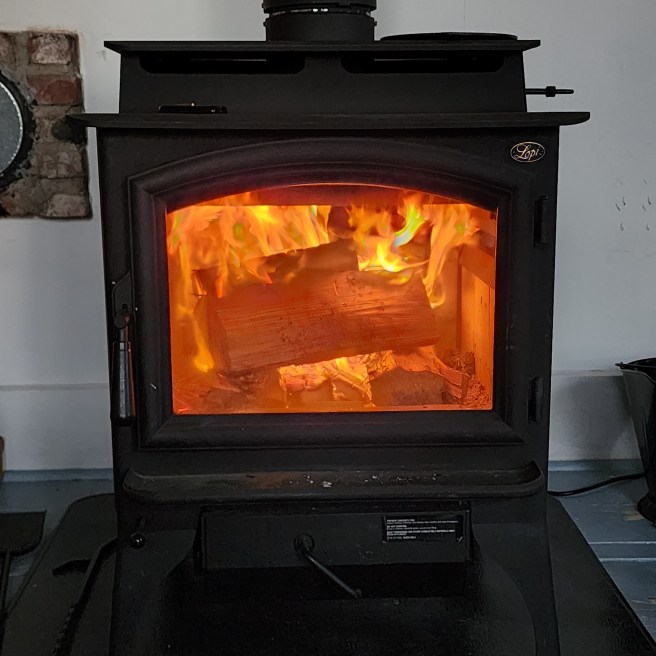
A writer collects many materials – fodder for winter. More important, eighteen years after a divorce, I had remarried, this time with children. Once again, I was with gardens and this time, trails of toys, clothing, and chipped dishes. We did have woodstove heat in the kitchen ell.

Not that anyplace with children is truly idyllic. It was always a near-catastrophe, of the best sort.

Zeal

Carved in stone in Trout Brook cemetery, Weston, Maine, this portion of the deceased’s name makes its own statement. Can we adapt this as a motto for the New Year, with a sense of zest?

I do suspect that gravestones can be a great source of first or last names when it comes to writing fiction, not that I did that in crafting my existing novels.

‘New Year’s Day is every man’s birthday’

With that insight from English essayist and poet Charles Lamb, let’s consider ten more quotes befitting a new year.

  1. “You know how I always dread the whole year? Well, this time I’m only going to dread one day at a time” — Charlie Brown, Peanuts
  2. “We should celebrate every year that we made it through” — Ellen DeGeneres
  3. “Don’t live the same year 75 times and call it a life” — Robin Sharma
  4. “An optimist stays up until midnight to see the new year in. A pessimist stays up to make sure the old year leaves” — William E. Vaughan
  5. “Be always at war with your vices, at peace with your neighbors, and let each year find you a better man” — Benjamin Franklin
  6. “It wouldn’t be New Year’s if I didn’t have regrets” — William Thomas
  7. “Many years ago, I resolved never to bother with New Year’s resolutions, and I’ve stuck with it ever since” — Dave Beard
  8. “I’d rather regret the risks that didn’t work out than the chances I didn’t take at all” —Simone Biles
  9. “Celebrate endings, for they precede new beginnings” Jonathan Lockwood Huie
  10. “8 p.m. is the new midnight” — unknown wit of a certain age who just could have been living where I do

Last chance!

If one of your New Year’s resolutions is to get back in shape – or even simply to get more physically fit, period – the characters in my novel Yoga Bootcamp will stand by you as inspiration. Or, as I’ve been confessing of late, as a reminder of what 50 years of neglect can do to you. (Some of the easiest hatha yoga moves are beyond my ability these days, and that’s before getting to my sense of balance. I don’t think I’ll get around to writing that story, though.)

Yoga Bootcamp tells of a back-to-the-earth funky farm not far from the Big Apple and covers a day in the life of its founder and followers as they seek to ride a natural high without tripping over themselves. As they discover, yoga is about much more than just standing on your head.

The humorous and insightful ebook is one of five I’m offering to you FREE as part of Smashword’s annual end-of-the-year sale, which ends tomorrow.

As they say, Act soon!

Get your copy now, in the platform of your choice, and then celebrate.

For details, go to the book at Smashwords.com.

Come on in to Big Pumpkin’s ashram

Another day, another year

Here we go again. As if we need an excuse to party and pop bubbly.

  1. First, let’s be clear. What we’re celebrating is the Gregorian new year, set as January 1 back in 1582 by Pope Gregory XIII.
  2. New Year’s Eve has always been December 31 going back as far as calendars have existed. But the Romans celebrated the New Year on March 1. Because January and February were late additions, the Roman year oringinally ran between March and December.
  3. Here in the U.S., New Year’s Eve is the most drunken night of the year. The average BAC (blood alcohol content) is reported at .095 percent.
  4. About 48,700 people are injured in car crashes.
  5. It’s not the most dangerous holiday for driving. Memorial Day, with 448 fatal accidents, is the worst, followed by Labor Day, the Fourth of July, Columbus Day, Father’s Day, and Cinco de Mayo. Still, with an estimated 408 fatalities, the New Year holiday can be bloody. Christmas, by the way, is the safest.
  6. Americans hold to their resolutions for 36 days, on average, but 16 percent admit they don’t stick to any of their goals. Some of us don’t make ’em at all.
  7. “Old Long Syne” is an old Scottish tune that got new words from Robert Burns in 1788. It means “times long past.”
  8. Canadian bandleader Guy Lombardo is responsible for making it a New Year’s staple. He performed the piece at midnight at a New Year’s Eve party in New York City in 1929 and eventually broadcast it on radio and TV stations around North America.
  9. Even though it’s become the go-to song every New Year’s Eve, very few people actually know its words. Do you?
  10. January was not named for the two-faced Roman god Janus but rather originates in the Latin word ianua, meaning door, reflecting the opening of a door we’re about to enter.

There’s still a feast awaiting on this plate

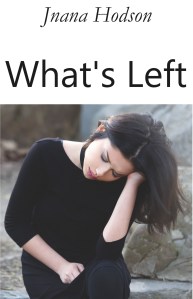
As the calendar year ends, it’s fair to ask What’s Left in your own life as you move on for the next round.

In my novel, the big question is stirred by a personal tragedy, leaving a bereft daughter struggling to make sense of her unconventional household and her close-knit extended Greek family.

In the wider picture, she’s faced with issues that are both universal and personal.

For me, it’s somehow fitting that my most recent work of fiction returns to Indiana, the place where my first novel originated before spinning off into big city subways. The state is also home to more Hodsons than anyplace else in the world, as far as I can see, not that I’ve been back in ages.

What’s Left is one of five novels I’m making available to you for free during Smashword’s annual end-of-the-year sale, which ends January First.

Get yours in the digital platform of your choice, and enter the New Year right.

For details, go to the book at Smashwords.com.


Who would be on your list of favorites?

So here you have 51 of my favorite writers. Looking back over them, I recall one girlfriend who, on entering my apartment the first time, burst out with the question, “Have you read all these books?”

I was equally startled by her question, realizing that this romance wouldn’t be going very far. Of course I had read them. Well, most of them. The others were simply biding their time.

Now there’s also the startling question of just how I found the time to read them, considering I was working fulltime and also writing and submitting to journals intensely on the side. On the other hand, it’s been more than 50 years since I graduated from college, so if I devoured just one book a year, it would add up.

Long ago I discovered that if you ask a classical composer for his favorite composers, or a painter for favorite painters, or writers for their favorites, the list will be filled with names totally new to you. I suppose actors and playwrights and photographers and architects will be just as quirky.

I hope this weekly list of writers has turned up some new names for you in that manner.

I can think of some bad influences, like William S. Burroughs, Hunter Thompson, and Cormac McCarthy.

And think of others who didn’t make my list, though I’ve admired and enjoyed them – Rilke, Rumi, Bill Stafford, Wallace Stevens, Hermann Hesse, Saul Bellow. It could go on and on.

And a few more who are coming into focus as a to-be-read pile. Ursula LeGuin, Cynthia Orzick, Philip K. Dick …

It even has me pondering the question, Does a writer ever read for mere pleasure?

Who wrote the copy on all those cereal boxes I read as a kid, anyway?