Looking at mainland New Brunswick

Americans, in general, know little about their “neighbor to the north,” meaning Canada, though where I live it’s actually closer to the east.

That said, I’ve been learning principally about its province of New Brunswick, with its border coming about a mile from our home.

Here are ten highlights.

  1. It’s one of the three Maritime provinces – the other two being Nova Scotia and Prince Edward Island – and one of the four Atlantic provinces when Newfoundland, which includes Labrador, is added in.
  2. It was set off from Nova Scotia in 1784 when 10,000 Loyalists arrived in exile from the new United States at the conclusion of the American Revolution. They established communities like St. John, St. Andrews, St. George, St. Stephen, and Fredericton. Some of them had even dismantled their homes in New England, shipped them, and erected them anew.
  3. Half of today’s population of 850,000 lives in three urban areas: Moncton, St. John, and Fredericton. As a result, New Brunswick, rather than say Manitoba or Saskatchewan, is proportionally the most heavily rural province in Canada.
  4. Although the first attempted French settlement in the New World was on St. Croix River, 1607-1608, on today’s border with Maine, it was abandoned. Later French colonists, from 1629 on, created a unique society based on dyke-based cultivation of tidal marshes along the Bay of Fundy. French authorities referred to the region as Acadia.
  5. The Treaty of Paris in 1763 not only ended the French and Indian wars with the English colonies but also gave England unchallenged rule of the region, leading to the forceful deportation of 12,000 Acadians. Those who emerged in Louisiana became known as Cajuns. Enough remained in New Brunswick to make it officially bilingual today – the only Canadian province so designated.
  6. About 8.5 percent of the population speaks French only. It’s a dialect stemming from southwestern France and is distinct from Quebecois elsewhere in Canada.
  7. Two-fifths of the city of St. John was destroyed by a fire that broke out in June 20, 1877. Among the 1,612 structures lost were eight churches, six banks, 14 hotels, and 11 schooners. Nineteen people were left dead and about 13,000 people became homeless.
  8. Today the city is home to the powerful Irving Group of Companies, including the gas station chain.
  9. Tourism is also a major economic factor, with the Bay of Fundy and its world’s highest tides as a central attraction. The province also has 58 covered bridges, including the world’s longest, and about 100 lighthouses, not all of them active.
  10. Four-fifths of the province is covered by forest. The Appalachian range extends across the northern half of the province.
Rude awakening? Like at dawn?

All this time spent online is not at all what I anticipated in retirement.

Perhaps, you know, rather than the lingering over coffee and an open newspaper or even a Bible and or deep meditation in front of a candle first thing each day.

I’m still seeking an ideal daily routine, or perhaps even a weekly one.

What are my goals at this stage of my life? I’d still love to have a champion for my literary ambitions.

For that matter, how will the renovations to our dwelling impact me? It should be easier to stay up later or take afternoon naps, for one thing, or even listen to music. Things were getting pretty crowded.

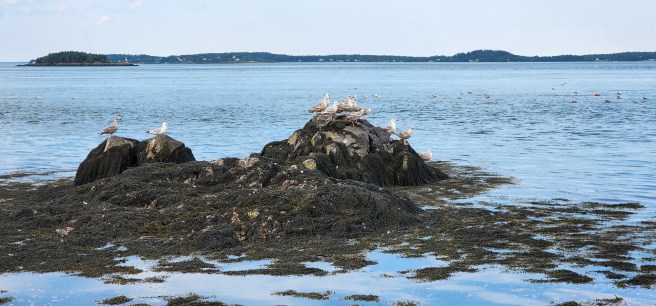
Many of my activities weren’t on the horizon, back when I was thinking ahead to my years of freedom. Blogging, choir, photography, and, for a while, swimming laps all came along after I left the newsroom. As was moving to this remote fishing village on an island in Maine, where 8 p.m. is the local midnight and dawn can start appearing around 3.

One option just might be rediscovering the joys of “simmering” abed in the morning, likely with (decaf) coffee and some light reading or journaling.

Now, if I could only purge some of my deadline-driven dreams that trouble my sleep.


John Shackford junior had his own legacy

In following the history of our house, we’ve veered off from Captain John and Esther’s children as other families added their names to the dwelling. At this point, I’d like to return to the Shackfords to give you a better sense of the family’s additional impact on the community as well as ways the town itself changed over the years. When the Shackfords first arrived, the place wasn’t even called Eastport but rather Passamaquoddy or Moose Island on Passamaquoddy Bay. Sometimes it even went by all three at once. While the sons’ and sons-in-law’s escapades during the War of 1812 have been noted, their seafaring ventures continued well after.

~*~

John junior, for instance, not only commanded the first vessel owned in the town, but he also ran the first packet in the Boston and Eastport line, “through winter’s storms and summer’s fogs.” A packet was a new concept in shipping, with vessels departing on a regular schedule, rather than waiting for a full load or a set number of passengers. The innovation could be risky for the investors or highly profitable, depending.

In a fuller telling, he “was commander of the first vessel owned in the town and commander on the first freight and passenger traffic boat established between Eastport, Portland, and Boston, and his last packet, the Boundary, the swiftest vessel on the coast after 21 years in this service, had to give place to steamships.”

The May 9, 1828, edition of the Eastern Argus announced that the schooner Boundary, 142 tons with John Shackford, master, the schooner Edward Preble, and the Thomas Rogers would be running between Eastport and Boston, stopping at Portland both directions. That gives us a date and a possible commercial association of the three vessels. After that, newspaper mentions of the Boundary arriving or departing Eastport or Boston with Captain Shackford at the helm were common.

He “knew by sight all the dangerous places along the coast, but never had more than a passing acquaintance with them, and during his long experience as shipmaster never had occasion to call upon his underwriters for a dollar.  The Boundary, his last packet, so well known as the swiftest vessel on the coast, was driven off the route on the introduction of steamships, when she was 21 years old; but for 20 years after she was a staunch craft, engaged in the coasting trade.”

Coasting, should you wonder, refers to traffic that followed the coastline rather than crossing the open ocean. The swift, agile coasting schooners could easily run into trouble further out from the coast.

The December 2011 edition of the Maine Coastal News described the Boundary as having two masts and dimensions 79 by 22 by 9 feet. And, yes, she was built on Shackford Cove in 1825 by Robert Huston.

There was a legal tangle on June 26, 1826, when, as commander of the Boundary, Captain John appeared before the Boston board of alderman to respond to charges of an alleged breach of the law to prevent the introduction of paupers from foreign ports.

Captain John junior’s sons included three shipmasters: Benjamin Batson Shackford, who died in Eastport in 1885, aged 73; Charles William Shackford, master of the brig Esther Elizabeth, who with his vessel was lost at sea in the winter of 1853-1854; and John Lincoln Shackford., who died at St. Thomas, West Indies. More on him later.

John’s wife, Elizabeth Batson, came from another seafaring family. She died in 1830. Did she travel with him, as many captains’ wives and families did? I suspect he married a second time, perhaps to Eliza A. who died in Eastport on February 17, 1899, age 84 years four months five days.

When John junior died on August 12, 1866, he left no will. His obituary in the Eastport Sentinel, in the manner of the time, did not name other family members, something that might have revealed whether he had remarried after his first wife’s decease. Instead, it said, “He was a devotional man always found at prayer meetings and public preaching when he was able to be there.”

Remember, John junior grew up in the house we now own.

Hand it to raccoons for wily ways

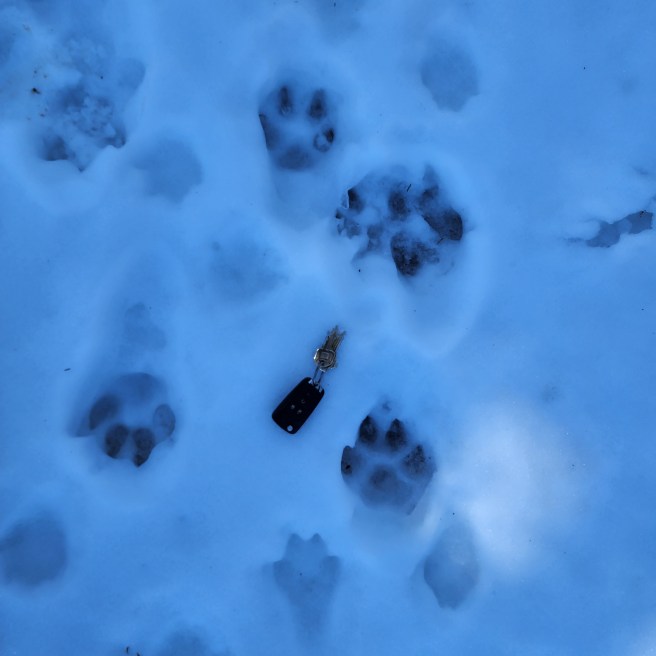
Native to North America, these mammals with the distinctive bushy dark-ringed tail typically live about two years in the wild, weigh up to 20 pounds, and have babies called kits.

Here are ten more considerations.

  1. They’re known as Trash Bandits because of the black “mask” across their eyes and their ability to find treasures amid human trash, often by overturning garbage cans or lifting the lids loudly in the middle of the night.
  2. They’re nocturnal and, during the day, rarely venture far from their dens.
  3. They eat a wide range of food. Grasshoppers, mice, insects, frogs, fish, ground-dwelling birds and their eggs all fall on their menu, as do dead animals, nuts, berries, pet food, and the content of bird feeders. If you possibly can, do not feed them.
  4. They’re excellent climbers who will even shimmy up a pole to get those bird feeders. (It’s not just squirrels, then?) And their back feet can rotate backward to allow them to climb down trees headfirst. Maybe even those poles, too.
  5. That mask deflects the sun’s glare and may aid their night vision. It may also hide their eyes from potential predators. As if you want to know what they’re thinking.
  6. They seem to wash their food before eating it, even if there’s no water, though water does enhance the sensory awareness of the finger-like toes of their front paws. Those slender fingers are nimble enough to hold and manipulate food and objects that include doorknobs, latches, lids, bottles, jars, and boxes. Beware, they are one of the few animals that can open doors. So far, I haven’t heard of any plants with that skill.
  7. They are smart, maybe even more than the typical domestic cat. They’re noted for solving complex puzzles in captivity, as well as their frequency of escape.
  8. Unlike many creatures that have declined as human development spreads, raccoon populations have thrived in urban and suburban areas. Toronto has even been dubiously dubbed the Raccoon Capital of the World.
  9. They are the second highest reported carriers of rabies, exceeded only by bats, though few cases have extended to humans. They are also susceptible to raccoon roundworm, which can spread through feces to the soil and then pets or small children. They can also transmit distemper and leptospirosis.
  10. Their hearing can even detect earthworms underground. Do watch what you say.

In case you’re interested, their name comes from the Algonquian word “aroughcun,” translating as “he who scratches with his hands.”

Ointment? I was skeptical

When my plantar fasciitis and related ankle pain kicked in again, I assumed that the only real healing required extended rest.

Shoe inserts, a few exercises, and ibuprofen seemed to provide some relief, but I really don’t want to be taking one more pill in my daily regimen and, frankly, I wasn’t so sure that anything that would cover up what my body was trying to tell me was such a good idea.

Finally, I did cave in at my wife’s suggestion of Voltaren nonsteroidal anti-inflammatory ointment. I just couldn’t see how something applied to the surface of the skin could really reach far into the muscles. I guess all that Bengay smeared on me in my childhood hadn’t convinced me.

We buy ours in Canada, by the way, where the tubes that are offered are stronger and longer-acting.

So far, as I’ll crow, my attitude’s changed.

It even has me reconsidering some of the traditional treatments in the healing circles of our neighboring Passamaquoddy tribe. Pine tar, anyone? They say it works wonders.