Author: Jnana Hodson
In downsizing to a remote fishing village in Downeast Maine, this eclectic writer feels everything's coming together.
With degrees of disorientation
From banter with Esperanza, I see I was already harboring a dream house in the woods, rather than the sleek flat in a high rise in midtown. Woods, but no mention of lakefront.
From there, the volume leaps rapidly into autumn. “It’s been so long since I have written. … Vagueness replaces articulation.”
Molly says everybody talks about their problems, but very few talk about what makes them happy.
At one stretch, I ranted about how few people could relate to my love of classical music etc., yet also how little I knew of rock or Hollywood stars. I see now that wasn’t the root of my loneliness, but rather my inability to see them as feeling creatures for reasons other than what facts they might share.
~*~
Out of the blue: “Nikki’s fucking up my head. I look strange (though mystic, interesting, intriguing) when I see myself in reflection: the hair and beard: where am I? I want to run but realize the malaise is within. … I’m homesick, but for where? Not Dayton, unless it’s [her family]. Not my parents or the Moons. Or Antioch?
~*~
Molly’s “We’re going to discuss infinity.”
“Oh, that will take forever.”
A note of taking a bubble bath at Molly’s – we didn’t have a tub with our apartment.
Also, her friends had the strangest names: Leo, Lousy Ruly, Zoom-Zoom, Beaver. How would a plain James fit in?
~*~
“It kinda pissed me to discover I paid $1.95 (plus tax) for Trout Fishing in America only to see it was set not by Linotype but rather electric typewriters, probably some poorly paid secretary …”
~*~
Interesting, when I claim there’s nothing Quaker about Quaker Lake, other than being in Pennsylvania. “Nor is there a meetinghouse for miles about. … Unlike Brackley’s roadside dive.” Quakers were still way off in my future.
~*~
Recollections of Fay, her smiling baby teeth and playful body, her wordplay mind, yet eons behind … while Judith gives nothing but her body but wants my soul, says I still love Nikki and should see a shrink.
~*~
Much of the volume continued the lines of judgmental social commentary cloaked as verse. Interwoven are attempts to define the landscape, both surrounding me and for the nation at large.
There were also pages written in pencil, now too faint to decipher.
The back page has both Nikki’s brother and Pips’ phone numbers and their addresses at Cornell. [Kara was now also there, all three as freshmen.]
A typed teletype roll insert: Time is flying by on dragon wings. Let us use Chinese dragons: they are beings of beauty and magic and have a pearl between their teeth.
So who I was addressing when I concluded, “Catholic hang-ups are beyond my scope of comprehension: I hope you arrive to where you can not only name them but comprehend them: the task of living is immense: we have no other choice. Peace & love.”
[Incinerated]
~*~
From Spiralbound Hippies, with commentary from now.
Situating the experiences and place
We can wonder how much of the history I could have captured if I had owned a camera. The images I’m digging up for this series help some, but skirt much of the grittier realities I faced.

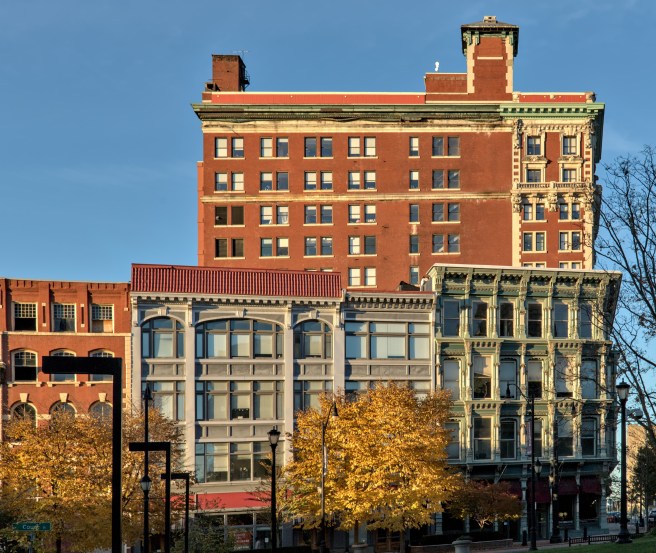
The city itself was already well into Rust Belt decline and probably would have been intolerable apart from the hippie-era adventure of living in a college-town slum.
This was my introduction to the East Coast, and my first time of living in proximity to mountains, albeit the Allegany foothills of the Apalachin range (New York spellings). I was still spellbound. The region was called the Southern Tier, to the west of the Catskills and south of the Finger Lakes. The city,- or Tri-Cities when neighboring Johnson City and Endicott were included, was generally working-class and infused with a spectrum of ethnic minorities.
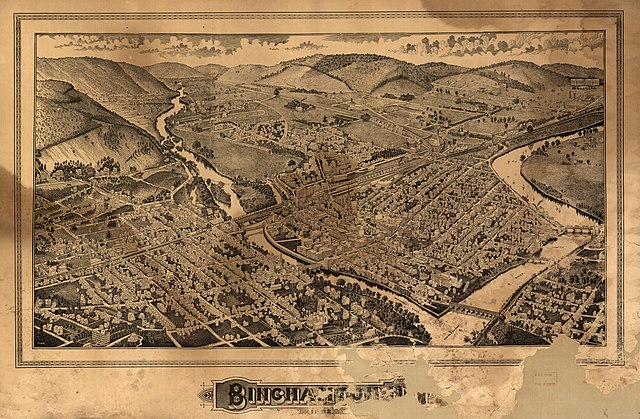
The city was nestled into the valley and once had water-powered mills along the riverbanks.
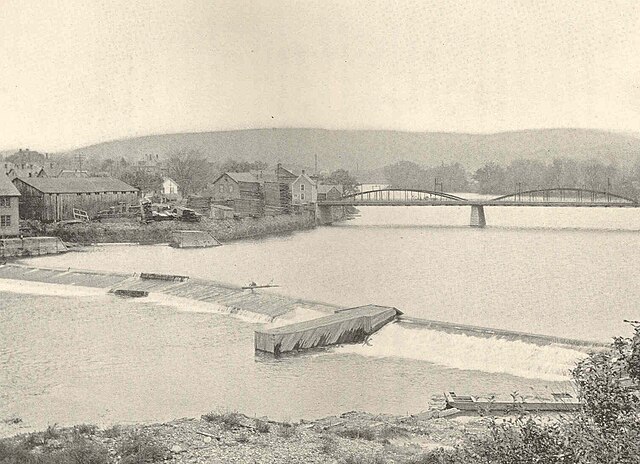
The Susquehanna itself was a fascinating river, as I present in my chapbook of poems carrying its name.
A little of this and a little of that
I’m guessing this is from a few weeks after my futile trip to Montana and Utah.
The pages open with some Pips at Quaker Lake details, opening with Sunday, “the most beautiful day since I’ve been here.” I arrived to find her in the water, playing with children who were climbing all over her. “The water was refreshing and clear and black. I could see my toes on the flat stones four feet under water. … Swimming together to come out somewhere beyond the weeds.” Reading the Sunday New York Times while she worked the crossword, “I felt like a lord.”
Pips, do note, was a courier at the office, fun to be with but interested in me only as a buddy. For me, she was much better than being alone.
“That night,” on the phone, “Nicki told me she’s going to Salt Lake for three weeks … and I decided to quit” the pursuit. “I feel so free, albatross from my neck.”
Yeah, right. Like a kick in the gut.
A few days later, after a big breakfast with Thor and Vivienne, I went to check out the Hawley Street apartment building, came home to throw the I Ching, and asked Vivenne to accompany me in seeing the unit. She had a coughing problem the whole time I was around her.
The coughing had in fact awakened her; she came out in Thor’s blue robe, its waist hitting her below the ass, pockets at her knees.
“Jesus, you’re short,” I giggled.
My day off, I stopped at the office to get my paycheck. It came out on Wednesdays? Also, got a new tie.
We went back to the apartment, I put $250 down – two week’ pay – and returned to Susquehanna Street, where I removed my tie, changed shoes, and put on a headband.
Then we were off to Scranton, where she would get the bus to Manhattan.
She whipped out some joints (from Thor’s stash) for a joyous ride. We picked up hitchhikers.
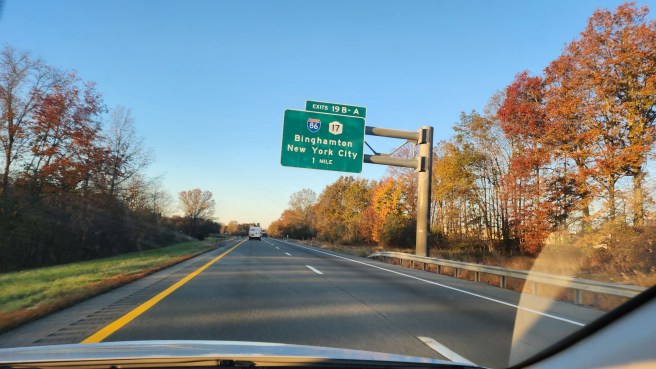
Back in Binghamton, though, the loneliness whammy.
Within the next week, Nikki was in Syracuse with her parents. Seeing her in the hotel suite, “our first glance, a terrified emotional rush, afraid to touch … but I put my arm around her. Her voice has changed … mellower, like feather down. She wants me to respect her.”
She’s off to Binghamton with me. We make love, it’s incredible (she’s learned new tricks), until she remembers my confession about Peter’s letter. And I cry too much, too often (like Monday night with Polly).
“In bed, lying next to me: who is this stranger? I’ve never seen her before. She’s so porcelain, such transparent skin, so fragile. And I never knew her mind, it’s so strange.
“We argued over trivia, viz., why did I get a post office mailbox?” She screamed and cried, thinking me paranoid. And I’m scared you’ll lose my other notebook.”
The weekend with Nicki in Syracuse and Binghamton. Apparently, she tore into me over many small decisions.
Why do I defend others, like clerks or waitresses? Am I trying to identify with them, like I’m OK, not freaky like you?
We hit the zoo on the hill and then the Roberson.
“Every time I leave you, it’s death. Will I see you again?”
[In revisiting this, I recast it: “Every time you leave me, it’s death. Will you see me again?” I may have been dropping her off at the hotel, but the fact was that she was the one departing.]
“I know I must avoid your father’s spell: it tears me from your mind.
“What a prison marriage can be: but what misery is this!”
What hurts most about her being with others was my fear of being second-best. Or was it of being alone, alienated?
I even admitted that she loved Bruce. The one in Utah?
“I promised you I would hide you, if necessary.” [Something that would haunt me.]
~*~
From Spiralbound Hippies, with commentary from now.
A few things you don’t know about this Aquarian
Despite all these outings as a writer, not just as a blogger but as a poet and novelist, too, let me confess, I …
- Almost always feel like an outsider.
- Struggle at small talk.
- Look at idealized writer’s studios and realize they could have been what’s now my bedroom.
- Can be blamed for too often having taken my romantic partner as a muse.
- Can’t stand wet feet unless I’m swimming. Or, more frequently, showering.
- Assume true love always involves pain.
- Had some horrid toilet-training that lingers.
- Love foggy mornings when I linger in bed, sipping decaf (these days) and reading.
- Add to that listening to the rain muffled on the metal roof just overhead, perhaps while falling asleep.
- Can’t keep up with all the reading I attempt to do, much less any of the rest I should be tackling.
Welcome to the riverside ghetto
My first residence after college was sharing the upstairs apartment of a house in what was an Italian neighborhood by day and Black ghetto at night. Here goes:
Twelve-hour drive, from Dayton, I guess, on Friday. [This was in the blue Buick Skylark I was purchasing from my father.]
Saturday, swimming in the campus pool at Harpur, and then a string quartet concert with Kara. Sunday at her parents’.
Next Friday (did I oversleep work? Got a call from Bob at 8, to my chagrin). This turned into the steak-in-the-rain event with Esperanza that ended at Howard Johnsons to eat and then back to her place, where D-Man was unexpectedly sitting in a chair. “They make fantastic dancers, and I slink into depression.”
And then, after a brace of empty pages, comes “Tromping Through the Wilderness with the Choir” as a long prose entry before my futile flight to Montana and Utah and back. Much muck here, as well as some sharp flashes that have been woven into my earliest “professional” poems. Much of the rest wallowed in self-confusion.
My house? [Susquehanna Street, presumably.] Nikki’s strand of bells above my bedroom door, her candles, my T-shirts and bellbottoms, her gift of Lili Kraus playing Mozart.
Includes mention of a letter, where I read “Nikki” but not the “good-bye” – when I read it aloud to D-Man and Al (ah, not going by his usual “Thor”), both responded, “That sounds bad.”
My own bit, to self: “Do I want you? I don’t know. I despise you, but I am you.”
Wound up taking the following week off, the futile Montana trip.
She asked why they wanted her back. They see her throwing her life away. As for me? I saw her running away from what she saw as an empty life. “I’m supposed to do in two or three days what I couldn’t in 1½ years? It’s impossible.”
She buys expensive dresses she’ll never wear.
Great Falls “looks like any Midwestern city, except that the lawns are better watered and the people are friendlier, probably because there aren’t as many of them.”
At breakfast, a conversation with a woman psychologist. I got around to mentioning Nikki.
“Is she spoiled? Does she pout (or get upset) when she doesn’t get what she wants? … She needs psychiatric help.” Unprompted.
She needs to do something on her own. We need to commend what she does right. In giving her attention for doing something bad, we may encourage her more whenever she seeks attention.
Lyric poems lack maturity, Yellen said. But these aren’t poems, I’ll confess, they’re teardrops.
My freedom’s shallow, unlike my sorrowful loneliness.
~*~
Three aged yellow teletype paper letters were also folded into the notebook, all lower-case, undated; one to Ostrom, written on a Sunday afternoon. Mentions swimming a quarter-mile three or four nights a week, playing violin, and getting ready to hear Ella Fitzgerald that night.
[Incinerated]
~*~
From Spiralbound Hippies, with commentary from now.
Kinisi 229
sip, sip and then it’s gone
Van Wept Ohio
Edging into the ‘70s
The first five spiralbound volumes reflect much of my thinking and experience underpinning my novel Daffodil Uprising, yet lacks many of the human sides of the story.
As you’ve noticed, none of them stand as journals or even systematic reflections, although one notebook opens, “I resolved the conflict between egotistic drive for position, for empty status, and intellectual quest,” arising from my decision to step down as arts editor at the Indiana Daily Student early in my junior year. Packman was among the first I consulted in making the move.
That volume, with an IU cover, does have my Men’s Residence Center address sticker, indicating I took my film course the spring of my junior year, rather than in my senior year. The first half has detailed notes taken during films, and my relationship with Nikki was in full force, though my record is only – apparently – class notes or scribblings while viewing, starting with Renoir’s Grand Illusion.
~*~
I was still far from journaling,
That would switch with the sixth volume, a book that starts out in Bloomington in the fall of 1968 as college class notes, but ends (after a big gap) in my emerging turmoil in Binghamton. That is, June 1970, the beginning of what would be a fervent, transformative decade for me: Bloomington, Binghamton, ashram, Fostoria, first marriage, Bloomington again, and then Yakima.
Two of the previous notebooks originated in the winter and spring of 1970, the second-half of my senior year of college, but with this notebook I was finally out on my own, my first full-time job, paying rent, owning a car, in despair regarding my first lover.
Revisiting this, I expected that much had been closely gleaned for the novels and poems.
I was surprised by how much hadn’t.
~*~
What strikes me, looking back, is the neurotic frenzy of those years, even before adding in the evenings of concerts, operas, lectures, and so on. Just where was my sense of direction? Or was it more likely escape?
Down the tube of time
Native crafts dying as television extends northward: work done at night as people sat around chatting now slips away.
It already happened in Europe long ago.
As for home life?
My major was political science, by the way
These notes were from a grad-level seminar, Frontiers of Public Policy and Action. Classmates included Brian Loveman, George Strump &/or George Stein, Paul Wogaman, and Major [his given name] somebody.
Takeaways:
Selecting one form of action as policy does not preclude other possibilities. So what causes policy to limit choices?
Soft constraints = a matter of choice, which leads to difference.
Hard constraints = invariance, operating across all political systems, including political inequality.
We assume that a dollar is a dollar. But is that true when dealing with the public treasury?
What happens when a dollar of yours is used to harm you? When you are taxed to harm yourself?
A public good may become a public bad.
A political price is assumed in all political systems.
Capabilities = potential assets.
Limitations = political liabilities.
Every decision reflects these.
With multi-tiered political systems, the concept of commons becomes ambiguous.
The bribe = the rich get richer; the poor, poorer.
Public entrepreneurs. Public goods and services.
Behavioral theory as an alternative to top-down management perceptions.
Unity of command: limited span of control. A belief the organization is always directed toward the center. (As for a bell curve?) (Or that which deviates from authority?)
Bureaucratic disfunctions. Formal versus informal policy/action.
Rules of procedure may dictate the solution.
Medieval epistemology quite at variance with contemporary perspectives. As in, spirits as an opportunity for Truth to be revealed, as well as magic and myth.
As for those who are negatively affected by an action (externalities) = direct consequences of actions.
A bilateral monopoly = oligarchy or other monopolists.
Water policies in the West as an example of a local matter that exerts much wider influence.
Trade associations within public agencies …
Dynamic of a hidden hand, an equilibrium without direct intervention.
How do we assure that rivalries between cities, states, or nations work toward a common good?
The aristocracy of the South became a military caste. State military colleges in South, not North, Midwest, or West.
Can bureaucratic professionals regulate their superiors? Or is a self-centered careerist more interested in pleasing the superiors who control his promotions?
As for strong client relationships?
Is what we’re buying with tax dollars in the national interest? (Block grants versus categorical grants.) Are these grants or are they purchases? Are we buying what we should?
Taxing capacity = real jurisdiction.
Politics as a subset of corruption.
Public education as a public good yet to the individual’s advantage.
Monocentric decision-making processes in a large city lead to
- Moves toward common, central preferences. (Bell curve, with a tendency to lose information on different interests.) Also, what is necessary to put together a minimum winning coalition?
- Deterioration of public services, along with decomposition of neighborhood, fundamental social change.
Mafia as a shadow bureaucracy versus government collective action.
~*~
From Spiralbound Daffodil, with commentary from now.
 Jnana's Red Barn