Why you don’t get bids with a binding contract

That’s also a warning if you do find a contractor who will present one on a project like ours.

Experienced tradesmen should know there are too many surprises when you’re dealing with an old house. The only way for them to come out ahead with that factor is by cutting corners or – as often happens – ghosting the client altogether.

Doing the job right, on the other hand, takes the amount of time it demands.

There’s an artistry in working with an existing old house.

~*~

That said, you better be prepared to deal with the expenses that do come up.

On our contractor’s end, when I look at all of the tools and equipment that’s been parked in our house, I’m surprised he’s making any money on this project. Much of his gear is very pricy, and we don’t even see the hidden costs, like insurance.

As for fireworks

Let’s start with a pitch I once considered using.

“Hi, my name is Jnana Hodson and I’m a retired hippie. One of millions and, unlike many, I’m not embarrassed to admit it was a time to remember, no matter how short we’ve fallen from its potential. What is often overlooked is that the central element was the hippie chick. My novel, Hippie Farm, celebrates her in her many guises, even if you can’t even use the term “chick” anymore without being corrected. At the time, though, it was a badge of honor and invitation – one leading, in this case, to a rundown farmhouse in the mountains outside a college town. May I introduce you to the full story?”

Well, that attempt has now been woven into what stands as Pit-a-Pat High Jinks. Still, as I also proclaimed:

“In many of my novels, the hippie movement opened their minds. Or at least their horizons. Or even a few hearts. What’s most opened yours?”

That led to these points:

  • Crucial to the outcome were personal transformations that few today will speak of.
  • We’re still caught between two worlds (or) unfinished business. I wanted to present my work as letters from a retired hippie or letters to youth and a call to action.
  • I wanted to tell them I’m sorry about what you’re inheriting. I’m sorry about the parts we messed up.
  • And yet, it wasn’t all our fault. We were too trusting, for one thing. And so green, as in naive.
  • Looking around, there are the old losers and the sense of hippie as essentially a girl thing.
  • It was a youth movement. What you need to know about its legacy is this.
  • Economics:. globalization and digitalization versus small-is-beautiful. As for the tax base? And the kleptomaniac One Percent? How about selling yourself into slavery?
  • Relationships: the restructuring of marriage and family (dare we consider ashrams and similar shared householding).
  • Environment and the earth: Global warming is a reality, despite years and millions of dollars expended in its denial.
  • Justice and equality. Dare I say more?
  • Alternative lifestyle. Think of clothing, the arts (Edge City), food, even basic skills such as use of a broom or hammer.
  • Drugs, alcohol, etc. Legalization is one thing, appropriate usage another. Jail is not the deciding point. Oppressive life situations, however, are.
  • Yup, the whole system of shaping our children.
  • I’m not going there today, other than to say deep readjustments are in order. I hope they get to the bottom rather than enrich the most elite of society.
  • Discipline and self-discipline. For me, that leads to the next.
  • Spirituality and religion. Personal experience of something divine and then holy community.

Now, back to those contributor’s notes possibilities:

  • As an unabashed political liberal, Jnana despairs for public sanity.
  • He knows nothing good can come from a politics of hate.
  • Jnana is a Lincoln Republican who votes Democrat by default.
  • I was UPROOTED, repeatedly. In location, relationship, my career, even faith.
  • The undertow or rip current, pulling me away. I expected to live in large cities, my life filled with opera and symphony performances. Instead, it’s been mostly small cities in rural conditions.
  • My life journey has had little resemblance to what I anticipated from college on. Repeatedly, it seemed I was uprooted – in location, career, relationship, and even spirit – just as I began to address a situation fully. Outwardly, the result has been fragmentary, unified only in the mind and heart that embrace its many facets.
  • In recent years, much of my experience of wandering and sojourn has constellated in an investigation of the metaphors of Light and Seed as they were expressed in the early Quaker movement. I now perceive a semblance between the Dharma bums of Asian religious practices and the vagabond ministry of itinerant Quaker ministers, and find comfort in their legacy, with its parallels to my own movements.
  • After throwing myself into business crusades and tumultuous relationships, I consider myself a survivor. I love classical music and opera, mountaintops and the North Atlantic, Quaker Meeting and New England contradancing.
  • For me, poetry is a state of mind. Its essential element is silence, linking it to sacred (An impossibility, of course, considering the nature of words. And yet!)

Or, to reconnect with Ezra Pound, literature is slow news, something allowing some breathing space and reflection, rather than the minute-by-minute confusion before us.

Which takes me back to Scripture, diving into antiquity for parallels to today.

Now, let’s sit back tonight for some gloriously fleeting pyrotechnics. Something that might inspire and awe almost everyone.

How French-speaking Canadiens provoked the American Revolution

In my research for the book that became Quaking Dover, I became much more aware of the ongoing tensions in New England with the French to the north.

I thought that ended with the Treaty of Paris in 1763, but I was wrong.

The British tried to assimilate the Canadiens into the wider society but by 1774 realized the futility of the effort.

To alleviate the situation, Parliament passed the Quebec Act, covering the former New France. The measure permitted the continuation of the French language, legal system, and Roman Catholic religion in what was now enlarged and renamed Quebec. Crucially, reference to the Protestant faith was removed from the oath of allegiance required for holding public office, and the Catholic church could again impose tithes.

Many of the English in the New World were outraged, seeing this as a granting freedoms and lands to their former enemy and including the possibility of stripping them of their self-elected assemblies and voiding their claims to land in the Ohio Country, granted by royal charter to New York, Pennsylvania, and Virginia but now unilaterally ceded to Quebec.

The act had been passed in the same session of Parliament that imposed punishments on the Boston Tea Party, among other affronts the Patriots derided as the Intolerable Acts.

Patriots also saw the measure as establishing Roman Catholicism in the 13 colonies and promoting the growth of “Papism.” in general.

I was unaware of its inflammatory influence as a direct cause of the American Revolution until I heard of the measure as an aside on a CBC Radio commentary.

Just nine months after the act’s enactment came Paul Revere’s midnight ride and the “shot heard ‘round the world” in the rebellion at Boston.

Barely two years after its passage, the Declaration of Independence was proclaimed in Philadelphia.

C’est vrai.

Happy Canada Day – and a nod to the Loyalists who fled from the American Revolution  

When I was growing up, we occasionally heard that not everyone in the American colonies supported the Revolutionary War, but we never, ever, got a clue of how many opponents there were or how strongly they resisted. Sometimes it went past as “a third.”

Living where I do, facing the border of New Brunswick, Canada, has been an eye-opening experience on that front.

In fact, a premiere historian of their support of the Crown was Lorenzo Sabine, a prominent figure in early Eastport and a business partner, briefly, of two of the sons of the man who first presided in our house. We’ll look at him in a Tendrils next week.

Today, in observation of Canada Day, we’ll focus on the United Empire Loyalists who were expelled from the new United States to the south. Or, where I live, it’s also east.

  1. An estimated 42,000 white settlers plus 3,500 free blacks and 2,000 enslaved blacks migrated to the remaining British North America holdings during and especially at the close of the Revolutionary War. They came from all 13 rebelling colonies, but principally from New York and New England. Many other expelled monarchists relocated to Florida, Britain, and the Caribbean.
  2. They came from every social class but often after enduring the confiscation of their property and wealth. Some did manage to dismantle their houses and erect them anew in Canada, as I learned in a neighborhood of Castine, Maine.
  3. Sir Guy Carleton – the 1st Lord Dorchester and governor of Quebec and governor general of the Canadas – created the identifying label to distinguish the English-speaking settlers from the descendants of New France inhabitants of the Province of Quebec, otherwise known as Canadians or Canadiens, possibly akin to Acadia.
  4. Growth resulting from the arrival led to the creation of new colonies. In 1784, New Brunswick was partitioned from Nova Scotia to reflect significant new settlement around the Bay of Fundy. In 1791, the Province of Quebec divided into Lower Canada (present-day Quebec), and Upper Canada (present-day Ontario).
  5. To encourage Loyalist resettlement, especially along the frontier of Upper Canada, the Crown awarded the new arrivals land grants of 200 acres a person. This added English speakers to the population and was followed by additional waves of immigration that established a predominantly Anglo-Canadian culture both west and east of the modern Quebec border.
  6. Loyalists in Upper Canada petitioned the government to be allowed to use the British legal system, which they were accustomed to in the American colonies, rather than the French system. Great Britain had maintained the French legal system and allowed freedom of religion after taking over the former French colony with the defeat of France in what we call the French and Indian War but is more widely known as the Seven Years’ War. Thus, most Loyalists in the west could live under British laws and institutions while the predominantly ethnic French population of Lower Canada, who were still French-speaking, could maintain their familiar French civil law and Roman Catholic religion. (I’m assuming that the residents of Nova Scotia and New Brunswick already functioned under the British system.)
  7. Thousands of Iroquois and other pro-British Indigenous peoples, expelled from New York and other states, resettled in Canada. One group established the Six Nations of the Grand River, the largest First Nations reserve in Canada.
  8. In laying out St. Andrews, eight miles from my home in Maine, Loyalists named the north-south streets after the 13 children of King George III. The major east-west streets include one named for Queen Charlotte and another as the Prince of Wales. The county is also named for Her Highness.
  9. Largely influenced by its Loyalist presence, Canada resisted U.S. overtures during the War of 1812 and successfully repulsed American invasion. From the Loyalist perspective, the War of 1812. Other parties viewed it as a mixed bag.
  10. Many Canadians take pride in their Loyalist ancestry. As In 1898, Henry Coyne wrote in 1898, “The Loyalists, to a considerable extent, were the very cream of the population of the Thirteen Colonies. They represented in very large measure the learning, the piety, the gentle birth, the wealth and good citizenship of the British race in America, as well its devotion to law and order, British institutions, and the unity of the Empire. This was the leaven they brought to Canada, which has leavened the entire Dominion of this day.”

George Washington, we may note, did not view them so favorably. As he remarked in a 1776 letter, “One or two have done what a great number ought to have done long ago, committed suicide. By all accounts, there never existed a more miserable set of beings than these wretched creatures now are. Taught to believe that the power of Great Britain was superior to all opposition, and, if not, that foreign aid was at hand, they were even higher and more insulting in their opposition than the regulars.”

Now, for tonight’s fireworks from an island on the other side of the international border.

Hello, readers!

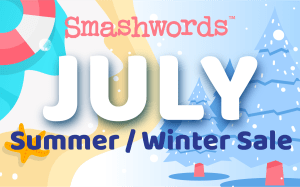
I’m excited to announce that my lineup of ebooks is available as part of a promotion on Smashwords for the month of July as part of their Annual Summer/Winter Sale. This is a chance to get my novels, poetry collections, and Quaker volumes, along with volumes from many other indy authors, at a discount so you can get right to reading. Some of mine are even free, as you’ll see.

The sale begins today, so save the link:
https://www.smashwords.com/shelves/promos/

Please share this promo with friends and family. You can even forward the news to the avid readers in your life.

Thank you for your help and support.

And happy summer reading!